
 Arabic
  English
  Russian
  French
  German
  Japanese
  Korean
  Portuguese
  Italian
  Dutch
Dutch  Turkish
  Indonesian
  Polish
  Spanish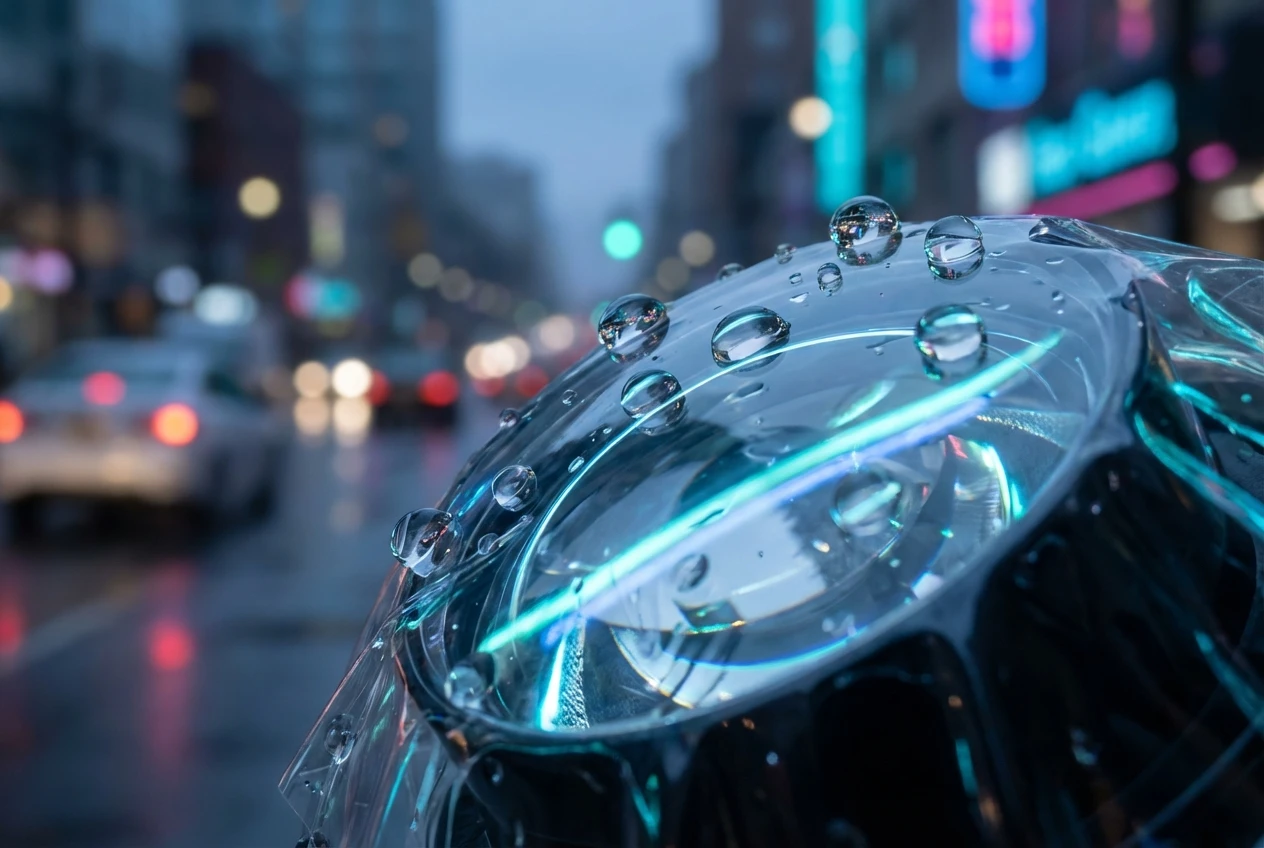
If you are an engineer working on autonomous vehicle tech, you know the pain. You’ve built a perception stack that costs more than a Ferrari, but a single muddy puddle defeats it. This is where فيلم PTFE للمستشعرات is quietly revolutionizing the industry.
We aren’t talking about standard screen protectors here. When we discuss فيلم PTFE للمستشعرات, we are talking about a critical infrastructure layer that sits between your expensive Lidar/Radar hardware and the chaotic, dirty world outside.
في تفلون X, we have spent years refining fluoropolymer chemistry. We’ve seen firsthand that mechanical wipers are failing. They scratch surfaces. They jam. They look terrible on a sleek EV design. The industry is pivoting to passive protection, and high-quality فيلم PTFE للمستشعرات is the material leading that charge.
Why? Because it combines optical clarity, radio frequency transparency, and a self-cleaning surface that feels almost like magic. Let’s dive deep into why this material is beating glass and polycarbonate in every meaningful metric.
1. The Physics of Signal Loss: Why فيلم PTFE للمستشعرات Wins
Let’s get technical for a minute. I promise to keep it readable, but we need to talk about Dielectric Constant (Dk).
Every time your 77GHz radar emits a wave, it has to pass through a protective cover (the radome). If that cover is made of standard plastic or glass, a chunk of that signal bounces back. This is called the Reflection Coefficient.
High reflection means your sensor is “dazzled” by its own cover. It reduces the range and accuracy of object detection.
Standard Polycarbonate has a Dk of roughly 2.9 to 3.0.
فيلم PTFE للمستشعرات, specifically the grade we engineer at Teflon X, has a Dk of roughly 2.0 to 2.1.
This difference sounds small, but in the world of mmWave radar, it is huge.
The Signal Transmission Formula
Since we can’t use fancy code blocks here, let’s look at the math in plain text. The Reflection Coefficient (let’s call it Gamma) depends on the permittivity (Er) of the material.
Gamma = (sqrt(Er) – 1) / (sqrt(Er) + 1)
Let’s run the numbers:
- For Polycarbonate (Er = 3.0):
Gamma = (1.732 – 1) / (1.732 + 1)
Gamma = 0.732 / 2.732
Reflection = 0.268 (or about 26.8%) - For Teflon X PTFE Film (Er = 2.1):
Gamma = (1.449 – 1) / (1.449 + 1)
Gamma = 0.449 / 2.449
Reflection = 0.183 (or about 18.3%)
That is a massive reduction in signal loss. By switching to فيلم PTFE للمستشعرات, you are effectively boosting your radar’s transmission efficiency by nearly 10% just by changing the cover material. That could be the difference between detecting a pedestrian at 150 meters versus 130 meters. In autonomous driving, those 20 meters save lives.

فيلم تفلون منخفض الاحتكاك لمكونات الطيران والسيارات
يتميز فيلم التفلون المُقطّع بتصميمه خفيف الوزن ومقاومته للحرارة حتى 260 درجة مئوية[5]. كما يُقلل سطحه منخفض الاحتكاك من تآكل أنظمة الوقود ومكونات المحرك، بينما تُحسّن خصائصه العازلة الأداء في بيئات الجهد العالي.
التطبيقات:أفلام عازلة للمكثفات ولوحات الدوائر والأحزمة الناقلة.
2. فيلم PTFE للمستشعرات and the Self-Cleaning Miracle
I hate the term “self-cleaning” because it implies the film has a little robot arm. It doesn’t. It just relies on physics—specifically, Contact Angle Hysteresis.
We recently had a client, a delivery bot startup, who was struggling with morning dew. Their cameras were fogging up, and the water droplets wouldn’t roll off until the bot hit 10 mph. But the bot only drives at 5 mph on sidewalks. They were stuck.
They applied our فيلم PTFE للمستشعرات over the lens.
Here is why it worked:
- Hydrophobicity: Water hates PTFE. The Water Contact Angle (WCA) is around 110-115 degrees. The water beads up into near-perfect spheres.
- Sliding Angle: This is the secret sauce. A bead of water on glass might stick until you tilt the glass 30 degrees. On فيلم PTFE للمستشعرات, the sliding angle is often less than 5 to 10 degrees.
Gravity does the cleaning for you. Even a slight vibration or a gentle breeze is enough to knock the water off. The delivery bot didn’t need wipers; it just needed a surface that refused to hold onto water.
Comparison Table: Materials at a Glance
Check out this comparison. It’s pretty clear why فيلم PTFE للمستشعرات is the superior choice for تكنولوجيا المركبات ذاتية القيادة.
| ميزة | Standard Glass | Polycarbonate Cover | Teflon X PTFE Film |
|---|---|---|---|
| ثابت العزل الكهربائي (Dk) | 6.0 – 7.0 (Terrible for Radar) | 2.9 – 3.0 | 2.0 – 2.1 (Excellent) |
| Signal Loss | عالي | معتدل | منخفضة جداً |
| زاوية تلامس الماء | ~40° (Hydrophilic) | ~80° | ~115° (Super Hydrophobic) |
| Cleaning Needs | Wipers + Fluid | Coatings (that wear off) | Air Jet / Gravity |
| Cost to Replace | $$$ (Entire Lens) | $$ (Molded Part) | $ (Sacrificial Film) |
3. The Economics: Why فيلم PTFE للمستشعرات Saves Budget
Let’s talk money.
A high-end Lidar unit can cost anywhere from $1,000 to $10,000. The front lens is usually made of precision-ground glass with specialized anti-reflective coatings.
If a stone chip hits that glass on the highway, the unit is toast. You can’t just polish it out because you’ll alter the optical curvature. You have to replace the unit.
Now, imagine you have applied a layer of فيلم PTFE للمستشعرات from تفلون X.
A stone hits. It gouges the film.
الحل: A technician peels off the $5 film and applies a new one. The $5,000 sensor underneath is pristine.
We are seeing fleet operators adopt فيلم PTFE للمستشعرات not just for the optical benefits, but purely as an insurance policy. It is a sacrificial layer. It takes the beating so your hardware doesn’t have to.
Real World Case: The Highway Trucking Test
We worked with a freight company (let’s call them Transport Z) testing Level 4 trucks. They run long hauls through insect-heavy routes. Dead bugs are incredibly acidic. If left on a polycarbonate lens for 48 hours, the acid starts to etch the plastic, causing permanent cloudiness.
Transport Z started using our فيلم PTFE للمستشعرات. Because PTFE is chemically inert (it’s basically the same stuff on your frying pan, chemically speaking), the bug acid couldn’t bond to it.
Result?
- Cleaning time reduced by 70%. A simple water spray washed the bugs right off.
- Lens replacement dropped to zero.
- ROI: They saved roughly $15,000 in hardware replacements over a 6-month pilot program.
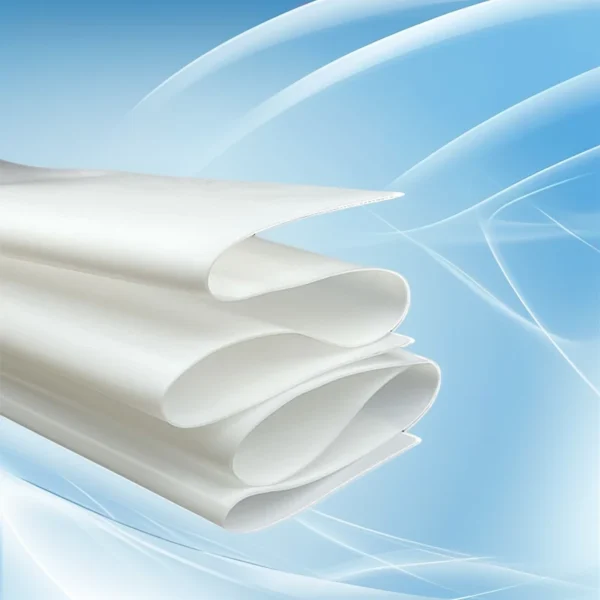
غشاء PTFE مُقشّع طبيًا للترشيح المعقم وطلاءات الزرع
يجمع غشاء PTFE المُزال من الدرجة الطبية بين التوافق الحيوي والترشيح الدقيق للمسام (بحجم مسام يتراوح بين 0.02 و15 ميكرومتر)، مُلبيًا بذلك المعايير الصيدلانية الصارمة. تُستخدم هذه المادة غير السامة في أنظمة توصيل الأدوية وطلاءات الزرعات، مما يضمن خمولًا كيميائيًا واستقرارًا حراريًا أثناء التعقيم.
الميزات الرئيسية:مقاوم للأشعة فوق البنفسجية، ومتوافق مع معايير إدارة الغذاء والدواء الأمريكية، وقابل للتكيف مع الدورة الحرارية السريعة.
4. Installation and Durability of فيلم PTFE للمستشعرات
One of the most common questions I get at أليسون يي@teflonx.com is: “Is it a nightmare to apply?”
Look, I won’t lie to you. It’s not like putting a sticker on a notebook. You need to be careful to avoid air bubbles, because an air bubble can refract a Lidar beam.
However, modern فيلم PTFE للمستشعرات comes with advanced silicone or acrylic adhesives that are “wet-out” friendly. This means they flow over time to fill in microscopic gaps.
The Application Process:
- ينظف: Absolute surgical cleanliness of the sensor.
- Wet Apply: We often recommend a slight mist of fluid allowing you to position the film.
- Squeegee: Push the fluid out.
- Cure: Let it bond.
Once it’s on, it stays on. Our فيلم PTFE للمستشعرات is rated for temperatures from -40°C (hello, Norway) to +150°C (hello, Death Valley). It doesn’t yellow under UV light like cheap PVC or TPU films do.
A Note on Customization
We know every sensor is different. Some are flat, some are domes. At تفلون X, we offer custom die-cutting. We can provide فيلم PTFE للمستشعرات cut to the exact millimeter of your device, with pull-tabs for easy application.
Don’t settle for buying a raw roll and trying to cut it with scissors in your lab. Precision matters here.
5. The Future: فيلم PTFE للمستشعرات and Solid State Cleaning
The industry is moving toward “Solid State” everything. Solid state Lidar (no spinning parts). Solid state batteries. And now, solid state cleaning.
The concept is Ultrasonic Lens Cleaning (ULC). The lens cover vibrates at ultrasonic frequencies to atomize water and dust.
Here is the catch: ULC works much better if the surface is already hydrophobic. If the surface energy is high (like plain glass), the water clings too tightly for the vibrations to shake it loose.
By laminating فيلم PTFE للمستشعرات onto a ULC system, you create the ultimate self-cleaning stack. The low surface energy of the PTFE means the water is barely holding on, so the ultrasonic vibrations send it flying instantly with less power consumption.
We are currently prototyping this combination with several Tier 1 suppliers. If you are developing تنظيف الليدار tech, you need to be testing this film.
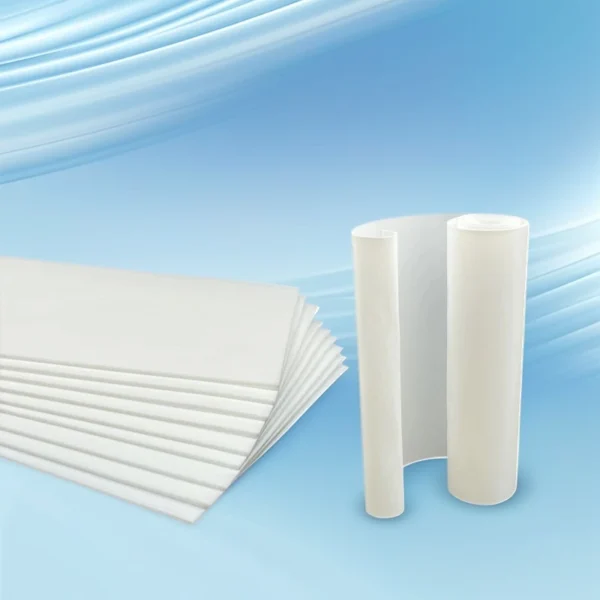
غشاء PTFE مقاوم لدرجات الحرارة العالية للأختام والحشيات الصناعية
يتميز غشاء PTFE المُزلق بثبات كيميائي استثنائي ومقاومة حرارية (من -200 درجة مئوية إلى +260 درجة مئوية)، وهو مثالي للأختام الصناعية في المضخات والصمامات ومعدات المعالجة الكيميائية[4]. يضمن معامل الاحتكاك المنخفض (0.04) المتانة في التطبيقات الديناميكية، بينما يوفر هيكله الدقيق المسامي (مسامية 85%) مقاومة للسوائل والجسيمات.
التطبيقات:الحشيات المقاومة للتآكل، وطلاءات محركات الطائرات، وأغشية الترشيح الطبية.
لماذا Teflon X؟
We aren’t a generalist plastic supplier. We focus on high-performance fluoropolymers. When you buy فيلم PTFE للمستشعرات from us, you are getting:
- Verified Data: We don’t guess at Dk values; we test them.
- Consistency: Every roll is inspected for optical defects.
- يدعم: Real engineers answering your emails, not a chatbot.
If you are tired of dealing with signal noise, frequent maintenance, and scratched lenses, it is time to upgrade your materials.
FAQ: Common Questions About فيلم PTFE للمستشعرات
Q1: Can فيلم PTFE للمستشعرات be applied to curved surfaces?
Yes, but it has limits. PTFE is not as stretchy as TPU (thermoplastic polyurethane). For extreme domes, we use a specialized “skived” PTFE that has slightly more flexibility, or we recommend vacuum lamination processes. Contact us for specific curvature guidelines.
س2: هل تؤثر الطبقة اللاصقة على الإشارة؟
سؤال رائع. عادة ما تكون المادة اللاصقة هي الحلقة الأضعف في الأفلام الأخرى. إن فيلم PTFE للمستشعرات يستخدم مادة لاصقة ذات تركيبة خاصة ومنخفضة الفقد، وتتميز بكونها شفافة بصرياً ومتوافقة عازلياً بأكبر قدر ممكن لتقليل الانعكاسات عند الواجهات البينية.
س3: ما هي مدة بقاء الفيلم في الأماكن الخارجية؟
تشتهر مادة PTFE بمقاومتها للأشعة فوق البنفسجية، فهي محصنة تماماً تقريباً ضد التحلل الناتج عنها. وفي ظروف قيادة السيارات الواقعية، فإن منتجنا فيلم PTFE للمستشعرات يدوم عادةً لمدة تتراوح بين 3 إلى 5 سنوات قبل الحاجة إلى استبداله بسبب التآكل المادي (الاحتكاك بالرمال)، وليس بسبب التحلل الكيميائي.
Q4: Can I get a sample of فيلم PTFE للمستشعرات to test on my radar?
بالتأكيد، ونحن نشجع على ذلك. ندرك أنك بحاجة إلى التحقق من بيانات التوهين بنفسك. تواصل معنا عبر صفحة الاتصال أو راسلني مباشرة عبر البريد الإلكتروني على أليسون يي@teflonx.com.
Ready to Solve Your Sensor Protection Problems?
The future of autonomous driving isn’t just about better code; it’s about better hardware integration. Don’t let a dirty lens ground your fleet.
Switch to فيلم PTFE للمستشعرات and see the difference in your data quality and maintenance cycles.
- View Products: Browse PTFE Film Category
- Get Technical Support: اتصل بنا
Let’s keep those sensors clean and your vehicles moving.
