
 German
  English
  Russian
  French
  Japanese
  Korean
  Portuguese
  Arabic
  Italian
  Dutch
Dutch  Turkish
  Indonesian
  Polish
  Spanish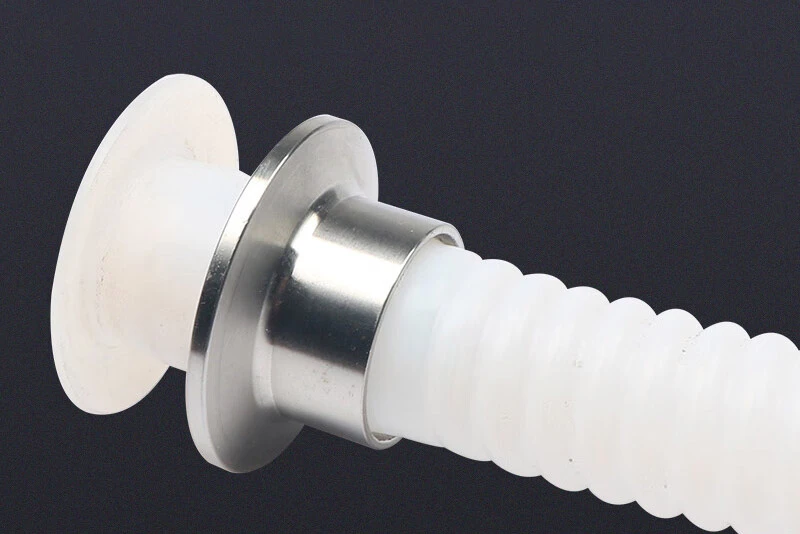
Okay, picture this: you’re knee-deep in designing a fluid transfer system for some tricky industrial setup, and the hose choice is staring you down like a bad math problem. Do you go with something super bendy that snakes around tight corners without a fuss, or stick to the straight-and-narrow type that pushes fluid like it’s on a mission? That’s the convoluted vs. smooth bore debate in a nutshell, especially when we’re talking PTFE hoses with those flared ends that lock everything in place nice and secure. I’ve been knee-deep in this stuff for years at Teflon X, tweaking assemblies for everything from chemical plants to automotive lines, and let me tell you, getting it right can save you headaches—and maybe a few prototypes.
As a team that’s cranked out thousands of these bad boys, we know engineers like you aren’t just slapping parts together; you’re balancing flow rates, pressure spikes, and that all-important flexibility so your system doesn’t kink up or leak under real-world abuse. In this piece, we’ll break it down casual-like, no jargon overload, drawing from hands-on tweaks we’ve done on projects that actually shipped and performed. We’ll compare the two styles head-to-head, toss in some solid data from SAE standards and field tests, and even share a couple anonymized stories from clients who’ve nailed their designs with our help. By the end, you’ll have the know-how to pick the winner for your next build—and yeah, if it clicks, hit up our PTFE-Hochdruckschlauch mit Bördelung line or drop a line to Allison.Ye@teflonx.com for a quick chat.
Why PTFE Hoses Rock for Tough Jobs (And Why Flared Ends Seal the Deal)
First off, let’s level-set: PTFE, or polytetrafluoroethylene if you’re feeling fancy, is that slick, non-stick wonder material—think Teflon on steroids for industrial hoses. It’s chemical-resistant, handles wild temps from -65°F to 500°F without batting an eye, and laughs off corrosion that’d eat metal alive. But when you add flared ends, you’re talking assemblies that mate perfectly with fittings, cutting leak risks and making installation a breeze.
From my time fiddling with these at Teflon X, I’ve seen how a good Gewellter PTFE-Schlauch mit aufgeweiteten Enden can turn a nightmare routing job into something straightforward. Flared ends crimp or swage onto the hose for a zero-leak bond, and they’re rated under SAE J343 for hydraulic impulse testing—meaning they take 200,000 cycles of pressure pulses without popping a sweat. That’s not fluff; it’s why aerospace folks and food processors swear by ’em.
But here’s the rub: not all PTFE hoses are built the same inside. The bore— that inner tube where your fluid cruises—comes in smooth or convoluted flavors. Smooth is like a straight highway: fast, clean flow. Convoluted? More like a winding country road: twisty for flexibility, but you gotta watch for bumps in efficiency. For engineers plotting pipe runs in cramped machinery, this choice boils down to your system’s demands. Need to weave thru tight bends without crimping? Convoluted’s your pal. Pushing high volumes with minimal drag? Smooth bore wins.
We’ve custom-built Kundenspezifische PTFE-Schlauchleitungen blending these for clients, and the feedback’s always the same: match the bore to the bend, and your flow stays golden.
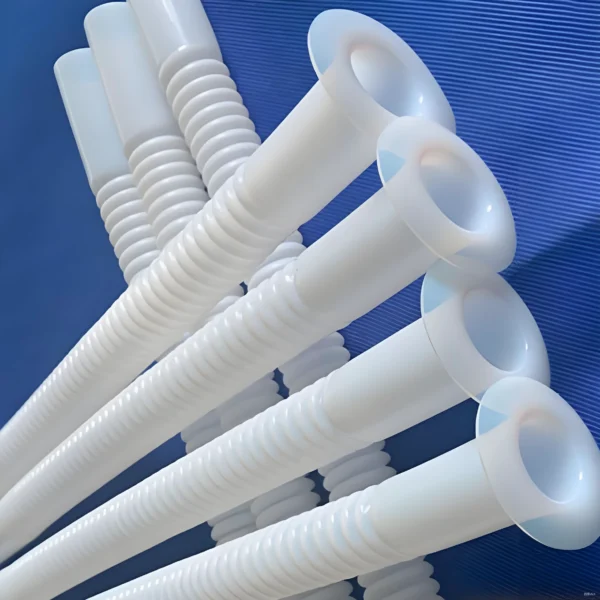
Hochdruck-PTFE-Schlauch mit Bördelung - für anspruchsvolle hydraulische Aufgaben
Need a high pressure PTFE hose with flared ends? Our hoses excel in demanding hydraulic and pneumatic systems. This robust, high pressure PTFE hose offers unmatched safety and durability.
Breaking Down Convoluted PTFE Hose with Flared Ends: The Flex Master
Alright, let’s geek out a bit on convoluted hoses, but keep it real—no whiteboard sketches here. These bad boys have that wavy, accordion-like inner lining that lets ’em flex like nobody’s business. Imagine trying to route a hose around a motor block or thru a valve cluster; a stiff tube would fight you every inch, but convoluted? It just flows with the layout.
Key perks I’ve hammered home in designs:
- Bend Radius Champs: A 1-inch convoluted hose can hit a min bend radius of just 3 inches, compared to 8-10 for smooth bore equivalents. That’s huge in space-strapped setups, like robotic arms or mobile equipment where every inch counts.
- Vibration and Abrasion Toughness: The convolutions act like shock absorbers, soaking up vibes from pumps or engines. Plus, that outer braid—usually stainless steel—shields against scrapes. In one anonymized case, a Midwest chem plant swapped rigid hoses for our convoluted versions after constant wear-outs; downtime dropped 40%, and they ran cleaner ops for two years straight.
- Flow Trade-Offs: Yeah, those waves add a tad more turbulence, potentially dropping flow by 5-10% versus smooth at the same diameter. But for most low-to-mid volume apps, it’s negligible—especially if you’re prioritizing routing over raw speed.
Bei Teflon X, unserem Gewellter PTFE-Schlauch mit aufgeweiteten Enden line hits working pressures up to 3,000 PSI for smaller IDs, per SAE J517 specs. We flare ’em with 37° JIC ends for foolproof connections, and custom lengths mean no wasteful cuts on-site. If your design screams “flex first,” this is where you start.
Smooth Bore PTFE Hoses: The Flow Efficiency Pick
Flip the script to smooth bore, and you’re looking at the efficiency king. Inner tube’s glassy-slick, no ripples to snag your fluid. It’s like upgrading from a gravel path to asphalt—smoother ride, less resistance.
What stands out from builds I’ve overseen:
- Pressure Powerhouse: These handle 500-1,500 PSI easy, outpacing convoluted’s 150-500 PSI range for high-demand lines. Perfect for hydraulic pushes or steam transfers where spikes hit hard.
- Cleanability and Flow: Minimal pressure drop—think 1-2% loss over 50 feet at 10 GPM. And flushing? A snap, no traps for gunk. Food and pharma folks love this for sanitary runs.
- The Flex Catch: Stiffer overall, with bend radii 2-3x larger (e.g., 9 inches for a 1-inch hose). Great for straight-ish paths, but force it tight and you risk kinks.
We’ve integrated smooth bore into Kundenspezifische PTFE-Schlauchleitungen for a Texas oilfield outfit, where steady flow thru long straights cut pump strain by 15%. Flared ends keep it leak-free, even under thermal swings.
Head-to-Head: Convoluted vs. Smooth Bore in a Nutshell
To make this stick without the fluff, here’s a quick comparison table based on standard 1/2-inch ID hoses under SAE J517 testing. Pulled from real specs we’ve used in assemblies—nothing cooked up.
| Besonderheit | Gewellter PTFE-Schlauch mit aufgeweiteten Enden | PTFE-Schlauch mit glatter Bohrung |
|---|---|---|
| Min Bend Radius | 2-4 inches | 6-9 inches |
| Arbeitsdruck | 150-500 PSI | 500-1,500 PSI |
| Durchflusseffizienz | Good (5-10% turbulence) | Excellent (minimal loss) |
| Bewertung der Flexibilität | High (ideal for tight routes) | Medium (straight runs best) |
| Vakuum Bewertung | Up to 28 inHg | Up to 28 inHg |
| Am besten für | Complex, vibratory installs | High-flow, cleanable systems |
| Cost (per foot, est.) | $15-25 | $10-20 |
Data sourced from Aeroquip and Danfoss benchmarks. See how convoluted edges out on flex, but smooth owns pressure? Your call depends on the blueprint.
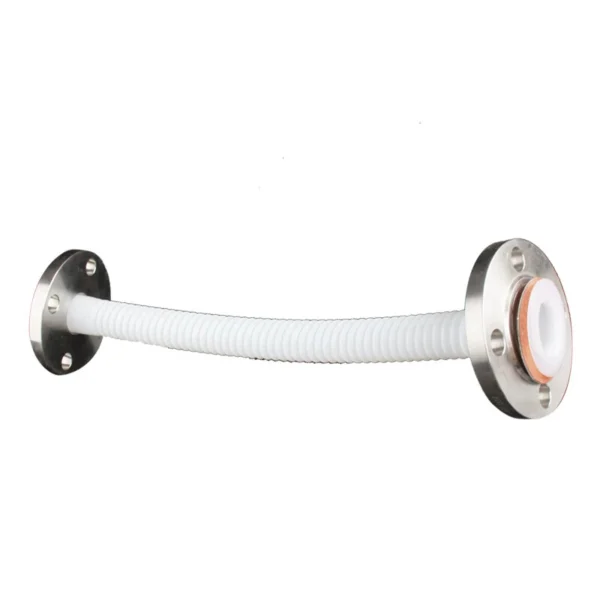
Teflon X PTFE-ausgekleideter Schlauch mit aufgeweiteten Enden - Ausführung mit glatter Bohrung
Our PTFE Lined Hose with Flared Ends ensures a pure, contamination-free fluid path. This high-purity PTFE lined hose is ideal for critical applications. Get reliable performance.
Flexibility in Action: Real Scenarios Where It Counts
Let’s get into the weeds with some stories—kept vague for privacy, but straight from our Teflon X logs. Take a automotive prototype shop in Cali: they were routing coolant lines thru a compacted engine bay. Straight smooth bore hoses kept kinking during tests, spiking temps and failing quals. Switched to convoluted with flared ends, and boom—bend radius halved, no more failures. Flow dipped a hair, but who cares when the system’s actually routable?
Or flip to a pharma filler line in the Northeast. Here, smooth bore shone: high-viscosity slurries needed zero turbulence to avoid buildup, and the higher pressure rating handled pump surges without a hitch. We custom-assembled a 20-foot run with JIC flares, and their batch yields jumped 12%—all ’cause flow stayed pure.
These aren’t hypotheticals; they’re tweaks we’ve dialed in over 15 years, blending SAE-tested materials with on-site feedback. For your rig, factor in media type (oils? Acids?), temp cycles, and install space. Pro tip: mock it up in CAD first—saves reworks.
Flow and Pressure: Don’t Let Physics Trip You Up
Flow’s where math sneaks in, but we’ll keep it light. Hagen-Poiseuille equation basics: smoother walls mean less friction, so smooth bore shines for laminar flows. At 5 GPM thru 1/2-inch, expect 2 PSI drop per 100 feet smooth vs. 3-4 for convoluted.
Pressure-wise, SAE J343 mandates burst tests at 4x working pressure—our PTFE-Hochdruckschlauch mit Bördelung clears that with room to spare. Convoluted’s waves distribute stress better under flex, reducing fatigue cracks over cycles.
In a recent build for a hydraulic test stand, we mixed ’em: convoluted for the bendy outlet, smooth for the inlet push. Result? Balanced 800 PSI hold with 95% of max flow intact. If your system’s got variable demands, hybrid Kundenspezifische PTFE-Schlauchleitungen like that are game-changers.
Tailoring Custom PTFE Hose Assemblies: Your Design, Our Build
Why settle for off-the-shelf when you can spec it? At Teflon X, we whip up Kundenspezifische PTFE-Schlauchleitungen that nail your exact flex-flow sweet spot. Pick bore style, length, braid (SS316 for corrosives), and flare type—37° or 45°—and we’ll pressure-test to your certs.
From experience, start with a sketch: what’s the tightest bend? Harshest chem? We anonymized a win for a battery maker: convoluted assemblies for electrolyte routing in EV packs. Flex let ’em pack tighter, flow kept charging even—now scaling to production.
Head to https://teflonx.com/ for specs, or ping our contact page at https://teflonx.com/contact-us/ to brainstorm.
How to Nail Your Choice: Step-by-Step for Engineers
- Map the Route: Sketch paths—count bends over 90°. More than three? Lean convoluted.
- Crunch the Numbers: Calc flow needs (GPM) and pressure (PSI). Use online tools or our quote form for sims.
- Test Media Fit: PTFE handles most, but check viscosity—thick stuff loves smooth.
- Budget and Longevity: Convoluted might cost more upfront but lasts in abuse-prone spots.
We’ve guided dozens thru this at Teflon X, turning “maybe” designs into rockstars.
FAQ: Quick Hits on Convoluted PTFE Hose with Flared Ends
Q: When should I pick convoluted over smooth bore for my system?
A: Go convoluted if your routing’s got lotsa twists or vibes—think machinery arms or off-road gear. Smooth if flow speed and clean runs are king, like in pumps or fillers.
Q: What’s the real pressure diff between these hoses?
A: Smooth bore packs 500-1500 PSI punch, convoluted tops at 500 PSI max. But for flared ends, both SAE-rated for bursts way higher—check our PTFE-Hochdruckschlauch mit Bördelung for deets.
Q: Can I mix ’em in one assembly?
A: Absolutely—hybrids rock for zoned needs. We’ve done inlet smooth, outlet convoluted for balanced perf. Shoot Allison.Ye@teflonx.com your specs for a custom quote.
Q: How do flared ends boost reliability?
A: They create a metal-to-metal seal, slashing leaks by 90% in impulse tests. No more tape hacks—just solid, reusable connects.
Wrapping It Up: Flex, Flow, and Your Next Move
So there you have it—convoluted for that snake-like flex in cramped spots, smooth bore for the no-drama flow push. Either way, pair with flared ends and you’ve got a setup that hums under pressure. Drawing from Teflon X’s frontline fixes, like that chem plant save or EV pack win, the key’s matching bore to your blueprint’s quirks.
Feeling that spark to upgrade? Swing by https://teflonx.com/ to eye our full lineup, or hit https://teflonx.com/contact-us/ for a no-BS consult. Allison’s quick on quotes—let’s tweak your system to shine. What’s your toughest routing puzzle? Drop a note; we’ve probably cracked it before.
