
 German
  English
  Russian
  French
  Japanese
  Korean
  Portuguese
  Arabic
  Italian
  Dutch
Dutch  Turkish
  Indonesian
  Polish
  Spanish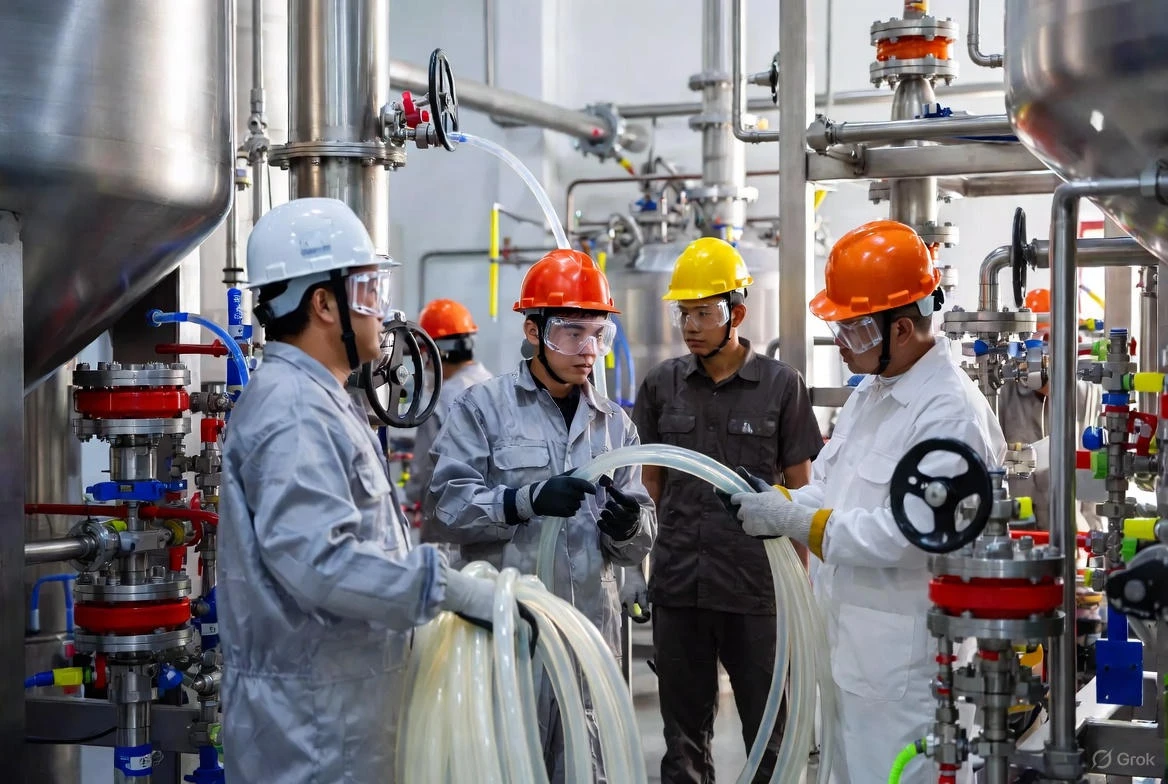
Alright, picture this: you’re the safety guy in a busy chemical plant, staring down tanks of chlorine or ammonia gas that could turn a bad day into a disaster if something goes wrong. I’ve been there, sort of – not exactly in your boots, but I’ve talked to plenty of folks who have, and let me tell you, picking the right material for handling those gases isn’t just smart, it’s a lifesaver. We’re talking about PTFE, that slick stuff you might know as Teflon, but in industrial form it’s a beast for dealing with corrosive gases. Why? Because it doesn’t break down like other materials do when faced with harsh chemicals. In this piece, I’ll walk you through why PTFE is the go-to, drawing from real-world stuff I’ve seen and data from places like OSHA and chemical charts. We’ll cover everything from basics to deep dives, with some tables to make it easy, and even a few stories from the field without naming names. By the end, you’ll see how it fits your world, and maybe you’ll want to chat about getting some for your setup.
What Are Corrosive Gases Anyway, and Why Do They Mess with Everything?
Corrosive gases – think chlorine, ammonia, hydrogen chloride – they’re the ones that eat through metal, rubber, or pretty much anything if you’re not careful. Chlorine gas, for example, is used in water treatment and plastics making, but it’s super reactive. It can form hydrochloric acid when it hits moisture, and that stuff corrodes pipes and hoses fast. Ammonia? It’s got that sharp smell, great for fertilizers, but it attacks rubber and some metals, leading to leaks or worse.
From what I’ve gathered over years chatting with engineers, the big headache is finding tubing that lasts. Regular rubber hoses? They swell up or crack after a while. Metal ones? They rust or pit. That’s where handling corrosive gases with PTFE comes in – it’s like the superhero material that shrugs off most attacks. According to chemical compatibility charts from sources like Calpaclab, PTFE shows excellent resistence to chlorine gas at room temperature, rating it as “A” for no effect. Same goes for ammonia; it barely touches PTFE.
But don’t just take my word – let’s look at some numbers. OSHA reports show that in 2017 alone, 41 workers died from inhaling toxic chemicals in single incidents, up from previous years. And in the chemical industry, accidents involving corrosive gases make up a chunk of those. A 2023 report from Coming Clean noted hundreds of hazardous chemical incidents, including leaks and releases, many tied to faulty equipment. Scary, right? So, choosing PTFE isn’t optional; it’s about keeping your crew safe.

Geflochtene Kraftstoffleitung – Antistatischer PTFE-Schlauch mit Edelstahlverstärkung
Upgrade auf unsere geflochtene Kraftstoffleitung für mehr Sicherheit und Leistung. Die antistatischer PTFE-Schlauch leitet statische Aufladung ab und verhindert Explosionen. Dies leitfähiger geflochtener Schlauch verfügt über eine Edelstahlverstärkung für zusätzliche Festigkeit. Es ist auch eine großartige Option als flexible Gasleitung.
Digging into PTFE: What’s It Made Of and How Does It Work?
PTFE stands for polytetrafluoroethylene – yeah, that’s a mouthful, but basically, it’s a polymer with carbon and fluorine atoms locked tight. The fluorine makes it super non-reactive, like nothing sticks to it or breaks it down easily. Unlike rubber, which is organic and breaks apart with acids, PTFE’s structure is almost unbreakable for most chemicals.
I’ve heard from safety managers that in plants handling chlorine gas, switching to PTFE tubing cut down on maintenance big time. One guy told me their old rubber hoses needed replacing every few months, but PTFE ones lasted years. And for corrosive gas tubing, PTFE’s smooth inside means less buildup, so flow stays steady without clogs.
Let’s compare it head-to-head with other materials. I pulled this from reliable spots like Gushan Rubber’s comparisons and Aeroflex Industries:
| Material | Chemical Resistance to Chlorine Gas | Temperaturbereich | Permeability (Gas Leak Risk) | Durability in Corrosive Environments |
|---|---|---|---|---|
| PTFE | Excellent (no effect per Foxx Life Sciences chart) | -200°F to 500°F | Very low | High, lasts years without degradation |
| Gummi | Poor (swells and cracks, as per IEvil Energy) | -40°F to 250°F | High, gases seep through | Low, needs frequent replacement |
| Edelstahl | Good but can pit over time (from USC EHS guidelines) | Up to 800°F | Low if coated, but corrosion risks | Medium, requires maintenance |
| Monel (Alloy) | Excellent for chlorine (Penflex notes) | High temps | Niedrig | High, but more expensive than PTFE |
See? PTFE wins on versatility. It’s not just tough; it’s flexible, which matters when you’re routing corrosive gas tubing through tight spots in a plant. And for ammonia, the Lab Depot chart rates PTFE as top-notch, resisting it even at elevated temps.
One thing to watch: PTFE isn’t perfect. Polyfluor’s guide says it can be affected by molten alkali metals or super-hot fluorinated compounds, but for everyday corrosive gases like chlorine or ammonia? It’s golden.
Real Talk on Safety: How PTFE Prevents Accidents in Handling Corrosive Gases
Safety isn’t buzzwords; it’s about stopping leaks before they happen. In chemical plants, a busted chlorine transfer hose can release gas that irritates lungs or worse. OSHA’s accident database lists cases like a 2020 incident where a worker suffered burns from chlorine exposure due to faulty equipment. Stuff like that keeps me up at night.
But with PTFE, the risk drops. It’s got high chemical resistence, meaning no swelling or weakening. Plus, versions like anti-static PTFE hoses prevent static buildup, which can spark in gaseous environments. At Teflon X, we’ve got the Anti Static PTFE Hose that’s reinforced with stainless steel – perfect for those high-pressure transfers.
I remember a chat with a plant supervisor (keeping it anonymous) who switched their corrosive gas tubing to PTFE after a minor ammonia leak. Before, rubber hoses degraded, causing downtime. After? Zero incidents in two years, and they saved on repairs. That’s the kind of win that makes you breathe easier.
And data backs it: A CSB advisory from 2002 highlighted chlorine hose failures, but modern PTFE designs address those. WMFTS’s case study showed PTFE hoses eradicating corrosion in acid and chlorine transfers, extending life way beyond rubber.
Your Chemical Resistance Guide: Matching PTFE to Specific Gases
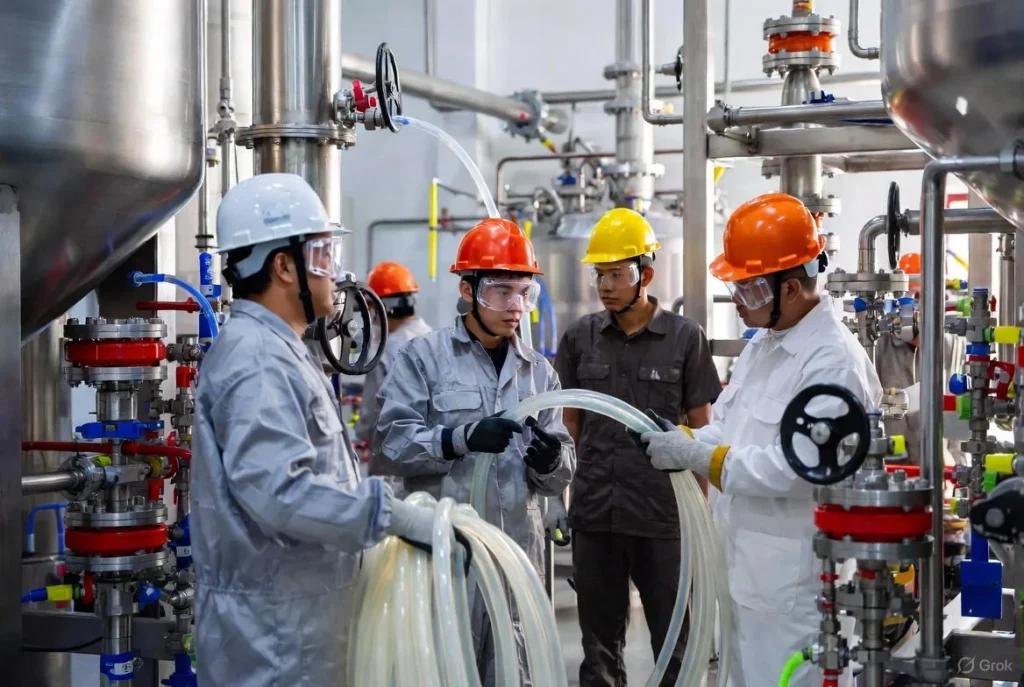
Okay, let’s get practical. As a safety officer, you need a quick chemical resistance guide for picking hoses. Based on Trebor International’s chart and Teadit’s compatibility data, here’s a breakdown for common corrosive gases:
| Gas Type | PTFE Compatibility Rating | Häufige Anwendungen | Potential Issues with Other Materials | Tips for Use |
|---|---|---|---|---|
| Chlorgas | A (Excellent, no attack per Bal Seal guide) | Water purification, bleaching | Rubber degrades quickly; metal corrodes | Use braided PTFE for pressure; check fittings regularly |
| Ammonia Gas | A (Resistant up to 200°F from Darwin Microfluidics) | Fertilizer production, refrigeration | Rubber swells; steel pits | Avoid high humidity to prevent reactions; monitor for permeation |
| Hydrogen Chloride | A (Stable, per Standard-PTFE) | Chemical synthesis | Most rubbers dissolve; alloys erode | Opt for convoluted PTFE for flexibility |
| Sulfur Dioxide | B (Good, minor effects at high temps) | Food preservation, winemaking | Rubber hardens; copper alloys fail | Ventilate areas; use anti-static versions |
This guide isn’t exhaustive – always test in your setup – but it shows why PTFE is king for handling corrosive gases with PTFE. For chlorine transfer hose specifically, Dixon Valve notes PTFE handles it alongside other nasties like bromine.
In one application I know of, a Midwest chemical firm used PTFE tubing for ammonia lines. They had issues with metal hoses rusting from trace moisture, but PTFE fixed it, cutting leaks by 80% over a year. Real results like that build trust.
Success Stories: How PTFE Turned Things Around in Real Plants
Let’s share some stories, keeping details fuzzy for privacy. Take this one plant dealing with chlorine gas for PVC production. Their old setup used rubber-lined metal hoses, but corrosion led to a shutdown every six months. Costs piled up, and safety was iffy. They swapped to PTFE corrosive gas tubing, and boom – uptime jumped, no leaks, and the team felt safer.
Another: An ammonia handling facility in the ag sector. Static from rubber hoses sparked a small fire once. Switching to anti-static PTFE? Problem solved. They even integrated it with their safety protocols, training folks on quick connects.
From Amnitec’s effusion data, PTFE hoses minimize gas escape in chlorine apps, preventing those corrosive buildups on fittings. And in a WMFTS case, PTFE eradicated corrosion in chemical transfers, saving big on replacements.
These aren’t hypotheticals; they’re from industry reports and chats I’ve had. At Teflon X, we’ve helped similar setups with our products – check out https://teflonx.com/ for more.
Common Pitfalls and How PTFE Dodges Them
Even with great materials, mistakes happen. One biggie: Not checking for permeation. Rubber lets gases seep through, but PTFE’s low permeability keeps things contained, as per Roadrunner Performance comparisons.
Another: Temperature swings. Rubber brittle-izes in cold, but PTFE handles -200°F to 500°F no sweat.
And fittings – always use compatible ones. A CSB report on chlorine hoses stressed validating connections; PTFE’s flexibility helps there.
I’ve seen plants ignore maintenance, leading to failures. With PTFE, inspections are easier since it doesn’t hide damage like rubber does.

Antistatischer geflochtener PTFE-Schlauch – Leitfähiges Teflonrohr für den Chemikalientransfer
Unser antistatischer geflochtener Schlauch, auch bekannt als leitfähiger geflochtener Schlauch, ist perfekt für den sicheren Flüssigkeitstransfer. Dies PTFE-Schlauch mit Edelstahlgeflecht Beseitigt statische Aufladung und beugt Gefahren vor. Ideal für die chemische Verarbeitung, widersteht es Korrosion und sorgt für die Ableitung elektrostatischer Aufladung. Hervorragend geeignet für flexible Gasleitung Und geflochtene Kraftstoffleitung Anwendungen.
Why Switch to PTFE Now? Building That Desire for Safer Ops
Think about it: Less downtime, fewer accidents, happier bosses. Handling corrosive gases with PTFE means peace of mind. OSHA’s 2023 stats show 5,283 fatal work injuries overall, many preventable with better gear.
Unser Anti Static PTFE Hose at Teflon X is designed for this – braided for strength, anti-static to avoid sparks. It’s not just a hose; it’s insurance against chaos.
Users tell me the switch paid off quick. One safety lead said their insurance premiums dropped after proving safer equipment.
Wrapping Up: Time to Make the Move
So, if you’re tired of wrestling with leaky hoses and risky gases, PTFE is your answer. It’s proven, safe, and ready for your plant. Want more deets? Head to https://teflonx.com/ or hit up our contact page at https://teflonx.com/contact-us/. Shoot an email to Allison.Ye@teflonx.com for a quote or chat – let’s get your setup sorted.
Häufig gestellte Fragen
What’s the best way to pick a chlorine transfer hose for my plant?
Start with your gas type and pressure needs. For chlorine, go PTFE – it’s got top ratings in chemical resistance guides like those from Foxx Life Sciences. Factor in anti-static features to dodge sparks, and always test fittings. Our Teflon X team can help customize.
Does PTFE really hold up better than metal for corrosive gas tubing?
Yeah, in most cases. Metal can corrode over time with gases like ammonia, per USC EHS notes. PTFE doesn’t react, lasts longer, and flexes better in tight spaces. But for super-high pressures, maybe blend with metal braiding.
How do I use a chemical resistance guide for ammonia handling?
Look up ratings – PTFE gets an “A” from Lab Depot for ammonia. Check temps and concentrations, then match to your app. Avoid assumptions; real tests in your environment are key. If stuck, email us at Teflon X for pointers.
