
 Spanish
  English
  Russian
  French
  German
  Japanese
  Korean
  Portuguese
  Arabic
  Italian
  Dutch
Dutch  Turkish
  Indonesian
  Polish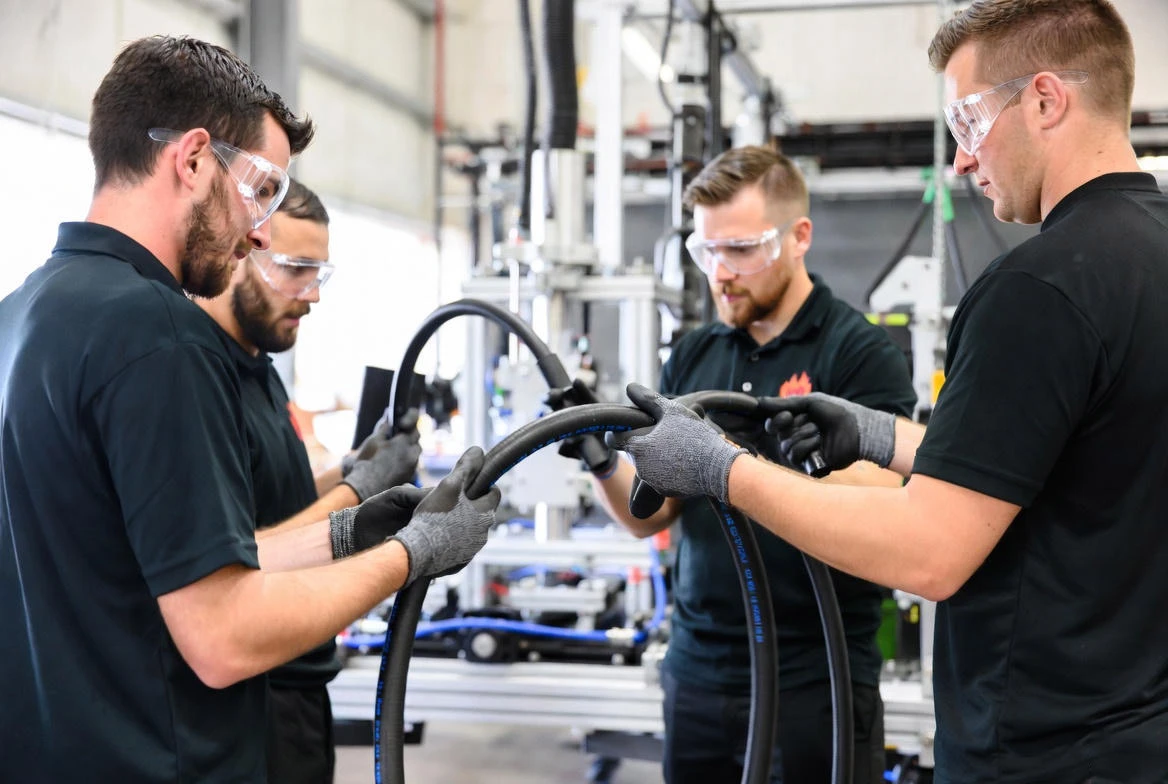
Si alguna vez ha trabajado con mangueras en entornos de alta temperatura, como cerca de motores o líneas industriales con vapor intenso, sabrá lo frustrante que puede ser cuando las mangueras estándar no soportan el calor. Se agrietan, gotean o, lo que es peor, le queman las manos al intentar reparar algo. Ahí es donde entran las mangueras de PTFE con cubierta de silicona: representan un cambio radical para los equipos de mantenimiento que necesitan componentes resistentes y fiables.
He visto esto de primera mano en varias plantas. En un taller con el que trabajé, tenían líneas que transportaban fluidos calientes cerca de hornos, y sus mangueras antiguas fallaban constantemente, provocando paradas e incluso algunos incidentes por quemaduras. Cambiaron a estas de PTFE con camisa de silicona y, de repente, todo funcionó mejor. Menos problemas y un manejo más seguro. Analicemos por qué estas mangueras destacan en entornos de alta temperatura.
¿Qué hace que las mangueras de PTFE con cubierta de silicona destaquen?
En su núcleo se encuentra el PTFE (el material conocido comúnmente como Teflón), que por sí solo es excelente para manejar productos químicos y temperaturas extremas. Las mangueras de PTFE pueden soportar un calor continuo de hasta aproximadamente 260 °C (500 °F), e incluso superior de forma intermitente, sin degradarse. Los datos de los fabricantes muestran que el PTFE estándar funciona de manera fiable entre -70 °C y +260 °C, siendo inerte a la mayoría de los fluidos.
Sin embargo, el PTFE simple puede quedar algo expuesto en entornos agresivos. Por eso, añadir una camisa de silicona lo cambia todo. La capa exterior de silicona actúa como una cubierta de manguera resistente al calor, protegiendo el PTFE interno del contacto directo con llamas, la abrasión y el calor radiante. El caucho de silicona también resiste hasta unos 260 °C de forma continua y proporciona esa capa adicional de protección térmica.
Juntos, crean una manguera que no solo tolera el calor por dentro, sino que está protegida por fuera. Piense en el PTFE como el encargado del trabajo pesado en la transferencia de fluidos, mientras que la silicona protege contra quemaduras y daños externos. El personal de mantenimiento lo agradece porque tocar una línea caliente ya no supone una quemadura instantánea.
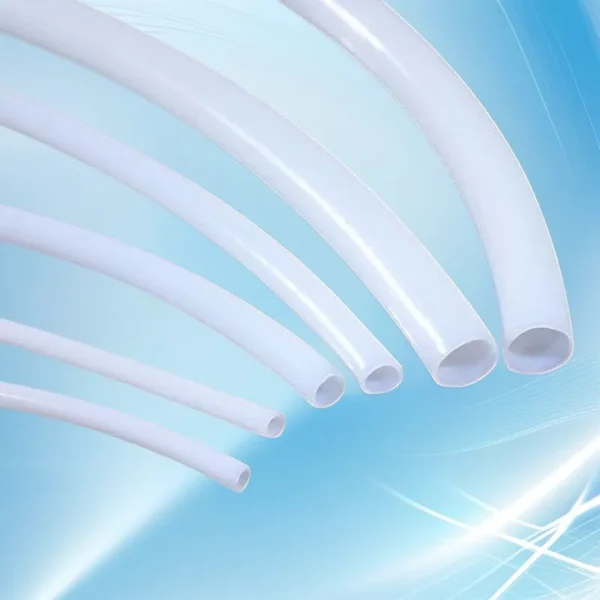
Manguera de teflón PTFE para la industria aeroespacial | Líneas ligeras de combustible y refrigerante
La manguera de teflón PTFE ofrece un rendimiento ligero y resistente a altas temperaturas para líneas de combustible y sistemas de refrigeración aeroespaciales. La versión trenzada de acero inoxidable resiste vibraciones y ciclos térmicos, garantizando la seguridad en condiciones extremas. Cumple con las normas AS/EN9100.
Beneficios clave en entornos de alta temperatura
¿Trabaja en zonas de alta temperatura? Estas mangueras ofrecen múltiples ventajas prácticas:
- Resistencia superior al calor: La combinación permite que la manguera soporte la exposición continua a 260 °C o más, con configuraciones clasificadas para picos breves de temperatura superior. A diferencia de las mangueras de caucho que alcanzan su límite alrededor de los 150 °C y se endurecen o agrietan, estas se mantienen flexibles e intactas.
- Protección contra quemaduras y seguridad: El diseño de PTFE con camisa de silicona hace que la superficie exterior se mantenga más fría al tacto, incluso cuando circulan fluidos calientes por su interior. Se acabaron las quemaduras accidentales durante las inspecciones o reparaciones, lo que supone una gran mejora de seguridad en plantas con mucha actividad.
- Aislamiento térmico: La cubierta reduce la pérdida de calor, manteniendo los fluidos calientes durante más tiempo, lo que ahorra energía en algunas líneas. Además, protege los componentes cercanos del calor radiante.
- Durabilidad frente a la abrasión y las llamas: Las versiones recubiertas de silicona resisten chispas, salpicaduras de material fundido y llamas ocasionales mejor que las mangueras trenzadas descubiertas. En las pruebas, fundas ignífugas similares soportan hasta 500 °F de forma continua y 2200 °F a corto plazo.
Aquí tiene una tabla comparativa rápida para mostrar cómo se comparan con las alternativas comunes:
| Tipo de manguera | Temperatura máxima continua | Protección contra quemaduras | Resistencia química | Flexibilidad | Caso de uso típico |
|---|---|---|---|---|---|
| Caucho estándar | ~150 °C (302 °F) | Pobre | Moderado | Alto | Bajo calor general |
| Silicona pura | ~260 °C (500 °F) | Bien | Bien | Excelente | Flexibilidad para alimentos y farmacéutica |
| PTFE desnudo | ~260 °C (500 °F) | Ninguno | Excelente | Moderado | Transferencia química |
| PTFE cubierto de silicona | ~260 °C (500 °F)+ | Excelente | Excelente | Bien | Industrial de alto calor |
Estas cifras provienen de estándares industriales como SAE y especificaciones del fabricante: los núcleos de PTFE alcanzan esa marca de 260 °C de manera confiable, con la silicona añadiendo el escudo exterior.
Aplicaciones y escenarios del mundo real
En entornos industriales, estas mangueras aparecen con frecuencia donde el calor y la seguridad se combinan. Por ejemplo, en plantas de fabricación con líneas de vapor o sistemas de aceite caliente, la protección térmica mantiene el funcionamiento sin reemplazos frecuentes.
Un escenario que recuerdo (sin mencionar nombres) fue una instalación que manejaba líneas de refrigerante caliente cerca de maquinaria. Las mangueras regulares se calentaban demasiado para manipularlas de forma segura, lo que resultaba en un mantenimiento más lento y riesgos. Después de cambiar a mangueras de PTFE con camisa de silicona, el equipo pudo trabajar más rápido, con menos incidentes. El tiempo de inactividad disminuyó porque las mangueras duraron más bajo el calor constante.
Otro punto común: líneas de combustible o refrigerante aeroespaciales o automotrices, como nuestras Manguera de PTFE opciones en Teflon X. Son ligeras pero resistentes, y la cubierta de silicona añade esa capa antiquemaduras para los equipos de tierra.
O considere el procesamiento químico: el PTFE interior resiste fluidos agresivos, mientras que la cubierta soporta el calor externo del equipo cercano.
Por qué los equipos de mantenimiento las prefieren para necesidades de aislamiento y antiquemaduras
Si usted es un encargado de mantenimiento que busca mejores opciones de aislamiento y resistencia a las quemaduras, esta es la solución. La cubierta de la manguera resistente al calor significa que puede tender líneas más cerca de superficies calientes sin preocuparse tanto. Aísla contra el calor radiante, protegiendo tanto la manguera como sus manos.
En una configuración, un equipo que manejaba líneas de vapor de alta temperatura las utilizó para reemplazar las antiguas que causaban quemaduras durante la instalación. La diferencia fue abismal: instalaciones más seguras y sencillas, y las mangueras resistieron mejor con el tiempo.

Comparación con otras opciones
Las mangueras de silicona estándar son flexibles y resistentes al calor, pero no igualan la inercia química ni los picos de temperatura más altos del PTFE. ¿El caucho? Olvídalo en entornos realmente calurosos: se degrada rápidamente.
El PTFE desnudo con trenzado de acero es excelente para la pureza y la presión, pero sin la silicona, es caliente al tacto y vulnerable externamente. La versión recubierta combina lo mejor: pureza interna y protección externa.
Consejos de instalación y mantenimiento
La instalación de estas mangueras es bastante sencilla, al igual que las trenzadas, pero la silicona facilita su deslizamiento en lugares estrechos. Mantenga las curvas suaves para evitar que el núcleo de PTFE se doble.
Para mayor longevidad, compruebe periódicamente si hay abrasión en la cubierta. Limpie con productos suaves; la silicona se limpia fácilmente.
Si trabaja con alta presión o vacío, utilícelas con los accesorios adecuados.
Preguntas frecuentes
¿Qué temperatura pueden soportar las mangueras de PTFE recubiertas de silicona?
Por lo general, soportan temperaturas continuas de hasta 260 °C (500 °F), donde el núcleo de PTFE proporciona la resistencia principal y la silicona añade protección externa para exposiciones breves a temperaturas más elevadas.
¿Son estas mangueras seguras para prevenir quemaduras?
Sí, la funda de silicona actúa como una barrera térmica, lo que mantiene la superficie exterior mucho más fría y reduce los riesgos de quemaduras durante su manipulación.
¿Cómo se comparan con las fundas cortafuegos convencionales?
Idea similar: muchas fundas ignífugas son de fibra de vidrio recubierta de silicona para brindar protección continua hasta los 500 °F. La cubierta integrada aquí cumple esa función, además de ofrecer la funcionalidad completa de una manguera.
¿Está listo para mejorar sus líneas para un mejor manejo del calor y seguridad? Consulte nuestra gama en Teflon X, incluyendo opciones ligeras Manguera de PTFE perfectas para aplicaciones de alta temperatura.
Póngase en contacto con nosotros en https://teflonx.com/contact-us/ o por correo electrónico Allison.Ye@teflonx.com para obtener un presupuesto o más detalles. Estaremos encantados de ayudarle a configurar su equipo.

Tubos de teflón PTFE personalizados | Manguera anticorrosiva para refrigeración industrial
Los tubos de teflón PTFE personalizados están diseñados para sistemas de refrigeración industrial, ofreciendo inercia química y estabilidad térmica. Las opciones con trenzado metálico mejoran la resistencia a la presión en circuitos de refrigeración líquida para maquinaria y electrónica de potencia. Disponibles en grados que cumplen con la FDA para diversos sectores.
