
 Spanish
  English
  Russian
  French
  German
  Japanese
  Korean
  Portuguese
  Arabic
  Italian
  Dutch
Dutch  Turkish
  Indonesian
  Polish
Si está leyendo esto, es probable que esté sepultado bajo una montaña de encuestas de cumplimiento de proveedores, intentando determinar si su proveedor actual de plásticos está realmente calificado o si solo es muy hábil usando Photoshop en sus certificados ISO. Como oficial de cumplimiento en la industria de dispositivos médicos, su trabajo nunca ha sido tan difícil como lo es ahora.
Entre el pánico masivo por las regulaciones de PFAS y los requisitos de presentación ante la FDA cada vez más estrictos, evaluar a un proveedor de PTFE de grado médico ya no se trata solo de obtener un buen precio por pie de tubería. Se trata de mantener a su empresa fuera del caos regulatorio.
Lo diré directamente: la mayoría de las afirmaciones de "grado médico" que se ven en los sitios web de los proveedores son una farsa total. No existe un sello universal y mágico de la FDA que convierta una materia prima en "grado médico". Los proveedores que exhiben un certificado genérico de hace cinco años están poniendo en riesgo toda su presentación 510(k) o MDR.
En este análisis detallado, le explicaré exactamente qué certificaciones importan realmente este año, qué especificaciones técnicas debe verificar y por qué algunos de los estándares heredados en los que ha confiado están prácticamente obsoletos.
Por qué el "grado médico" suele ser solo un argumento de venta
Aclaremos un hecho polémico de entrada. La FDA no aprueba materias primas. Aprueba dispositivos médicos terminados.
Cuando un representante de ventas le dice que su PTFE está "aprobado por la FDA", o bien no conoce su propia industria o le está engañando intencionadamente. Lo que probablemente quiere decir es que el material cumple con la norma FDA 21 CFR 177.1550 (que es en realidad un estándar de contacto con alimentos) o que poseen un Archivo Maestro de Acceso (MAF) ante la agencia.
El contacto con alimentos es excelente si se fabrican sartenes. Es absolutamente inútil si se fabrica un catéter venoso central. A la sangre no le importa si el material es seguro para un huevo revuelto.
Lo que realmente importa para su cumplimiento normativo es la biocompatibilidad, la trazabilidad y el control del entorno en salas blancas. Necesita un proveedor que comprenda la morfología química del politetrafluoroetileno (PTFE) y cómo interactúa con el tejido humano. Debido a que el PTFE tiene una energía superficial increíblemente baja —que suele rondar los 18 dinas/cm (o mN/m)— resiste la adhesión. Es por eso que es ideal para alambres guía y revestimientos de catéteres. Pero si su proveedor contamina esa superficie durante la fabricación con lubricantes industriales, esa baja energía superficial no le salvará de un fallo catastrófico de citotoxicidad.
El campo de minas regulatorio de PFAS de 2026 (y por qué el PTFE sobrevive)
No podemos hablar de abastecimiento de material médico en 2026 sin abordar el problema evidente: las restricciones globales sobre las sustancias perfluoroalquiladas y polifluoroalquiladas (PFAS).
Es probable que su equipo de ingeniería le haya preguntado si necesita rediseñar toda su línea de productos porque la Agencia Europea de Sustancias y Mezclas Químicas (ECHA) y la EPA de EE. UU. están prohibiendo los "químicos eternos".
He aquí la realidad: mientras se prohíben miles de sustancias químicas PFAS tóxicas de cadena corta, los fluoropolímeros como el PTFE son ampliamente considerados "Polímeros de bajo riesgo" (PLC) cuando se fabrican correctamente. No se degradan en el medio ambiente y no se bioacumulan en el cuerpo humano.
But los organismos reguladores no se limitan a creer en su palabra. Bajo las últimas reglas de información de la Sección 8(a)(7) de la TSCA de la EPA y las propuestas de restricción de la ECHA activas en 2026, los dispositivos médicos a menudo obtienen exenciones críticas, que suelen durar hasta 12 años para los implantes.
Sin embargo, obtener esa exención requiere una prueba irrefutable de la pureza de la cadena de suministro. Su proveedor debe demostrar que no utiliza auxiliares de procesamiento prohibidos (como PFOA o PFOS) durante la polimerización. Si su proveedor actual compra resina barata y sin documentar en el mercado gris, su producto será retenido en la aduana. Punto. Necesita un socio que pueda proporcionar declaraciones completas de materiales hasta el nivel de partes por mil millones.
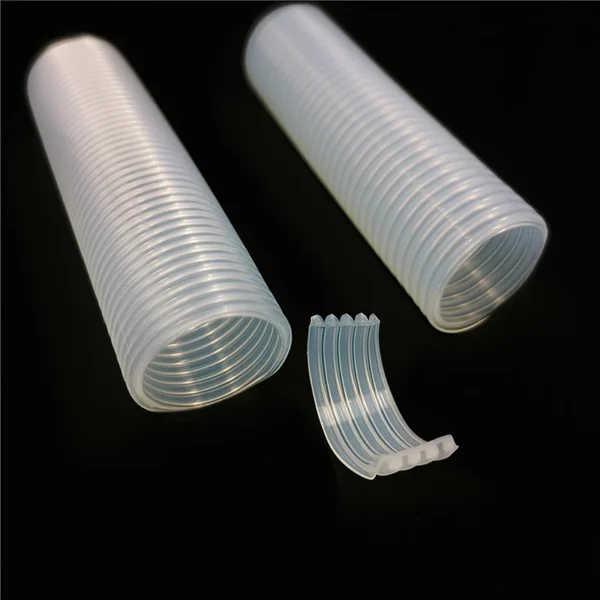
Manguera de PTFE corrugada, interior plana y exterior, resistente a la corrosión para laboratorios
La manguera de PTFE corrugada, resistente a la corrosión, con interior plano y exterior plano proporciona una superficie interior plana para un suministro preciso de fluidos de laboratorio y un exterior corrugado para mayor maniobrabilidad. Esta tubería de PTFE corrugada, con interior plano y exterior plano, ofrece una resistencia superior a ácidos y disolventes en entornos de laboratorio.
Esencial para las instalaciones de investigación, el tubo corrugado interno plano con onda externa mantiene la integridad de la muestra durante las transferencias.
Confíe en este tubo de PTFE corrugado exterior con orificio interior liso para obtener resultados consistentes; su diseño, similar al del tubo corrugado exterior plano interior de PTFE, mejora la eficiencia del laboratorio.
ISO 13485: El requisito mínimo para el suministro de materiales médicos
Veo que muchos equipos de adquisiciones aceptan certificados ISO 9001 como prueba de calidad. Permítanme ser franco: la norma ISO 9001 es excelente si se fabrican bolígrafos. Para componentes de dispositivos médicos, es una broma.
Si está evaluando un Proveedor de PTFE para aplicaciones médicas, ISO 13485 no es un complemento deseable. Es el estándar mínimo absoluto.
¿Por qué? Porque la norma ISO 13485 obliga al fabricante a implementar una gestión de riesgos rigurosa y una trazabilidad de lotes inquebrantable.
Piense en el proceso de extrusión de tubos de PTFE. A diferencia de los plásticos normales que simplemente se funden y se pasan por un troquel, el PTFE no se puede extruir por fusión. Debe extruirse en pasta. Esto implica mezclar polvo fino de PTFE con un auxiliar de extrusión de hidrocarburos (como nafta o Isopar), prensarlo en una palanquilla, extruirlo en frío y luego hornearlo en un horno para vaporizar el lubricante y sinterizar el polímero.
Si la temperatura del horno de un proveedor cae unos pocos grados, quedan hidrocarburos residuales en el tubo. Bajo la norma ISO 9001, simplemente podrían documentar la desviación y enviarlo de todos modos si parece estar bien. Bajo un sistema de calidad ISO 13485, ese lote se pone en cuarentena, se investiga por no conformidad y se destruye porque el riesgo de lixiviación química en el torrente sanguíneo de un paciente es inaceptable.
Cuando se abastece a través de Teflón X, no solo está comprando plástico. Está comprando la documentación rigurosa y la infraestructura ISO 13485 que demuestra que cada centímetro de ese material fue procesado bajo parámetros estrictamente controlados.
ISO 10993 frente a USP Clase VI: La batalla de la biocompatibilidad
Si todavía está enviando cuestionarios a proveedores solicitando "certificados USP Clase VI", está viviendo en el pasado.
La USP (Farmacopea de los Estados Unidos) Clase VI era el estándar de oro para los plásticos médicos en la década de 1990. Consiste en inyectar extractos de material en animales para ver si enferman. Es increíblemente básico.
Hoy en día, la FDA y los organismos notificados europeos quieren ver pruebas alineadas con el marco de la norma ISO 10993. La USP Clase VI se considera en gran medida insuficiente para cualquier cosa que tenga un contacto prolongado con el cuerpo.
Aquí tiene un breve desglose para que sepa exactamente qué exigir a sus proveedores:
| Característica / Norma | USP Clase VI | ISO 10993-1 |
|---|---|---|
| Enfoque principal | Toxicidad general y reacción tisular local | Evaluación integral del riesgo biológico |
| Métodos de prueba | In vivo (pruebas en animales) inyección sistémica, intracutánea, implantación | Combina in vitro (pruebas de laboratorio) e in vivo; favorece enormemente el perfil químico |
| Citotoxicidad (muerte celular) | No estrictamente requerido | Obligatorio (ISO 10993-5) |
| Hemocompatibilidad | No abordado | Obligatorio para dispositivos en contacto con la sangre (ISO 10993-4) |
| Caracterización química | Extracción básica | Análisis profundo de extraíbles y lixiviables (ISO 10993-18) |
| Mejor uso para | Equipos de fabricación farmacéutica, contacto superficial a corto plazo | Implantes, catéteres, dispositivos permanentes, cualquier 510(k) moderno |
Si un proveedor intenta convencerlo de que su certificado USP Clase VI es «suficientemente bueno» para su nuevo catéter cardiovascular, huya. Harán que rechacen su solicitud ante la FDA.
Especificaciones técnicas que determinan el cumplimiento
Como profesional del cumplimiento normativo, es posible que no sea el ingeniero principal, pero debe entender las matemáticas detrás del material. Cuando un proveedor escatima recursos, esto afecta la física del producto, lo que eventualmente se convierte en una pesadilla de cumplimiento.
Veamos una fase crítica de la extrusión de pasta: la Relación de Reducción.
Cuando el PTFE se empuja a través de la matriz de extrusión, las partículas de resina se cizallan y fibrilan violentamente para crear resistencia estructural.
La fórmula para esto es:
Relación de Reducción (RR) = (Db^2 – Dp^2) / (Dd^2 – Dm^2)
Dónde:
Db = Diámetro del tocho
Dp = Diámetro de la clavija
Dd = Diámetro de la matriz
Dm = Diámetro del mandril
Si un proveedor utiliza la resina incorrecta para el RR requerido, la tubería resultante tendrá una porosidad microscópica. No se verá a simple vista. Pero cuando un cirujano inyecta medio de contraste a través de ese catéter a 1,200 PSI, el tubo estallará.
Su equipo de ingeniería calculará los límites de tensión utilizando una fórmula básica de tensión circunferencial:
Tensión circunferencial (σ) = (Presión * Diámetro interno) / (2 * Espesor de la pared)
Si la integridad estructural del PTFE se ve comprometida debido a los deficientes controles del proveedor, el cálculo de la tensión circunferencial falla en el mundo real. Esta es exactamente la razón por la cual cumplimiento normativo está profundamente vinculado al control de procesos. Necesita un socio certificado bajo la norma ISO 13485 que comprenda las matemáticas profundas del procesamiento de fluoropolímeros, no solo a alguien que opere una máquina barata en un almacén sucio.
Otro factor masivo es la lubricidad. Una de las razones principales por las que se utiliza PTFE es porque nada se le adhiere. El coeficiente de fricción es absurdamente bajo.
El cálculo básico es:
Coeficiente de fricción (μ) = Ff / N
(Donde Ff es la fuerza de fricción y N es la fuerza normal).
Para el PTFE puro de grado médico, ese coeficiente debe situarse de manera fiable entre 0,04 y 0,10. Si el proveedor recicla su material de desecho (una enorme señal de alerta en la fabricación médica), la superficie se vuelve más rugosa, el coeficiente se dispara y, de repente, la guía se queda atascada dentro del sistema vascular del paciente.
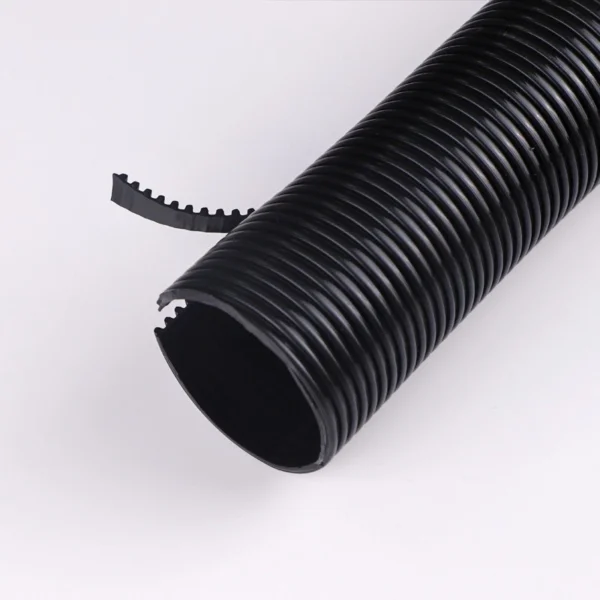
Tubo corrugado flexible de PTFE con interior plano y exterior para procesamiento de alimentos
Nuestro tubo corrugado flexible de PTFE con interior plano y exterior está diseñado con una capa interior lisa para facilitar la limpieza y una capa exterior corrugada para mayor flexibilidad en las líneas de procesamiento de alimentos. Este tubo de PTFE con interior liso y exterior corrugado garantiza la transferencia de comestibles y bebidas sin sustancias tóxicas, conforme a la FDA.
Perfecta para transportar materiales viscosos, la variante de tubo con fuelle de PTFE evita la contaminación por sabor y soporta lavados frecuentes.
Incorpore este tubo corrugado de onda externa plana interna a su configuración; su estructura de tubo corrugado de PTFE interior y exterior plano garantiza higiene y durabilidad.
Caso de éxito: La pesadilla del catéter que casi fue
Quiero compartir una historia sobre lo que sucede cuando se confía en el papeleo incorrecto. Mantendré el nombre de la empresa en el anonimato, pero se trata de un fabricante mediano de dispositivos cardíacos estructurales.
Hace unos años, su equipo de cumplimiento aprobó a un nuevo proveedor de plásticos porque este presentó un flamante certificado USP Clase VI y prometió una reducción de costos del 20 % en tuberías de revestimiento de PTFE. Todo parecía correcto sobre el papel.
Durante sus pruebas de validación finales antes de una presentación ante la FDA, el dispositivo falló la prueba de citotoxicidad ISO 10993-5. El laboratorio informó que las células humanas estaban muriendo en la placa de Petri al ser expuestas a los extractos del catéter. Cundió el pánico. Millones de dólares en I+D quedaron repentinamente congelados.
Se pusieron en contacto con nosotros en un estado de pánico total. Realizamos un análisis de espectroscopia FTIR (infrarroja por transformada de Fourier) en la tubería de la competencia. ¿Adivinen qué encontramos? Trazas de aceite de silicona industrial.
Resultó que el proveedor anterior estaba produciendo tubos médicos en la misma extrusora que utilizaban para fabricar recubrimientos de cables aeroespaciales. No tenían una sala limpia dedicada. Simplemente limpiaron la máquina con un trapo y dieron el trabajo por terminado. La silicona industrial contaminó el lote médico y, como no operaban bajo las estrictas reglas de segregación de la norma ISO 13485, nadie lo detectó hasta que fallaron las pruebas biológicas.
Los trasladamos a nuestras líneas Productos de PTFE dedicadas. En Teflon X, la fabricación médica se lleva a cabo en salas blancas certificadas ISO Clase 7 e ISO Clase 8. No existe cruce alguno con materiales industriales. Reconstruimos sus prototipos utilizando resina de PTFE 100% virgen con trazabilidad completa de lotes. Pasaron sus pruebas de citotoxicidad dos semanas después y obtuvieron la autorización 510(k) sin mayores contratiempos.
Esa es la diferencia entre un socio médico real y un taller de plásticos genérico.
Señales de alerta a buscar durante sus auditorías de proveedores de 2026
Si se está preparando para auditar su cadena de suministro este año, esto es lo que realmente debe buscar. Deje de perder tiempo comprobando si tienen una estación de lavado de ojos en el almacén y comience a observar estos elementos centrales:
- Solicite sus Certificados de Análisis (CoA) de resina: ¿Están comprando resina médica premium y trazable de los principales actores químicos (como Chemours o Daikin), o están comprando polvo sin marca a intermediarios? Si no le dicen de dónde proviene la resina, retírese.
- Inspeccione los procedimientos de vestimenta en la sala blanca: He auditado instalaciones donde los trabajadores vestían trajes de sala blanca pero llevaban su calzado de calle habitual. Eso anula completamente el propósito. Una sala blanca adecuada controla las partículas (como el polvo y las células de la piel) que pueden causar reacciones a cuerpos extraños si se incrustan en un dispositivo médico.
- Verifique los procedimientos de control de cambios: Este es el punto crucial. Si el proveedor decide cambiar la marca del lubricante de extrusión que utiliza, ¿se lo notifica? Un buen proveedor ISO 13485 nunca cambiará una materia prima sin emitir una Notificación de Cambio formal y obtener primero su aprobación de ingeniería.
- Exija ver su estrategia de cumplimiento de PFAS: Pregúnteles cómo están manejando los requisitos de informes de la EPA y la ECHA para 2026. Si le miran con la mirada perdida, usted está en serios problemas.
Preguntas frecuentes: Evaluación de un proveedor de PTFE para dispositivos médicos
Es probable que todavía tenga algunas dudas. Estas son las preguntas más comunes que nos hacen los responsables de cumplimiento cuando intentan desenredar su cadena de suministro.
¿Es necesario esterilizar el PTFE de grado médico antes de que el proveedor lo envíe?
Por lo general, no. Como fabricante de componentes, el proveedor de PTFE de grado médico proporciona la materia prima o el tubo extruido en un estado limpio y no estéril. Normalmente se fabrica en una sala limpia para minimizar la biocarga (bacterias y partículas). El fabricante del dispositivo final es responsable de esterilizar el producto ensamblado —generalmente mediante gas de óxido de etileno (EtO) o autoclave— antes de enviarlo al hospital. Nota: Nunca utilice irradiación gamma en el PTFE, ya que la radiación rompe las cadenas poliméricas y lo vuelve quebradizo.
2. Actualmente compramos PTFE que cumple con la norma FDA 21 CFR 177.1550. ¿Es esto suficiente para un dispositivo médico de Clase II?
Definitivamente no. Como mencioné anteriormente, la norma 177.1550 es un estándar de contacto con alimentos. Demuestra que el material no filtrará sustancias químicas tóxicas en su sopa. No hace absolutamente nada para demostrar la compatibilidad con la sangre o el tejido humano. Necesita material que haya sido evaluado bajo el marco de la norma ISO 10993 para satisfacer a los organismos reguladores modernos.
3. ¿Cómo nos aseguramos de que nuestro proveedor no esté mezclando secretamente PTFE regenerado (reciclado) en nuestros pedidos médicos?
Esta es una práctica terriblemente común en el sector industrial para ahorrar dinero. Para aplicaciones médicas, es completamente inaceptable. Usted se asegura de esto aplicando acuerdos de calidad estrictos que exijan legalmente el uso de resina 100% virgen y auditando su sistema de seguimiento de materiales. Bajo la norma ISO 13485, cada libra de resina entrante debe contabilizarse en el rendimiento del producto saliente. Si las cifras no coinciden, sabrá que ha ocurrido algo turbio.
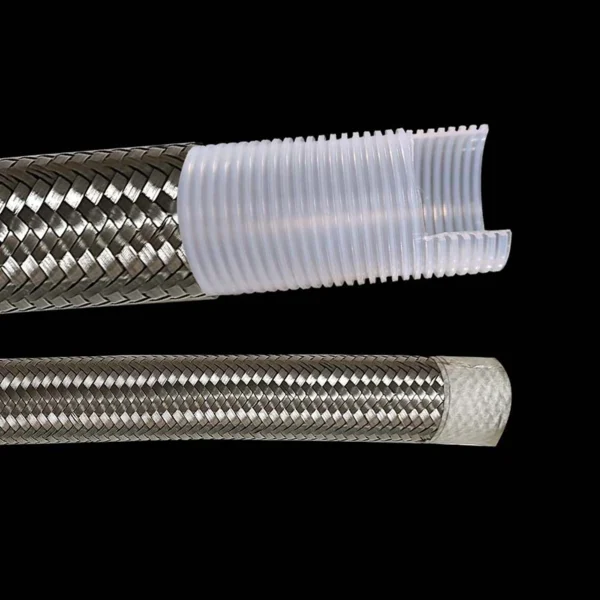
Tubo de fuelle de PTFE: interior plano y exterior corrugado para uso farmacéutico
El tubo de fuelle de PTFE, con diseño interior plano y exterior corrugado, ofrece un rendimiento higiénico y no contaminante para aplicaciones farmacéuticas. Este tubo de PTFE con interior liso y exterior corrugado facilita la transferencia fluida del producto y resiste a agentes desinfectantes agresivos.
Adecuado para entornos estériles, el tubo corrugado de onda externa plana interna mantiene la pureza en los procesos de fabricación de medicamentos, ofreciendo flexibilidad sin comprometer la resistencia.
Opte por este tubo corrugado exterior plano interior de PTFE para mejorar la eficiencia; su estructura tipo fuelle, similar a la del tubo corrugado exterior plano interior de PTFE, garantiza el cumplimiento de los estrictos estándares de la industria.
Deje de adivinar con su cumplimiento normativo
La obtención de componentes críticos no debería sentirse como jugar a la ruleta rusa con la posición regulatoria de su empresa. Los días de aceptar materiales genéricos con documentación deficiente han terminado. La FDA está endureciendo las inspecciones, el MDR europeo es implacable y la legislación sobre PFAS eliminará a los proveedores débiles muy rápidamente.
Usted necesita un socio que hable el lenguaje del cumplimiento normativo, comprenda la profunda ciencia de materiales de los fluoropolímeros y opere bajo un sistema de gestión de calidad infalible.
Si le preocupa una próxima auditoría, o si acaba de descubrir que su proveedor actual está escatimando recursos en secreto, tenemos que hablar. Hemos ayudado a decenas de empresas de dispositivos médicos de primer nivel a sanear su cadena de suministro y asegurar sus líneas de abastecimiento de materiales a largo plazo.
No espere a que un Organismo Notificado señale su solicitud. Anticípese al problema hoy mismo. Póngase en contacto con nuestro equipo en Allison.Ye@teflonx.com o diríjase a nuestro Página de contacto para obtener una respuesta clara sobre sus desafíos de abastecimiento de materiales. Aseguremos su cumplimiento normativo para que finalmente pueda dormir tranquilo por las noches.
