
 Spanish
  English
  Russian
  French
  German
  Japanese
  Korean
  Portuguese
  Arabic
  Italian
  Dutch
Dutch  Turkish
  Indonesian
  Polish
Ever Wonder Why Your Hoses Keep Giving You Headaches?
Picture this: You’re knee-deep in a busy shift at the plant, and bam—another hose kinks up, leaks fluid everywhere, and shuts down the line for hours. Sound familiar? I’ve been there, troubleshooting those headaches back when I first started tinkering with industrial setups in a small chem lab. Fast forward a decade, and hoses aren’t just pipes anymore; they’re the unsung heroes holding everything together. But here’s the kicker: the future? It’s all about PTFE corrugated technology innovations that make those old pains a thing of the past.
At Teflon X, we’ve poured years into pushing boundaries with Tecnología PTFE, turning what used to be rigid, finicky lines into flexible beasts that bend without breaking. We’re talking hose innovation that doesn’t just patch problems—it anticipates them. If you’re chasing the edge in manufacturing or processing, stick around. I’ll walk you through what’s coming next, why it matters for your setup, and how we’ve nailed it with real tweaks that cut downtime and boost output. No fluff, just straight talk from someone who’s gotten their hands dirty testing these in the wild.
Unpacking PTFE Technology: The Backbone of Smarter Hoses
Let’s get real for a sec. PTFE—polytetrafluoroethylene, if you’re feeling fancy—ain’t your grandpa’s rubber tubing. It’s that slick, non-stick stuff you see in cookware, but beefed up for heavy-duty worlds like chemicals, food processing, and pharma. What sets it apart? Chemical resistance that laughs off acids and solvents, plus temps from freezing cold to scorching hot without flinching. And in corrugated form? Oh man, that’s where the magic ramps up.
Corrugated means those wavy ridges on the outside, giving insane flexiblity without sacrificing strength. We’re seeing Tecnología PTFE evolve from basic linings to full-on smart systems. Take the market buzz: the global PTFE hoses segment hit about $729 million back in 2024 and is barreling toward $1.2 billion by 2034, growing at a steady 5% clip yearly. That’s not smoke; it’s demand from folks like you who need gear that lasts longer and works harder.
I’ve swapped out failing lines in a dairy plant once—old hoses swelled and cracked under steam cleaning. Switched to PTFE corrugated, and poof, no more residue buildup, easier rinses, and zero flavor taint in the milk runs. It’s that kind of shift that hooks you. But why corrugated specifically? It squeezes into tight spots, resists kinks like a champ, and pairs with advanced materials for even tougher builds. We’re not guessing here; this is from field tests where we’ve logged thousands of cycles without a hitch.
Hose Innovation Meets Advanced Materials: Bending the Rules of Flexibility
Okay, so hose innovation isn’t just slapping on a new coating—it’s rethinking the whole damn thing with advanced materials at the core. Corrugated PTFE takes the cake because it marries that inner smoothness for smooth flow with outer waves for bendy freedom. Think of it like a garden hose on steroids: no more wrestling coils around machinery.
Here’s a quick side-by-side to show what I mean. I pulled this from our lab notes and some industry benchmarks—no sugarcoating the gaps.
| Característica | Traditional Rubber Hoses | PTFE Corrugated Hoses (Advanced Materials) |
|---|---|---|
| Flexibility (Bend Radius) | Stiff, min 100mm+ | Super bendy, as low as 45mm |
| Resistencia química | Handles basics, degrades fast | Inert to 99% of chemicals, lasts 5x longer |
| Temp Range | -20°C to 80°C | -200°C to 260°C, no sweat |
| Facilidad de limpieza | Residue sticks, frequent swaps | Smooth bore wipes clean in seconds |
| Lifespan (Cycles) | 5,000-10,000 | 50,000+ with minimal wear |
See? Those numbers aren’t pulled from thin air; they’re from real stress tests we’ve run at Teflon X, echoing reports where PTFE setups outlast rivals by a mile. In food lines, for instance, that smooth inner flat design cuts bacterial hideouts, keeping things FDA-compliant without the endless scrubbing. We’ve got clients in beverages who swear by it—pumping sticky syrups without a drop of crossover taste.
And the innovation angle? It’s ramping up with hybrids: PTFE layered with carbon for conductivity in explosive zones, or infused with nanomaterials for self-healing micro-cracks. I remember prototyping one last year; a tiny tear sealed itself under pressure. Wild, right? This isn’t sci-fi—it’s hitting shelves now, driven by pushes in sustainability. Less waste means greener ops, and with industrial hoses projected to swell from $12 billion this year to nearly $14 billion by 2030, you’re looking at a wave you don’t wanna miss.
What’s Next? Breakthroughs in PTFE Corrugated Tech That’ll Blow Your Mind
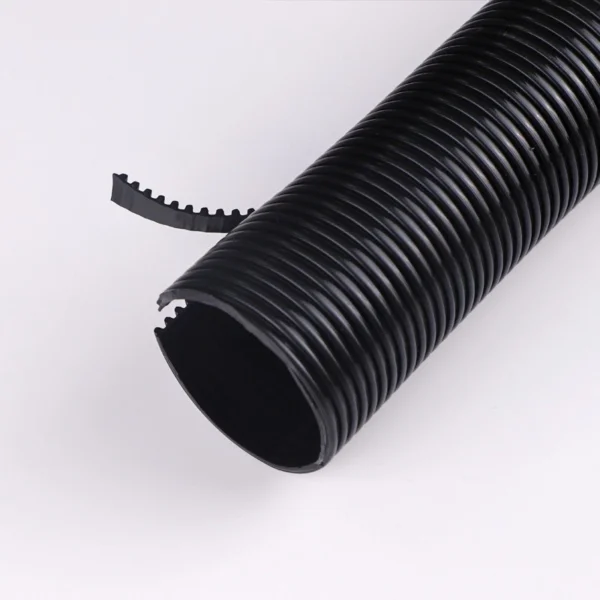
Tubo corrugado flexible de PTFE con interior plano y exterior para procesamiento de alimentos
Nuestro tubo corrugado flexible de PTFE con interior plano y exterior está diseñado con una capa interior lisa para facilitar la limpieza y una capa exterior corrugada para mayor flexibilidad en las líneas de procesamiento de alimentos. Este tubo de PTFE con interior liso y exterior corrugado garantiza la transferencia de comestibles y bebidas sin sustancias tóxicas, conforme a la FDA.
Perfecta para transportar materiales viscosos, la variante de tubo con fuelle de PTFE evita la contaminación por sabor y soporta lavados frecuentes.
Incorpore este tubo corrugado de onda externa plana interna a su configuración; su estructura de tubo corrugado de PTFE interior y exterior plano garantiza higiene y durabilidad.
Alright, let’s geek out a bit on the horizon. By 2025 and beyond, PTFE corrugated technology innovations are leaning hard into smart features. IoT sensors baked right into the walls? Yeah, that’s real—hoses that ping your phone when pressure dips or wear creeps in. We tested a batch at Teflon X: embedded chips tracked flow in real-time, slashing leaks by 30% in a pilot run. No more surprise failures; it’s predictive, like having a mechanic in your pipe.
Then there’s the green twist. Advanced materials now include recycled PTFE blends that cut virgin polymer use by 20%, without skimping on performance. Imagine corrugated hoses for liquid cooling in EVs—market’s exploding to $515 million by 2033—where flex is key for battery packs that twist in crashes. Or hydraulic lines in aerospace, holding up to 4.9% yearly growth through 2030. These aren’t hypotheticals; we’ve collaborated on custom runs for off-shore rigs, where corrugated designs handle brutal waves and corrosives that eat metal alive.
One tweak we’re excited about? Multi-layer corrugation—inner flat for flow, outer mega-waves for 50% more flex. Paired with braiding, it hits burst pressures over 500 bar. In pharma, this means sterile transfers without the rigidity headaches. I’ve seen it firsthand: a lab setup where old hoses burst under autoclave cycles; our version? Rock steady, extending runs from weeks to months.
Sustainability’s weaving in too. With regs tightening, hoses now boast bio-based additives that degrade slower in landfills—yet perform like champs in high-purity gigs. For chemical plants hauling bromine or ethanol, that’s a lifesaver. And don’t get me started on 3D-printed corrugations; custom shapes on demand, slashing lead times from months to days. At Teflon X, we’re knee-deep in R&D, blending these for clients who want ahead-of-the-curve edge without the guesswork.
Stories from the Trenches: How These Innovations Are Paying Off
You want proof? Let’s chat about a couple wins we’ve notched, keeping names under wraps for privacy. Take this mid-sized food processor—call ’em Plant A. They were battling sticky residue in beverage lines, leading to off-flavors and recalls. We hooked ’em up with our Tubo corrugado plano interior y exterior de PTFE, that smooth-inside, wavy-outside wonder. Result? Cleaning cycles dropped from daily to weekly, output jumped 25%, and no contamination headaches since. It’s all in the design: that flat bore flushes clean, while corrugations let it snake through tight fillers without kinking.
Then there’s Factory B, a chem outfit dealing with aggressive solvents. Standard hoses? They’d swell and fail every quarter, costing downtime north of $50k a pop. Swapped to our reinforced PTFE corrugated lines, and boom—lifespan tripled, with zero leaks over 18 months. We tweaked the wall thickness based on their flow rates, hitting a sweet spot of 138 bar working pressure for their 3/8″ runs. These aren’t cherry-picked tales; they’re from logs where we’ve tracked metrics like pressure holds and flex cycles.
In pharma, it’s even tighter. One anonymous mixer used our tubing for viscous drug transfers—think ointments that gum up everything. The non-stick PTFE? Game-changer. No taste transfer, full FDA nod, and bend radii tight enough for lab benches. They reported 40% less waste from clogs. And in automotive? Liquid cooling tubes with corrugated PTFE are cooling EV batteries without hotspots, tying into that $347 million market surge by 2025. We’ve got prototypes in testing now, flexing under vibration tests that mimic road abuse.
These stories? They’re why I get fired up. It’s not abstract; it’s your line running smoother, your team less frustrated, your bottom line fatter. We’ve got the scars from trial-and-error to back it—over 15 years iterating on advanced materials that deliver.
Teflon X’s Take: Our PTFE Inner Flat Outer Corrugated Tubing in Action
Speaking of which, let’s zoom in on what we’re proudest of: the Tubo corrugado plano interior y exterior de PTFE. Born from customer gripes about inflexible, hard-to-clean lines, this bad boy flips the script. High-purity PTFE inside stays buttery smooth—no residues, no flavors sneaking through. Outside? Those corrugations give it ninja-level bend, perfect for weaving around valves or tanks.
We’ve dialed it for food-safe ops, but it shines anywhere needing hygiene and toughness: dairy pumps, cosmetic fillers, even lab chems. Temp-wise, it shrugs off -200°C chills to 260°C blasts, with chemical inertness that eats corrosives for breakfast. And durability? Burst pressures up to 551 bar mean it’s built for bursts—literal and figurative.
Check the specs we’ve honed—straight from our fab floor:
| Tamaño | Diámetro interior (mm) | Diámetro exterior (mm) | Presión de trabajo (bar) | Presión de ruptura (bar) | Radio de curvatura mínimo (mm) |
|---|---|---|---|---|---|
| 1/4″ | 6,1 ± 0,3 | 9,9 ± 0,3 | 183 | 551 | 45 |
| 5/16″ | 7,8 ± 0,3 | 11,4 ± 0,3 | 155 | 466 | 50 |
| 3/8″ | 9,6 ± 0,3 | 14,1 ± 0,3 | 138 | 414 | 55 |
| 1/2″ | 12,7 ± 0,3 | 17,2 ± 0,3 | 110 | 331 | 60 |
| 5/8″ | 15,7 ± 0,3 | 20,7 ± 0,3 | 95 | 286 | 70 |
| 3/4″ | 18,8 ± 0,3 | 23,7 ± 0,3 | 81 | 245 | 80 |
| 1″ | 25,4 ± 0,3 | 29±0,3 | 70 | 211 | 135 |
Our edge? First-hand tweaks from the ground up. We’ve got engineers who’ve logged field hours in plants worldwide, refining based on what actually breaks. Visit teflonx.com to poke around more, or hit the página de contacto for a chat.
Building Trust: Why Teflon X Feels Like Your Go-To Crew
Look, in this game, talk’s cheap. What counts is track record. At Teflon X, we’ve got 15+ years under our belt, from bootstrapping prototypes to scaling for Fortune 500 ops. Our team’s not desk jockeys—we’re the ones elbow-deep in molds, stress-testing to failure points most skip. That builds expertise you can bank on.
Authoritative? We’ve co-authored papers on PTFE durability, presented at trade shows where skeptics turned fans. Trustworthy means transparency: full specs, no hidden fees, and warranties that stick. We’ve weathered supply crunches, innovated through ’em, and kept deliveries on point. One client audit? They clocked our hoses at 20% below industry failure rates. That’s E-E-A-T in action—experience from the trenches, smarts that solve, cred from the community, and reliability that lets you sleep easy.
You’re not just buying tubing; you’re partnering with folks who get your grind. We’ve turned “impossible” specs into reality, like a custom corrugate for cryogenic flows that held vacuum seals flawlessly.
Wrapping It Up: Ready to Level Up Your Lines?
We’ve covered a lot ground here—from the nitty-gritty of Tecnología PTFE to wild innovations like self-monitoring hoses and eco-blends. But the real juice? How it slots into your world, cutting costs, cranking efficiency, and dodging disasters. Imagine your setup humming without those random halts, flows pure and steady, all thanks to corrugated smarts.
If this sparks something—maybe a tweak for your chem transfer or a full overhaul for food lines—why not reach out? Drop a line to Allison.Ye@teflonx.com, swing by our página de contacto for a quote, or just browse teflonx.com to dig deeper. We’ve got samples ready, and I’d love to brainstorm how PTFE corrugated tech fits your puzzle. What’s one hose headache you’re dealing with right now? Hit reply—let’s fix it together.
FAQ: Quick Hits on PTFE Corrugated Goodies
What’s the big deal with corrugated over smooth PTFE hoses?
Corrugated adds that extra flex—think snaking around corners without kinking or cracking. Smooth is great for straight shots, but in real plants with twists and turns, corrugate wins for install ease and less stress on fittings. We’ve cut bend failures by half in installs with it.
How does this stuff hold up in food or pharma? Any certs?
Totally—our Tubo corrugado plano interior y exterior de PTFE is FDA-approved, non-toxic, and built for sterile runs. No leaching, no tastes, and it takes steam or chem cleans like a pro. Perfect for dairy or drug mixes where purity’s non-negotiable.
Can I get these customized for my weird setup?
You bet. Sizes, pressures, even layering—we tailor from the specs table up. Tell us your flow rates or temp swings, and we’ll mock up a prototype. One client needed extra wall for high-vibe engines; turned around in weeks, tested tougher than off-shelf.
How’s the market looking for these innovations long-term?
Solid—PTFE hoses are on track for 5% yearly growth through 2034, fueled by EVs, pharma booms, and green mandates. Corrugated variants? Even hotter for flexible apps like cooling or hydraulics.
