
 French
  English
  Russian
  German
  Japanese
  Korean
  Portuguese
  Arabic
  Italian
  Dutch
Dutch  Turkish
  Indonesian
  Polish
  Spanish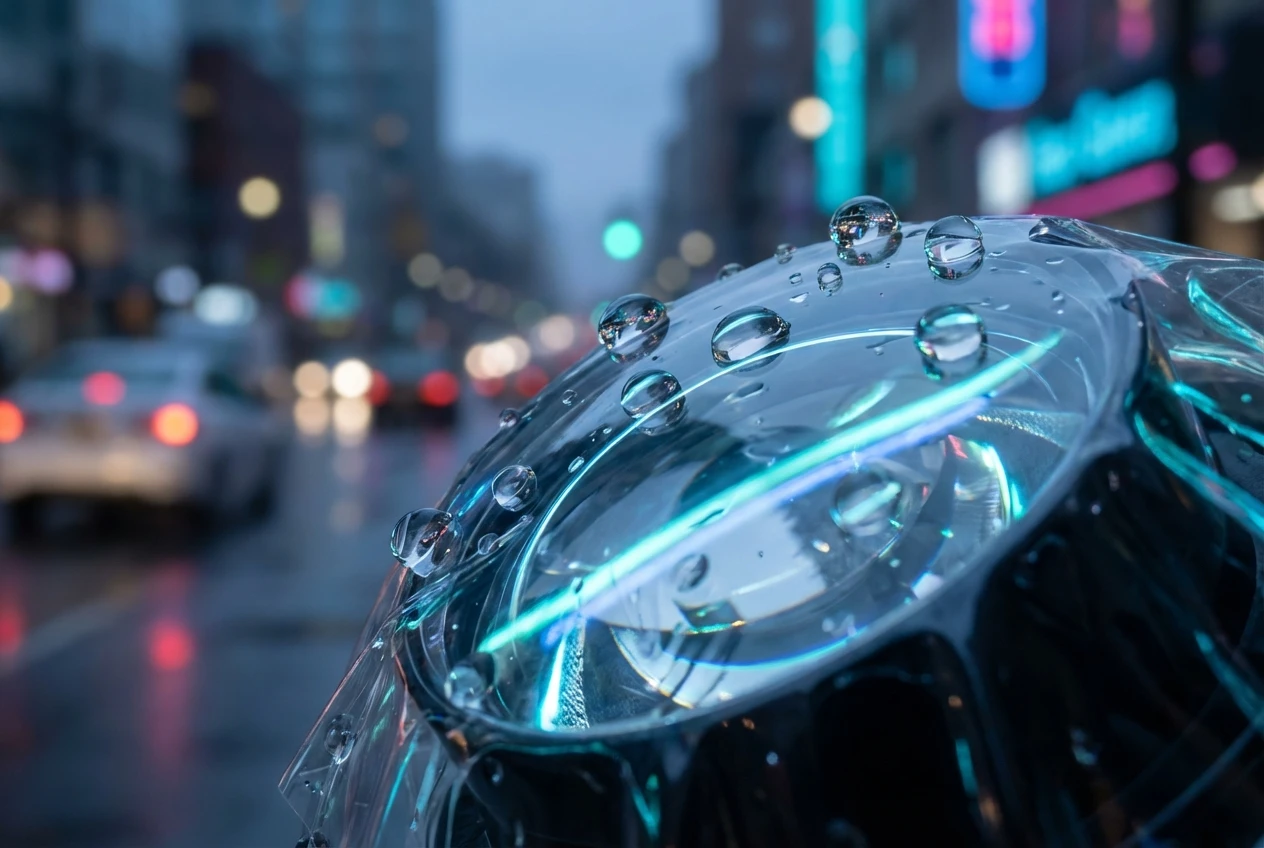
Si vous êtes un ingénieur travaillant sur la technologie des véhicules autonomes, vous connaissez la difficulté. Vous avez conçu une pile de perception qui coûte plus cher qu'une Ferrari, mais une simple flaque de boue suffit à la mettre en échec. C'est ici que film PTFE pour capteurs révolutionne discrètement l'industrie.
Nous ne parlons pas ici de protections d'écran standard. Lorsque nous discutons de film PTFE pour capteurs, nous parlons d'une couche d'infrastructure critique qui se situe entre votre matériel Lidar/Radar onéreux et le monde extérieur chaotique et sale.
À Téflon X, nous avons passé des années à affiner la chimie des fluoropolymères. Nous avons constaté par nous-mêmes que les essuie-glaces mécaniques échouent. Ils rayent les surfaces. Ils se bloquent. Ils gâchent le design épuré des véhicules électriques. L'industrie s'oriente vers la protection passive, et une qualité élevée de film PTFE pour capteurs est le matériau qui mène cette transition.
Pourquoi ? Parce qu'il combine clarté optique, transparence aux radiofréquences et une surface autonettoyante qui semble presque magique. Plongeons dans les raisons pour lesquelles ce matériau surpasse le verre et le polycarbonate selon tous les indicateurs significatifs.
1. La physique de la perte de signal : Pourquoi film PTFE pour capteurs l'emporte
Passons aux aspects techniques un instant. Je promets de rester compréhensible, mais nous devons parler de la constante diélectrique (Dk).
Chaque fois que votre radar 77 GHz émet une onde, celle-ci doit traverser un couvercle de protection (le radôme). Si ce couvercle est fait de plastique ou de verre standard, une partie de ce signal rebondit. C'est ce qu'on appelle le coefficient de réflexion.
Une réflexion élevée signifie que votre capteur est « ébloui » par son propre couvercle. Cela réduit la portée et la précision de la détection d'objets.
Le polycarbonate standard a une Dk d'environ 2,9 à 3,0.
film PTFE pour capteurs, plus précisément le grade que nous concevons chez Teflon X, a une Dk d'environ 2,0 à 2,1.
Cette différence semble minime, mais dans le monde des radars à ondes millimétriques, elle est immense.
La formule de transmission du signal
Comme nous ne pouvons pas utiliser de blocs de code élaborés ici, examinons les calculs en texte brut. Le coefficient de réflexion (appelons-le Gamma) dépend de la permittivité (Er) du matériau.
Gamma = (sqrt(Er) – 1) / (sqrt(Er) + 1)
Analysons les chiffres :
- Pour le polycarbonate (Er = 3,0) :
Gamma = (1,732 – 1) / (1,732 + 1)
Gamma = 0,732 / 2,732
Réflexion = 0,268 (soit environ 26,8 %) - Pour le film PTFE Teflon X (Er = 2,1) :
Gamma = (1,449 – 1) / (1,449 + 1)
Gamma = 0,449 / 2,449
Réflexion = 0,183 (soit environ 18,3 %)
Il s'agit d'une réduction massive de la perte de signal. En passant à film PTFE pour capteurs, vous augmentez efficacement l'efficacité de transmission de votre radar de près de 10 % simplement en changeant le matériau de protection. Cela pourrait faire la différence entre la détection d'un piéton à 150 mètres contre 130 mètres. Dans la conduite autonome, ces 20 mètres sauvent des vies.

Film Téflon à faible frottement pour composants aérospatiaux et automobiles
Le film Téflon Skived excelle dans les applications aérospatiales et automobiles grâce à sa conception légère et sa résistance à la chaleur jusqu'à 260 °C[5]. Sa surface à faible frottement réduit l'usure des systèmes de carburant et des composants du moteur, tandis que ses propriétés diélectriques améliorent les performances dans les environnements haute tension.
Applications:Films isolants pour condensateurs, circuits imprimés et bandes transporteuses.
2. film PTFE pour capteurs et le miracle de l'autonettoyage
Je déteste le terme « autonettoyant » car il implique que le film possède un petit bras robotisé. Ce n'est pas le cas. Il repose simplement sur la physique, plus précisément sur l'hystérésis de l'angle de contact.
Nous avons récemment eu un client, une start-up de robots de livraison, qui était confronté à la rosée matinale. Leurs caméras s'embuaient et les gouttelettes d'eau ne s'écoulaient pas tant que le robot n'atteignait pas 10 mph. Mais le robot ne circule qu'à 5 mph sur les trottoirs. Ils étaient bloqués.
Ils ont appliqué notre film PTFE pour capteurs sur l'objectif.
Voici pourquoi cela a fonctionné :
- Hydrophobie : L'eau déteste le PTFE. L'angle de contact de l'eau (WCA) se situe autour de 110-115 degrés. L'eau perle en sphères quasi parfaites.
- Angle de glissement : C'est l'ingrédient secret. Une goutte d'eau sur du verre peut rester collée jusqu'à ce que vous incliniez le verre de 30 degrés. Sur film PTFE pour capteurs, l'angle de glissement est souvent inférieur à 5 ou 10 degrés.
La gravité effectue le nettoyage pour vous. Même une légère vibration ou une brise légère suffit à faire tomber l'eau. Le robot de livraison n'avait pas besoin d'essuie-glaces ; il avait simplement besoin d'une surface refusant de retenir l'eau.
Tableau de comparaison : les matériaux en un coup d'œil
Consultez cette comparaison. Il est évident que film PTFE pour capteurs est le choix supérieur pour technologie des véhicules autonomes.
| Fonctionnalité | Verre standard | Couvercle en polycarbonate | Film PTFE Teflon X |
|---|---|---|---|
| Constante diélectrique (Dk) | 6,0 – 7,0 (Mauvais pour le radar) | 2.9 – 3.0 | 2,0 – 2,1 (Excellent) |
| Perte de signal | Haut | Modéré | Très bas |
| Angle de contact de l'eau | ~40° (Hydrophile) | ~80° | ~115° (Super hydrophobe) |
| Besoins de nettoyage | Essuie-glaces + Liquide | Revêtements (qui s'usent) | Jet d'air / Gravité |
| Coût de remplacement | $$$ (Lentille entière) | $$ (Pièce moulée) | $ (Film sacrificiel) |
3. L'aspect économique : Pourquoi film PTFE pour capteurs Économise le budget
Parlons d'argent.
Une unité Lidar haut de gamme peut coûter entre $1 000 et $10 000. La lentille frontale est généralement fabriquée en verre poli de précision avec des revêtements antireflet spécialisés.
Si un éclat de pierre frappe ce verre sur l'autoroute, l'unité est hors service. On ne peut pas simplement polir l'impact car cela modifierait la courbure optique. Il faut remplacer l'unité.
Maintenant, imaginez que vous ayez appliqué une couche de film PTFE pour capteurs de Téflon X.
Une pierre frappe. Elle entaille le film.
La solution : Un technicien retire le film à $5 et en applique un nouveau. Le capteur à $5 000 situé en dessous est intact.
Nous voyons des exploitants de flottes adopter film PTFE pour capteurs non seulement pour les avantages optiques, mais purement comme une police d'assurance. C'est une couche sacrificielle. Elle encaisse les chocs pour que votre matériel n'ait pas à le faire.
Cas réel : Le test de transport routier sur autoroute
Nous avons travaillé avec une société de fret (appelons-la Transport Z) testant des camions de niveau 4. Ils effectuent de longs trajets sur des itinéraires riches en insectes. Les insectes morts sont incroyablement acides. S'ils sont laissés sur une lentille en polycarbonate pendant 48 heures, l'acide commence à attaquer le plastique, provoquant une opacité permanente.
Transport Z a commencé à utiliser notre film PTFE pour capteurs. Étant donné que le PTFE est chimiquement inerte (il s'agit essentiellement de la même matière que celle de votre poêle, d'un point de vue chimique), l'acidité des insectes n'a pas pu y adhérer.
Résultat ?
- Temps de nettoyage réduit de 70%. Une simple pulvérisation d'eau a permis de déloger les insectes instantanément.
- Le remplacement des lentilles est tombé à zéro.
- ROI : Ils ont économisé environ $15 000 en remplacements de matériel au cours d'un programme pilote de 6 mois.
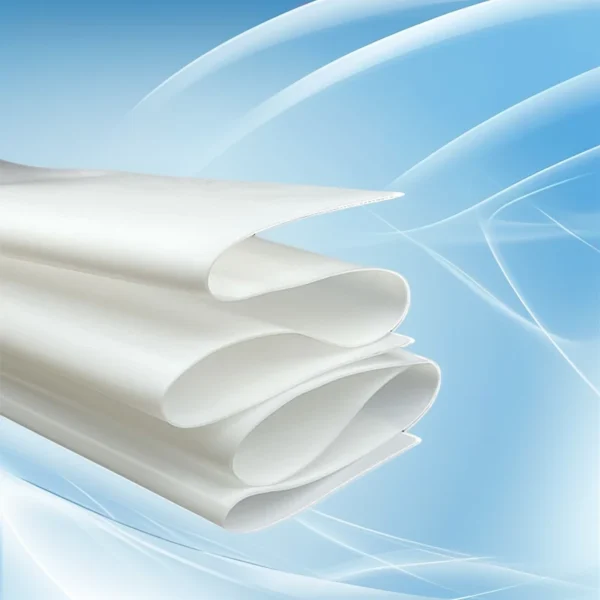
Film PTFE biseauté de qualité médicale pour filtration stérile et revêtements d'implants
Le film PTFE Skived de qualité médicale allie biocompatibilité et filtration microporeuse (taille des pores : 0,02 à 15 µm), répondant ainsi aux normes pharmaceutiques les plus strictes. Ce matériau non toxique est utilisé dans les systèmes d'administration de médicaments et les revêtements d'implants, garantissant inertie chimique et stabilité thermique lors de la stérilisation.
Caractéristiques principales: Résistant aux UV, conforme à la FDA et adaptable aux cycles thermiques rapides.
4. Installation et durabilité de film PTFE pour capteurs
L'une des questions les plus fréquentes que je reçois chez Allison.Ye@teflonx.com est : « Est-ce un cauchemar à appliquer ? »
Écoutez, je ne vais pas vous mentir. Ce n'est pas comme coller un autocollant sur un carnet. Il faut veiller à éviter les bulles d'air, car une bulle d'air peut réfracter un faisceau Lidar.
Cependant, les produits modernes film PTFE pour capteurs sont dotés d'adhésifs avancés en silicone ou en acrylique facilitant le « mouillage ». Cela signifie qu'ils s'étalent avec le temps pour combler les interstices microscopiques.
Le processus d'application :
- Faire le ménage: Propreté chirurgicale absolue du capteur.
- Application humide : Nous recommandons souvent une légère brume de fluide vous permettant de positionner le film.
- Raclette : Expulser le fluide.
- Durcissement : Laissez l'adhésion s'opérer.
Une fois appliqué, il reste en place. Notre film PTFE pour capteurs est certifié pour des températures allant de -40 °C (bonjour, la Norvège) à +150 °C (bonjour, la Vallée de la Mort). Il ne jaunit pas sous l'effet des UV contrairement aux films PVC ou TPU bas de gamme.
Note sur la personnalisation
Nous savons que chaque capteur est unique. Certains sont plats, d'autres en dôme. Chez Téflon X, nous proposons la découpe sur mesure. Nous pouvons fournir film PTFE pour capteurs découpé au millimètre près pour votre appareil, avec des languettes pour une application facilitée.
Ne vous contentez pas d'acheter un rouleau brut pour tenter de le découper aux ciseaux dans votre laboratoire. Ici, la précision est primordiale.
5. L'avenir : film PTFE pour capteurs et le nettoyage à l'état solide
L'industrie s'oriente vers le « tout état solide ». LiDAR à état solide (sans pièces rotatives). Batteries à état solide. Et désormais, le nettoyage à l'état solide.
Le concept repose sur le nettoyage d'optique par ultrasons (ULC). Le cache de l'objectif vibre à des fréquences ultrasoniques pour atomiser l'eau et la poussière.
Voici la particularité : l'ULC fonctionne bien mieux si la surface est déjà hydrophobe. Si l'énergie de surface est élevée (comme le verre ordinaire), l'eau adhère trop fortement pour que les vibrations puissent l'expulser.
En laminant film PTFE pour capteurs sur un système ULC, vous créez la solution autonettoyante ultime. La faible énergie de surface du PTFE permet à l'eau de ne pratiquement pas adhérer, ainsi les vibrations ultrasoniques l'expulsent instantanément avec une consommation d'énergie réduite.
Nous réalisons actuellement des prototypes de cette combinaison avec plusieurs fournisseurs de rang 1. Si vous développez nettoyage du lidar une technologie, vous vous devez de tester ce film.
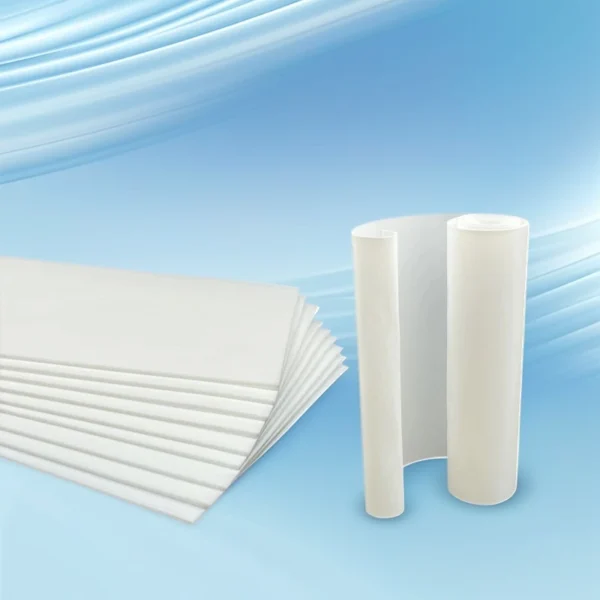
Film PTFE biseauté résistant aux hautes températures pour joints et garnitures industriels
Le film PTFE Skived offre une stabilité chimique et une résistance thermique exceptionnelles (-200 °C à +260 °C), idéal pour les joints industriels des pompes, vannes et équipements de traitement chimique[4]. Son faible coefficient de frottement (0,04) assure la durabilité dans les applications dynamiques, tandis que sa structure microporeuse (porosité 85%) assure la résistance aux liquides et aux particules.
Applications:Joints résistants à la corrosion, revêtements de moteurs aérospatiaux et membranes de filtration de qualité médicale.
Pourquoi Teflon X ?
Nous ne sommes pas un fournisseur de plastique généraliste. Nous nous concentrons sur les fluoropolymères de haute performance. Lorsque vous achetez film PTFE pour capteurs chez nous, vous obtenez :
- Données vérifiées : Nous ne devinons pas les valeurs Dk ; nous les testons.
- Constance : Chaque rouleau est inspecté pour détecter d'éventuels défauts optiques.
- Soutien: De vrais ingénieurs répondent à vos e-mails, pas un chatbot.
Si vous en avez assez du bruit du signal, de la maintenance fréquente et des lentilles rayées, il est temps de mettre à niveau vos matériaux.
FAQ : Questions courantes sur film PTFE pour capteurs
Q1 : Est-ce que film PTFE pour capteurs peut être appliqué sur des surfaces courbes ?
Oui, mais il y a des limites. Le PTFE n'est pas aussi extensible que le TPU (polyuréthane thermoplastique). Pour les dômes extrêmes, nous utilisons un PTFE « biseauté » spécialisé qui offre un peu plus de flexibilité, ou nous recommandons des processus de stratification sous vide. Contactez-nous pour obtenir des directives spécifiques sur la courbure.
Q2 : La couche adhésive affecte-t-elle le signal ?
Excellente question. L'adhésif constitue généralement le point faible des autres films. Notre film PTFE pour capteurs utilise un adhésif à faibles pertes de formulation spéciale, optiquement transparent et dont l'adaptation diélectrique est optimisée pour minimiser les réflexions d'interface.
Q3 : Quelle est la durée de vie du film en extérieur ?
Le PTFE est célèbre pour sa résistance aux UV. Il est pratiquement insensible à la dégradation par les UV. Dans des conditions automobiles réelles, notre film PTFE pour capteurs dure généralement de 3 à 5 ans avant de devoir être remplacé en raison de l'usure physique (abrasion par le sable), et non d'une décomposition chimique.
Q4 : Puis-je obtenir un échantillon de film PTFE pour capteurs pour le tester sur mon radar ?
Absolument. Nous vous y encourageons. Nous savons que vous devez valider les données d'atténuation par vous-même. Contactez-nous via notre Page de contact ou envoyez-moi un e-mail directement à Allison.Ye@teflonx.com.
Prêt à résoudre vos problèmes de protection de capteurs ?
L'avenir de la conduite autonome ne se limite pas à un meilleur code ; il s'agit d'une meilleure intégration du matériel. Ne laissez pas une lentille sale immobiliser votre flotte.
Passez à film PTFE pour capteurs et constatez la différence dans la qualité de vos données et vos cycles de maintenance.
- Voir les produits : Parcourir la catégorie des films PTFE
- Obtenir une assistance technique : Contactez-nous
Gardons ces capteurs propres et vos véhicules en mouvement.
