
 French
  English
  Russian
  German
  Japanese
  Korean
  Portuguese
  Arabic
  Italian
  Dutch
Dutch  Turkish
  Indonesian
  Polish
  Spanish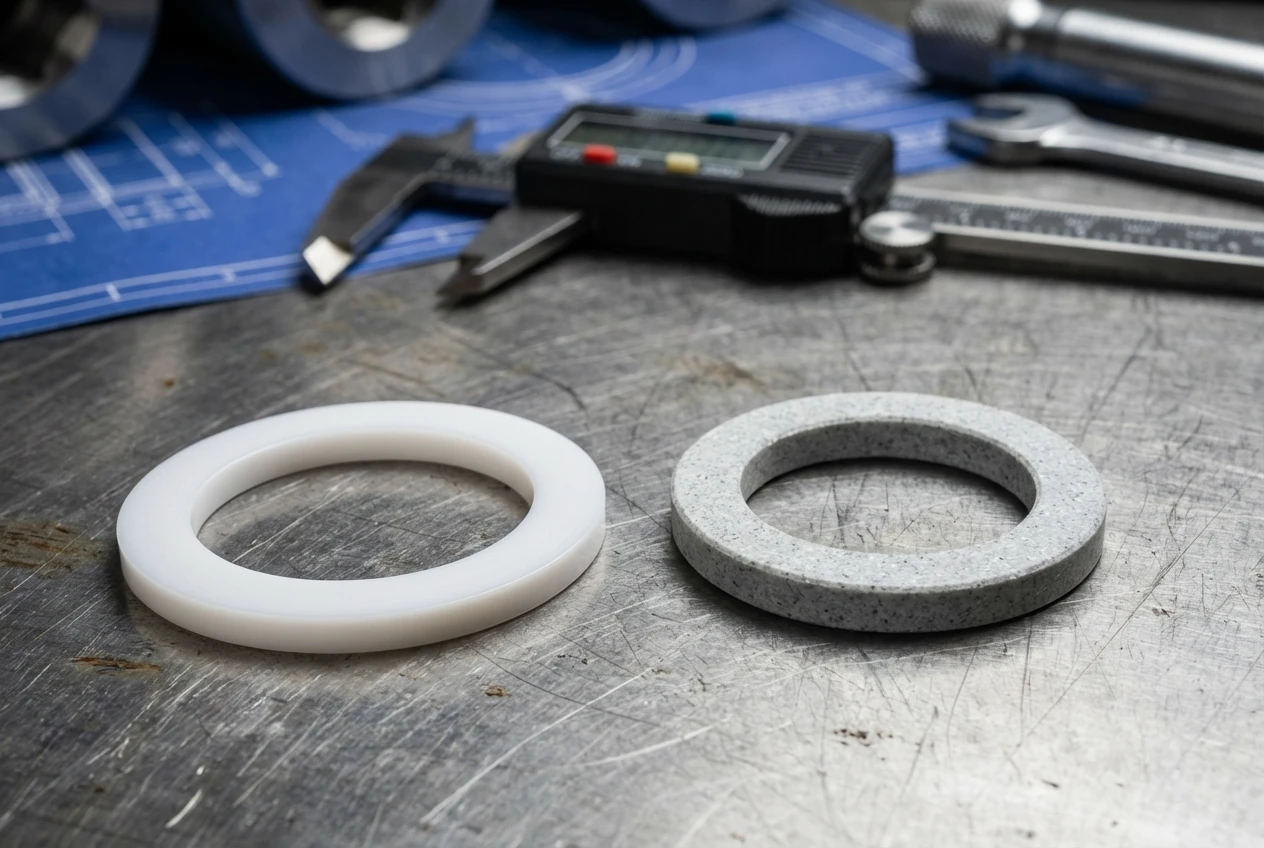
Il n'y a rien de pire que l'appel d'un client signalant qu'un joint a échoué sur le banc d'essai trois jours avant le début de la production. La fuite d'huile est problématique, le ton monte, et il fallait une solution hier.
Si vous êtes ingénieur en matériaux dans le secteur automobile, vous connaissez la chanson. Vous examinez un joint en PTFE standard en vous demandant : « Ai-je commandé le mauvais produit ? »
Le débat entre PTFE vierge vs PTFE chargé n'est pas seulement une question de couleur ou de coût. C'est une question de physique. Il s'agit de la façon dont un matériau se comporte lorsqu'on lui inflige 1 000 psi et qu'on fait tourner un arbre contre lui à 5 000 tr/min.
À Téflon X, nous avons vu suffisamment de joints fondus, extrudés et déchiquetés pour savoir que les spécifications « standard » ne suffisent généralement pas. Aujourd'hui, je vais vous expliquer les différences fondamentales, écarter les arguments marketing et examiner les données techniques réelles. Nous déterminerons quand vous pouvez vous contenter du matériau pur et quand vous devez absolument le renforcer.
La référence : à quoi sert réellement le PTFE vierge ?
Tout d'abord, arrêtons de critiquer le PTFE vierge. C'est un matériau incroyable. Il possède cette propriété glissante et antiadhésive (coefficient de friction d'environ 0,05 à 0,10) qui le rend légendaire.
Chimiquement ? C'est un colosse. Vous pouvez l'exposer à presque tous les fluides automobiles — ATF, liquide de frein, mélanges d'éthanol — et le PTFE vierge reste imperturbable. Il ne gonfle pas, il ne se dissout pas.
Mais voici le problème.
Le PTFE vierge a l'intégrité structurelle d'un fromage à pâte ferme. Je suis sérieux. Il souffre gravement de « fluage à froid » (creep). Si vous boulonnez une bride sur un joint en PTFE vierge, revenez 24 heures plus tard. Les boulons seront desserrés. Pourquoi ? Parce que le matériau s'est écoulé sous la pression.
La faiblesse en chiffres
Examinons la résistance à la traction. Le PTFE vierge standard se situe généralement autour de :
- Résistance à la traction: ~20-30 MPa
- Élongation : ~200-400%
Excellent pour l'étirement, mais médiocre pour maintenir une tolérance serrée sous une lourde charge dynamique. Dans un environnement de moteur ou de transmission, le PTFE pur s'use incroyablement vite en cas de frottement. C'est ce que nous appelons le Taux d'usure spécifique (k).
Pour le PTFE vierge, le taux d'usure est astronomiquement élevé par rapport aux nuances chargées. Nous parlons d'un facteur d'usure d'environ :
k ~ 500 x 10^-10 mm³/Nm
Ce n'est… pas une bonne chose pour un joint d'arbre rotatif.
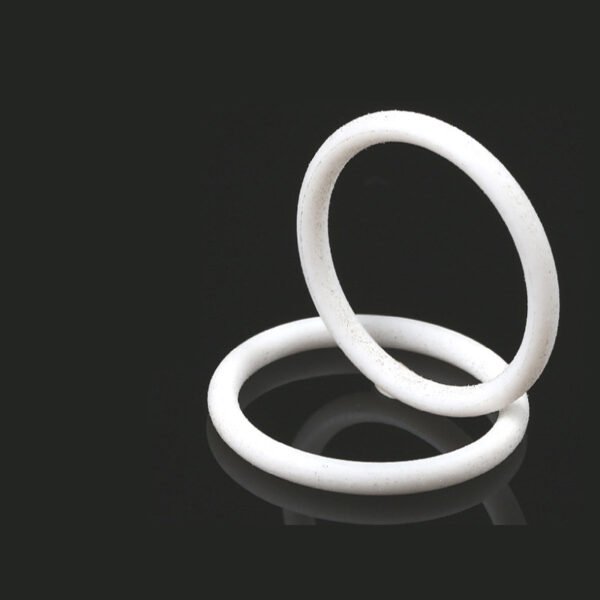
Joint PTFE haute température et joint torique en Téflon | Joint PTFE pour une résistance chimique
Le joint en PTFE haute température et le joint torique en Téflon offrent une excellente étanchéité à des températures extrêmes et en présence de produits chimiques agressifs. Ils résistent à la corrosion et offrent une longue durée de vie. Ils sont parfaits pour les industries chimiques, pharmaceutiques et agroalimentaires nécessitant des joints sûrs et propres.
Le challenger : le PTFE chargé (le « muscle »)
Alors, comment résoudre le problème du « fromage à pâte molle » ? Nous ajoutons des charges. Pensez-y comme à l'ajout d'armatures dans le béton. Vous conservez la résistance chimique (pour l'essentiel), mais vous augmentez considérablement la résistance mécanique.
Lorsque nous parlons de comparaison de joints d'étanchéité automobiles, nous examinons généralement trois principaux candidats pour remplacer le matériau vierge :
- PTFE chargé de verre
- PTFE chargé de carbone/graphite
- PTFE chargé de bronze
L'ajout de ces charges change la donne. Vous réduisez considérablement la déformation sous charge.
La physique de la charge
C'est là que cela devient intéressant. La charge supporte l'effort. Lorsque le joint est pressé contre un arbre, le PTFE agit comme lubrifiant, déposant un mince film de transfert sur le métal, tandis que les particules de verre ou de bronze soutiennent la charge.
Cela augmente la Limite PV (Pression x Vitesse).
- Limite PV du PTFE vierge : ~ 1 800 PSI-fpm
- Limite PV du PTFE chargé : ~ 10 000+ PSI-fpm
C'est une différence colossale. Si votre application implique des vitesses de rotation élevées, le PTFE vierge n'est même pas dans la course.
Analyse approfondie : comparaison des spécificités
Analysons cela en fonction des propriétés qui comptent réellement pour vous lors de la conception d'un joint.
1. Résistance à l'usure et tribologie
C'est généralement la raison #1 pour laquelle les ingénieurs passent à nos Joints en PTFE et des joints fabriqués avec des charges.
La formule du volume d'usure (W) est généralement exprimée sous la forme :
W = k * F * L
Où :
- W = Volume d'usure (mm³)
- k = Taux d'usure spécifique (mm³/Nm)
- F = Force normale (N)
- L = Distance de glissement (m)
Si vous utilisez PTFE chargé de verre, la valeur « k » chute de façon spectaculaire.
- « k » vierge : ~500
- « k » chargé à 25% de verre : ~2 – 5
Il s'agit d'un matériau qui dure 100 fois plus longtemps en contact glissant. Cependant, il y a un bémol. Le verre est abrasif. Si vous utilisez du PTFE chargé de verre sur un arbre tendre (comme l'aluminium non trempé ou l'acier doux), le joint ne s'usera pas, mais l'arbre, lui, s'usera.
J'ai vu des clients détruire un arbre à $500 pour économiser $2 sur un joint. Ne soyez pas ce client.
2. Fluage et déformation
Dans les applications automobiles, les températures fluctuent énormément. De -40 °C en hiver à 150 °C sous le capot. Le PTFE vierge possède un coefficient de dilatation thermique élevé et une faible résistance au fluage.
Déformation sous charge (14 MPa à 23 °C pendant 24 h) :
- Vierge : ~15% de déformation
- Chargé à 25% de verre : ~11% de déformation
- Chargé au bronze : ~7% de déformation
Si vous avez besoin que le joint conserve sa géométrie sous la force de serrage, vous devez opter pour une version chargée.
3. Conductivité thermique
La chaleur détruit les joints. Le PTFE vierge est un isolant thermique. Il emprisonne la chaleur à l'interface d'étanchéité. Cela entraîne la carbonisation de l'huile ou la fusion de la lèvre du joint.
PTFE chargé au carbone est la solution idéale ici. Il évacue la chaleur loin du point de contact.
- Vierge : ~0,25 W/mK
- Chargé au carbone : ~0,60+ W/mK
Si vous avez une application rotative à grande vitesse (comme un joint de vilebrequin), l'évacuation de la chaleur est critique.

Joint en téflon PTFE haute température pour vannes à boisseau sphérique et étanchéité industrielle
Les joints en PTFE Téflon sont conçus pour résister aux températures extrêmes (-200 °C à +260 °C) et rester inertes chimiquement. Ils sont parfaits pour l'étanchéité des vannes à boisseau sphérique haute pression et des systèmes de fluides corrosifs. Ces joints garantissent une étanchéité optimale dans les secteurs du pétrole et du gaz, du traitement chimique et des machines industrielles. Leurs formes personnalisables (plates, à collerette ou annulaires) s'adaptent aux structures mécaniques complexes.
Charges spécifiques : Sélectionner votre solution
D'accord, vous savez donc que vous avez besoin d'une version chargée. Mais laquelle ? Voici l'aide-mémoire que j'utilise chez Téflon X lors de mes consultations.
Fibre de verre (La polyvalente)
Généralement 15% ou 25% de fibre de verre.
- Avantages : Haute résistance à la compression, excellente résistance à l'usure, chimiquement inerte (sauf vis-à-vis de l'acide fluorhydrique).
- Cons : Abrasif pour les surfaces de contact. Peut augmenter la porosité.
- Idéal pour : Joints statiques, sièges de soupape, garnitures où la rotation est lente ou le métal de contact est dur (Rockwell C 45+).
Carbone / Graphite (L'expert du glissement)
- Avantages : Autolubrifiant, faible friction, excellente conductivité thermique. Suffisamment souple pour ne pas endommager les arbres.
- Cons : Plus coûteux que le verre. La couleur noire limite l'inspection visuelle de la propreté dans certaines applications de niche (rare dans l'automobile).
- Idéal pour : Joints d'étanchéité rotatifs à haute vitesse, amortisseurs, segments de piston.
Bronze (Le spécialiste des charges lourdes)
- Avantages : Résistance à la compression la plus élevée, meilleure conductivité thermique.
- Cons : Sensible aux acides/alcalis (baisse de la résistance chimique), coûteux.
- Idéal pour : Systèmes hydrauliques, résistance à l'extrusion, joints de transmission à usage intensif.
Scénario réel : Le cas du carter de transmission « fuyant »
Permettez-moi de vous parler d'un projet que nous avons traité l'année dernière. Appelons le client « AutoCorp ».
Ils concevaient une nouvelle transmission à double embrayage (DCT). Ils avaient spécifié du PTFE vierge pour les joints de piston de commande interne car ils souhaitaient la friction la plus faible possible pour des changements de vitesse rapides.
La défaillance :
Lors de l'essai d'endurance de 100 heures, le passage des vitesses est devenu imprécis. Finalement, la pression a chuté et la transmission est tombée en panne.
Le diagnostic :
Nous avons retiré les joints. Ils ressemblaient à des crêpes. La chaleur générée par l'actionnement rapide, combinée à la pression hydraulique, a provoqué un fluage à froid du PTFE vierge. La lèvre du joint s'est aplatie, entraînant une perte de pression de contact -> fuite.
La solution :
Nous les avons remplacés par une solution personnalisée PTFE chargé de 15 % de verre + 5 % de MoS2.
- Verre a stoppé le fluage à froid.
- MoS2 (Le bisulfure de molybdène) a ramené le coefficient de friction à des niveaux proches de ceux du PTFE vierge.
Résultat ? Test de 500 heures réussi avec zéro fuite. Parfois, il faut combiner et assortir. Si vous avez une application complexe comme celle-ci, envoyez un e-mail à Allison.Ye@teflonx.com. Nous adorons résoudre ces énigmes.
Tableau de comparaison rapide
Je sais que les ingénieurs adorent les tableaux. Voici l'aperçu.
| Propriété | PTFE vierge | PTFE chargé de verre | PTFE chargé carbone | PTFE chargé de bronze |
|---|---|---|---|---|
| Couleur | Blanc | Blanc cassé / Gris | Noir | Brun / Bronze |
| Coefficient de friction | Excellent (0,05) | Bon (0,15) | Excellent (0,10) | Passable (0,20) |
| Résistance à l'usure | Pauvre | Excellent | Très bon | Excellent |
| Usure de l'arbre | Faible | Élevée (Abrasive) | Faible | Faible-Moyen |
| Résistance au fluage | Faible | Moyen | Moyen | Haut |
| Cond. thermique | Faible | Faible | Haut | Très élevé |
| Coût | $ | $$ | $$$ | $$$ |
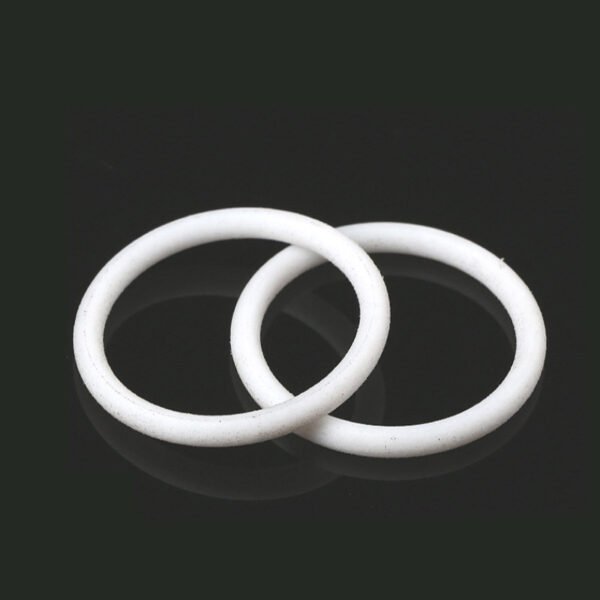
Joint torique en PTFE et Téflon | Fournisseur de joints d'étanchéité haute température en PTFE et Téflon
Les joints toriques et joints en PTFE sont parfaits pour l'étanchéité à haute température dans les environnements chimiques agressifs. Ils offrent une résistance chimique et une durabilité exceptionnelles. Notre joint en PTFE garantit des performances fiables. Idéal pour les applications industrielles et les systèmes fluides.
Coût vs Performance : Le compromis
Écoutez, je comprends. Le service des achats vous met la pression pour réduire les coûts. Le PTFE vierge est moins cher.
Mais calculer le coût sur la base du prix par gramme de matériau est un piège. Vous devez calculer le Coût de la défaillance.
Si un joint en PTFE vierge à 0,50 $ tombe en panne et entraîne une demande de garantie sur une transmission de 2 000 $, le calcul n'est pas rentable.
Cependant, ne compliquez pas inutilement la conception si ce n'est pas nécessaire. Si vous concevez un cache-poussière statique ou un capuchon qui ne subit aucune charge ni aucun frottement, le PTFE vierge est parfait. Il a un aspect propre, il est bon marché et il fonctionne.
Mais pour comparaison de joints d'étanchéité automobiles dans les environnements dynamiques (vilebrequins, arbres à cames, pistons de transmission, jambes de suspension), les grades chargés se rentabilisent en survivant à la période de garantie.
Une note sur l'état de surface
C'est un point que l'on a tendance à oublier. Si vous passez du PTFE vierge au PTFE chargé, il se peut que vous deviez ajuster l'état de surface de votre arbre.
- PTFE vierge : Nécessite un état de surface très lisse (Ra 0,2 – 0,4 µm).
- PTFE chargé : Peut en fait bénéficier d'un état de surface légèrement plus rugueux (Ra 0,4 – 0,8 µm) pour favoriser l'établissement du film de transfert mentionné précédemment.
Si l'arbre est trop lisse, le PTFE chargé pourrait simplement glisser dessus sans déposer le film de transfert, ce qui entraînerait une friction et une chaleur accrues. C'est un équilibre délicat.
En conclusion
Choisir entre PTFE vierge vs PTFE chargé ne consiste pas à savoir quel matériau est le « meilleur ». Il s'agit d'adapter le matériau aux contraintes qu'il va subir.
- Utiliser Vierge pour les emplacements statiques, riches en produits chimiques et à faible charge.
- Utiliser Chargé verre pour une résistance générale à l'usure et des charges lourdes (attention à la dureté de l'arbre !).
- Utiliser Carbone/Bronze pour une chaleur élevée et une pression élevée.
Ne devinez pas. Un mauvais choix entraîne des fuites.
Si vous examinez actuellement un plan CAO en vous demandant quel composé spécifier, ne devinez plus. Nous disposons des données et des matériaux nécessaires. Découvrez notre gamme de Joints en PTFE pour voir ce qui est possible.
Ou bien, passez l'étape de la recherche et demandez-nous directement. Nous pouvons effectuer les calculs PV pour vous.
Contactez-nous ici : https://teflonx.com/contact-us/
E-mail: Allison.Ye@teflonx.com
Assurons-nous que vos joints assurent réellement l'étanchéité.

Joint en PTFE résistant aux produits chimiques pour systèmes et vannes cycloniques
Conçues pour les séparateurs à cyclone et les systèmes de vannes industrielles, les feuilles d'étanchéité en PTFE offrent une résistance inégalée aux acides, aux bases et aux solvants. Leur surface antiadhésive empêche l'accumulation de matière, améliorant ainsi la longévité des équipements. Disponibles en feuilles standard ou sur mesure pour une intégration parfaite.
FAQ : Questions courantes sur les joints en PTFE
Q : Puis-je utiliser du PTFE chargé de verre sur un boîtier en aluminium ?
R : Vous devez être prudent. Le verre est plus dur que l'aluminium. En cas de mouvement relatif (frottement), les fibres de verre contenues dans le PTFE agiront comme du papier de verre et attaqueront l'aluminium. Pour les métaux d'accouplement tendres, nous recommandons généralement un mélange chargé de carbone ou un mélange de polymères spécialisé non abrasif.
Q : Pourquoi mon joint en PTFE vierge s'extrude-t-il dans l'interstice ?
R : C'est un cas classique de « fluage à froid ». Le PTFE vierge présente une faible résistance à la déformation sous charge. Si la pression est élevée et que le jeu est même légèrement trop important, le matériau s'expulsera comme du dentifrice. Vous devez passer à un grade chargé (comme le bronze ou le verre) pour augmenter la résistance à la compression, ou utiliser une bague d'appui.
Q : Le PTFE chargé possède-t-il la même résistance chimique que le PTFE vierge ?
R : En grande partie, oui, mais la charge est le maillon faible. Par exemple, le PTFE vierge est insensible à l'acide fluorhydrique (HF), mais le PTFE chargé de verre ne l'est PAS, car l'acide attaque le verre. Le PTFE chargé de bronze n'est pas compatible avec certains acides oxydants. Vérifiez toujours la compatibilité chimique de la charge, et pas seulement du PTFE.
Q : Quelle est la température maximale pour le PTFE chargé verre ?
R : La matrice est toujours en PTFE, le maximum théorique est donc d'environ 260 °C (500 °F). Cependant, les propriétés mécaniques se dégradent à l'approche de cette limite. Dans les applications automobiles, nous essayons généralement de rester en dessous de 200 °C en service continu afin de préserver l'intégrité et la durée de vie des joints.
