
 French
  English
  Russian
  German
  Japanese
  Korean
  Portuguese
  Arabic
  Italian
  Dutch
Dutch  Turkish
  Indonesian
  Polish
  Spanish
If you’ve ever dealt with seals that just can’t hold up under pressure or wear out way too quick, you might’ve come across glass-filled PTFE gaskets. They’re kinda the workhorse version of regular PTFE – you know, that super-slippery, chemical-resistant stuff often called Teflon. But adding glass fibers changes the game a lot. I’ve been around these materials for years at Teflon X, helping folks in chemical plants and industrial setups find the right fit. So let’s chat about what makes glass-filled PTFE gaskets tick, the good stuff, the not-so-good, and where they really perform best.
People often search for terms like “glass filled teflon gasket” or spot those distinctive blue PTFE gaskets on supplier sites. Yeah, that blue color usually means it’s glass-filled – the filler gives it that hue while boosting performance. If you’re trying to figure out if these are right for your setup, stick around. We’ll break it down without all the stiff technical jargon.
What Are Glass-Filled PTFE Gaskets Anyway?
PTFE on its own is awesome for seals because nothing sticks to it, it laughs at most chemicals, and it handles crazy temperatures from like -450°F up to 500°F. But pure PTFE, or virgin PTFE, has a downside: it creeps under load. Meaning, over time with pressure, it kinda squishes and deforms – that’s called cold flow or creep. Not great if you’re bolting down a flange tight.
That’s where glass filling comes in. Manufacturers mix in glass fibers, usually 15% or 25% by weight. This turns the soft, flexible PTFE into something stiffer and tougher. The result? A material that’s still chemically inert but way better at holding shape under stress.
You’ll often see these as blue PTFE gaskets because the glass filler tints the material. A glass filled teflon gasket might come in sheets that you cut to size, or pre-made envelope gaskets for flanges. At Teflon X, we work with high-quality versions that balance the filling just right for real-world use.
The Pros: Why So Many Folks Swear By Glass-Filled PTFE Gaskets
Okay, let’s get to the good parts first. Adding glass fixes a bunch of virgin PTFE’s weaknesses without killing its core strengths.
First off, creep resistance shoots way up. Pure PTFE can deform a lot under constant load, leading to leaks over time. With 25% glass, creep drops significantly – we’re talking reductions that make seals last years longer in high-pressure spots.
Wear resistance is another big win. Virgin PTFE wears fast if there’s any movement, like in pumps or valves. Glass fibers make it tougher, so a glass filled teflon gasket holds up better against abrasion.
Then there’s compressive strength. Data from material sheets shows 25% glass-filled PTFE hitting around 2200 psi compressive strength, compared to much lower for virgin. That means it can take higher bolt loads without squishing too much.
Dimensional stability improves too – less expansion or contraction with temperature swings. And it still keeps excellent chemical resistance to acids, solvents, pretty much everything except a few extremes like molten alkali metals.
Here’s a quick table to compare some key properties (based on typical data sheets for 25% glass-filled vs virgin PTFE):
| Propriété | Virgin PTFE | 25% Glass-Filled PTFE | Pourquoi c'est important |
|---|---|---|---|
| Compressive Strength (psi) | Around 1000-1500 | ~2200 | Better for high bolt loads, fewer leaks |
| Résistance au fluage | High creep under load | Significantly reduced | Longer seal life in constant pressure apps |
| Résistance à l'usure | Poor in dynamic use | Much improved | Great for valves, pumps with movement |
| Conductivité thermique | Faible | Slightly higher | Helps dissipate heat a bit better |
| Résistance chimique | Excellent | Still excellent (minor trade-offs) | Safe for most aggressive media |
| Plage de température | -450°F to +500°F | Same range | Handles extremes either way |
In my time at Teflon X, I’ve seen these pros save customers big headaches. Like in one chemical processing setup (keeping it anonymous), switching to glass-filled helped cut maintenance stops because the seals weren’t deforming anymore.

Joint en Téflon résistant aux produits chimiques | Joints de vanne et joints cycloniques en PTFE
Les feuilles de joints en PTFE assurent une étanchéité parfaite dans les environnements chimiques agressifs. Ces joints en Téflon sont d'excellents composants d'étanchéité pour les vannes à boisseau sphérique industrielles et les séparateurs à cyclone. Résistants à des températures de -200 °C à +260 °C, nos joints en PTFE comprennent des joints plats, des chemises sur mesure et des variantes de bagues en Téflon. Conforme aux normes FDA, ce matériau garantit une utilisation sûre dans les systèmes à cyclone agroalimentaires et pharmaceutiques.
The Cons: Yeah, There Are Some Trade-Offs
Nothing’s perfect, right? Glass-filled PTFE gaskets have drawbacks you gotta weigh.
The big one is abrasiveness. Those glass fibers can scratch mating surfaces, like stainless steel flanges. Over time, that wear might cause issues if your equipment has soft parts or needs super smooth contact.
It also needs higher seating stress to seal properly – meaning you gotta torque bolts harder than with virgin PTFE. If your flanges are old or fragile, like glass-lined reactors, that could be a problem.
Chemical resistance takes a tiny hit in some cases. Still amazing overall, but extreme alkalis or hydrofluoric acid might attack the glass filler a touch more.
And food or pharma apps? Skip it. Virgin PTFE is often FDA-approved for food contact (under 21 CFR 177.1550), but glass-filled versions aren’t – the filler makes it no-go for direct food stuff.
Also, it’s stiffer, so less forgiving on uneven surfaces. If your flange has warps or damage, pure or expanded PTFE might conform better.
Real-World Applications: Where Glass-Filled PTFE Gaskets Shine
These gaskets aren’t for every job, but in the right spots, they’re gold.
Chemical industry is huge. Reactors, pipes, valves handling acids or solvents – glass filled teflon gaskets resist corrosion and hold tight under pressure. We’ve supplied tons for setups dealing with sulfuric or hydrochloric acid, where virgin would creep too much.
Petrochemical and oil & gas love them for flanges in high-pressure lines. The reduced creep means fewer leaks over time, even with temperature cycles.
Pumps and compressors with dynamic movement benefit from the wear resistance. Think reciprocating parts where rubbing happens.
Valve seats, bearings, anti-extrusion rings – anywhere needing strength plus low friction.
One story from our experience at Teflon X: A client in a refinery had recurring leaks on high-pressure flanges. Switched to our 15% glass-filled sheets, cut to custom gaskets, and issues dropped way down. Held up great over months of hot oil flow.
Another case in a pharma-related plant (not direct food, but clean chemicals) – used blue PTFE gaskets for better stability in agitator seals.
If you’re dealing with glass-lined equipment, sometimes special microsphere-filled versions work better for compressibility, but standard glass-filled is solid for steel flanges.
For top-quality options, check our chemical-resistant Teflon gasket sheet – we stock glass-filled variants that perform reliably.
How Glass-Filled Stacks Up Against Other Filled PTFE
Not all fillers are glass. Carbon-filled adds conductivity and even better wear, but darker color. Bronze for heavy loads, but heavier and less chemical resistant.
Glass is the go-to for balancing cost, strength, and resistance. 15% for milder needs, 25% for tougher.
Compared to virgin: Glass-filled wins on mechanicals, loses a bit on pure inertness and softness.
Here’s another table for quick pros/cons:
| Aspect | Pros of Glass-Filled | Cons of Glass-Filled |
|---|---|---|
| Strength & Stability | Higher compressive, less creep | Needs higher torque |
| Wear | Excellent in moving parts | Abrasive to surfaces |
| Chimique | Near-virgin level | Slight vulnerability in extremes |
| Coût | Affordable upgrade | Bit more than virgin |
| Applications | Industrial, chemical, high load | Not food/pharma direct contact |
Picking the Right One: Some Practical Tips
Think about your media – aggressive chemicals? Glass-filled usually fine.
Load and movement – high pressure or rubbing? Go filled.
Surfaces – soft or polished? Might need virgin to avoid scratches.
Temperature swings – filled handles better.
Filler percentage – start with 15% for most, 25% if really tough.
Always check specs. At Teflon X, we help size and select based on your exact setup.
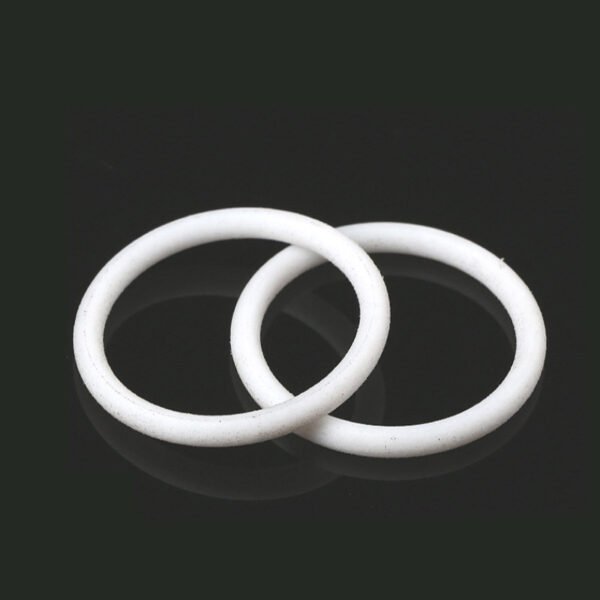
Joint torique en PTFE et Téflon | Fournisseur de joints d'étanchéité haute température en PTFE et Téflon
Les joints toriques et joints en PTFE sont parfaits pour l'étanchéité à haute température dans les environnements chimiques agressifs. Ils offrent une résistance chimique et une durabilité exceptionnelles. Notre joint en PTFE garantit des performances fiables. Idéal pour les applications industrielles et les systèmes fluides.
Common Questions About Glass-Filled PTFE Gaskets (FAQ)
Why are some PTFE gaskets blue? Does that mean they’re glass-filled?
Yeah, most times. The glass fibers give that blue tint. A blue PTFE gasket is usually a sign it’s reinforced for better strength and wear. But always confirm with the supplier – colors can vary.
Can glass-filled PTFE gaskets be used in food processing?
Generally no. Virgin PTFE can be FDA-compliant, but adding glass filler makes it unsuitable for direct food contact. Stick to approved virgin or other materials for that.
When should I choose a glass filled teflon gasket over virgin PTFE?
If creep or wear is killing your seals – like in bolted flanges under constant load or dynamic equipment. Virgin’s better for super pure chemicals or low-load, uneven surfaces.
Do glass-filled gaskets work in high-temperature apps?
Absolutely, same range as virgin: up to around 500°F continuous. The filler even helps with stability there.
How long do these gaskets typically last?
Depends on conditions, but with proper install, years in static apps. We’ve seen them outlast virgin by 2-3x in creeping-prone spots.
Look, if you’re tired of leaks or frequent replacements, glass-filled PTFE gaskets could be the fix. We’ve helped tons of customers at Teflon X sort this out – from custom cuts to full advice.
Need a quote or chat about your specific needs? Shoot an email to Allison.Ye@teflonx.com or head over to our page de contact. We’d love to hear about your setup and suggest the best option, maybe even from our feuilles de joints en téflon résistant aux produits chimiques.
Drop us a line – let’s get your seals sorted proper.
