
 French
  English
  Russian
  German
  Japanese
  Korean
  Portuguese
  Arabic
  Italian
  Dutch
Dutch  Turkish
  Indonesian
  Polish
  Spanish
Man, CES 2026 was somethin’ else this year. I wandered the floors in Vegas just a couple days ago, and everywhere you looked, there were these humanoid robots doin’ stuff that blew my mind. One was foldin’ laundry – yeah, slowly, but still foldin’ it proper. Another poured coffee without spillin’ a drop, and some Chinese bots from companies like Unitree and AgiBot were stealin’ the show with crazy smooth moves. LG had their CLOiD bot rollin’ around on wheels, pickin’ up chores like it was no big deal. Boston Dynamics and Hyundai showed off Atlas doin’ industrial stuff that felt straight out of sci-fi.
The buzz was all about how these bots are gettin’ closer to real-world use – factories, homes, even hospitals. But here’s the thing nobody talks about much on the show floor: all that fancy movement comes with a hidden headache. The wiring inside these things takes a serious beating.
Think about it – a humanoid robot’s joints twist, bend, and flex thousands of times a day. Regular wires just can’t keep up. They crack, fray, or short out way too soon. That’s where PTFE wiring solutions really shine, especially with the CES 2026 robotics trends pushin’ for tougher, more flexible bots.
What Stood Out at CES 2026 for Humanoid Robots
This year’s CES felt like the year humanoids finally stepped into the spotlight. Over 38 companies showed off humanoid tech, and half of ’em were from China – Unitree, AgiBot, EngineAI, you name it. They dominated the Robot Pavilion.
The demos weren’t perfect – some moved kinda sluggish – but the progress was real. One bot dealt cards at blackjack. Another sorted objects autonomously. LG talked up their “Zero Labor Home” idea with CLOiD handlin’ dishes and laundry.
Experts are sayin’ the humanoid robot market is explodin’. MarketsandMarkets projects it growin’ from about $2.92 billion in 2025 to $15.26 billion by 2030, with a wild 39.2% CAGR. ABI Research sees it hittin’ $6.5 billion by the end of the decade. Either way, it’s clear these bots are comin’ fast, and they need wiring that can handle the nonstop action.
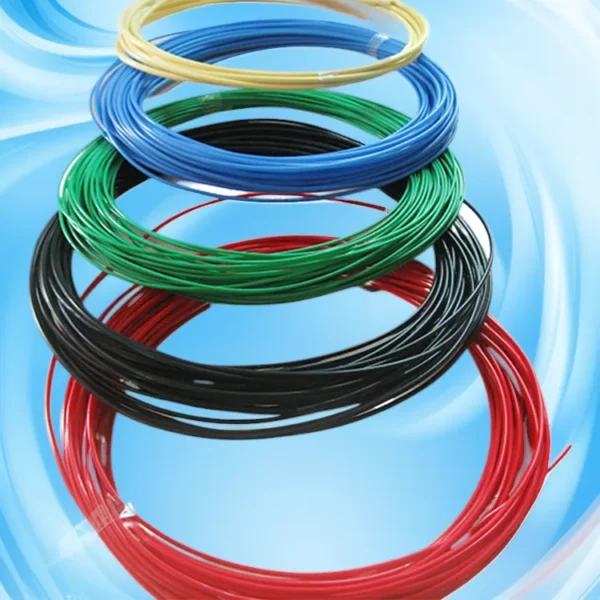
Tube en PTFE à faible frottement | Solutions de transport de matériaux écoénergétiques
Le tube PTFE à faible frottement réduit la consommation d'énergie de 20% dans les systèmes de transport pneumatique et de transfert de fluides. Sa surface ultra-lisse (coefficient de frottement de 0,04) empêche l'accumulation de matière, ce qui est idéal pour la manipulation des poudres et des liquides visqueux. Personnalisable avec des revêtements antistatiques.
The Real Wiring Struggles in Modern Robots
If you’ve ever worked on robotics wiring – or even just peeked inside a robot arm – you know the pain. These machines move in every direction: bending, twisting, stretching. Cables rub against each other, against joints, against whatever’s nearby. Abrasion kicks in quick, and before long, insulation wears through.
Add in vibration from motors, temperature swings from actuators heatin’ up, and sometimes chemicals or oils in industrial setups. Standard PVC or basic silicone wires give up fast. They stiffen, crack, or lose their electrical properties after a few thousand cycles.
In humanoid bots like the ones at CES, it’s worse. Arms swing like humans, legs step and balance, torsos rotate. One report from igus folks talks about how three-dimensional motions make abrasion unpredictable. Cables fail from corkscrew twists or constant flexing in tight spaces.
We’ve seen projects where teams swapped wires every few months – huge downtime, especially in prototypes. That’s why high-flex cables built for millions of cycles are a must now.
Why PTFE Wire Insulation Changes Everything
So what’s the fix? PTFE wire insulation – yeah, that’s the Teflon stuff. It’s not new, but it’s perfect for next-gen robotics.
First off, PTFE handles insane temperatures. It stays solid from around -100°F all the way up to +400°F, sometimes higher dependin’ on the grade. Sources like iPolymer and Chemours confirm it keeps mechanical properties across that range – no meltin’, no brittleness.
Then there’s the low friction. It’s super slippery, so cables slide past each other without grindin’ down. That cuts abrasion big time in tight robot joints.
Chemical resistance is another win. Oils, solvents, cleaners – PTFE shrugs ’em off. Great for factory bots or home ones dealin’ with spills.
Electrically, it’s top-notch. High dielectric strength means thin insulation without risk of breakdown, keepin’ things compact for crammed robot designs.
And flexibility? People think PTFE is stiff, but in proper high-flex builds – like with stranded conductors and special extrusions – it bends like crazy. Companies like Gore and Cicoil make flat high-flex cables with ePTFE that survive millions of cycles.
At Teflon X, we’ve used PTFE in robotics wiring for years, and it just works better than alternatives for high-movement stuff.
Quick Comparison of Common Insulation Materials for Robotics
Here’s a simple table breakin’ down how PTFE stacks up against PVC and silicone for robot use:
| Matériel | Plage de température | Flex Life (Cycles) | Résistance à l'abrasion | Résistance chimique | Coût | Idéal pour |
|---|---|---|---|---|---|---|
| PVC | -20°F to +220°F | Low (10k-100k) | Modéré | Équitable | Faible | Basic static apps |
| Silicone | -60°F to +400°F | Medium (100k-1M) | Bien | Bien | Moyen | High-temp, some flex |
| PTFE (Teflon) | -100°F to +500°F | High (1M-10M+) | Excellent | Outstanding | Plus haut | High-flex, abrasion-heavy robots |
(Data pulled from general industry specs like NASA guidelines and manufacturer sheets – PTFE wins on durability for demanding stuff.)
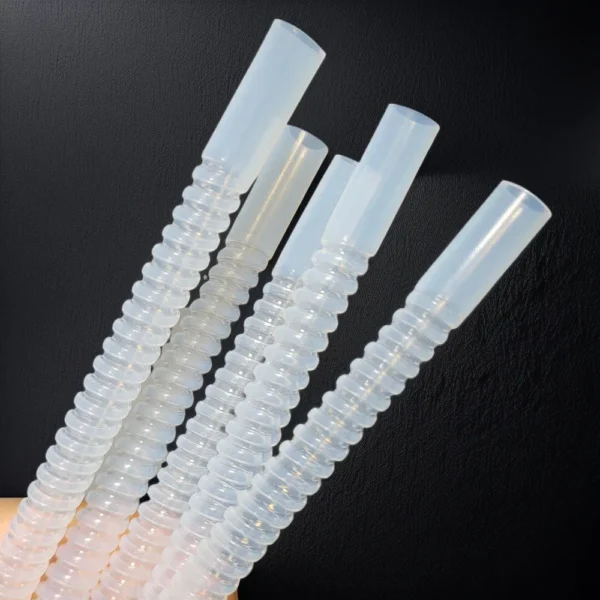
Conduite de carburant en PTFE pour usines de traitement chimique
La conduite de carburant en PTFE, fabriquée sous forme de tuyau ondulé en PTFE, est idéale pour le transfert de fluides corrosifs dans les usines chimiques. Son inertie chimique lui permet de résister aux acides et aux solvants. Sa conception robuste supporte les hautes pressions et les cycles thermiques, garantissant un transfert de fluide fiable et sans frottement.
High-Flex Cables: Made for Robot Movements
High-flex cables take PTFE to the next level. They’re engineered with fine strands, special shielding, and sometimes tapes like spun nylon or low-friction wraps to boost slide and life.
In robotics, you see ’em in torsion setups – cables that twist 360 degrees without kink. igus and BizLink make chains with these, rated for rapid acceleration and tight bends.
At CES demos, bots like Unitree’s G1 or Boston Dynamics’ Atlas rely on this kinda tech behind the scenes. Smooth arm swings? That’s high-flex cables not bindin’ up.
We’ve supplied similar at Teflon X – custom PTFE high-flex bundles that fit narrow joints while carryin’ power and signals reliably.
Some Real-Life Wins with PTFE in Robotics
Can’t name names for confidentiality, but we’ve helped a few interestin’ projects.
One team buildin’ a bipedal humanoid for warehouse work struggled with arm cables failin’ after 50,000 cycles. Regular silicone cracked from constant reachin’ and twistin’. We switched ’em to PTFE-insulated high-flex cables, and they hit over 2 million cycles in tests – huge improvement, less downtime in prototypes.
Another case: a home-assistant bot prototype (kinda like the CES laundry folders). Heat from motors near the torso melted cheaper insulation. PTFE handled the temps no problem, and the low friction stopped wear in the shoulder joints.
A bigger industrial one – think factory line with repetitive bending – saw failures from abrasion against metal frames. Our PTFE solution with extra sliding layers fixed it, and the bot ran months without issues.
These aren’t rare – lots of robotics teams find PTFE wiring solutions save headaches down the line.
How to Choose the Right Robotics Wiring for Your Bot
Pickin’ wires ain’t one-size-fits-all. Start with the movement: how many flex cycles? Torsion or just bending?
Then environment: temps, chemicals, EMI from motors?
For most next-gen humanoids, go PTFE if you want longevity. Pair it with proper cable management – dress packs or energy chains to guide ’em.
Consider size too – thinner PTFE means lighter bots, better battery life.
At Teflon X, we help spec this stuff all the time. We’ve got options from mil-spec PTFE wires to custom high-flex assemblies.
Lookin’ Ahead: CES Trends and Wiring Evolution
CES 2026 showed humanoids are here to stay, and 2027 will probably be even wilder. More speed, more dexterity means even tougher demands on wiring.
Expect more ePTFE and hybrid materials for ultra-flex. Maybe integrated sensors in cables for predictive maintenance.
But bottom line: solid PTFE wiring solutions will stay key for reliable bots.
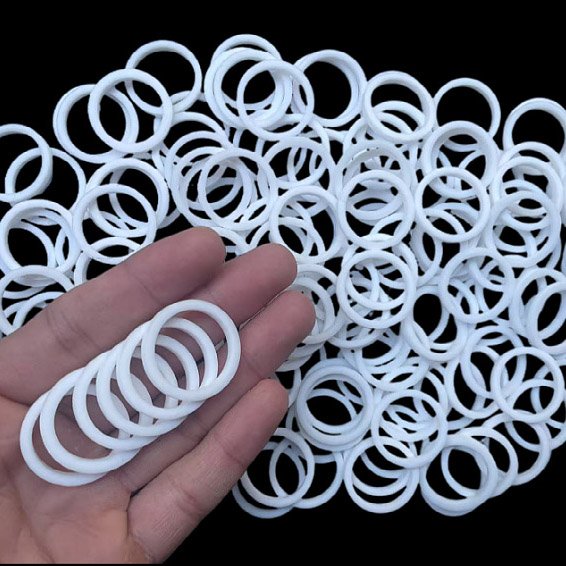
Joint torique en Téflon et joint PTFE de qualité supérieure | Joint en Téflon résistant aux produits chimiques
Le joint torique en Téflon et le joint en PTFE de qualité supérieure offrent une excellente étanchéité pour les applications chimiques et industrielles. Les joints en PTFE et en Téflon sont reconnus pour leur non-réactivité, leur flexibilité et leur fiabilité à long terme. Ils conviennent parfaitement au traitement de l'eau, aux équipements de laboratoire et aux machines de traitement des fluides.
Frequently Asked Questions About PTFE Wiring for Robots
Why pick PTFE wire insulation over silicone for high-movement robots?
PTFE beats silicone on abrasion and friction. Silicone’s flexible and temp-resistant, but it wears faster in constant rubbin’ scenarios. PTFE’s slick surface lasts way longer – often 5-10x the cycles in twisty joints.
How many flex cycles can good high-flex PTFE cables handle?
Depends on design, but quality ones hit 5-10 million cycles easy in robot apps. We’ve seen lab tests over 10 million with proper stranding and jackets.
Is PTFE wiring too stiff for tight humanoid joints?
Nah, not in modern high-flex versions. With fine strands and thin-wall extrusion, it’s plenty bendy. Tighter bend radii than you might think – down to 6x diameter sometimes.
Does PTFE help with EMI in dense robotics wiring?
Yeah, big time. Great dielectric properties and optional shielding make it solid for signal integrity around motors and actuators.
If you’re workin’ on a humanoid project and wrestlin’ with wiring woes, drop us a line at Teflon X. We’ve got the experience to sort PTFE wiring solutions that fit your needs – durable, flexible, ready for those CES-level movements.
Head over to teflonx.com for more specs, or hit up our contact page at https://teflonx.com/contact-us/. You can email Allison.Ye@teflonx.com direct for quotes or samples. Let’s chat about makin’ your bot’s wiring bulletproof.
