
 French
  English
  Russian
  German
  Japanese
  Korean
  Portuguese
  Arabic
  Italian
  Dutch
Dutch  Turkish
  Indonesian
  Polish
  Spanish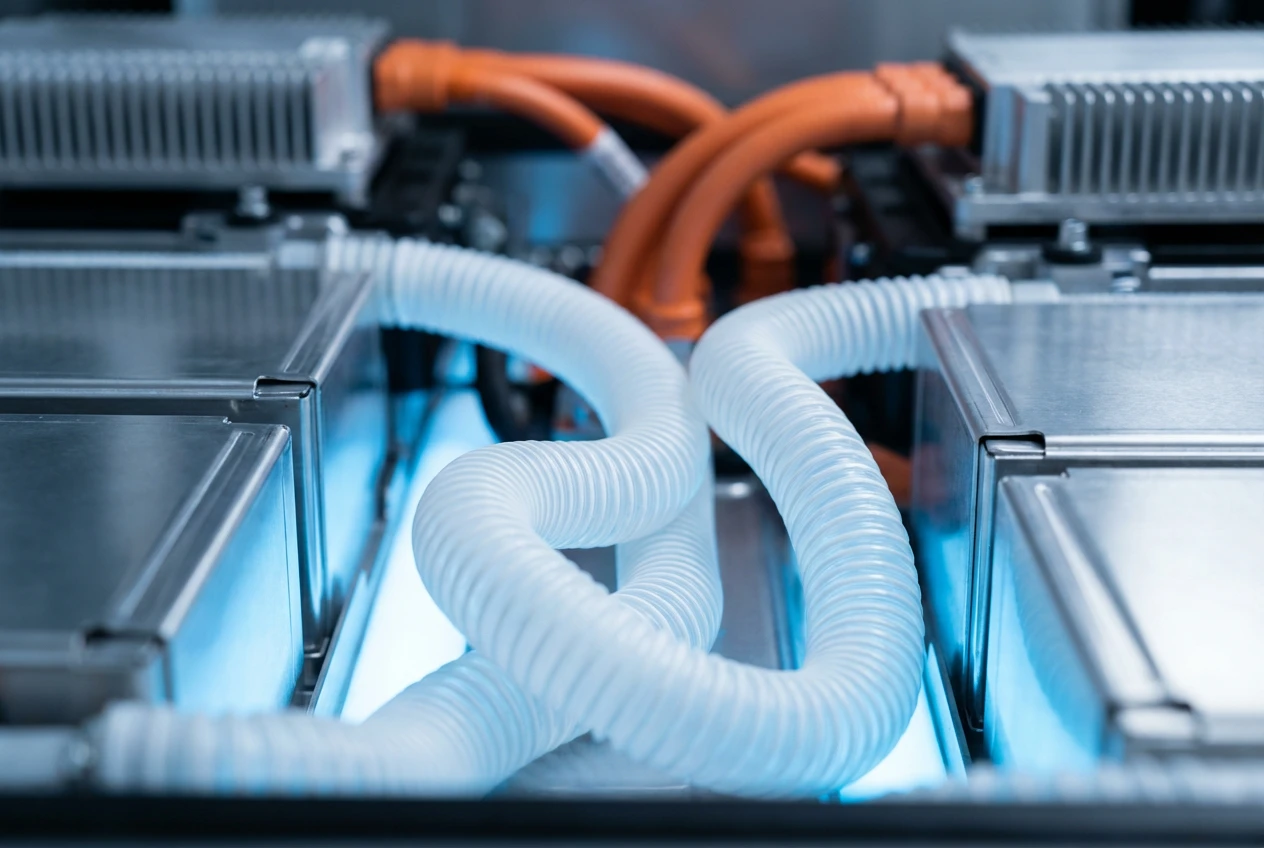
Vous connaissez ce sentiment de malaise lorsque vous entrez dans le laboratoire d'essais et apercevez une flaque de liquide bleu ou rose sous votre prototype de pack batterie ?
Oui. Je suis passé par là. C'est un véritable cauchemar.
Pour les ingénieurs automobiles travaillant à la pointe du développement des véhicules électriques (VE), gestion thermique n'est pas seulement une case à cocher. C'est littéralement ce qui fait la différence entre un véhicule haute performance et un titre sur l'emballement thermique au journal du soir.
Nous nous contentions autrefois du caoutchouc EPDM standard à l'époque des moteurs à combustion interne. Mais soyons honnêtes : installer des tuyaux en caoutchouc lourds et encombrants à l'intérieur d'un pack batterie haute tension devient une pratique obsolète. C'est comme essayer de refroidir un supercalculateur avec de la tuyauterie de jardin.
Aujourd'hui, je vais vous expliquer pourquoi tuyau ondulé en PTFE s'impose discrètement dans le secteur des véhicules électriques, plus précisément pour les lignes de refroidissement. Nous aborderons les débits, les raisons pour lesquelles le Nylon n'est pas toujours la solution, et je partagerai même des calculs mathématiques qui fonctionnent concrètement sur le terrain.
Le problème : pourquoi vos tuyaux actuels pourraient faillir
Écoutez, je comprends. L'EPDM est bon marché. Le PA12 (Nylon) est rigide et prévisible. Mais les véhicules électriques ont changé les règles du jeu.
Dans un pack batterie de véhicule électrique, vous avez affaire à une zone idéale (dite « Boucle d'or »). Les cellules de la batterie doivent rester entre 15 °C et 35 °C pour une durée de vie optimale. Si elles chauffent trop, la dégradation s'accélère. Si elles sont trop froides, l'autonomie s'effondre.
C'est là que les matériaux traditionnels éprouvent des difficultés :
- Problèmes de perméation : Le caoutchouc est perméable. Sur une période de 5 à 10 ans, la vapeur d'eau s'échappe et la concentration du liquide de refroidissement change, ce qui perturbe votre conductivité thermique.
- La guerre de l'espace : Vous vous battez pour chaque millimètre à l'intérieur du châssis. Les tuyaux en caoutchouc nécessitent des parois épaisses et des rayons de courbure massifs. Essayez de courber un tuyau EPDM d'un pouce à 90 degrés dans un espace restreint : bonne chance, il finira par se pincer.
- Attaques chimiques : Les liquides de refroidissement modernes (généralement un mélange eau-glycol 50/50) circulent à haute température. Avec le temps, ils peuvent hydrolyser certains plastiques ou extraire les plastifiants du caoutchouc, ce qui encrasse les micro-canaux de la plaque de refroidissement.
C'est là que Téflon X entre en jeu. Nous avons réalisé il y a quelque temps que l'industrie avait besoin d'un matériau aussi flexible qu'un ressort (slinky) mais capable de résister aux produits chimiques comme un bécher de laboratoire.

Tuyau flexible ondulé en téflon ignifuge et résistant aux intempéries
Conçu pour la durabilité, ce Tuyau ondulé en téflon combine ignifugation et résistance aux intempéries pour résister aux conditions extérieures difficiles. surface antiadhésive empêche l'accumulation d'huile et de débris, ce qui le rend adapté aux systèmes de transfert de fluides automobiles, aérospatiaux et à haute température.
Pourquoi le tuyau ondulé en PTFE est le choix des ingénieurs
Laissons de côté le jargon marketing. Pourquoi les équipementiers (OEM) passent-ils réellement au tuyau ondulé en PTFE?
Tout repose sur la liaison moléculaire. La liaison carbone-fluor est l'une des plus fortes en chimie organique. Elle ignore pratiquement tout ce à quoi elle est exposée.
1. Une plage de température qui compte vraiment
Les véhicules électriques génèrent de la chaleur, mais ils stationnent également dans des parkings glacés en Norvège.
Nos tuyaux en PTFE supportent -70°C à +260°C.
Le PA12 (Nylon) atteint généralement ses limites vers 120 °C avant de commencer à perdre sa résistance mécanique. En cas de point chaud localisé ou de défaillance de la pompe, le Nylon peut se déformer. Le PTFE, lui, ne bronchera pas.
2. Flexibilité vs résistance au pliage
C'est l'argument majeur.
Un tube en PTFE à paroi lisse est rigide. Mais une fois ondulé (spécifiquement avec un profil hélicoïdal ou concentrique), le rayon de courbure diminue considérablement.
Comparaison du rayon de courbure (tuyau de 10 mm de diamètre intérieur) :
| Matériel | Rayon de courbure min. (approx.) | Risque de pliage |
|---|---|---|
| caoutchouc EPDM | 60 – 80 mm | Élevé à des angles serrés |
| PA12 lisse | 80 – 100 mm | Très élevé |
| Teflon X PTFE ondulé | 18 – 25 mm | Proche de zéro |
Tableau 1 : Comparaison du rayon de courbure basée sur les spécifications standards de l'industrie.
Vous pouvez faire serpenter un Tuyau ondulé en PTFE à travers la géométrie complexe d'un module de batterie sans ajouter de contrainte aux connecteurs. C'est un atout majeur pour la longévité.
Résistance chimique : le facteur glycol
Nous avions un client (appelons-le « Entreprise A » pour satisfaire les avocats) qui utilisait un élastomère spécialisé pour ses conduites de refroidissement. Ils ont constaté qu'après 2 000 cycles de choc thermique à l'éthylène glycol, les tuyaux commençaient à gonfler.
Gonflement = débit restreint = batteries plus chaudes.
Le PTFE est chimiquement inerte à tous les fluides automobiles standard.
- Éthylène glycol ? Aucun problème.
- Fluide de transmission automatique (pour le refroidissement direct) ? Facile.
- Fluides diélectriques ? Absolument.
Il ne vieillit pas. Vous pourriez probablement déterrer ces tuyaux dans 50 ans et ils seraient toujours mécaniquement intacts.
La section mathématique : calcul du débit et de la chute de pression
Très bien, sortez votre calculatrice. C'est ici que certains ingénieurs s'inquiètent au sujet des tuyaux annelés.
« Mais l'annelage ne détruit-il pas mon débit ? »
Oui et non. Cela crée des turbulences. Mais la turbulence facilite en réalité le transfert thermique dans certaines parties du système, bien que nous soyons principalement concernés par la chute de pression (Delta P) dans les conduites de transfert.
Comme WordPress n'apprécie pas le code LaTeX complexe, je vais écrire ces formules sous forme de texte afin que vous puissiez les copier-coller dans vos notes d'ingénierie.
Le facteur de friction
Dans un tube lisse, nous utilisons l'équation de Darcy-Weisbach. Pour les tuyaux annelés, le facteur de friction (f) est plus élevé.
Formule de perte de charge :
Delta_P = f * (L / D) * (rho * v^2 / 2)
Où :
- Delta_P: Perte de charge (Pa)
- f: Facteur de friction (sans dimension)
- L: Longueur du tuyau (m)
- D: Diamètre intérieur (m)
- rho: Densité du liquide de refroidissement (kg/m³)
- v: Vitesse d'écoulement (m/s)
L'astuce des ondulations :
Pour tuyau ondulé en PTFE, le facteur de friction n'est pas constant. Il dépend du pas de l'ondulation.
Une règle empirique que nous utilisons chez Téflon X pour le dimensionnement préliminaire : supposez que la perte de charge sera 1,5x à 2,0x plus élevée que celle d'un tube lisse de même diamètre intérieur.
Si vous utilisez un système à haut débit, passez simplement à la taille supérieure. Si vous avez calculé un tube lisse de 10 mm, utilisez un tuyau ondulé de 12 mm ou 14 mm. La pénalité de poids est négligeable car le PTFE est très léger.

Tuyau ondulé en PTFE – Tuyau flexible en Téflon pour haute pression
Les tuyaux ondulés en PTFE, fabriqués en Téflon X de première qualité, offrent une flexibilité et une durabilité supérieures pour les secteurs de l'automobile, de la chimie et des équipements médicaux. Ces tuyaux flexibles ondulés excellent pour l'évacuation des fluides grâce à leur paroi intérieure lisse, réduisant la profondeur des creux pour un nettoyage facile. Renforcé par un fil d'acier spiralé, ce tuyau ondulé en plastique noir résiste aux torsions et aux températures élevées, ce qui le rend idéal pour les dimensions sur mesure et les environnements difficiles.
Étude de cas : Le pack de batteries « Spaghetti Monster »
Je souhaite partager une brève histoire concernant un projet sur lequel nous avons travaillé l'année dernière. Un fabricant de véhicules électriques en démarrage (stade de l'échantillon B) avait une conception de pack de batteries dense. Je veux dire, réellement dense.
Ils ont essayé des tuyaux en caoutchouc préformés. Les seuls coûts d'outillage s'annonçaient à 50 000 $ car chaque coude nécessitait un mandrin unique. De plus, l'installation était un cauchemar ; les ouvriers devaient lubrifier les tuyaux pour les faire glisser dans des interstices étroits, ce qui créait un désordre.
La solution :
Nous les avons fait passer à Téflon X des tuyaux ondulés en PTFE conducteur.
- Aucun coût d'outillage : Comme le tuyau est flexible, ils n'avaient pas besoin de formes préformées. Ils l'ont simplement coupé à la longueur voulue et l'ont acheminé.
- Dissipation statique : Nous avons utilisé un PTFE doublé de carbone (noir) pour empêcher l'accumulation de charges statiques dues au liquide de refroidissement non conducteur à haute vitesse.
- Acheminement : Ils ont acheminé les lignes comme des « spaghettis » (de manière organisée) autour des modules.
Le résultat :
Ils ont économisé 40% sur les coûts de prototypage et ont réduit le poids total du pack de 1,2 kg.
Installation et raccordements : Ne faites pas d'impair
Vous pouvez avoir le meilleur tuyau au monde, mais si le raccord échoue, vous aurez une fuite.
Pour Refroidissement de la batterie de véhicule électrique, nous voyons généralement deux types de raccordements :
- Connecteurs rapides SAE J2044 : Ceux-ci sont standard. Vous avez besoin d'un manchon à l'extrémité du tuyau annelé pour s'adapter à l'embout cannelé. Nous pouvons thermoformer des manchons lisses aux extrémités du tuyau annelé. Cela vous offre une étanchéité parfaite avec les connecteurs automobiles standard.
- Raccords à sertir : Pour des pressions plus élevées (bien que les circuits de refroidissement soient généralement à basse pression, < 2-3 bar), un collier de sertissage en acier inoxydable est préférable.
Conseil de pro : Lors de l'acheminement, assurez-vous de laisser un peu de « mou » pour la dilatation thermique. Même si le PTFE ne se dilate pas beaucoup, le boîtier de batterie en aluminium le fait. Si le tuyau est tendu comme une corde de guitare, quelque chose se brisera lorsque la voiture atteindra 60 °C.
Une opinion controversée : le caoutchouc est-il mort ?
Certains de mes pairs pourraient me critiquer pour cela, mais je pense que pour in-pack le refroidissement, le caoutchouc est en fin de vie.
À l'extérieur du pack ? Bien sûr, utilisez de l'EPDM. C'est bon marché et exposé aux impacts de pierres là où un caoutchouc épais est utile.
Mais à l'intérieur de l'environnement délicat et haute tension d'un module de batterie ? Le caoutchouc est trop risqué. Il dégaze, vieillit et prend trop de place.
Si vous construisez une citadine économique, vous resterez peut-être au caoutchouc. Mais si vous construisez un VE haute performance ou un camion lourd où la fiabilité est essentielle, vous avez besoin de fluoropolymères.
Aide-mémoire des spécifications
Si vous rédigez un plan en ce moment, voici les spécifications que vous devriez rechercher chez un fournisseur de qualité (comme nous) :
- Matériel: Résine PTFE (Téflon) 100% vierge.
- Épaisseur de paroi : Généralement de 0,5 mm à 1,0 mm selon les besoins en pression.
- Profil d'ondulation : Style Oméga (meilleure flexibilité) ou style U (nettoyage plus facile).
- Pression d'éclatement : Doit être au moins 4 fois supérieure à votre pression de service.
- Conductivité : < 10^6 Ohms pour les exigences de conductivité (conforme à la norme SAE J1645).
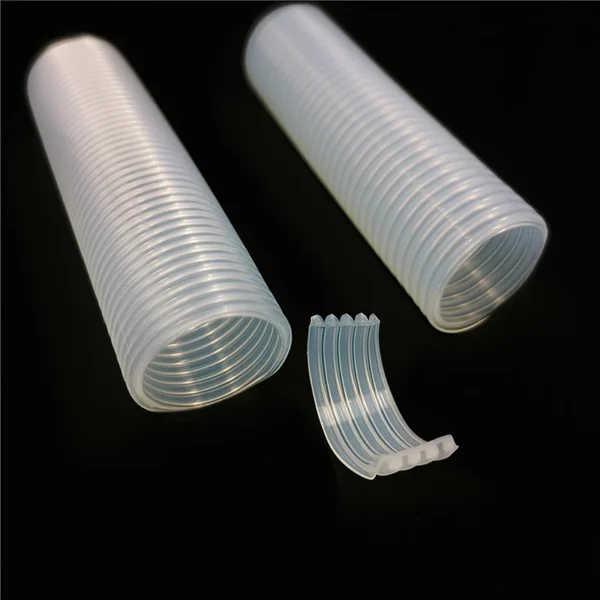
Tuyau ondulé en PTFE résistant à la corrosion, intérieur plat et extérieur, pour laboratoires
Le tuyau PTFE ondulé intérieur plat et extérieur résistant à la corrosion offre une surface intérieure plane pour une distribution précise des fluides de laboratoire et une surface extérieure ondulée pour une meilleure maniabilité. Ce tuyau PTFE ondulé intérieur plat et extérieur offre une résistance supérieure aux acides et aux solvants en laboratoire.
Essentiel pour les installations de recherche, le tube ondulé interne plat externe ondulé maintient l'intégrité de l'échantillon pendant les transferts.
Faites confiance à ce tube PTFE ondulé intérieur lisse et extérieur pour des résultats cohérents ; sa conception, faisant écho au tube ondulé intérieur plat extérieur en PTFE, améliore l'efficacité du laboratoire.
Pourquoi travailler avec Teflon X ?
Nous ne sommes pas seulement un entrepôt expédiant des colis. Nous sommes des ingénieurs.
Lorsque vous envoyez une demande à Allison.Ye@teflonx.com, vous ne recevez pas de réponse d'un bot. Vous obtenez une équipe qui comprend la dynamique des fluides.
Nous testons nos les lignes de refroidissement rigoureusement. Nous testons la pression de chaque lot. Nous ne faisons pas de suppositions.
Foire aux questions (FAQ)
Q1 : Le tuyau annelé en PTFE est-il nettement plus cher que l'EPDM ?
UN: Le coût des matières premières est plus élevé, certes. Cependant, lorsque vous tenez compte de l'élimination des coûts d'outillage pour les formes préformées, de la réduction du nombre de raccords (car vous pouvez cintrer le tuyau au lieu d'utiliser des coudes) et de la durée de vie (aucun remplacement), le Coût Total de Possession est souvent comparable ou inférieur pour les applications complexes de véhicules électriques.
Q2 : Puis-je utiliser des colliers de serrage à vis tangente standard sur des tuyaux annelés ?
UN: Veuillez ne pas le faire. Un collier de serrage à vis sans fin sur une surface ondulée est une source de fuite assurée. Le collier peut écraser les crêtes. Vous avez besoin d'un tuyau avec des « manchettes » (extrémités lisses) si vous souhaitez le serrer, ou utilisez des raccords à sertir spécifiques conçus pour les parois ondulées. Nous les fournissons solutions avec manchons.
Q3 : L'ondulation retient-elle les sédiments ou les boues ?
UN: Dans un circuit de refroidissement correctement entretenu, cela pose rarement problème car la vitesse d'écoulement maintient les particules en suspension. Cependant, le PTFE est anti-adhésif (après tout, c'est du Téflon). Les boues ont beaucoup plus de mal à adhérer aux parois par rapport au caoutchouc, qui peut devenir collant avec le temps.
Prêt à optimiser votre gestion thermique ?
Écoutez, le marché des véhicules électriques évolue rapidement. Vous n'avez pas le temps de gérer des fuites ou des défaillances thermiques six mois après le début de la production.
Il vous faut une solution de conduite de refroidissement flexible, robuste et chimiquement invincible.
Ne laissez pas le refroidissement de votre batterie au hasard.
Découvrez notre gamme complète de Tuyaux ondulés en PTFE ici : https://teflonx.com/product-category/ptfe-corrugated-hoses/
Ou mieux encore, envoyez-nous vos plans CAO ou vos croquis. Nous pouvons vous aider à déterminer le cheminement et les rayons de courbure.
Contactez Teflon X :
- Web : https://teflonx.com/contact-us/
- E-mail: Allison.Ye@teflonx.com
Construisons quelque chose qui ne chauffe pas et dure éternellement.
