
 Indonesian
  English
  Russian
  French
  German
  Japanese
  Korean
  Portuguese
  Arabic
  Italian
  Dutch
Dutch  Turkish
  Polish
  Spanish
Begini, jika Anda bekerja di R&D energi baru, khususnya dengan sel bahan bakar PEM (Proton Exchange Membrane), Anda tahu kesulitannya. Anda membangun tumpukan yang bagus, semuanya terlihat sempurna pada model CAD, lalu Anda melakukan pengujian di bangku tes.
Penurunan tekanan.
Hidrogen bocor. Lagi.
Ini adalah molekul terkecil di alam semesta. Molekul ini ingin keluar. Dan jika Anda masih menggunakan elastomer karet standar atau solusi penyegelan murah, ia akan keluar. Saya telah melihat proyek tertunda berbulan-bulan hanya karena tim teknik meremehkan 'kemampuan penyegelan' gas hidrogen.
Hari ini, saya akan menjelaskan kepada Anda mengapa Gasket PTFE untuk sel bahan bakar hidrogen adalah hampir satu-satunya pilihan serius untuk daya tahan jangka panjang. Kita akan membahas kimia, masalah 'creep' (dan cara memperbaikinya), serta melihat beberapa data nyata. Tanpa omong kosong, hanya yang berhasil.
Musuh yang Tidak Terlihat: Memahami Permeasi Hidrogen
Sebelum kita berbicara tentang Teflon X, kita harus berbicara tentang gas itu sendiri. Hidrogen ($H_2$) itu rumit. Ia tidak hanya bocor melalui celah; ia merembes melalui material itu sendiri.
Bayangkan segel karet seperti spons. Bagi air, ia tampak padat. Bagi hidrogen, karet itu terlihat seperti pagar kawat. Molekul hidrogen hanya meluncur menembus rantai polimer.
Berikut adalah matematika dasar tentang permeasi yang kami gunakan saat menghitung integritas segel. Saya tidak menggunakan kode yang rumit di sini sehingga Anda dapat menyalinnya langsung ke dalam catatan Anda:
Fluks Permeasi (J) = P * (p1 – p2) / d
Dimana:
- J adalah fluks (jumlah gas yang bergerak melaluinya).
- P adalah Koefisien Permeabilitas dari material tersebut.
- p1 – p2 adalah perbedaan tekanan pada segel.
- d adalah ketebalan segel.
Faktor penghambat utama di sini adalah P (Permeabilitas). Sebagian besar elastomer memiliki nilai P yang tinggi untuk hidrogen. Namun, PTFE memiliki struktur molekul yang jauh lebih padat. Ikatan Karbon-Fluorin adalah salah satu yang terkuat dalam kimia organik, dan cara rantai-rantai ini menyatu membuatnya sangat sulit bagi hidrogen untuk menembusnya.
Saat kami menguji ini pada Teflon X, kami secara konsisten melihat bahwa Gasket PTFE menawarkan laju permeasi yang beberapa kali lipat lebih rendah daripada silikon standar atau EPDM.

Gasket PTFE Suhu Tinggi untuk Katup Bola | Solusi Cincin & Lembaran Penyegel Teflon
Gasket PTFE (gasket Teflon) memberikan ketahanan kimia yang luar biasa untuk sistem penyegelan katup bola. Dirancang untuk media korosif bertekanan tinggi, segel PTFE ini mempertahankan integritas pada suhu 260°C. Ideal sebagai gasket katup bola PTFE di pabrik petrokimia. Lembaran gasket PTFE kami memungkinkan pemotongan mati khusus untuk pemisah siklon dan mesin industri. Tersedia sebagai cincin datar, pelapis, atau segel Teflon berbentuk 3D.
Mengapa Tidak Menggunakan Segel Logam Saja?
Pertanyaan bagus. Segel logam sangat baik untuk menghentikan permeasi. Namun, tumpukan sel bahan bakar, terutama dalam aplikasi otomotif, sangat sering bergetar.
Segel logam tidak memiliki fleksibilitas (compliance). Jika tumpukan Anda memuai dan menyusut (siklus termal) atau bergetar, segel logam dapat kehilangan kontak atau merusak pelat bipolar yang sensitif. Anda membutuhkan sesuatu yang dapat sedikit ditekan tetapi tetap memblokir gas layaknya dinding. Itulah keunggulan utama dari PTFE.
Uji Asam: Bertahan di Lingkungan PEM
Di sinilah segalanya menjadi sulit. Di dalam PEM tumpukan sel bahan bakar, kondisinya bukan sekadar gas hidrogen. Melainkan hangat, lembap, dan asam.
Membran memerlukan hidrasi untuk menghantarkan proton. Hal ini menciptakan lingkungan yang panas dan basah. Selain itu, reaksi kimia yang terlibat dapat menciptakan kondisi yang agak asam (pembentukan HF jika terjadi degradasi membran).
Saya pernah melihat segel NBR (Nitril) standar menjadi rapuh dan retak hanya setelah 500 jam dalam perangkat uji karena tidak mampu menangani lingkungan kimia tersebut.
PTFE (Polytetrafluoroethylene) bersifat inert secara kimiawi. Anda bisa merebusnya dalam asam dan itu tidak akan berpengaruh. Dalam konteks segel sel bahan bakar hidrogen, ini berarti:
- Tanpa Peluluhan (Leaching): Segel tidak terurai dan melepaskan ion ke dalam tumpukan. Ini sangat krusial. Jika segel Anda meluluhkan ion, Anda meracuni katalis. Hal itu berarti akhir bagi efisiensi tumpukan.
- Stabilitas Jangka Panjang: Produk ini tidak terdegradasi seiring berjalannya waktu akibat serangan kimia.
Berikut adalah tabel perbandingan singkat yang saya susun berdasarkan properti material umum yang kami amati di laboratorium:
| Fitur | Gasket PTFE | FKM (Viton) | Silikon |
|---|---|---|---|
| Ketahanan Permeasi H2 | Bagus sekali | Sedang | Miskin |
| Kelembaman Kimia | Tinggi (0-14 pH) | Tinggi | Sedang |
| Risiko Peluluhan Ion | Sangat Rendah | Sedang | Tinggi |
| Kompresibilitas | Rendah (kecuali jika diekspansi) | Tinggi | Tinggi |
| Biaya | Sedang | Tinggi | Rendah |
Anda dapat melihat mengapa tim R&D akhirnya beralih ke PTFE. Ini adalah jaring pengaman terhadap keracunan katalis.
Kontroversi “Creep”: Menangani Cold Flow
Baik, saya akan jujur di sini. PTFE murni (virgin) standar memiliki kelemahan. Material ini mengalir (flow).
Jika Anda menjepitnya di bawah beban tinggi, seiring waktu, material tersebut akan bergeser menjauhi tekanan. Hal ini disebut sebagai “cold flow” atau “creep”. Pada sel bahan bakar, jika gasket Anda mengalami creep, Anda akan kehilangan beban baut. Jika beban baut hilang, akan terjadi kebocoran.
Inilah sebabnya mengapa beberapa insinyur takut pada PTFE. Mereka mencobanya sekali pada tahun 1995, bocor setelah seminggu, dan kemudian mereka meninggalkannya.
Namun teknologi telah berubah.
Hadirnya Expanded PTFE (ePTFE) dan Filled Grades
Pada Teflon X, kami jarang merekomendasikan PTFE murni (skived virgin) untuk tumpukan sel bahan bakar kompresi tinggi. Sebaliknya, kami menggunakan versi yang telah dimodifikasi.
Expanded PTFE (ePTFE) adalah terobosan besar. Dengan meregangkan material secara terkendali selama proses manufaktur, kami menciptakan struktur berserat multidireksional.
- Material ini lunak: Ini menyesuaikan dengan pelat bipolar (yang mungkin tidak sepenuhnya rata).
- Ini menghentikan perayapan (creep): Strukturnya terkunci di tempatnya.
- Ini menyegel dengan gaya tekan yang lebih kecil: Anda tidak perlu mengencangkan baut dengan torsi berlebih hingga patah.
Jika Anda mencari spesifikasi produk khusus mengenai hal ini, silakan lihat kategori Gasket PTFE. Kami memiliki tingkatan yang dirancang secara khusus untuk menahan perayapan (creep) sambil mempertahankan penghalang hidrogen yang krusial tersebut.
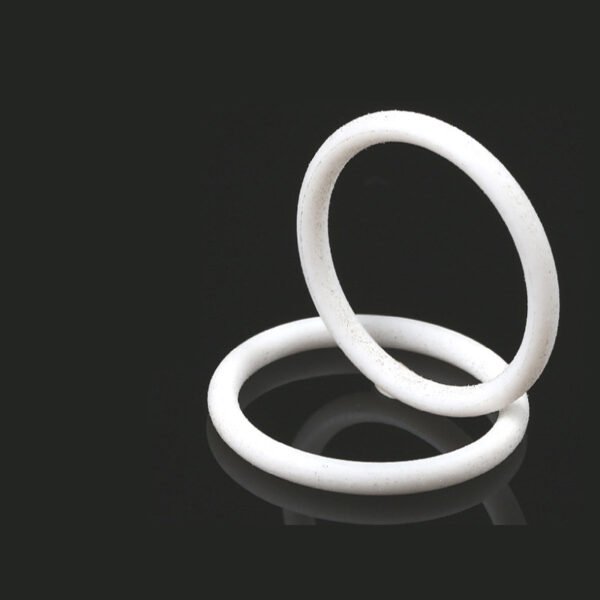
Gasket PTFE Suhu Tinggi & Cincin O Teflon | Segel PTFE untuk Ketahanan Kimia
Gasket PTFE suhu tinggi dan cincin o teflon memberikan penyegelan yang sangat baik pada suhu ekstrem dan bahan kimia agresif. Segel PTFE dan gasket teflon tahan korosi dan memberikan masa pakai yang lama. Sempurna untuk industri kimia, farmasi, dan pengolahan makanan yang membutuhkan segel yang aman dan bersih.
Studi Kasus: Proyek Stack 50kW
Izinkan saya menceritakan proyek yang kami kerjakan tahun lalu. Saya tidak akan menyebutkan nama kliennya, tetapi mereka adalah pemain menengah di pasar drone hidrogen.
Masalah:
Mereka sedang membangun stack 50kW untuk drone angkat berat. Mereka menggunakan segel FKM (fluoroelastomer). Segel tersebut berfungsi dengan baik di laboratorium, namun selama uji terbang, efisiensi stack menurun.
Kami menganalisis MEA (Membrane Electrode Assemblies) bekas dan menemukan jejak kontaminan. FKM mengalami sedikit peluruhan (leaching) di bawah operasi suhu tinggi (80°C), dan getaran menyebabkan kebocoran mikro.
Solusi:
Kami menggantinya dengan potongan kustom Teflon X gasket ePTFE dengan pengisi khusus untuk meningkatkan konduktivitas termal.
Hasil:
- Kontaminasi: Hilang. Tidak ada bukti degradasi segel setelah 1000 jam.
- Efisiensi: Stabil.
- Pemeliharaan: Mereka benar-benar memperpanjang interval servis karena mereka tidak lagi khawatir segel akan mengering atau retak.
Ini bukan sihir; ini hanyalah mencocokkan material yang tepat dengan fisika aplikasi tersebut.
Saran Praktis: Merancang Segel Anda
Jika Anda sedang merancang alur untuk segel sel bahan bakar hidrogen, berikut adalah beberapa tips dari lapangan.
1. Penyelesaian Permukaan Itu Penting
Hidrogen sangat tidak kenal ampun. Jika pelat bipolar Anda memiliki goresan di permukaan penyegelan, hidrogen akan menemukannya.
Dengan ePTFE, Anda memiliki sedikit toleransi karena materialnya mengalir ke dalam ketidaksempurnaan. Namun, targetkan penyelesaian permukaan yang lebih baik dari Ra 3,2 mikrometer (sekitar 125 mikro-inci).
2. Jangan Berlebihan Memberi Torsi
Saya sering melihat ini. Orang-orang dengan kunci pas besar berpikir bahwa "semakin kencang semakin baik."
Dengan PTFE, setelah Anda mencapai tegangan dudukan minimum, mengencangkannya lebih lanjut tidak akan banyak membantu dan mungkin akan membengkokkan pelat Anda. Gunakan kunci torsi. Tolong.
3. Menghitung Tegangan Dudukan
Anda perlu mencapai “Tegangan Dudukan Minimum” (nilai-y dalam kode ASME, meskipun untuk sel bahan bakar kami menggunakan metrik yang sedikit berbeda).
Untuk ePTFE lunak, ini mungkin serendah 15-20 MPa. Pastikan sistem penjepitan Anda dapat memberikannya secara merata. Tumpukan yang tidak seimbang akan menyebabkan… Anda sudah menebaknya, kebocoran.
Mengapa Teflon X?
Ada banyak pemasok gasket di luar sana. Mengapa datang kepada kami?
Karena kami tidak hanya menjual lembaran plastik. Kami memahami perembesan hidrogen data. Kami tahu apa yang dibutuhkan oleh tumpukan sel bahan bakar untuk bertahan selama 5.000 atau 10.000 jam operasi.
Tim kami di Teflon X bekerja secara langsung dengan file CAD Anda untuk memotong prototipe yang pas dengan sempurna. Kami dapat menangani toleransi ketat yang diperlukan untuk tumpukan yang kompak.
Selain itu, kami cepat. Litbang bergerak dengan cepat. Anda tidak bisa menunggu enam minggu untuk mendapatkan prototipe segel.

Gasket O-Ring Teflon | Gasket PTFE & Penyegel Teflon untuk Penggunaan Industri
Gasket o-ring Teflon dan gasket PTFE banyak digunakan untuk penyegelan industri. Solusi penyegelan Teflon ini menjamin pengoperasian antibocor dan toleransi suhu tinggi. Segel PTFE dan gasket Teflon cocok untuk pompa, katup, dan jaringan pipa sensitif di sektor yang menuntut.
FAQ: Pertanyaan Umum Mengenai gasket PTFE untuk sel bahan bakar hidrogen
P1: Apakah gasket PTFE dapat menahan suhu sel bahan bakar PEM suhu tinggi?
A: Tentu saja. PTFE stabil hingga suhu 260°C (500°F). Sebagian besar sel HT-PEM beroperasi di kisaran suhu 160°C hingga 180°C. PTFE mampu menangani kondisi ini dengan mudah tanpa mengalami degradasi, tidak seperti banyak elastomer yang mulai mengalami kerusakan pada suhu tersebut.
Q2: Apakah ePTFE dapat digunakan kembali jika saya membongkar tumpukan (stack) tersebut?
A: Umumnya tidak. Begitu Anda menekan ePTFE, material tersebut akan menyesuaikan dengan permukaan dan kehilangan sebagian ketebalannya secara permanen. Jika Anda membuka rangkaian untuk pemeliharaan, Anda harus selalu mengganti Gasket PTFE untuk memastikan penyegelan yang andal. Langkah pencegahan yang murah, bukan?
Q3: Bagaimana perbandingan PTFE dengan segel grafit untuk hidrogen?
A: Grafit tahan terhadap panas tinggi, tetapi bersifat rapuh dan konduktif. Dalam sel bahan bakar, segel sering kali harus berfungsi sebagai isolator listrik untuk mencegah terjadinya hubungan arus pendek antar pelat. PTFE adalah isolator listrik yang sangat baik. Grafit memerlukan langkah-langkah tambahan untuk isolasi, sehingga membuat desainnya menjadi lebih rumit.
Siap untuk Menghentikan Kebocoran?
Membangun sel bahan bakar sudah cukup sulit tanpa harus mengkhawatirkan apakah gasket Anda akan gagal. Anda membutuhkan mitra yang memahami sains dan dapat menyediakan suku cadang tersebut.
Jika Anda lelah dengan penurunan tekanan dan ingin mendiskusikan bagaimana Teflon X dapat mengamankan stack Anda, mari kita bicara.
Anda dapat melihat berbagai solusi kami di situs web kami: https://teflonx.com/
Atau, jika Anda memiliki gambar teknis tertentu atau kendala teknis yang perlu diselesaikan segera, kirimkan email langsung ke Allison.Ye@teflonx.com. Allison adalah pemimpin kami untuk proyek-proyek ini dan sangat ahli di bidangnya.
Jangan biarkan segel seharga $5 merusak prototipe seharga $50,000. Hubungi kami sekarang.
Hubungi Kami Sekarang untuk Mendapatkan Penawaran
