
 Indonesian
  English
  Russian
  French
  German
  Japanese
  Korean
  Portuguese
  Arabic
  Italian
  Dutch
Dutch  Turkish
  Polish
  Spanish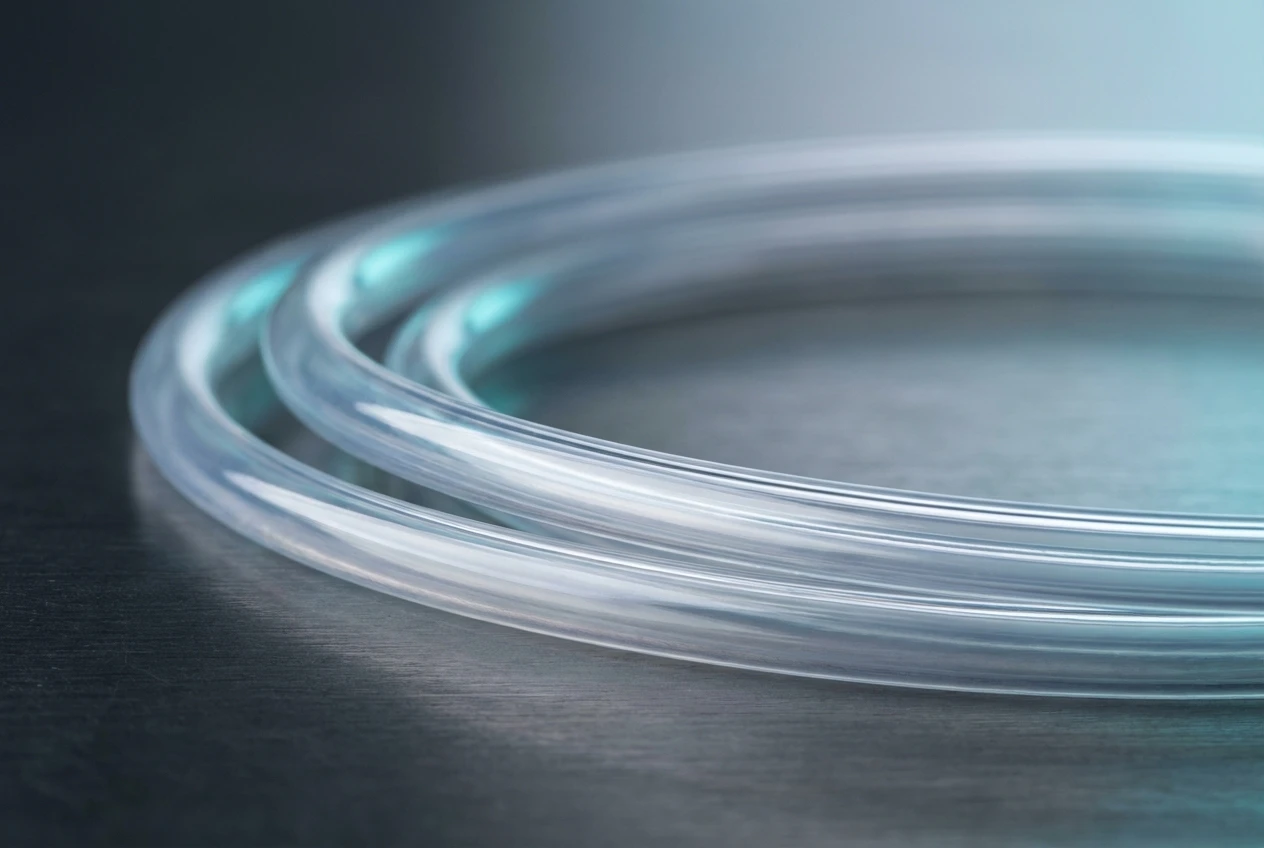
If you are in the business of designing endoscopes, you know the drill. You need a working channel that offers virtually zero resistance, but you also need the tube to navigate the tortuous path of the GI tract without kinking or collapsing. It’s the classic engineering headache: the battle between pushability Dan trackability.
Pada Teflon X, we’ve spent years arguing with physics to get this balance right. We aren’t just extruding plastic; we are crafting the veins of minimally invasive surgery. Today, I want to cut through the marketing fluff and talk about the real science behind Custom PTFE Tubing, why friction is your enemy, and how we actually solve these problems on the production floor.
The Friction Addiction: Why PTFE Wins Every Time
You’ve probably looked at FEP or PFA. Maybe you even considered HDPE for a second before realizing it can’t handle the heat. But you always come back to PTFE (Polytetrafluoroethylene). Why?
Because friction is a killer in endoscopy.
When a doctor is manipulating a bronchoscope or a colonoscope, tactile feedback is everything. If the liner has high friction, the “slip-stick” phenomenon occurs. The instrument jerks. Precise movement becomes impossible.
Here is the math that governs our lives in medical extrusion:
F = u * N
Dimana:
- F is the Force of friction (what you are fighting against).
- u (mu) is the Coefficient of Friction (COF).
- N is the Normal force (the pressure of the instrument against the wall).
In a curved endoscope, N increases dramatically at every bend. If u isn’t as low as humanly possible, F sky-rockets.
PTFE is the only material that gives you a static coefficient of friction around 0.05 to 0.1. That is nearly as slippery as wet ice on wet ice. Nothing else comes close. FEP is great, but its COF hovers around 0.2. That difference sounds small, but over a 2-meter working channel, it’s the difference between a smooth procedure and a device that fails in the field.
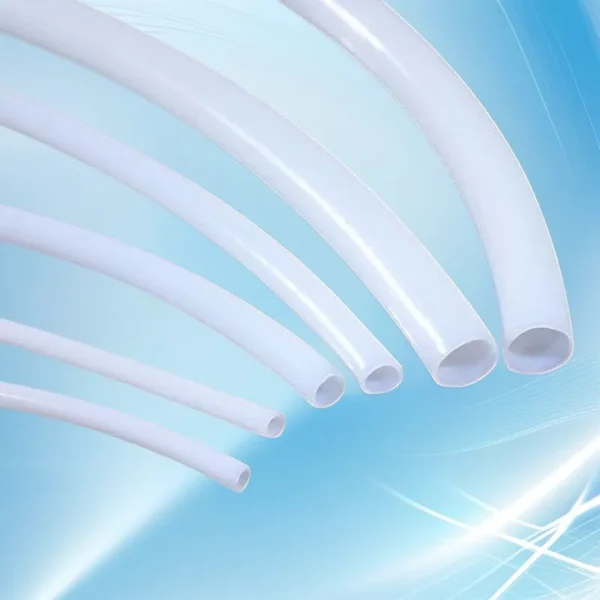
Selang Teflon PTFE untuk Dirgantara | Saluran Bahan Bakar & Pendingin Ringan
Selang PTFE Teflon memberikan kinerja ringan dan tahan suhu tinggi untuk saluran bahan bakar dan sistem pendingin kedirgantaraan. Varian baja antikarat yang dikepang menahan getaran dan siklus termal, memastikan keamanan dalam kondisi ekstrem. Sesuai dengan standar AS/EN9100.
The Flexibility Trade-Off: Don’t Kink It
Here is the controversial part that some suppliers won’t tell you: Pure PTFE is naturally stiff.
Yes, it’s lubricous, but if you just extrude a thick chunk of it, it’s going to be rigid. In endoscopy, rigidity is dangerous. You need the tube to bend with the scope.
So, how do we make PTFE tubing flexible enough for a distal tip deflection of 180 degrees?
1. Wall Thickness is King
We have to push the limits of extrusion. We aren’t talking about standard plumbing here. We are talking about ultra-thin walls. For endoscope channels, we frequently extrude liners with walls as thin as 0.001 inches (0.0254 mm).
Reducing the wall thickness reduces the “moment of inertia” of the tube cross-section, drastically lowering the flexural modulus (stiffness) of the final assembly.
2. The Etching Factor
You can’t just shove a PTFE liner into a braided catheter and hope it stays. PTFE hates sticking to things. That’s its whole point. To bond it to the outer jacket (usually Pebax or Nylon), we have to chemically etch the surface.
Pada Teflon X, we use a sodium-naphthalene complex etching process. It rips fluorine atoms off the surface, leaving a carbonaceous layer that adhesives can actually grab onto.
Kiat Pro: If your current supplier is sending you etched tubing that looks patchy or light brown instead of a consistent dark brown, send it back. Bad etching creates delamination, and delamination causes the liner to collapse inside the patient. Not good.
Real Data: PTFE vs. The Competitors
I hate generic statements, so let’s look at the actual numbers we see in the lab.
| Milik | PTFE (Teflon X Custom) | Bahasa Indonesia: FEP | PFA | Nylon 12 |
|---|---|---|---|---|
| Coefficient of Friction (Static) | 0.05 – 0.10 | 0.20 – 0.25 | 0.20 – 0.25 | > 0.40 |
| Titik Leleh | 327°C (621°F) | 260°C (500°F) | 305°C (581°F) | 178°C (352°F) |
| Flexural Modulus (Stiffness) | ~0.5 GPa | ~0.6 GPa | ~0.6 GPa | ~1.2 GPa |
| Sterilization Resistance | Excellent (EtO, Autoclave) | Bagus | Bagus | Adil |
| Biokompatibilitas | USP Kelas VI | USP Kelas VI | USP Kelas VI | Bervariasi |
You can see why low friction tubing almost always implies PTFE in this industry. Nylon is too sticky; FEP is too stiff for the extreme distal ends.
Case Study: The “Jittery” Biopsy Forceps
I want to share a story (names changed, obviously) about a client we helped recently. Let’s call them “ScopeCo.”
ScopeCo was developing a new duodenoscope for ERCP procedures. They were using a standard off-the-shelf PTFE liner from a general industrial supplier.
The Problem:
During the elevator mechanism activation (the part that lifts the tool), the biopsy forceps were stuttering. The doctors complained about “loss of fine control.” The supplier told them, “It’s PTFE, it’s slippery, it should work.”
The Teflon X Diagnosis:
We requested samples and put them under the microscope. Two things were wrong:
- Inner Surface Roughness: The previous extruder was running their RAM extruder too fast. This caused “bambooing” or melt fracture on the ID (Inner Diameter). It wasn’t smooth; it was microscopically ribbed.
- Tolerance Slop: The ID tolerance was +/- 0.003″. That’s too loose. The gap between the tool and the wall was varying, causing the tool to rattle and bind.
The Solution:
We re-engineered the Tabung PTFE using a slower sintering profile and tighter tooling.
- We achieved an ID surface finish of < 16 Ra (micro-inches).
- We tightened the ID tolerance to +/- 0.001″.
The Result:
The stutter disappeared. The actuation force dropped by 35%. ScopeCo moved to full production with us three months later.
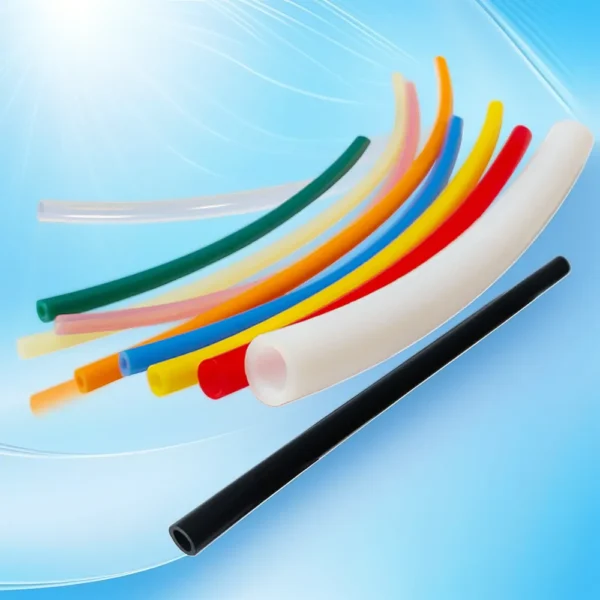
Selang Berlapis PTFE Tugas Berat | Tabung Teflon Multi-Lapisan untuk Lingkungan Keras
Selang berlapis PTFE tugas berat menggunakan konstruksi multilapis untuk ketahanan abrasi dalam penambangan dan pemrosesan kimia. Inti PTFE menahan degradasi dan oksidasi UV, sementara anyaman luar menambah kekuatan tarik. Masa pakai melebihi 10 tahun jika digunakan terus-menerus.
Manufacturing: It’s Not Just Melting Plastic
A lot of buyers don’t realize that you don’t screw-extrude PTFE like you do PVC. You can’t. It doesn’t melt and flow like honey; it turns into a thick gel.
We use RAM Extrusion. Think of it like a giant, high-pressure syringe. We mix fine PTFE powder with a lubricant (naphtha), compress it into a billet, and ram it through a die.
Then comes the oven. We have to sinter (bake) the tube to burn off the lube and fuse the particles.
Why does this matter to you?
Because if the sintering temp is off by even a few degrees, you get “uncured” tubing that is weak and chalky, or “over-cured” tubing that degrades and creates particles. Particle generation in a medical device is a massive FDA red flag.
We monitor our temperature profiles 24/7. It’s boring work, but it ensures that when you get a shipment from Teflon X, it’s fully sintered and clean.
Customization Options for Endoscopy
We don’t really do “standard” here. Most of what we ship is built to a print. Here is what we are seeing demand for in 2024 and 2025:
Multi-Lumen Tubing
Single lumen is easy. But now engineers want 3, 4, or even 7 lumens in a single PTFE tube profile. One for the camera wire, one for water, one for air, one for the tool. Maintaining thin walls between these lumens without them blowing out during extrusion is an art form.
Radiopacity
Sometimes you need to see the tube under X-ray (fluoroscopy). We can blend Barium Sulfate (BaSO4) or Bismuth Trioxide into the PTFE paste before extrusion. Usually, a 20% loading gives you good visibility without ruining the mechanical properties.
Tie-Layers
For advanced catheter construction, we can co-extrude (well, technically co-process) layers, or provide etched liners ready for reflow with Pebax jackets.
FAQ: Questions We Get Asked Daily
Q: Can you hold tolerances tighter than +/- 0.001″?
A: Yes, but it depends on the size. On very small micro-tubing (under 0.010″ ID), we can often hold +/- 0.0005″. It requires very specialized tooling and slows down production, but for neurovascular or ophthalmic applications, we do it all the time.
Q: Does sterilization affect the lubricity of PTFE?
A: Generally, no. PTFE is incredibly stable. Gamma radiation can degrade PTFE (it makes it brittle), so we usually recommend EtO (Ethylene Oxide) or Autoclave for PTFE-based devices. If you must use Gamma, we need to talk about using a different fluoropolymer grade or radiation-stabilized blends.
Q: What is the minimum wall thickness you can extrude?
A: We have successfully extruded walls down to 0.001″ (0.025 mm). Handling this tubing without crushing it is tricky, so we often ship it with a support mandrel (a silver-plated copper wire inside) to keep it round during shipping and assembly.
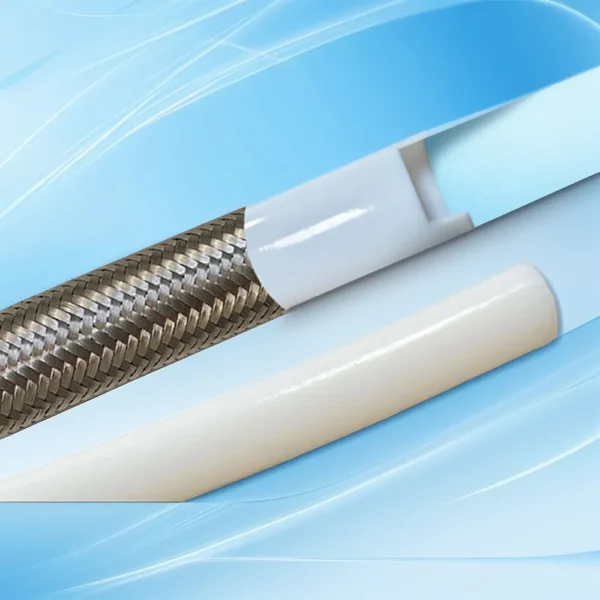
Produsen Tabung PTFE | Tabung Teflon Suhu Tinggi untuk Penggunaan Kimia & Medis
Tabung PTFE (Tabung Politetrafluoroetilena) menawarkan ketahanan kimia dan stabilitas termal yang luar biasa dari -200°C hingga +260°C, sehingga ideal untuk pemindahan cairan korosif dalam pemrosesan kimia dan aplikasi farmasi. Dengan koefisien gesekan 0,04 dan sifat antilengket, tabung PTFE kami meminimalkan kehilangan energi dan memastikan pengoperasian bebas kontaminasi. Dapat disesuaikan dengan anyaman baja tahan karat untuk tekanan hingga 1,6 MPa.
Let’s Solve Your Tubing Headache
Look, sourcing components for medical devices is stressful. You have ISO standards to meet, FDA 510(k) submissions to file, and engineers breathing down your neck about “tactile feel.”
You don’t need a vendor who just sells plastic straws. You need a partner who understands medical extrusion.
Pada Teflon X, we specialize in the hard stuff. The tight tolerances. The thin walls. The custom profiles that other extrusion houses decline.
If you are working on a next-gen endoscope or just sick of your current liner failing QC, reach out to us. I’d love to take a look at your drawings and see if we can shave off that friction.
Ready to talk specs?
- Visit our product page:Check out our PTFE Tubes
- Drop me an email directly: Allison.Ye@teflonx.com
- Contact us via the web:https://teflonx.com/contact-us/
Don’t let friction kill your device’s performance. Let’s get it smooth.
