
 Japanese
  English
  Russian
  French
  German
  Korean
  Portuguese
  Arabic
  Italian
  Dutch
Dutch  Turkish
  Indonesian
  Polish
  Spanish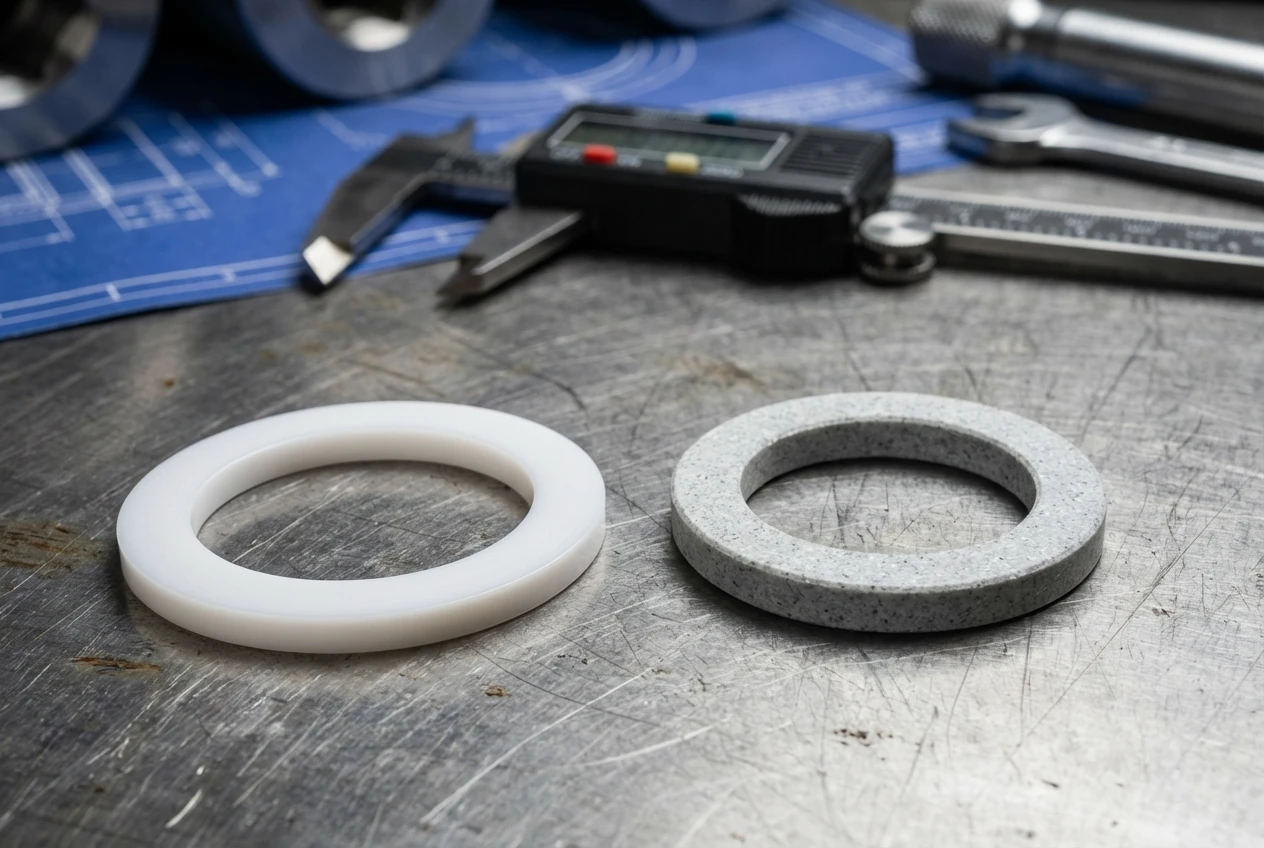
生産開始の3日前に、顧客からテストベンチでシールに不具合が発生したという電話ほど最悪なものはない。オイル漏れは厄介で、叫び声は大きく、解決策は昨日中に必要だ。
自動車業界の材料技術者であれば、このドリルをご存知だろう。標準的なPTFEシールを見て、"間違ったものを頼んでしまったかな?"と思っていることでしょう。
の議論 バージンと充填PTFE 色やコストだけの問題ではない。物理学の問題だ。1,000psiの圧力で粉砕し、5,000RPMでシャフトを回転させたときに、素材がどのような挙動を示すかということだ。
で テフロンXしかし、「標準」スペックでは通用しないことは、溶けたり、押し出されたり、破砕されたりしたシールの数々を見てきてわかっている。本日は、その細かな違いを説明し、マーケティング的なうわべを取り去り、実際のエンジニアリング・データを見ていこうと思う。どのような場合に純粋なもので済ませることができるのか、またどのような場合に絶対にバルクアップが必要なのかについて説明する。
ベースラインバージンPTFEは実際何に適しているのか?
まず最初に、バージンPTFEをバッシングするのはやめよう。信じられない素材だ。滑りやすく、こびりつきにくいマジック(摩擦係数は0.05~0.10程度)があり、伝説的な素材だ。
化学的に?獣です。ATF、ブレーキフルード、エタノール混合液など、ほとんどどんな自動車用流体でも、ヴァージンPTFEは笑っているのです。膨潤も溶解もしません。
しかし、問題はここからだ。
バージンPTFEは硬いチーズのような構造的完全性を持っている。私は真剣だ。コールドフロー」(クリープ)がひどい。バージンPTFEガスケットにフランジをボルトで固定したら、24時間後にまた来てください。ボルトは緩んでいるはずだ。なぜか?材料が圧力で流れたからです。
数字の弱さ
引張強度を見てみよう。標準的なバージンPTFEは通常
- 抗張力: ~20-30 MPa
- 伸長: ~200-400%
ストレッチには最適ですが、大きな動的負荷がかかった状態で厳しい公差を保持するには不向きです。エンジンやトランスミッションの環境では、純粋なPTFEは摩擦があると驚くほど早く摩耗します。私たちはこれを 比摩耗速度 (k).
バージンPTFEでは、充填グレードに比べて摩耗率が天文学的に高い。私たちは、およそ摩耗係数について話しています:
k ~ 500 x 10^-10 mm³/Nm
それは...ロータリーシャフトシールには良くない。
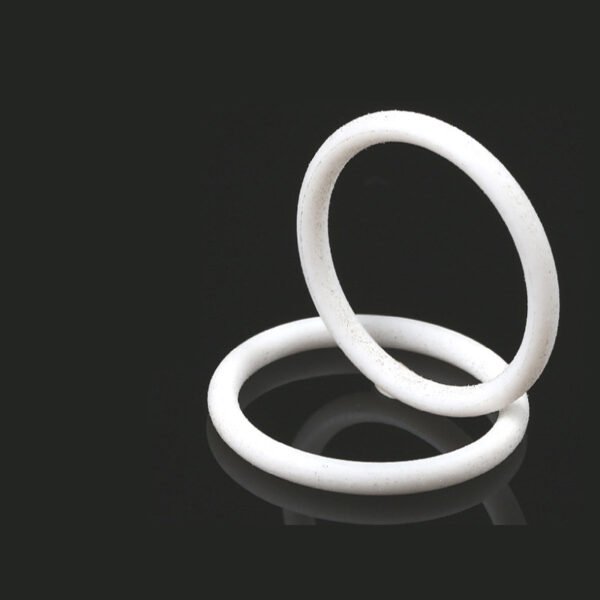
耐高温PTFEガスケット&テフロンOリング|耐薬品性PTFEシール
耐高温PTFEガスケットとテフロンOリングは、極度の温度や強力な化学薬品においても優れたシール性を発揮します。PTFEシールとテフロンガスケットは耐腐食性に優れ、長寿命を実現します。安全でクリーンなシールを必要とする化学、製薬、食品加工業界に最適です。
チャレンジャー充填PTFE(「マッスル)
では、どうすれば軟らかいチーズの問題を解決できるのか?フィラーを加えるのだ。コンクリートに鉄筋を入れるようなものだ。耐薬品性は(ほとんど)維持したまま、機械的強度を急上昇させるのだ。
について話すとき 自動車用シールの比較私たちは通常、バージンの代替品として3つの候補を考えている:
- ガラス繊維強化PTFE
- カーボン/グラファイト充填PTFE
- 青銅充填PTFE
これらのフィラーを加えると、ゲームが変わります。荷重による変形が大幅に減少するんだ。
フィラーの物理学
ここからが面白くなる。フィラーが荷重を受けるのです。シールがシャフトに押し付けられると、PTFEが潤滑油として機能し、金属に薄い転写膜を塗り、ガラスやブロンズの粒子が重量を支えます。
これによって、より大きな効果が期待できる。 PVリミット (圧力×速度)。
- バージンPTFE PVリミット: ~ 1,800 PSI-fpm
- 充填PTFE PVリミット: ~ 10,000 PSI-fpm
これは大きな違いです。高回転を伴う用途であれば、ヴァージンPTFEは競争相手にもなりません。
ディープ・ダイブスペックの比較
印鑑をデザインする際に実際に重要な特性別に分けてみよう。
1.耐摩耗性とトライボロジー
エンジニアが当社の製品に乗り換える理由は、通常このような点にある。 PTFEガスケット とフィラーで作られたシール。
摩耗量(W)の計算式は、一般に次のように表される:
W = k * F * L
どこでだ:
- W = 摩耗量 (mm³)
- k = Specific wear rate (mm³/Nm)
- F = Normal force (N)
- L = Sliding distance (m)
If you use ガラス繊維強化PTFE, the ‘k’ value drops dramatically.
- Virgin ‘k’: ~500
- 25% Glass Filled ‘k’: ~2 – 5
You are looking at a material that lasts 100x longer in sliding contact. However, there’s a catch. Glass is abrasive. If you use glass-filled PTFE on a soft shaft (like unhardened aluminum or mild steel), the seal won’t wear out, but the shaft will.
I’ve seen customers destroy a $500 shaft to save $2 on a seal. Don’t be that guy.
2. Creep and Deformation
In automotive applications, temperatures fluctuate wildy. -40°C in winter to 150°C under the hood. Virgin PTFE has a high coefficient of thermal expansion and low creep resistance.
Deformation under load (14 MPa @ 23°C for 24 hrs):
- Virgin: ~15% deformation
- 25% Glass Filled: ~11% deformation
- Bronze Filled: ~7% deformation
If you need the seal to maintain geometry under clamping force, you gotta go filled.
3. Thermal Conductivity
Heat kills seals. Virgin PTFE is a thermal insulator. It traps heat at the sealing interface. This leads to carbonization of the oil or melting of the seal lip.
Carbon filled PTFE is the hero here. It conducts heat away from the contact point.
- Virgin: ~0.25 W/mK
- Carbon Filled: ~0.60+ W/mK
If you have a high-speed rotary application (like a crank seal), moving that heat away is critical.

ボールバルブおよび工業用シーリング用高温PTFEテフロンガスケット
PTFEテフロンガスケットは、極限温度(-200℃~+260℃)の耐熱性と耐薬品性を備え、高圧ボールバルブや腐食性流体システムのシールに最適です。これらのガスケットは、石油・ガス、化学プロセス、産業機械において優れた漏れ防止性能を発揮します。形状(フラット、ライナー、リング)はカスタマイズ可能で、複雑な機械構造にも適応します。
Specific Fillers: Choosing Your Fighter
Okay, so you know you need filled. But which one? Here is the cheat sheet I use at テフロンX when consulting.
Glass Fiber (The All-Rounder)
Usually 15% or 25% glass fiber.
- 長所だ: High compressive strength, excellent wear resistance, chemically inert (except to hydrofluoric acid).
- 短所だ: Abrasive to mating surfaces. Can increase porosity.
- Best for: Static seals, valve seats, gaskets where rotation is slow or the mating metal is hard (Rockwell C 45+).
Carbon / Graphite (The Slick Operator)
- 長所だ: Self-lubricating, low friction, excellent thermal conductivity. Soft enough not to damage shafts.
- 短所だ: More expensive than glass. Black color limits visual inspection for cleanliness in some niche apps (rare in auto).
- Best for: High-speed rotary seals, shock absorbers, piston rings.
Bronze (The Heavy Lifter)
- 長所だ: Highest compressive strength, best thermal conductivity.
- 短所だ: Attacked by acids/alkalis (chemical resistance drops), expensive.
- Best for: Hydraulic systems, extrusion resistance, heavy-duty transmission seals.
Real World Scenario: The “Leaky” Transmission Case
Let me tell you about a project we handled last year. Let’s call the client “AutoCorp.”
They were designing a new DCT (Dual Clutch Transmission). They specced Virgin PTFE for the internal control piston seals because they wanted lowest possible friction for fast shifting.
The Failure:
During the 100-hour durability test, the shifting got sloppy. Eventually, the pressure dropped, and the transmission failed.
The Diagnosis:
We pulled the seals. They looked like pancakes. The heat generated by the rapid actuation, combined with the hydraulic pressure, caused the Virgin PTFE to cold flow. The seal lip flattened out, loss of contact pressure -> leak.
修正
We switched them to a custom 15% Glass + 5% MoS2 filled PTFE.
- Glass stopped the cold flow.
- MoS2 (Molybdenum Disulfide) lowered the friction coefficient back down near Virgin levels.
Result? Passed the 500-hour test with zero leakage. Sometimes you have to mix and match. If you have a tricky application like this, shoot an email to アリソン・イェ@teflonx.com. We love solving these puzzles.
Quick Comparison Table
I know engineers love tables. Here is the snapshot.
| 財産 | バージンPTFE | ガラス繊維強化PTFE | Carbon Filled PTFE | 青銅充填PTFE |
|---|---|---|---|---|
| 色 | 白 | Off-White / Gray | Black | Brown / Bronze |
| Friction Coeff. | Excellent (0.05) | Good (0.15) | Excellent (0.10) | Fair (0.20) |
| 耐摩耗性 | 貧しい | 素晴らしい | 非常に良い | 素晴らしい |
| Shaft Wear | 低い | High (Abrasive) | 低い | Low-Medium |
| クリープ抵抗 | 低い | 中くらい | 中くらい | 高い |
| Thermal Cond. | 低い | 低い | 高い | 非常に高い |
| 料金 | $ | $$ | $$$ | $$$ |
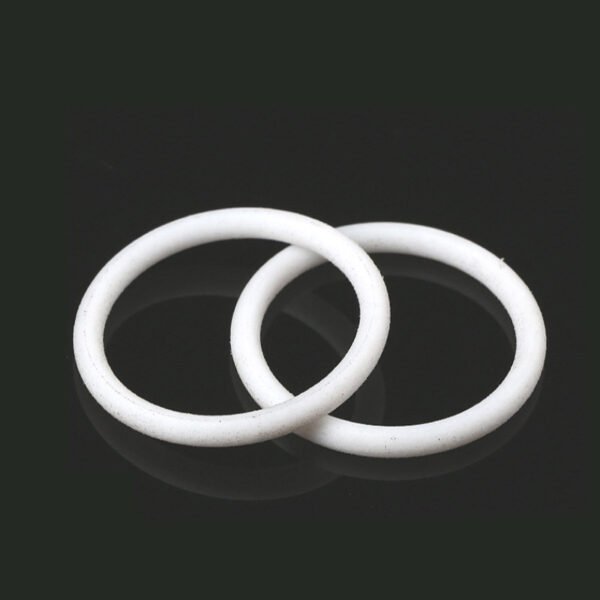
PTFEテフロンOリングガスケット | 高温シールPTFEシール&テフロンガスケットサプライヤー
PTFEテフロンOリングとテフロンガスケットは、過酷な化学環境における高温シールに最適です。テフロンガスケットとPTFEガスケットは、優れた耐薬品性と耐久性を備えています。当社のPTFEシールは信頼性の高い性能を保証します。産業用途や流体システムに最適です。
Cost vs. Performance: The Trade-off
Look, I get it. Procurement is breathing down your neck to cut costs. Virgin PTFE is cheaper.
But calculating cost based on the price per gram of material is a trap. You need to calculate the Cost of Failure.
If a $0.50 Virgin seal fails and causes a warranty claim on a $2,000 transmission, that math doesn’t work out.
However, don’t over-engineer if you don’t have to. If you are designing a static dust boot or a cap that sees no load and no friction, Virgin PTFE is perfect. It looks clean, it’s cheap, and it works.
But for 自動車用シールの比較 in dynamic environments (crankshafts, cam shafts, transmission pistons, suspension struts), the filled grades pay for themselves by surviving the warranty period.
A Note on Surface Finish
This is something people forget. If you switch from Virgin to Filled, you might need to adjust your shaft surface finish.
- バージンPTFE: Likes a very smooth finish (Ra 0.2 – 0.4 µm).
- 充填PTFE: Can actually benefit from a slightly rougher finish (Ra 0.4 – 0.8 µm) to help establish that transfer film I mentioned earlier.
If the shaft is too smooth, the filled PTFE might just slide over it without depositing the transfer film, leading to higher friction and heat. It’s a delicate balance.
Wrapping It Up
Choosing between バージンと充填PTFE isn’t about which material is “better.” It’s about matching the material to the abuse it’s going to take.
- 使用 ヴァージン for static, chemical-heavy, low-load spots.
- 使用 Glass Filled for general wear resistance and heavy loads (watch the shaft hardness!).
- 使用 Carbon/Bronze for high heat and high pressure.
Don’t guess. The wrong choice leaks.
If you are staring at a CAD drawing right now wondering which compound to specify, stop guessing. We have the data, and we have the materials. Check out our range of PTFEガスケット to see what’s possible.
Or, just skip the browsing and ask us directly. We can run the PV calculations for you.
Contact us here: https://teflonx.com/contact-us/
メールアドレス: アリソン・イェ@teflonx.com
Let’s make sure your seals actually seal.

サイクロンシステムおよびバルブ用耐薬品性PTFEガスケットシート
サイクロンセパレーターや産業用バルブシステム向けに設計されたPTFEガスケットシートは、酸、アルカリ、溶剤に対する比類のない耐性を備えています。非粘着性表面により、材料の付着を防ぎ、機器の寿命を延ばします。標準シートまたはカスタムカットデザインで提供しており、シームレスな統合が可能です。
FAQ: Common Questions on PTFE Seals
Q: ガラス繊維入りPTFEをアルミ製ハウジングに使用できますか?
A:注意しなければならない。ガラスはアルミニウムよりも硬い。相対的な動き(摩擦)があると、PTFE中のガラス繊維がサンドペーパーのように作用し、アルミニウムに食い込んでしまいます。柔らかい相手金属には、通常、カーボン入りか、研磨剤の入っていない特殊ポリマーブレンドをお勧めします。
Q: なぜ私のバージンPTFEシールは隙間に押し出されるのですか?
A: That’s classic “cold flow.” Virgin PTFE has low resistance to deformation under load. If the pressure is high and the clearance gap is even slightly too big, the material will squeeze out like toothpaste. You need to switch to a filled grade (like Bronze or Glass) to increase compressive strength, or use a backup ring.
Q: 満ちている PTFE はバージン PTFE のように化学的に抵抗力がありますか。
A: たいていはそうですが、充填材が弱点です。例えば、バージンPTFEはフッ化水素酸(HF)には耐性がありますが、ガラス繊維入りPTFEは耐性がありません。満たされる青銅はある特定の酸化性の酸と互換性がない。の化学適合性を常に点検しなさい。 フィラーPTFEだけではない。
Q: ガラス繊維強化PTFEの最高温度は何度ですか?
A: マトリックスはまだPTFEなので、理論上の最高温度は260℃前後です。しかし、その限界に近づくにつれて機械的特性は低下します。自動車用途では、シールの完全性と寿命を維持するために、通常、連続使用では200℃以下に抑えるようにしています。
