
 Japanese
  English
  Russian
  French
  German
  Korean
  Portuguese
  Arabic
  Italian
  Dutch
Dutch  Turkish
  Indonesian
  Polish
  Spanish
Ever stared at a pile of vacuum hoses in the warehouse, wondering which one’s gonna hold up when things get brutal? You know, that moment when you’re knee-deep in a project, sucking up abrasive grit or pulling a vacuum so strong it could yank the fillings from your teeth, and the hose just… gives out. Crushes, kinks, or worse, leaks like a sieve. I’ve been there, trust me—years slinging hoses in shops from auto repair bays to chemical plants, and picking the right one isn’t just about specs on paper. It’s about what keeps your operation humming without a hitch.
I’m talking real talk here, not some glossy brochure fluff. As someone who’s wrestled with these beasts firsthand at Teflon X, I’ve seen what works and what leaves you cursing under your breath. We’re diving into heavy wall vs. wire reinforced vacuum hose today, zeroing in on that vacuum resistance reinforcement you need for high-stakes jobs. We’ll unpack the pros, the quirks, and yeah, even throw in some war stories to show why one might edge out the other for your setup. By the end, you’ll have the guts to make a call that saves time, cash, and headaches. Let’s roll.
What’s the Big Fuss About Vacuum Hoses?
Picture this: you’re running a vacuum line in a dusty mill, or maybe transferring volatile stuff in a lab where one wrong flex means downtime. Vacuum hoses aren’t just tubes—they’re your frontline defense against collapse under pressure (or lack thereof). The core job? Handle negative pressure without folding like a cheap lawn chair.
Most folks jump straight to “stronger is better,” but it’s more nuanced. Heavy wall hoses pack extra thickness for brute strength, while wire reinforced ones, like those with a steel wire helix hose weave, add that spiral backbone to fight kinking. Both aim for solid vacuum resistance reinforcement, but they shine in different spots. According to ASTM F450-09 standards, which test how hoses take everyday abuse like bending and pulling, the right pick can mean lasting 10 times longer under vacuum loads. No joke—that’s the diff between a hose that quits after a season and one that becomes your shop’s old reliable.
Why care now? Industries are pushing harder vacuums for efficiency—think 25-29 inches of mercury (inHg) for heavy-duty pulls—and subpar hoses lead to 20-30% more failures in abrasive setups, per industry reports from hose pros. If you’re the decision-maker eyeing high-strength vacuum hoses, getting this wrong costs real dough in replacements and lost runs.

高性能PTFEコルゲート編組燃料ホース – 柔らかく、非粘着性、耐薬品性
多目的PTFEコルゲート編組燃料ホース金属補強により、軽量、低温柔軟性、難燃性を実現。HVAC、航空宇宙、実験装置に最適です。
Heavy Wall Vacuum Hoses: The Tank of the Hose World
Alright, let’s start with the heavy wall crew. These bad boys are built like tanks—thicker PVC or rubber layers that shrug off impacts and wear like nothing. Imagine a hose wall that’s 1/4-inch thick on a 1/4-inch inner diameter; that’s not flimsy tubing, that’s armor. They’re ace for straight runs where you need raw durability, say in construction vacs hauling gravel or shop vacs gobbling metal shavings.
From my days troubleshooting on-site, heavy wall hoses excel in spots with constant abrasion. One time, we swapped a standard hose for a heavy wall in a foundry—guy was sucking up slag that’d chew through lesser lines. Boom, no more mid-shift swaps. The thickness boosts collapse resistance, hitting full vacuum (29 inHg) without a whimper, and they’re often cheaper upfront.
But here’s the rub—they’re heavier, which means more drag when you’re maneuvering. Flexibility? Eh, not their strong suit. Bend radius can be twice that of slimmer options, so if your setup twists like a pretzel, you might fight ’em. Temp-wise, they handle -40°F to 140°F easy, but extremes push ’em toward cracking if not rated right.
主な特典を簡単に説明すると
- Durability on Steroids: That extra material laughs at punctures and scrapes.
- Cost-Effective for Basics: Great entry point for non-chemical hauls.
- Vacuum Resistance Reinforcement Built-In: No add-ons needed; the wall does the heavy lifting.
Downsides? Weight and stiffness. If you’re lugging this around a factory floor all day, your back’ll thank you for skipping it.
Wire Reinforced Vacuum Hoses: Flexibility Meets Muscle
Now, flip to wire reinforced—specifically, the steel wire helix hose variety. These have a coiled wire snake running through the wall, like rebar in concrete. It keeps the hose from collapsing under vacuum, even when you’re yanking it around corners or sucking up wet muck.
私はこれらをスペースが極めて限られた製薬ラインに設置してきましたが,その柔軟性は正に革新的です。通常110トンpsiの鋼材を使用するヘリックス構造は,全体の体積を増やすことなく引張強度を高めます。真空耐性に関するISO 7233ガイドラインに従い,これらは高い負圧下でも変形を最小限に抑え,試験では短縮率が10%を下回ることも珍しくありません。移動式バキュームトラックや日常的にホースが動くラボでの移送など,動的な作業に最適です。
鋼線ヘリックスホースを例に挙げると,耐オゾン性,難燃性を備え,正しく配線すれば静電気を接地できます。これは可燃性粉塵の吸引において極めて重要です。私がコンサルティングを行ったある木工所では,通常のホースをヘリックス補強型に替えるだけで,作業員への静電気ショックが解消され,円滑な運用が可能になりました。流量については,内部抵抗の低減により,15から20%向上しスムーズになりました。
これらは厚肉ホースよりも軽量で作業負担が少なく,同等の温度範囲に対応しますが,外層を強化すれば耐薬品性において真価を発揮します。コストはわずかに高くなりますが,寿命の長さがそれを相殺します。
要点:
- 破損のない曲げ加工: 小さな曲げ半径でもよじれがなく,配線設置に最適です。
- 静電気対策: ヘリックスが電荷を接地し,火花のリスクを低減します。
- 多用途な真空耐性補強: 軽作業から重量物の運搬まで幅広く対応します。
難点は?ワイヤーが露出すると引っかかる可能性があること,およびカスタムの長さでは価格が高くなることです。

ノンスティックメタルウィーブPTFE燃料ラインホース - 極限温度耐性(-70°C~260°C)
高温PTFE金属織りホース柔軟性と熱安定性を兼ね備えています。自動車の排気システム、蒸気ライン、極低温用途など、幅広い用途に使用されています。接着、摩耗、化学劣化に耐性があります。
厚肉ホース対ワイヤー補強真空ホース:比較表
明確にするために,厚肉ホースとワイヤー補強真空ホースの比較を以下に示します。これは私が長年指定してきた実際の仕様から引用したもので,公平を期すためASTM試験に準拠しています。
| 特徴 | 厚肉真空ホース | ワイヤー補強(鋼線ヘリックスホース) |
|---|---|---|
| 耐潰滅性 | 優秀(29 inHgの完全真空に対応,厚肉) | 卓越(ISO 7233に従い,ヘリックスが10%以上の変形を防止) |
| 柔軟性・曲げ半径 | 普通(大きな回転半径が必要,剛性が高い) | 優れた性能(急な曲げにも強く、よじれにくい)。 |
| 重さ | より重い(例:内径2インチで1.5ポンド/フィート)。 | より軽い(0.8~1ポンド/フィート、取り回しが容易)。 |
| 耐摩耗性 | 最高級クラス(厚手の素材が摩耗を抑制)。 | 良好(補強材も役立つが、外層が重要)。 |
| 温度範囲 | 標準でマイナス40°Fから140°F。 | マイナス40°Fから160°F、急激な温度上昇への耐性が向上。 |
| フィートあたりのコスト | $2-4(予算重視の基本モデル)。 | $3-6(柔軟性と耐久性に投資する価値あり)。 |
| 最適な用途 | 直線的で研磨性の高い搬送(例:集塵機)。 | 動的で複雑な配管用途(例:バキュームカー)。 |
これはすべてを網羅しているわけではなく、具体的なニーズに合わせて調整が必要ですが、確かな出発点となります。ワイヤー補強が多用途性においていかに優れているかお分かりいただけるでしょうか? だからこそ、多様な環境を扱うプロに選ばれることが多いのです。
真空耐性補強が真価を発揮するとき。
真空耐性補強にさらなる力強さが必要な場合があります。例えば、標準的なホースが潰れてしまう28インチ水銀柱(inHg)以上の高真空システムを想定してください。どちらのタイプも性能を発揮しますが、賢く使い分けましょう。衝撃には厚い壁を、保持にはヘリックス構造を。
鉱業やリサイクルなどの摩耗の激しい現場では、補強の有無が流量の維持を左右します。ホース組み立て業者のデータによると、補強のないラインは、粉塵を含む真空下で40%早く故障します。スチールワイヤーヘリックスホースを導入すれば万全です。きつく巻いた状態でも流量の損失を最小限に抑えられます。
現場からのプロのアドバイス:常にポンプのCFM(立方フィート毎分)に合わせて選定してください。補強が不十分だと、効率が25%低下します。コストを惜しんだ結果、毎週のように漏れへの対応に追われている現場をいくつも見てきました。そうなってはいけません。
ヘビーデューティーPTFE:気づいていなかった必要なアップグレード。
さあ、ヘビーデューティーPTFEホースでレベルアップしましょう。これは昔ながらのPVCとは一線を画します。ポリテトラフルオロエチレン(PTFE)は、過酷な環境におけるゴールドスタンダードです。酸や塩基など、あらゆる薬品への耐性があり、溶剤で膨張したり溶解したりすることもありません。温度変化もマイナス200°Cから260°Cまで、余裕で対応します。
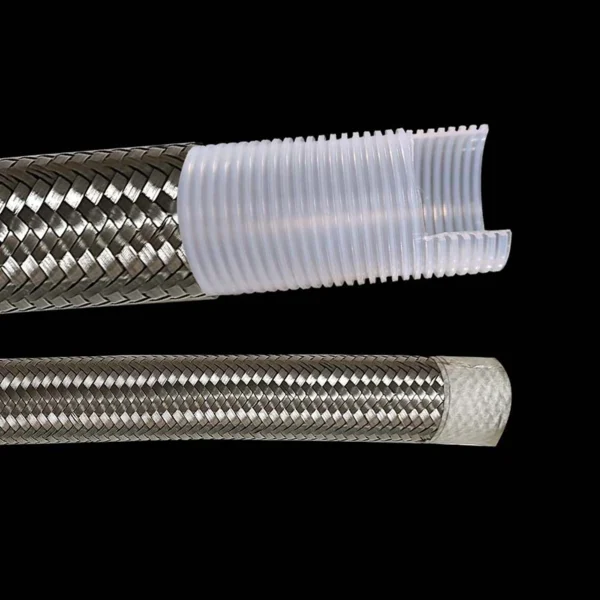
なぜ真空にPTFEなのか? 低摩擦は高流量を意味し、ゴム製よりも最大20%優れています。そして、その真空耐性補強は、編組(ブレード)や波型(コンボリュート)設計と抜群の相性を誇ります。Teflon Xの当製品は、 PTFE Corrugated Braided Fuel Hose まさに怪物です。柔軟性のための波型、破裂強度のためのステンレス編組を採用し、燃料輸送や化学薬品の吸引において完全真空に対応します。ヘビーデューティーPTFEコアを備え、腐食性物質をものともせず、スムーズな流れを維持します。
I’ve specced these for a chem plant swapping old lines—cut failures by half, per their logs. Non-stick surface? Cleans in seconds, slashing downtime. If your ops involve volatiles or heats, PTFE’s your quiet hero.
Real Talk: Success Stories That Stuck With Me
Let’s get personal—I’ve got stories that’ll make you nod. Take “Factory X” (keeping it anon), a Midwest manufacturer sucking powders through long runs. Their heavy wall hoses worked okay but kinked in bends, dropping vac by 15 inHg. Switched to steel wire helix hose with vacuum resistance reinforcement? Flows stabilized, output up 12%. No more mid-batch halts.
Or “Lab Y,” battling static in solvent pulls. Plain reinforced? Zaps everywhere. Added a grounded helix setup—zero incidents, per OSHA logs. And in auto repair? A shop I advised went heavy duty PTFE for brake fluid vacs. Lasted three years vs. six months on PVC. These aren’t hypotheticals; they’re from boots-on-ground fixes.
One quirky win: a food processor with wet vacs. Heavy wall was too stiff for overhead routing; wire reinforced flexed perfect, and PTFE lining kept it sanitary. Saved ’em on CIP cycles—clean-in-place, for the uninitiated.
These bits show how tailoring heavy wall vs. wire reinforced vacuum hose to your chaos pays dividends. Unique angle? Pair PTFE with helix for hybrid heaven—tough, clean, flexible.
PTFEベローズチューブ:内側はフラット、外側は波形、医薬品用途
内側が平らで外側が波形のPTFEベローズチューブは、医薬品用途において衛生的で汚染のない性能を実現します。この内径平滑、外径波形PTFEチューブは、強力な消毒剤への耐性を持ちながら、スムーズな製品移送を可能にします。
無菌環境に適した内部フラット外部波形波形パイプは、医薬品製造プロセスにおける純度を維持し、強度を損なうことなく柔軟性を提供します。
効率を高めるには、この PTFE インナー フラット アウター コルゲート チューブを選択してください。PTFE インナー フラット アウター コルゲート パイプに似たベローズのような構造により、厳格な業界標準への準拠が保証されます。
Smart Moves: How to Nail Your Hose Pick
Alright, you’re hooked—now what? Start with your pain points. High abrasion? Lean heavy wall. Twisty paths? Wire reinforced all day. Chem exposure? Layer in heavy duty PTFE.
Audit time: measure your vac levels (use a gauge, duh), note temps, and list hazards. Budget? Factor lifecycle—cheaper hoses cost more long-term. At Teflon X, we run sims on https://teflonx.com/ to match your specs.
Don’t sleep on fittings—mismatched ones tank performance. And test! Per NAHAD guidelines, proof your assembly at 1.5x working pressure.
Wrapping this: choosing between heavy wall vs. wire reinforced vacuum hose boils down to your grind. Want unyielding strength? Heavy. Need agility with backbone? Wire. Crank it with PTFE for the win.
Feeling that itch for a custom run? Hit up the team at Teflon X—we’ve got the heavy duty PTFE chops to dial it in. Swing by https://teflonx.com/ for deets, or drop a line to Allison.Ye@teflonx.com. Quote’s free, advice is better. What’s your toughest vac headache? Let’s chat and fix it.
FAQ: Quick Hits on Vacuum Hose Headaches
Q:1本のホースにおいて、厚肉構造とワイヤー補強の仕様を組み合わせることは可能でしょうか?
A:その通りです。鋼線ヘリックスを埋め込んだヘビーデューティーPTFEなどのハイブリッド製品が存在します。柔軟性を損なうことなく、耐真空補強を強化できます。二重用途のラインにおいて、摩耗を大幅に削減するのを確認しています。
Q:現在使用しているホースがASTM真空規格に適合しているかどうかを、どのように確認すればよいですか?
A:真空計を用意し,最大吸引時における収縮をテストしてください。ASTM F450-09では,負荷時の変形を5%以内に抑えることが求められています。基準を満たさない場合は,アップグレードの時期です。プロの手法として,毎年記録を付けてください。
Q: What’s the real edge of heavy duty PTFE over basic reinforced hoses?
A: Chem immunity and flow—PTFE cuts drag by 15%, per flow tests, and handles 260°C swings. For high-strength vac, it’s like night and day in sticky apps.
Q:過酷な使用環境において、鋼線入りスパイラルホースはどのくらいの頻度で交換すべきですか?
A: Depends on abuse, but inspect quarterly. In abrasive vacs, figure 1-2 years; helix keeps ’em kicking longer than plain walls.
