
 Japanese
  English
  Russian
  French
  German
  Korean
  Portuguese
  Arabic
  Italian
  Dutch
Dutch  Turkish
  Indonesian
  Polish
  Spanish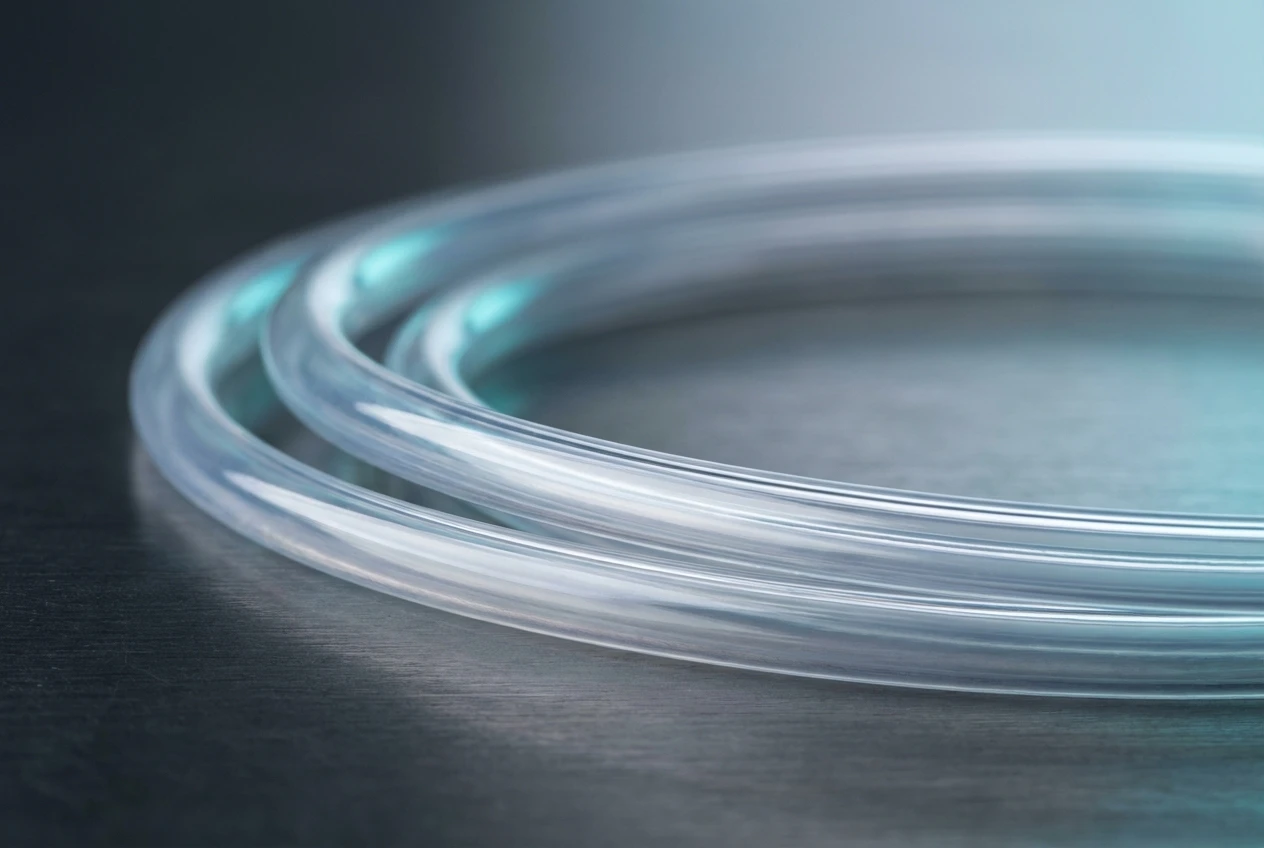
If you are in the business of designing endoscopes, you know the drill. You need a working channel that offers virtually zero resistance, but you also need the tube to navigate the tortuous path of the GI tract without kinking or collapsing. It’s the classic engineering headache: the battle between pushability そして trackability.
で テフロンX, we’ve spent years arguing with physics to get this balance right. We aren’t just extruding plastic; we are crafting the veins of minimally invasive surgery. Today, I want to cut through the marketing fluff and talk about the real science behind Custom PTFE Tubing, why friction is your enemy, and how we actually solve these problems on the production floor.
The Friction Addiction: Why PTFE Wins Every Time
You’ve probably looked at FEP or PFA. Maybe you even considered HDPE for a second before realizing it can’t handle the heat. But you always come back to PTFE (Polytetrafluoroethylene). Why?
Because friction is a killer in endoscopy.
When a doctor is manipulating a bronchoscope or a colonoscope, tactile feedback is everything. If the liner has high friction, the “slip-stick” phenomenon occurs. The instrument jerks. Precise movement becomes impossible.
Here is the math that governs our lives in medical extrusion:
F = u * N
どこでだ:
- F is the Force of friction (what you are fighting against).
- u (mu) is the Coefficient of Friction (COF).
- N is the Normal force (the pressure of the instrument against the wall).
In a curved endoscope, N increases dramatically at every bend. If u isn’t as low as humanly possible, F sky-rockets.
PTFE is the only material that gives you a static coefficient of friction around 0.05 to 0.1. That is nearly as slippery as wet ice on wet ice. Nothing else comes close. FEP is great, but its COF hovers around 0.2. That difference sounds small, but over a 2-meter working channel, it’s the difference between a smooth procedure and a device that fails in the field.
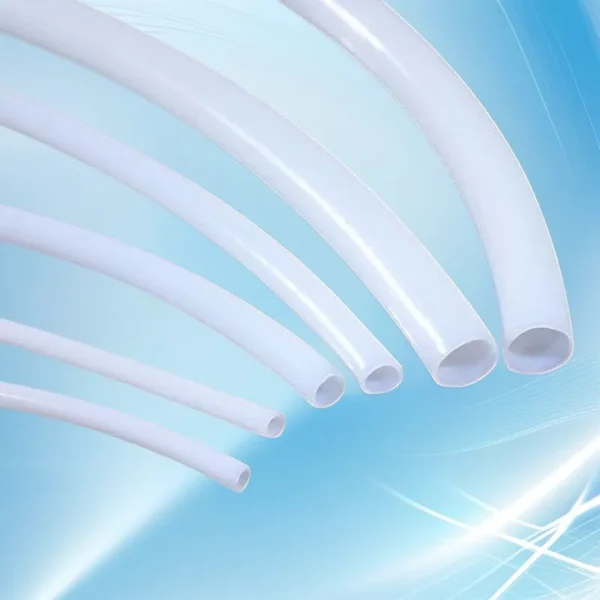
航空宇宙用PTFEテフロンホース|軽量燃料・冷却ライン
PTFEテフロンホースは、航空宇宙分野の燃料ラインおよび冷却システムにおいて、軽量かつ高温性能に優れています。ステンレス鋼編組ホースは振動や熱サイクルにも耐え、過酷な条件下でも安全性を確保します。AS/EN9100規格に準拠しています。
The Flexibility Trade-Off: Don’t Kink It
Here is the controversial part that some suppliers won’t tell you: Pure PTFE is naturally stiff.
Yes, it’s lubricous, but if you just extrude a thick chunk of it, it’s going to be rigid. In endoscopy, rigidity is dangerous. You need the tube to bend with the scope.
So, how do we make PTFEチューブ flexible enough for a distal tip deflection of 180 degrees?
1. Wall Thickness is King
We have to push the limits of extrusion. We aren’t talking about standard plumbing here. We are talking about ultra-thin walls. For endoscope channels, we frequently extrude liners with walls as thin as 0.001 inches (0.0254 mm).
Reducing the wall thickness reduces the “moment of inertia” of the tube cross-section, drastically lowering the flexural modulus (stiffness) of the final assembly.
2. The Etching Factor
You can’t just shove a PTFE liner into a braided catheter and hope it stays. PTFE hates sticking to things. That’s its whole point. To bond it to the outer jacket (usually Pebax or Nylon), we have to chemically etch the surface.
で テフロンX, we use a sodium-naphthalene complex etching process. It rips fluorine atoms off the surface, leaving a carbonaceous layer that adhesives can actually grab onto.
プロのヒント: If your current supplier is sending you etched tubing that looks patchy or light brown instead of a consistent dark brown, send it back. Bad etching creates delamination, and delamination causes the liner to collapse inside the patient. Not good.
Real Data: PTFE vs. The Competitors
I hate generic statements, so let’s look at the actual numbers we see in the lab.
| 財産 | PTFE (Teflon X Custom) | FEP | PFA | Nylon 12 |
|---|---|---|---|---|
| Coefficient of Friction (Static) | 0.05 – 0.10 | 0.20 – 0.25 | 0.20 – 0.25 | > 0.40 |
| 融点 | 327°C (621°F) | 260°C | 305°C (581°F) | 178°C (352°F) |
| Flexural Modulus (Stiffness) | ~0.5 GPa | ~0.6 GPa | ~0.6 GPa | ~1.2 GPa |
| Sterilization Resistance | Excellent (EtO, Autoclave) | 良い | 良い | 公平 |
| 生体適合性 | USPクラスVI | USPクラスVI | USPクラスVI | 様々 |
You can see why 低摩擦チューブ almost always implies PTFE in this industry. Nylon is too sticky; FEP is too stiff for the extreme distal ends.
Case Study: The “Jittery” Biopsy Forceps
I want to share a story (names changed, obviously) about a client we helped recently. Let’s call them “ScopeCo.”
ScopeCo was developing a new duodenoscope for ERCP procedures. They were using a standard off-the-shelf PTFE liner from a general industrial supplier.
問題だ:
During the elevator mechanism activation (the part that lifts the tool), the biopsy forceps were stuttering. The doctors complained about “loss of fine control.” The supplier told them, “It’s PTFE, it’s slippery, it should work.”
The Teflon X Diagnosis:
We requested samples and put them under the microscope. Two things were wrong:
- Inner Surface Roughness: The previous extruder was running their RAM extruder too fast. This caused “bambooing” or melt fracture on the ID (Inner Diameter). It wasn’t smooth; it was microscopically ribbed.
- Tolerance Slop: The ID tolerance was +/- 0.003″. That’s too loose. The gap between the tool and the wall was varying, causing the tool to rattle and bind.
解決策
We re-engineered the PTFEチューブ using a slower sintering profile and tighter tooling.
- We achieved an ID surface finish of < 16 Ra (micro-inches).
- We tightened the ID tolerance to +/- 0.001″.
結果
The stutter disappeared. The actuation force dropped by 35%. ScopeCo moved to full production with us three months later.
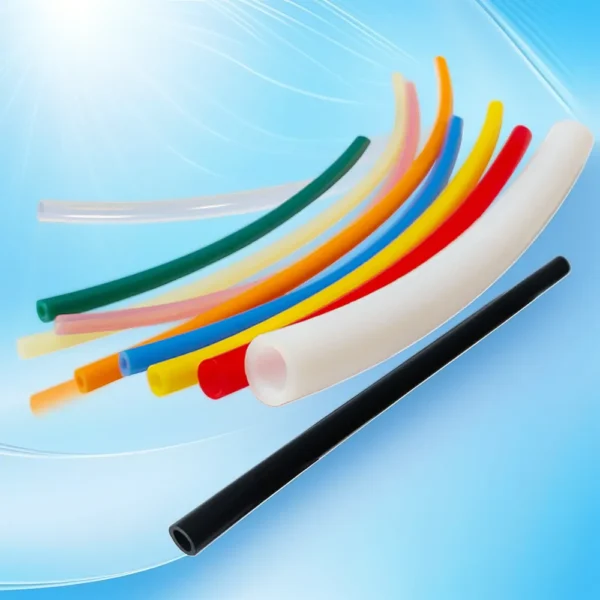
耐久性の高いPTFEライニングホース | 過酷な環境に適した多層テフロンチューブ
PTFEライニングを施した高耐久性ホースは、多層構造を採用し、鉱業や化学処理における耐摩耗性を実現します。PTFEコアは紫外線による劣化や酸化に強く、外側の編組は引張強度を高めます。連続使用で10年以上の耐用年数を実現します。
Manufacturing: It’s Not Just Melting Plastic
A lot of buyers don’t realize that you don’t screw-extrude PTFE like you do PVC. You can’t. It doesn’t melt and flow like honey; it turns into a thick gel.
私たちは以下を使用します RAM Extrusion. Think of it like a giant, high-pressure syringe. We mix fine PTFE powder with a lubricant (naphtha), compress it into a billet, and ram it through a die.
Then comes the oven. We have to sinter (bake) the tube to burn off the lube and fuse the particles.
Why does this matter to you?
Because if the sintering temp is off by even a few degrees, you get “uncured” tubing that is weak and chalky, or “over-cured” tubing that degrades and creates particles. Particle generation in a medical device is a massive FDA red flag.
We monitor our temperature profiles 24/7. It’s boring work, but it ensures that when you get a shipment from テフロンX, it’s fully sintered and clean.
Customization Options for Endoscopy
We don’t really do “standard” here. Most of what we ship is built to a print. Here is what we are seeing demand for in 2024 and 2025:
Multi-Lumen Tubing
Single lumen is easy. But now engineers want 3, 4, or even 7 lumens in a single PTFE tube profile. One for the camera wire, one for water, one for air, one for the tool. Maintaining thin walls between these lumens without them blowing out during extrusion is an art form.
Radiopacity
Sometimes you need to see the tube under X-ray (fluoroscopy). We can blend Barium Sulfate (BaSO4) or Bismuth Trioxide into the PTFE paste before extrusion. Usually, a 20% loading gives you good visibility without ruining the mechanical properties.
Tie-Layers
For advanced catheter construction, we can co-extrude (well, technically co-process) layers, or provide etched liners ready for reflow with Pebax jackets.
FAQ: Questions We Get Asked Daily
Q: Can you hold tolerances tighter than +/- 0.001″?
答え: Yes, but it depends on the size. On very small micro-tubing (under 0.010″ ID), we can often hold +/- 0.0005″。それには非常に特殊な工具が必要であり,生産速度は低下しますが,神経血管や眼科用途においては,日常的に行われています。
Q:滅菌はPTFEの潤滑性に影響を及ぼしますか?
答え: 一般的には,いいえ。PTFEは極めて安定しています。ガンマ線照射 は, PTFEを劣化させ「素材を脆くする」可能性があるため,通常PTFEベースのデバイスにはEtO「エチレンオキシド」またはオートクレーブを推奨しています。もしガンマ線照射が必須である場合は,異なるグレードのフッ素樹脂や放射線安定化ブレンドの使用について検討する必要があります。
Q:押し出し成形可能な最小肉厚はどのくらいですか?
答え: 当社は、肉厚を以下まで押し出し加工することに成功しました 0.001″ (0.025 mm)。このチューブを潰さずに取り扱うのは困難なため,輸送や組み立ての際に真円度を維持できるよう,サポートマンドレル(内部に銀メッキ銅線の芯材を挿入したもの)を同梱して出荷することが一般的です。
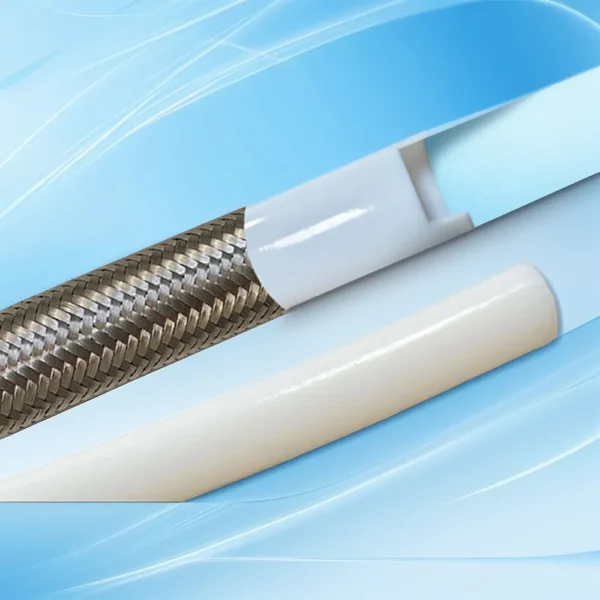
PTFEチューブメーカー | 化学・医療用耐熱テフロンチューブ
PTFEチューブ(ポリテトラフルオロエチレンチューブ)は、優れた耐薬品性と-200℃~+260℃の熱安定性を備え、化学処理や製薬用途における腐食性流体の移送に最適です。摩擦係数0.04と非粘着性を備えた当社のPTFEチューブは、エネルギー損失を最小限に抑え、汚染のない操作を保証します。最大1.6MPaの圧力に対応するため、ステンレス鋼編組によるカスタマイズも可能です。
Let’s Solve Your Tubing Headache
Look, sourcing components for medical devices is stressful. You have ISO standards to meet, FDA 510(k) submissions to file, and engineers breathing down your neck about “tactile feel.”
You don’t need a vendor who just sells plastic straws. You need a partner who understands medical extrusion.
で テフロンX, we specialize in the hard stuff. The tight tolerances. The thin walls. The custom profiles that other extrusion houses decline.
If you are working on a next-gen endoscope or just sick of your current liner failing QC, reach out to us. I’d love to take a look at your drawings and see if we can shave off that friction.
Ready to talk specs?
- Visit our product page:Check out our PTFE Tubes
- Drop me an email directly: アリソン・イェ@teflonx.com
- Contact us via the web:https://teflonx.com/contact-us/
Don’t let friction kill your device’s performance. Let’s get it smooth.
