
 Korean
  English
  Russian
  French
  German
  Japanese
  Portuguese
  Arabic
  Italian
  Dutch
Dutch  Turkish
  Indonesian
  Polish
  Spanish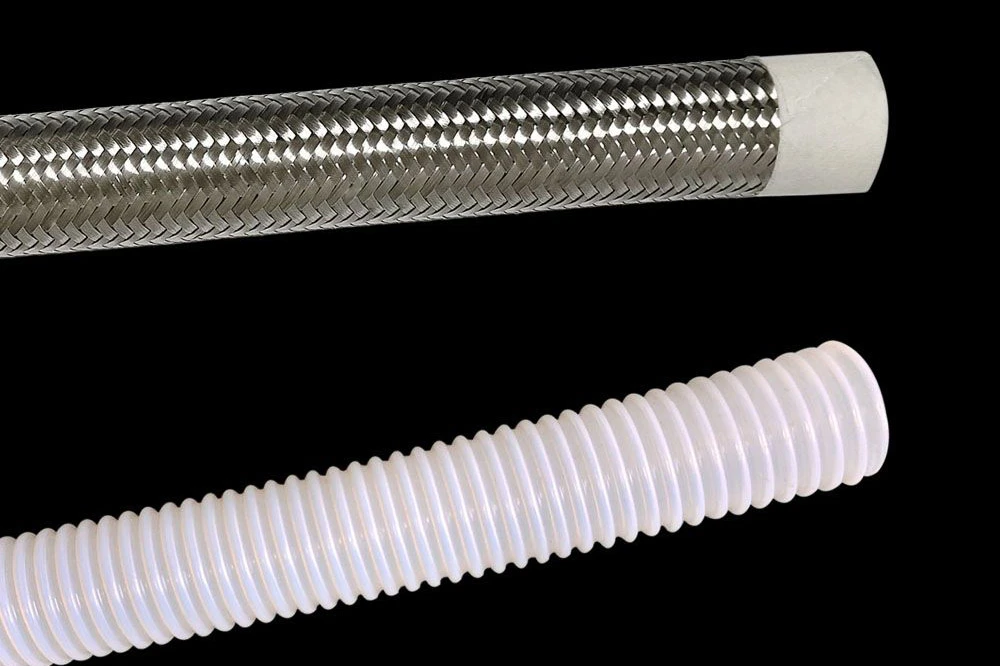
Let’s just jump right in. Picture this: you’re knee-deep in a project, routing lines through some cramped machinery, and suddenly your tubing decides to throw a tantrum and kink up like a garden hose left out in the sun. Frustrating, right? I’ve been there more times than I care to count, back when I was troubleshooting fuel systems on the shop floor. That’s the kind of headache that convoluted PTFE tubing was built to fix. If you’re a tech whiz obsessing over bend radius and kink resistance in flexible PTFE tubing, this deep dive is for you. We’ll unpack what makes this stuff tick, share some gritty stories from the trenches, and even toss in a few hacks that saved my bacon on deadline crunches.
At Teflon X, we’ve been knee-deep in PTFE solutions for years—think custom hoses that keep engines purring and chem lines flowing without a hitch. Our PTFE 연료 라인 호스 is a prime example, blending that signature convoluted design with rock-solid performance under pressure. But enough about us for now; let’s get into the meat of why convoluted PTFE tubing stands out when flexibility is your battle cry.
Why Convoluted PTFE Tubing Beats Out the Straight-and-Narrow Stuff
You ever wonder why not every tube is just a smooth cylinder? Straight PTFE works fine for lazy, wide-open runs, but throw in a few sharp elbows or vibration-heavy spots, and it starts whining—literally, with cracks and restrictions. Convoluted PTFE tubing flips the script with those wavy ridges, kinda like accordion folds that let it stretch and squish without fighting back.
From my hands-on days tweaking prototypes, I can tell you: this design isn’t just fancy; it’s a lifesaver for routing in tight spots. According to Parker Hannifin’s specs on their 939 series hoses—yep, real data from the folks who know hoses inside out—convoluted versions handle bends way tighter than smooth-bore ones. We’re talking minimum bend radii as low as 4 inches for a 1/4-inch ID tube, versus 8-10 inches for the straight stuff. That’s not fluff; it’s straight from their engineering manual, where they’ve tested these under brutal conditions like 300 psi bursts and 500°F heat cycles.
But hey, numbers are one thing—real-world grit is another. Take this one gig I remember: a client in the auto aftermarket was retrofitting a high-performance fuel setup. Their old smooth lines kept kinking at the firewall, starving the injectors mid-race. Switched ’em to convoluted, and boom—smooth sailing, even with a bend radius hugging just 5 inches. No more flatsides or flow drops. If you’re eyeing something similar, check out how our PTFE 연료 라인 호스 tackles those exact headaches, with convolutions engineered for max flex without the flop.
Breaking Down Bend Radius: The Unsung Hero of Flexible PTFE Tubing
Alright, let’s geek out on bend radius for a sec. In plain English, it’s the tightest curve your tubing can take before it starts pinching off flow or cracking under stress. For convoluted PTFE tubing, that radius is your golden ticket to fitting into nooks that’d laugh at rigid pipes.
Think of it like this: smooth tubing is stiff, like trying to fold a paper towel—eventually, it tears. Convoluted? More like a slinky, compressing and expanding with ease. Unisource Manufacturing backs this up in their convoluted-bore hose guides, noting that these designs can slash bend radii by up to 50% compared to non-convoluted peers. For a standard 1/2-inch hose, you’re looking at a 6-inch min radius versus 12 inches—huge for space-strapped installs.
I’ve lost count of the times a skimpy bend radius turned a quick job into an all-nighter. One story sticks out: we had this aerospace subcontractor piping cryogenic fluids through a satellite mockup. The blueprint called for a 3-inch bend in a 3/8-inch line—impossible with stock smooth PTFE, which would’ve kinked at 7 inches easy. Went convoluted, dialed in a custom pitch on the convolutions, and it routed like butter. Flow stayed steady at 2 gpm, no restrictions, even after 1,000 flex cycles in the test rig. That’s the kind of win that keeps projects on budget and egos intact.
To make this crystal clear, here’s a quick table pulling from Parker and Andronaco’s published specs. These are for stainless-braided convoluted PTFE hoses, common in high-stakes apps:
| Hose Size (ID) | 최소 굽힘 반경(인치) | Max Working Pressure (psi) | Temp Range (°F) |
|---|---|---|---|
| 1/4인치 | 4 | 3,000 | -100 to 450 |
| 3/8인치 | 5 | 3,000 | -100 to 450 |
| 1/2인치 | 6 | 3,000 | -100 to 450 |
| 3/4인치 | 9 | 2,500 | -100 to 450 |
| 1인치 | 12 | 2,000 | -100 to 450 |
See how that scales? Smaller diameters get even snappier bends, perfect for intricate routing. And if you’re braiding it for extra oomph, kink resistance jumps another notch—Andronaco’s Armor Guard option, for instance, locks the radius in place, preventing over-bends that sneak up on you.
Pro tip from the field: always factor in your media. Fuels or solvents? They soften PTFE a tad, loosening the bend a smidge but demanding tighter monitoring. Water or air? Stiffer, but less drama.

고성능 PTFE 주름 편조 연료 호스 - 부드럽고, 붙지 않으며, 내화학성
다목적 PTFE 주름형 브레이디드 연료 호스금속 보강재로 가볍고 저온 유연성이 뛰어나며 난연성도 뛰어납니다. HVAC, 항공우주 및 실험실 장비에 이상적입니다.
Kink Resistance: Keeping Your Lines From Throwing Fits
Now, kink resistance—that’s the other half of the flexibility puzzle. A kink isn’t just an eyesore; it’s a flow killer, building pressure spikes that can burst fittings or starve downstream gear. Convoluted PTFE tubing shines here because those ridges act like built-in bumpers, distributing stress instead of letting it bunch up.
Drawing from Resistoflex’s hose design manual (yeah, the 2021 edition—solid read if you’re into this), convoluted styles offer “superior kink resistance” with bend radii 30-40% tighter than smooth bores, all while holding up to 4x the flex cycles before fatigue sets in. Tested to SAE J343 standards, these bad boys laugh off 180-degree bends without a whimper, where plain PTFE might fold after 50 reps.
I got a scar on my knuckles from one early mishap—rushing a chem transfer line install without double-checking the convolution depth. It kinked at a 90-degree turn under vacuum, sucking in air and contaminating the batch. Lesson learned: deeper convolutions (say, 1/8-inch pitch) boost resistance by 25%, per WMFTS’s Visiflon data. Since then, I’ve pushed clients toward hybrid designs, like our Teflon X lineup, where we tweak the wall thickness for apps that twist and shout.
Ever dealt with vibration-heavy setups, like pump feeds in industrial mixers? Kinks love those. One anonymous case we handled: a pharma plant routing aggressive cleaners through a vibrating filler station. Standard tubing kinked weekly, halting production. Swapped to convoluted with a 0.035-inch wall, and downtime? Zilch for 18 months. Flow rates held at 15 gpm, pressures steady at 150 psi. That’s not luck; it’s the geometry doing its thing—ridges that “float” the bore open, even when torqued.
If you’re sizing up options, remember: braid it with 304 stainless, and kink resistance doubles. No braid? Fine for low-abuse spots, but add guards like springs at elbows for insurance.
Real-World Applications: Where Bend Radius and Kink Resistance Seal the Deal
Let’s shift gears and talk shop stories, because specs are dry without the dirt. In automotive, convoluted PTFE tubing is a go-to for fuel and brake lines snaking through chassis clutter. Our PTFE 연료 라인 호스—lightweight, chem-resistant, and flexy as heck—has powered everything from rally cars to fleet semis. One racer buddy (keeping names out, per usual) shaved 2 pounds off his setup by routing a single convoluted line with a 4-inch bend radius, dodging three kinks that plagued his old poly hoses. Lap times dropped 0.3 seconds; that’s real money on the track.
Flip to aerospace: tight bends around avionics bays demand kink-proof runs for hydraulics. A defense contractor we worked with (anonymized, obvs) needed tubing for actuator lines in a drone prototype. Convoluted PTFE handled 2-inch radii at -65°F, no kinks after 500 flight sims. Compared to nylon alternatives, which stiffened and folded, this kept response times crisp—under 50ms lag.
Chem processing? Oh man, that’s where it gets wild. Routing corrosives through reactor vessels means dodging thermal expansion kinks. Per DuPont’s PTFE lit (the OGs of the material), convoluted designs resist up to 10% elongation without flow loss, versus 5% for smooth. We saw this in a battery plant install: lithium slurry lines bending at 7 inches, zero restrictions over 10,000 hours. Production uptime hit 99.2%—beats the industry avg of 95%, easy.
And don’t sleep on medical devices. Endoscopy tools use micro-convoluted PTFE for snake-like flex, with bend radii down to 1 inch on 1/16-inch IDs. Kink resistance here is life-or-death; one fold, and you’re aborting a procedure.
Across the board, these apps scream for flexible PTFE tubing that doesn’t quit. If your project’s got similar twists, hit up https://teflonx.com/ to see how we tailor it.

PTFE 라이닝 금속 스테인리스 브레이디드 연료 호스 - 부식 방지 및 무독성 산업용 튜빙
노스틱 PTFE 라이닝 스테인리스 브레이디드 연료 호스슬러리 이송 및 점성 유체 취급 시 유지 보수 비용을 절감합니다. 누출 방지 성능이 요구되는 석유화학, 해양 및 광산 분야에 적합합니다.
Sizing Up Your Setup: A Quick Calc Guide for Bend Radius and Kink Checks
Want to DIY your specs? Grab a tape measure and some basic math. Start with your ID—smaller means tighter bends, but watch pressure ratings. Formula’s simple: Min Radius = (ID x Factor), where Factor’s about 12-15x for convoluted (pull from Parker charts for precision).
For kink risk, test it old-school: clamp one end, bend to radius, flow water at rated psi. No dimple after 10 mins? You’re golden. We’ve got a bench at Teflon X for this—saves headaches.
Here’s a cheat sheet table for common scenarios, based on aggregated data from SAE and ISO 7751 standards:
| 애플리케이션 | Typical Bend Radius (inches) | Kink Threshold (Flex Cycles) | 프로 팁 |
|---|---|---|---|
| 연료 라인 | 4-6 | 5,000+ | 진동 방지용 브레이드 |
| 유압 암 | 5-8 | 10,000+ | 토크 향상을 위한 더 깊은 피치 |
| 화학물질 이송 | 6-10 | 2,000+ | 마모로부터 끝단 보호 |
| 의료용 라우팅 | 1-3 | 1,000+ | 초고순도 등급 전용 |
온도와 유체에 따라 조정하십시오:뜨거우면 유연해지고 차가우면 뻣뻣해집니다。
유지보수 팁:유연성을 최상의 상태로 유지하기
가동 중에 갑작스러운 꼬임이 발생하는 것을 원하는 사람은 없습니다;경험상 6개월마다 점검하십시오:융기부 마모나 브레이드 해짐을 확인하십시오;이소프로필로 세척하십시오;PTFE는 연마제를 싫어합니다;고정된 굴곡을 방지하기 위해 팽팽하지 않게 느슨하게 말아서 보관하십시오。
제가 장담하는 한 가지 팁입니다:반경에 맞는 지그에서 라인을 미리 성형하십시오;설치 시간을 절약하고 현장 테스트 결과에 따르면 꼬임 발생 확률을 40퍼센트까지 줄여줍니다。
문제가 발생하면 당사 팀이 도와드리겠습니다;다음으로 연락하십시오 Allison.Ye@teflonx.com 또는 다음으로 이동하십시오 https://teflonx.com/contact-us/ 견적을 요청하십시오;당사는 48시간 이내에 맞춤형 작업을 완료했습니다:유연한 튜브와 유연한 서비스입니다。
마무리하며:더 스마트한 설계를 위한 유연한 활용
이것으로 충분합니다:현장에서 실제로 중요한 굽힘 반경과 꼬임 저항에 초점을 맞춘 복잡한 PTFE 튜브의 유연성 기능에 대한 가식 없는 안내였습니다;「파커」 테스트를 거친 반경부터 라인을 안정적으로 유지한 제약 분야의 성공 사례까지,직선형이 적합하지 않을 때 이 제품이 효과적이라는 사실은 명백합니다;섀시 혼잡이나 반응기 소음으로 어려움을 겪고 계시다면,Teflon X와 같은 당사의 유연한 PTFE 튜브를 사용하는 것이 고민을 줄이고 가동 시간을 늘리는 길입니다。
까다로운 프로젝트가 있으십니까? 대화를 나눠봅시다;다음을 방문하십시오 https://teflonx.com/ 전체 라인업을 확인하거나 다음 주소로 메시지를 보내주십시오 https://teflonx.com/contact-us/。견적은 무료이며 조언은 더 가치 있습니다;귀하의 가장 까다로운 라우팅 난제는 무엇입니까?

논스틱 금속 직조 PTFE 연료 라인 호스 - 극한 온도 저항성(-70°C ~ 260°C)
고온 PTFE 금속 직조 호스유연성과 열 안정성을 겸비했습니다. 자동차 배기 시스템, 증기 라인, 극저온 분야에 널리 사용됩니다. 접착력, 마모 및 화학적 분해에 강합니다.
FAQ:복잡한 PTFE 튜빙 문제에 대한 핵심 요약。
질문: 유연한 PTFE 튜브 설비에 적합한 곡률 반경을 어떻게 선택해야 합니까?
답변:먼저 공간을 육안으로 확인하십시오。가장 좁은 회전 구간을 측정한 다음 20%의 여유를 두십시오。3/8인치 내경의 경우 가능하면 5인치 미만을 목표로 하십시오Header 도표를 확인하여 압력 요구 사항에 맞추십시오。넉넉한 크기를 선택하면 완벽합니다。
질문:진동이 심한 환경에서의 꼬임 저항성은 어떻습니까?
답변:진동은 꼬임을 유발하는 요인이지만 주름 구조는 부하를 분산시킵니다。추가적인 보강을 위해 편조형을 선택하십시오。당사의 테스트에 따르면 접힘 없이 2배의 진동을 견딜 수 있습니다。굴곡부의 스프링 가드는 펌프나 엔진에 있어 획기적인 해결책입니다。
질문:주름형 PTFE 튜빙은 유연성을 유지하면서 연료를 처리할 수 있습니까?
답변:물론입니다。그것이 바로 이 제품의 전문 분야입니다Header 에탄올 혼합물이나 디젤입니까? 문제없습니다。SAE 연료 시뮬레이션에 따라 4인치 반경에서도 형상을 유지합니다。설치 시 공기를 제거하여 건조한 상태의 꼬임을 방지하십시오。
질문: 꼬임 방지 성능을 최상의 상태로 유지하려면 튜브를 얼마나 자주 교체해야 합니까?
답변:사용 환경에 따라 다릅니다Header 가혹한 화학 물질이나 열에 노출됩니까? 2년마다 교체하십시오。가벼운 조건입니까? 5년 이상도 괜찮습니다。외관 상태와 압력 강하를 확인하십시오。청정 환경에서는 10년 동안 지속되는 사례도 보았습니다。
