
 Korean
  English
  Russian
  French
  German
  Japanese
  Portuguese
  Arabic
  Italian
  Dutch
Dutch  Turkish
  Indonesian
  Polish
  Spanish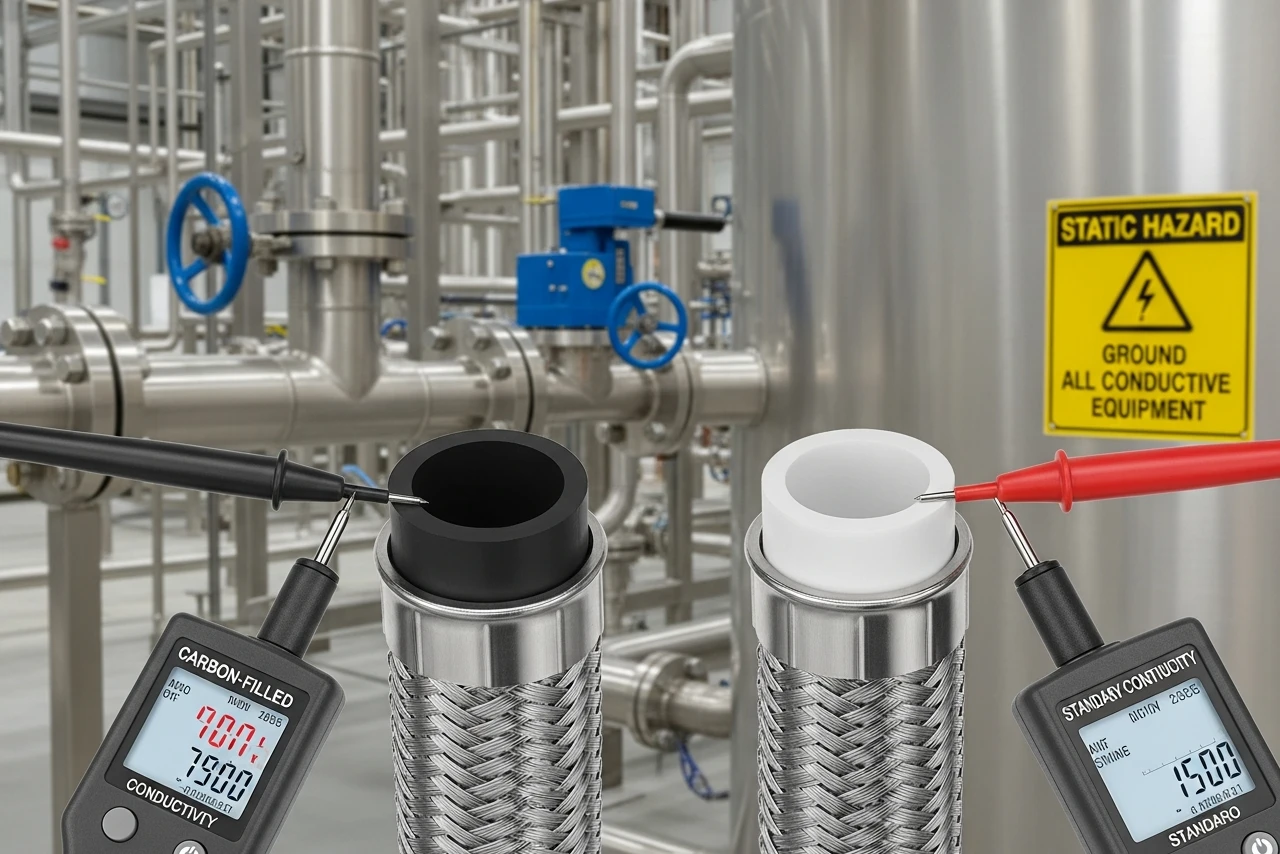
If you’ve ever stared at two PTFE hoses—one plain white inside, the other black—and wondered why one costs way more, you’re not alone. I’ve been knee-deep in this stuff for years at Teflon X, helping folks figure out if that pricier carbon-filled version is really worth it or if the standard one will do the job just fine. Truth is, it boils down to what you’re pumping through it and how much risk you’re willing to take with static buildup. Let’s break it down like we’re chatting over coffee, no fancy jargon, just real talk from someone who’s seen hoses fail (and succeed) in the wild.
Most buyers I talk to are in the same boat: they’ve got a setup handling chemicals, fuels, solvents, or steam, and they’re trying to avoid overspending on something “fancy” when the basic PTFE hose seems tough enough. PTFE is awesome—handles crazy temperatures from like -70°C up to 260°C, laughs at almost every chemical, super low friction so stuff flows smooth. But the catch? Pure PTFE is a fantastic insulator. Like, ridiculously good at holding onto static electricity. Flow a non-conductive fluid fast through a long hose, and bam—charge builds up inside the liner.
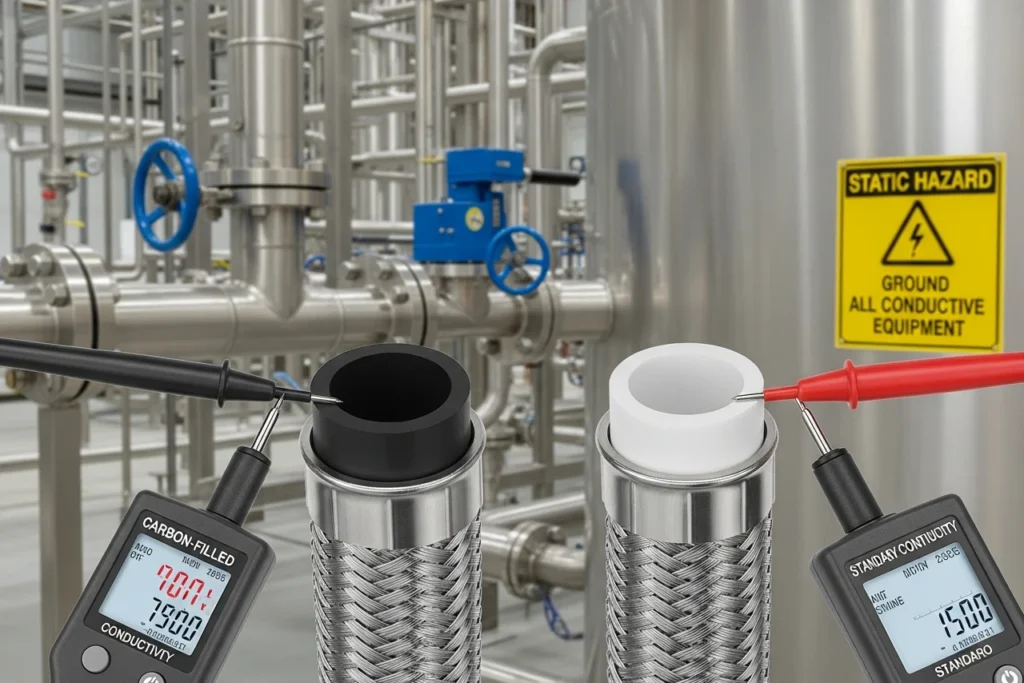
That’s where conductive vs non-conductive hose comes in. Standard PTFE (the white one) is non-conductive. Carbon-filled (usually black inside) has carbon black mixed in to make it dissipative. It safely bleeds off that static to the metal braid and fittings, which you ground properly. No spark, no pinhole burn-through, no surprise fire.
Why Static Electricity in Hoses is a Bigger Deal Than You Think
Picture this: fluid rushes through the hose, rubbing against the smooth PTFE wall. If the fluid has low electrical conductivity (most solvents, fuels, pure chemicals), it generates static just like shuffling your feet on carpet. In a non-conductive hose, that charge has nowhere to go. It builds until—zap—it arcs through the liner wall to the stainless braid. That arc can melt a tiny hole. At best, you get a leak. At worst, if the fluid is flammable and there’s vapor around… well, you get the idea.
I’ve seen photos from labs where they deliberately tested this—non-conductive PTFE hoses develop pinholes after high-flow tests with low-conductivity fluids. Real-world? There are documented cases in chemical plants and fuel transfer where static discharge ignited vapors. One report from a big manufacturer showed a hose failure leading to a flash fire because they skimped on conductive liner for acetone transfer. Scary stuff, and totally avoidable.
Industry folks aren’t making this up. Guidelines from places like Pacific Hoseflex and Swagelok say: if your fluid’s conductivity is below 10,000 pS/m (picoSiemens per meter)—think acetone, toluene, hexane, alcohols, most hydrocarbons—go conductive, especially at high flow rates or long hose runs. Even steam or compressed air can be an issue if it’s dry.
Quick Comparison: Carbon-Filled (Conductive) vs Standard (Non-Conductive) PTFE Hose
Here’s a simple table I throw together for customers—makes it way easier to see side-by-side:
| 특징 | Standard PTFE Hose (Non-Conductive) | Carbon-Filled PTFE Hose (Conductive/Anti-Static) |
|---|---|---|
| Inner Liner Color | Usually white/natural | Black (from carbon black) |
| Electrical Resistivity | 매우 높음(>10^17 ohm-cm) | 소산에 충분히 낮음(일반적으로 <10^6 ohm/sq) |
| 정전기 축적 위험 | 전도성이 낮은 유체의 경우 높음 | 안전하게 접지됨 |
| 가장 적합한 | 수성 물질, 식품/제약(비인화성), 브레이크/클러치 라인 | 인화성 용제, 연료, 화학 물질, 증기, 고속 이송 |
| 가격 | 더 저렴함(보통 20-50% 저렴) | 탄소 첨가제로 인해 더 비쌈 |
| 마모/마찰 | 때때로 약간 더 매끄러움 | 마찰이 아주 약간 더 높지만 여전히 우수함 |
| 충족하는 일반 표준 | 청정 애플리케이션용 FDA, USP | 동일 조건 + ATEX/방폭 구역인 경우가 많음 |
네, 전도성 제품은 초기 비용이 더 많이 들지만, 단 한 번의 사고라도 예방할 수 있다면 결과는 명백합니다。
실제 사례(익명)
몇 년 전 페인트 공장에서 톨루엔을 사용하던 고객이 있었습니다。「그냥 용제일 뿐인데 괜찮겠죠?」라며 표준 흰색 PTFE 호스를 사용했습니다。유량은 괜찮았고 호스 길이는 약 20미터였습니다维护。몇 달 후 호스 하나에서 미세한 누출이 생기기 시작했습니다。정전기 아크로 인한 핀홀로 밝혀졌습니다。그래서 당사의 검은색 탄소 충전 주름형 제품으로 교체했습니다—마치 당사의 유연한 주름관—그 후로는 문제가 전혀 발생하지 않았습니다。 업그레이드 비용보다 훨씬 더 큰 손실을 초래했을 가동 중단을 막아준 셈이지요。
또 다른 사례입니다: 에탄올 혼합물을 운송하는 제약 공장이었습니다。 「깨끗한」 작업이기에 비전도성 호스도 괜찮을 것이라 생각했지요。 하지만 에탄올의 전도성은 특히 순도가 높을 때 꽤 낮습니다。 펌프의 빠른 유속은 전하를 빠르게 축적시켰습니다。 저희는 전도성 제품을 권장했고 양 끝단의 전기적 연속성을 테스트했으며, 그 후로 수년 동안 원활하게 가동되고 있습니다。 스파크도 없고 검사관들도 만족해합니다。
레이싱 연료 라인(메탄올, E85)을 취급하는 자동차 튜닝 숍의 사례도 있습니다。 그들은 비전도성 PTFE에서 아크가 발생하여 핀홀이 생길 수 있다는 사실을 빠르게 깨달았습니다。 현재 대부분의 고성능 빌드에서는 카본 충전형 제품이 기본 사양으로 자리 잡았습니다。
실제로 언제 필요한가요 카본 충전형 버전이?
검토 시 다음 사항들을 자문해 보십시오 PTFE hose selection:
- 유체가 가연성 또는 폭발성입니까?(용제, 연료, 가스 등)
- 전기 전도성이 낮습니까?(10,000 pS/m 미만—유체의 사양서를 확인하십시오)
- 유속이 빠릅니까?(일반적으로 5 m/s를 초과하면 주의가 필요합니다)
- 호스 어셈블리가 깁니까?(길이가 길수록 더 많은 전하가 축적됩니다)
- 폭발 위험이 있는 환경입니까?(ATEX 구역, 먼지가 많거나 가연성이 높은 지역)
두 가지 이상 해당된다면 전도성 제품을 선택하십시오。 비용을 아끼려다 사고가 나 보험사에 경위를 설명하는 것보다 안전을 택하는 것이 현명합니다。
물, 냉각수, 식품 등급 자재 또는 사용자가 원하는 절연이 필요한 경우(일부 유압 리턴 라인 등)에는 표준형이 가장 적합하며 비용도 절감할 수 있습니다。
현장에서 전하는 몇 가지 추가 팁
- 항상 테스트하십시오 electrical continuity 전도성 호스의 경우—브레이드 작업이 올바르게 되었다면 양 끝단 사이의 저항이 100옴 미만이어야 합니다。
- 모든 것을 접지하십시오。 브레이드와 피팅이 전하를 외부로 배출합니다。
- Convoluted vs smooth bore? Convoluted (like our Flexible Corrugated Pipe) flexes better, easier to route, but smooth has less pressure drop if that’s critical.
- Don’t mix— if one section is non-conductive, the whole assembly might as well be.
We’ve got both at Teflon X, and honestly, most folks end up with the black conductive once they hear the risks. But we won’t upsell if you genuinely don’t need it.
Wrapping It Up – Which One Do You Need?
If you’re moving anything that can go boom or has low conductivity, spend the extra on carbon-filled conductive PTFE hose. It’s not about being fancy; it’s about not having a bad day. Standard works great for safe, non-flammable stuff and keeps your wallet happier.
Still on the fence? Shoot me an email at 앨리슨.예@테프론x.com 또는 연락처 페이지. Tell me what fluid, temp, pressure, flow rate—and I’ll tell you straight what makes sense. We can even quote both options side-by-side.
Or check out our black conductive 유연한 주름관—it’s one of our best-sellers for exactly these scenarios.
Stay safe out there.
FAQ – Carbon Filled vs. Standard PTFE Hose
1. What’s the main difference between conductive vs non-conductive hose?
The big one is static dissipation. Non-conductive (standard white PTFE) lets charge build up. Conductive (carbon-filled, black) safely drains it away through the hose wall to the braid. Use conductive whenever you’re worried about sparks.
2。 표준 PTFE 호스가 실제로 폭발을 일으킬까요?
Not always, but yeah—it can. If static arcs through the liner and ignites flammable vapors, absolutely. Seen it in labs and heard from plants that learned the hard way. Low risk isn’t zero risk.
3:카본 함유 호스는 추가 비용을 지불할 가치가 있습니까?
Almost always if your application matches the “risky” list above. The price jump is usually 30-50%, but replacing a failed hose (or dealing with a fire) costs way more. Plus peace of mind.
4。 연료 라인에 비전도성 PTFE를 사용할 수 있습니까?
In small, low-flow automotive stuff like brakes? Sure, lots do. For actual fuel transfer, especially race fuels or high-volume? Nope—go conductive. Most pros won’t touch white liner for fuel anymore.
5。 사용 중인 유체가 전도성 호스를 필요로 하는지 어떻게 확인할 수 있습니까?
빠른 확인:전기 전도성을 확인하십시오。10000 pS/m 미만이며 가연성인 경우 전도성이 있는 것으로 간주합니다。확실하지 않을 때는 검은색 제품을 사용하십시오。
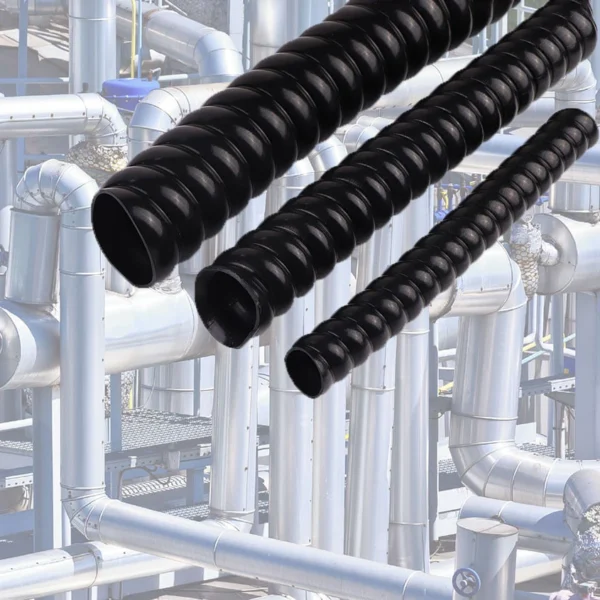
고온용 유연한 골판지 파이프 - 검정색 PTFE 호스
테플론 X 소재로 제작된 유연한 주름관은 자동차 및 화학 분야와 같은 고온 고압 환경에서 탁월한 성능을 발휘합니다. 이 검은색 PTFE 호스는 정교한 내벽으로 원활한 유체 흐름과 손쉬운 세척을 보장합니다. 나선형 보강재는 내구성을 높여 맞춤형 제작이 가능하고 신뢰성이 높습니다.
전체 라인업을 확인하려면 테프론x.com if you want more tech sheets or just wanna chat hoses. We’re here to help.
