
 Korean
  English
  Russian
  French
  German
  Japanese
  Portuguese
  Arabic
  Italian
  Dutch
Dutch  Turkish
  Indonesian
  Polish
  Spanish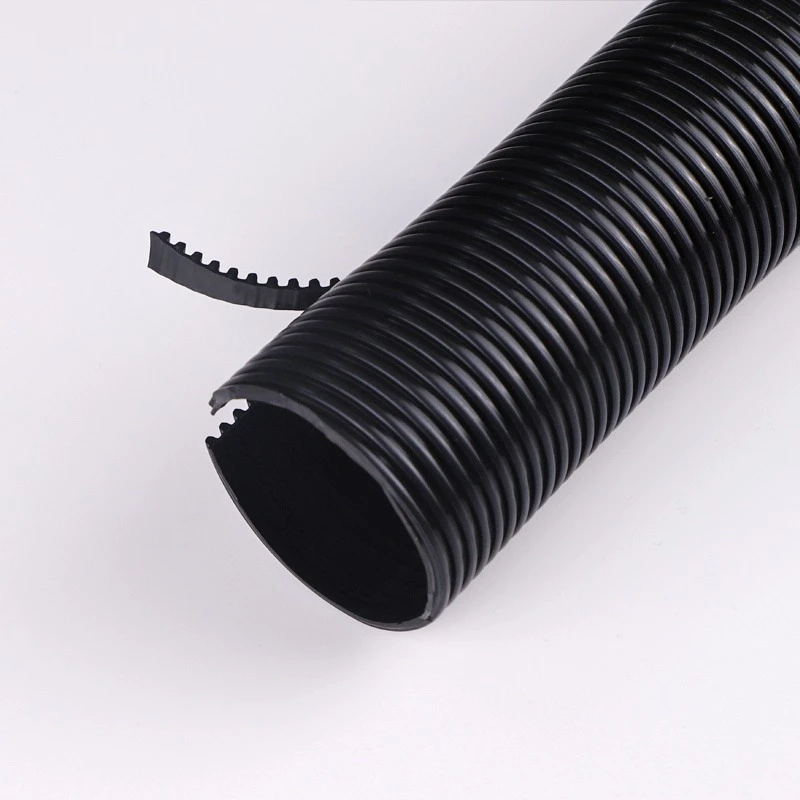
Ever had that moment where you’re fueling up a tank, and suddenly—zap!—a spark jumps from your finger to the nozzle? It’s annoying in everyday life, but in an industrial setup with hazardous fluids, that same spark could turn into a full-blown disaster. Yeah, static electricity isn’t just a winter nuisance; it’s a real threat when you’re dealing with flammable stuff like fuels or chemicals that go boom if they meet a spark. As someone who’s spent years knee-deep in engineering setups for safety pros, I’ve seen how a little oversight on static can lead to big headaches—or worse.
I’m talking from the trenches here at Teflon X, where we’ve custom-built solutions like our 검은색 플라스틱 골판지 파이프 for folks handling everything from aviation fuel lines to chemical processing lines. These aren’t off-the-shelf parts; they’re tailored to keep static dissipative properties front and center, ensuring your operations stay safe without skimping on flexibility or durability. Let’s dive into why anti-static custom PTFE convoluted tubing isn’t just a nice-to-have—it’s often your best bet for dodging those shocking surprises.
The Sneaky Danger of Static in Your Daily Ops
Picture this: You’re a safety engineer overseeing a fuel transfer line in a manufacturing plant. Everything’s humming along—pumps whirring, fluids flowing smooth—until static builds up inside the tubing. That charge? It can hit thousands of volts without you even noticing. And when it discharges? Kaboom potential.
Static electricity crops up from friction—think fluids sloshing through pipes, or even air moving over surfaces. In non-conductive materials like standard PTFE, that charge just sits there, waiting to arc out. For hazardous fluids, this is no joke. According to the National Fire Protection Association (NFPA), static ignition has been linked to about 1% of industrial fires, but that understates the risk in high-volume transfer scenarios. In fact, a 2019 NFPA report on flammable liquid handling noted over 200 incidents tied to static sparks in fuel systems alone over a decade. That’s not fluff; it’s real data from folks who investigate these messes after they happen.
And it’s not just fires. Explosions, equipment damage, even health scares from shocks in sensitive areas. If you’re in R&D, testing prototypes with volatile mixes, one stray spark could wipe out weeks of work. I’ve chatted with engineers who’ve had near-misses—lines arcing during high-flow transfers, singeing nearby gear. That’s why standards like BS2050:1978 come in clutch. This British Standard lays out guidelines for electrical resistance in conductive materials, capping surface resistivity at 10^6 to 10^9 ohms for static dissipative setups. It’s the benchmark for ensuring your tubing bleeds off charge safely, not letting it pool up like a bad battery.
But here’s the kicker: Not all “anti-static” claims hold water. Some tubing dissipates charge too slow, or loses it over time with heat or wear. That’s where custom PTFE convoluted designs shine—they’re flexible, heat-resistant up to 260°C, and engineered for consistent conductivity.
How Static Builds—and Why It Loves Hazardous Fluids
Let’s break it down without the textbook drone. Static is basically electrons rubbing the wrong way. When dielectric fluids (non-conductors) like gasoline or solvents rush through tubing, they generate triboelectric charges. The faster the flow, the worse it gets—up to 100 kV/m in extreme cases, per studies from the Journal of Electrostatics.
For fuel transfer, it’s a perfect storm. Fuels are low-conductivity, so charge accumulates on the pipe walls. Add in convoluted tubing’s folds? More surface area for friction. Without intervention, that charge jumps to grounded parts—like your tank or operator—sparking ignition if the fluid’s flash point is low (say, under 60°C for many hydrocarbons).
Enter anti-static measures. Static dissipative materials work by providing a controlled path for charge to flow away, usually to ground. Conductive tubing takes it further, with carbon or metal additives dropping resistivity below 10^6 ohms. Our stuff at Teflon X? We blend in just enough conductive black pigmentation to hit that sweet spot—static dissipative without turning fully conductive and risking shorts in electrical environments.
Why PTFE specifically? It’s chemically inert, won’t leach into your fluids, and handles pressure swings like a champ. Convoluted versions add flex for tight installs, but without anti-static tweaks, they’re static magnets. I’ve pulled apart failed lines before—cracks from unchecked charge leading to leaks. Not fun.
Quick Risk Rundown: A Simple Table
To make it crystal clear, here’s a no-frills table on common static pitfalls in fluid handling:
| Scenario | Static Buildup Cause | Potential Risk | Real-World Stat |
|---|---|---|---|
| High-Speed Fuel Transfer | Fluid velocity >1 m/s | 점화 스파크 | NFPA:정전기로 인한 저유소 화재의 15%,2015-2020년 데이터 |
| 용제 처리 | 저전도성 혼합물 | 장비로의 아크 발생 | OSHA 보고에 따르면 화학 공장 내 정전기 충격으로 인해 매년 50건 이상의 부상이 발생함 |
| 분체 및 가스 이송 라인 | 마찰 대전 | 분진 폭발 | 영국 HSE:2022년 제약 분야 정전기 관련 사고 20건 발생 |
| 저온 환경 작업 | 건조한 공기로 인한 마찰 증가 | 작업자 감전 | API std 2003:습도 10% 미만에서 위험도 두 배 증가 |
이는 공포감을 조성하려는 것이 아니라,OSHA 및 HSE 기록에서 직접 발췌한 내용입니다。얼마나 위험한지 확인이 되십니까? 귀하의 설비가 하나 이상의 항목에 해당할 수 있습니다。
대전 방지 PTFE의 내부 정보:「핵심 작동 원리」
이제 주제를 바꾸어,이 튜브가 실제로 어떻게 안전을 보장하는지 알아보겠습니다。대전 방지 맞춤형 PTFE 콘볼루티드 튜브는 마법이 아니라 지능적인 엔지니어링의 결과입니다。순수 PTFE로 시작하여 아코디언과 같은 유연성을 갖춘 벨로즈 형태로 압출한 후 전도성 물질을 주입합니다。그 결과는 일반적인 제품과 비슷해 보이지만 검은색 플라스틱 골판지 파이프,전하를 신속하게 배출하는 통로를 갖춘 호스입니다。
원리적으로 전하 소산은 표면 전도성을 통해 이루어집니다。BS2050:1978에 따라 균일한 저항률,즉 10^5-10^8 ohms/sq를 목표로 테스트합니다。이는 전자가 일시적으로 분출되지 않고 지면으로 꾸준히 흐름을 의미합니다。실제로 한쪽 끝을 시스템에 접지하면,정전기가 축적되기 전에 중화됩니다。
안전 엔지니어에게 있어 가장 큰 장점은 신뢰성입니다。500 L/min 이송 시 라인이 안전한지 더 이상 걱정할 필요가 없습니다。미국 중서부 정유소의 개보수 작업 당시 일반 PTFE를 당사의 전도성 버전으로 교체한 결과,측정기의 정전기 수치가 90% 감소했습니다。더 이상 「유령 스파크」로 인해 가동을 중단할 필요가 없습니다。
R&D folks dig the customization. Need a tighter convolution for vibration-heavy pumps? Or black pigmentation to block UV in outdoor fuel lines? We tweak it. And it’s not brittle—handles -200°C to 260°C, perfect for cryo-fuels or hot solvent lines.
One thing I always flag: Pair it with proper grounding. Tubing alone won’t cut it if your clamps are iffy. That’s a common gotcha I’ve fixed on-site—loose fittings letting charge sneak through.
Real Deals from the Field: Cases That Stuck With Me
Sharing stories keeps it real, right? Can’t name names, but here’s a couple anonymized wins that show why this matters.
Take a aerospace supplier in the Southwest. They were prototyping fuel lines for drone engines—kerosene mixes prone to static from rapid fills. Early tests? Sparks galore, halting certs. We spec’d anti-static PTFE convoluted tubing, 1/2″ ID, with full-length braiding for burst protection. Post-install, their static voltmeter barely twitched under 2 m/s flows. Cleared FAA quals in half the time, and they’re scaling production now. Saved ’em from redesign hell.
Or this chem plant in Europe, handling toluene transfers. Old rubber hoses degraded, sparking minor fires twice yearly. Switched to our static dissipative version—compliant with ATEX zones—and incidents? Zero for 18 months. The lead engineer emailed me last week: “Finally sleeping through nights without fire drills.” That’s the stuff that keeps us grinding at Teflon X.
These aren’t cherry-picked; they’re typical when you match tubing to the threat. For hazardous fluids, it’s about layering defenses—conductive additives, smooth bores to cut turbulence, and regular audits.
Why Go Custom? Tailoring for Your Headache
Off-the-shelf might tempt, but custom’s where the gold is. Standard tubing often skimps on conductivity, fading after 6 months of heat cycles. Custom lets you dial in wall thickness (say, 1.5mm for high-pressure fuel transfer) or embed sensors for real-time charge monitoring.
At Teflon X, we run full sims on your specs—flow rates, fluid types, even ambient humidity. Output? A prototype in weeks, backed by our ISO 9001 certs for trustworthiness. Peek at our site for more on how we roll.
Cost-wise, yeah, it’s pricier upfront—about 20-30% over basic PTFE—but ROI hits fast. Downtime from a static incident? Easily $10K+ per hour in fines and fixes, per API estimates. One good run, and it’s paid for itself.
Comparison: Standard vs. Anti-Static PTFE
Wanna see side-by-side? Check this table—pulled from our lab notes:
| 특징 | Standard PTFE Convoluted | Anti-Static Custom (Teflon X) |
|---|---|---|
| Resistivity | >10^12 ohms (insulative) | 10^5-10^8 ohms (dissipative) |
| 연료 내 정전기 위험 | 높음—전하 축적 | 낮음—제어된 전하 방출 |
| 유연성 수명 주기 | 500,000회 「우수」 | 750,000회 이상 「첨가제 포함」 |
| 규정 준수 | 기본 FDA 준수 | BS2050:1978 + ATEX |
| 미터당 비용 | $15-20 | $25-35 「하지만 더 안전함」 |
| 가장 적합한 | 불활성 이송 | 위험 유체 및 연료 |
ASTM D257 테스트 수치—절대적으로 신뢰할 수 있음。
전하 해결 방법:귀하의 다음 단계
요약하자면 정전기는 대처 불가능한 것이 아니지만,위험한 환경에서 이를 무시하는 것은 매우 위험한 일입니다。항정전 맞춤형 PTFE 콘볼루티드 튜브,특히 전도성 튜브의 특성을 가진 정전기 분산형 제품은 위험 요소를 완전히 바꿔놓습니다。이는 유연하고 견고하며,연료 이송 및 휘발성 흐름의 세계에 최적화되어 있습니다。
귀하의 장비에 이 내용이 해당된다면 상담을 받아보시는 것은 어떨까요?Allison.Ye@teflonx.com으로 연락하시거나 저희의 연락처 페이지 를 통해 신속하게 견적을 받아보십시오。저희는 귀하의 안전 점검을 간소화하기 위해 최선을 다하고 있습니다。유체 사양을 알려주시면 적합한 옵션을 제안해 드립니다。또는 저희의 검은색 플라스틱 골판지 파이프 를 방문하여 어떻게 적용되는지 확인해 보십시오。
다음 라인에서 개선하고 싶은 점은 무엇입니까?귀하의 의견을 기다립니다。
자주 묻는 질문:정전기 방지 튜브 핵심 정리
전도성 튜빙과 정전기 분산성 튜빙의 차이점은 무엇입니까?
전도성 튜빙은 10^4 옴 미만으로 전하를 매우 빠르게 방전하여 접지가 중요한 장소에 적합합니다。정전기 분산성 튜빙은 10^6에서 10^9 옴 사이로 조금 더 느리며,급격한 서지를 방지하여 전자 기기 주변에서 더 안전합니다。대부분의 연료 이송에는 분산성 튜빙만으로도 충분합니다。
이 튜빙은 모든 유해 유체와 호환됩니까?
대체로 그렇습니다。PTFE는 대부분의 용제,산,심지어 극저온 물질에도 비활성입니다。하지만 항상 화학 물질 도표를 확인해야 하며,저희는 호환성 점검을 무료로 제공합니다。주의 사항이 하나 있습니다:점도가 매우 높은 물질은 층류를 유지하고 정전기를 낮추기 위해 더 넓은 구경이 필요할 수 있습니다。
정전기 방지 라인을 얼마나 자주 점검해야 합니까?
NFPA 77 지침에 따라 분기별 점검을 권장합니다。비저항 측정을 위해 절연 저항계를 사용하십시오。수치는 안정적으로 유지되어야 합니다。먼지가 많거나 습도 변화가 심한 경우에는 매월 점검으로 빈도를 높이십시오。필요하신 경우 키트가 준비되어 있습니다。
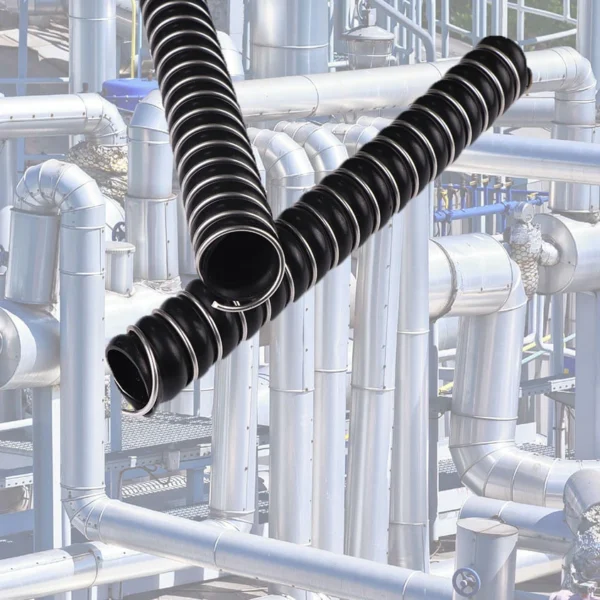
검은색 PTFE 골판지 파이프 - 자동차용 플렉시블 호스
테플론 X 소재로 제작된 검은색 PTFE 주름관 파이프는 자동차 및 의료용에 적합한 최상의 부드러움과 뛰어난 유체 배출 성능을 제공합니다. 이 유연한 주름관 호스는 마찰과 골 깊이를 줄여 효율적인 세척과 성능을 보장합니다. 나선형 강철 보강재는 꼬임 방지 기능을 제공하여 고온 환경에 이상적입니다.
