
 Korean
  English
  Russian
  French
  German
  Japanese
  Portuguese
  Arabic
  Italian
  Dutch
Dutch  Turkish
  Indonesian
  Polish
  Spanish
If you’re a production manager dealing with flammable liquids day in and day out, you know how quickly things can go wrong. One little spark from static buildup, and suddenly you’re facing a fire or worse. I’ve seen it happen more times than I’d like in plants just like yours – transferring solvents, fuels, or chemicals through regular hoses that don’t handle static properly. That’s where conductive PTFE hoses come in. They’re not some fancy add-on; they’re a straightforward way to cut down on those electrostatic discharge hazards that keep you up at night.
Think about it: when you’re pumping flammable stuff, friction inside the hose builds up charge. If it doesn’t have a way to dissipate safely, bam – spark, ignition, chaos. Conductive PTFE hoses, like our 정전기 방지 PTFE 편조 호스 at Teflon X, have a special liner that lets that charge flow out harmlessly, usually through grounding to the braid and fittings.
Understanding Electrostatic Discharge Hazards in Flammable Transfer
So, what’s the big deal with static in the first place? When liquids flow through a hose, especially non-conductive ones, charge separates and accumulates. In flammable transfer, this can lead to sparks energetic enough to ignite vapors.
Real-world stats back this up. According to reports from the U.S. Chemical Safety Board (CSB), static sparks have caused major incidents, like the 2007 and 2008 explosions at Barton Solvents facilities during flammable liquid transfers. In one case, inadequate bonding and grounding let static build up, igniting vapors and causing massive fires. NFPA 77, the Recommended Practice on Static Electricity, highlights how common this is in industries handling solvents and fuels.
OSHA guidelines under 29 CFR 1910.106 also stress preventing ignition from static during flammable liquid handling. They’ve cited cases where poor hose choices contributed to risks.
Common Sources of Static Buildup
Here’s a quick table breaking down where static often comes from in transfer ops:
| Source | How It Happens | Risk Level in Flammable Transfer |
|---|---|---|
| High-flow pumping | Turbulence in liquid | 높은 |
| Splash filling | Air mixing with liquid | 매우 높음 |
| Non-conductive hoses | Charge can’t dissipate | 높은 |
| Filters or narrow lines | Increased friction | Medium to High |
| Two-phase flow (liquid/gas) | Bubbling and agitation | 높은 |
Using an explosion proof hose or fuel transfer hose designed for static control flips this around.

정전기 방지 PTFE 브레이디드 호스 - 스테인리스 스틸 브레이드가 있는 유연한 가스 라인
우리의 정전기 방지 PTFE 브레이디드 호스 에 이상적입니다 유연한 가스 라인 응용 분야. 스테인리스 스틸로 강화된 이 브레이디드 연료 라인 내구성과 안전성을 보장합니다. 전도성 편조관 정전기를 분산시켜 유해한 환경에 적합합니다. 스테인리스 스틸 브레이디드 테프론 호스 옵션.
Why Regular Hoses Fall Short – And How Conductive PTFE Steps Up
Standard PTFE hoses are great for chemical resistance – they handle aggressive stuff without breaking down. But they’re insulators, so static just sits there building up. That’s fine for non-flammable apps, but in fuel transfer or solvent lines? Not so much.
Conductive versions add carbon black or similar to the liner, making it dissipative. Charge flows to the stainless steel braid and out through proper grounding. No pinholes from arcing, no sudden sparks.
I’ve worked with plants where switching to these cut near-misses way down. One chemical facility I consulted for (keeping it anonymous, of course) was transferring toluene blends. They had a couple close calls with sparks from old hoses. Swapped to conductive PTFE, grounded everything right, and problems vanished. Safer crew, smoother ops.
Key Benefits of Conductive PTFE Hoses
- 정전 소산: Safely bleeds off charge, reducing electrostatic discharge hazards.
- 화학적 호환성: Resists almost everything, from acids to solvents.
- 온도 범위: Handles extremes, often -70°C to +260°C.
- 유연성과 내구성: Braided stainless steel outer means it bends without kinking, lasts longer.
- 규정 준수: Meets standards like ISO 8031 for conductivity in hazardous spots.
Compared to rubber or plain plastic hoses, these are tougher and safer for explosion proof hose needs.
Real-Life Applications and Success Stories
In paint manufacturing, flammable solvents get pumped constantly. One mid-sized plant had recurring static issues with their fuel transfer hose setup. Sparks were jumping, scaring operators. They upgraded to anti-static braided PTFE lines, added bonding clips, and followed NFPA 77 grounding recs. No incidents since, and production uptime improved because less downtime for checks.
Another scenario: pharma plants handling acetone or ethanol. These low-conductivity liquids charge up fast. Conductive hoses prevent that buildup, keeping things explosion-proof.
Or think fuel depots – diesel, gasoline transfers. A proper fuel transfer hose with conductive liner avoids the risks seen in those CSB reports.
At Teflon X, we’ve supplied these to various ops, and feedback’s always about peace of mind. Our Anti-Static PTFE Braided Hose is built exactly for this, with flexible gas line capabilities too.
Best Practices for Safe Flammable Transfer
To get the most from conductive PTFE hoses:
- Always ground and bond – connect hose ends to verified earth points.
- Avoid splash filling; bottom-load if possible.
- Keep flow velocities reasonable – too fast ramps up charge.
- Inspect regularly for wear; damaged braid loses conductivity.
- Use in combo with other controls, like inerting or ventilation.
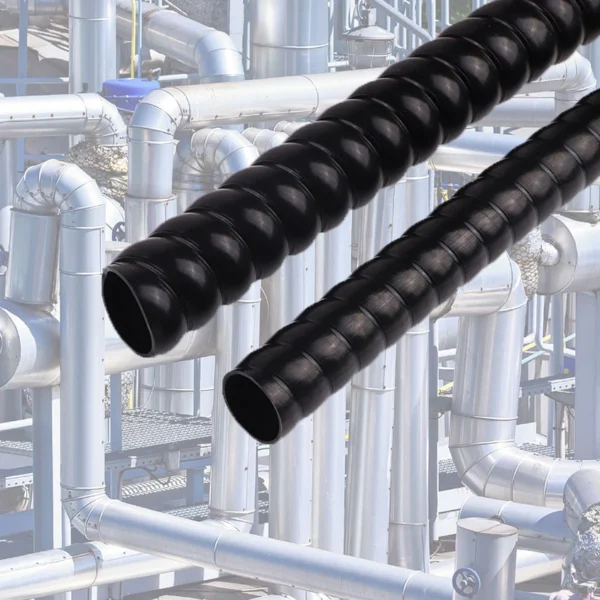
주름진 플렉시블 호스 - 의료용 PTFE 테프론 파이프
테플론 X 소재의 PTFE로 제작된 주름진 플렉시블 호스는 마찰이 없어 의료 장비 및 화학 공정에 적합합니다. 이 PTFE 호스는 매끄러운 내벽을 갖추고 있어 최적의 유체 배출과 위생을 보장합니다. 나선형 강철 와이어로 제작된 이 검은색 플라스틱 주름관은 꼬임 현상이 없고 사용자 정의 크기 조절이 가능합니다.
Comparison Table: Hose Types for Flammable Apps
| 호스 유형 | Static Control | 내화학성 | 가장 적합한 | Drawbacks |
|---|---|---|---|---|
| Standard Rubber | 가난한 | 중간 | General liquids | Wears fast, not for extremes |
| Plain PTFE | None | 훌륭한 | Corrosives, non-flammable | Static buildup risk |
| Conductive PTFE Braided | 훌륭한 | 훌륭한 | Flammable transfer, solvents | Slightly higher cost |
| Metal Hoses | Good (if grounded) | 좋은 | High pressure | Less flexible |
Clearly, for your needs as a production manager, conductive PTFE wins on safety.
Standards and Why They Matter
NFPA 77 recommends static control for flammable handling, including dissipative hoses. OSHA requires precautions against ignition sources like static. In hazardous locations, ATEX or similar directives often mandate conductive materials.
Choosing hoses that meet these isn’t just checking boxes – it’s protecting your team and facility.
FAQs About Conductive PTFE Hoses in Industrial Safety
What makes a hose “explosion proof” for flammable transfer?
It’s not fully explosion-proof on its own, but conductive liners prevent static sparks – a common ignition source. Pair with grounding for best results.
How do I know if my fuel transfer hose needs to be conductive?
If handling low-conductivity flammables like solvents or fuels, yes. Check flow rates and if vapors can form explosive mixes.
Can static buildup really cause explosions in factories?
Absolutely – CSB investigations show it happening during simple transfers without proper controls. Dissipative hoses help avoid that.
What’s the difference between anti-static and conductive hoses?
Anti-static reduces buildup; fully conductive (like carbon-lined PTFE) dissipates it fastest, ideal for hazardous spots.
How often should I replace conductive PTFE hoses?
Depends on use, but inspect monthly. Look for braid damage or stiffness. Quality ones last years with care.
If you’re dealing with these risks, it’s worth chatting about your setup. At Teflon X, we help folks like you find the right solutions. Drop us a line at 앨리슨.예@테프론x.com or head to our 연락처 페이지 for a quote on conductive PTFE options. Better safe than sorry, right? Let’s keep your plant running smooth and hazard-free.
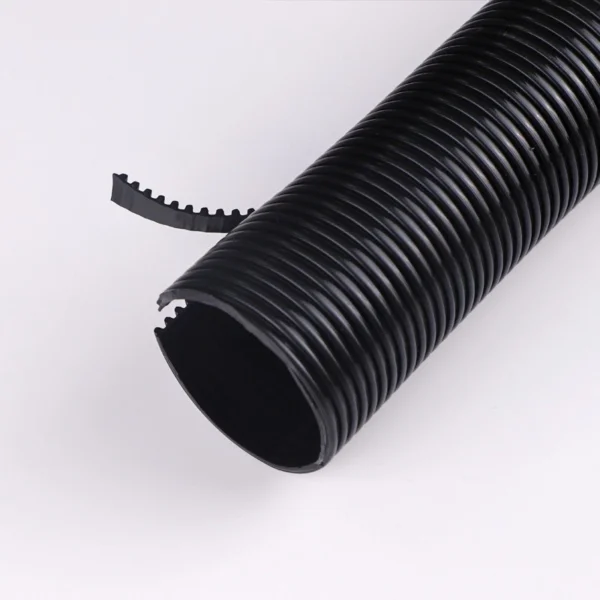
식품 가공용 유연한 PTFE 내부 평면 외부 골판지 튜빙
당사의 유연한 PTFE 내부 평면 외부 골판지 튜브는 세척이 용이하도록 매끄러운 내부 층과 식품 가공 라인의 유연성을 위해 골판지 외부 층으로 설계되었습니다. 이 매끄러운 내부 보어 외부 골판지 PTFE 튜브는 FDA 규정을 준수하는 무독성 식품 및 음료 이송을 보장합니다.
점성 물질을 운반하는 데 적합한 PTFE 벨로우즈 튜브는 향미 오염을 방지하고 잦은 세척에도 잘 견딥니다.
이 내부 평면 외부 파형 골판지 파이프를 귀하의 설비에 통합하세요. PTFE 내부 평면 외부 골판지 튜빙 구조는 위생과 내구성을 보장합니다.
