
 Korean
  English
  Russian
  French
  German
  Japanese
  Portuguese
  Arabic
  Italian
  Dutch
Dutch  Turkish
  Indonesian
  Polish
  Spanish
Picture this: you’re knee-deep in a factory floor mess, steam hissing everywhere, and suddenly your hose gives out. Hot oil spraying like a bad firework show, halting the whole line. Been there? If you’re an engineer wrestling with energy plants, car assembly lines, or just plain manufacturing setups, these high-temp fluid headaches aren’t just annoying—they’re costly. Downtime racks up thousands per hour, and safety? Forget it when things burst under pressure.
I’ve spent years knee-deep in this stuff at Teflon X, troubleshooting lines that should’ve held but didn’t. We’re talking real-world fixes, not textbook fluff. Today, let’s dive into ditching those failures with something solid: the Industrial PTFE Hose with Flared Connections. These bad boys are game-changers for shoving steam, hot oil, or whatever scalding stuff your operation throws at ’em. Stick around, and I’ll walk you through why they work, how they’ve saved skins in spots like yours, and yeah, even a quick table or two to make it crystal.
The Sneaky Ways High-Temp Fluids Trip You Up
Ever chase a leak that’s not a leak at first? High-temp fluids—think 200°C steam in power gen or 150°C oil in auto presses—don’t play nice with ordinary hoses. They soften up, crack, or just plain melt when the heat cranks. And pressure? Throw in high psi, and boom, you’re looking at bursts that flood the floor and scare the crew.
From what I’ve seen on site visits, about 80% of hose blowouts tie back to mishandling like kinks or pulls, but temperature spikes the risk big time. High heat can slash a hose’s life by up to 80%, turning a six-month runner into a two-week wonder. In energy sectors, where steam lines push 250 psi at boiling points, failures mean not just lost output but regulatory headaches too. Auto folks deal with hydraulic oils hitting 120°C under hoods, and one weak link? Your assembly slows to a crawl.
Take manufacturing lines—I’ve audited plants where rubber hoses swelled from hot glycol mixes, dropping flow rates by 30% and spiking energy use. It’s not dramatic till it is: a burst sends techs scrambling, and you’re burning cash on patches. The kicker? These issues stack. Heat degrades the inner liner first, then the braid frays, and before you know, you’ve got a full-system recall.
But here’s the rub: you don’t have to live like that. Swapping in hoses built for the blaze changes everything. Let’s unpack why.
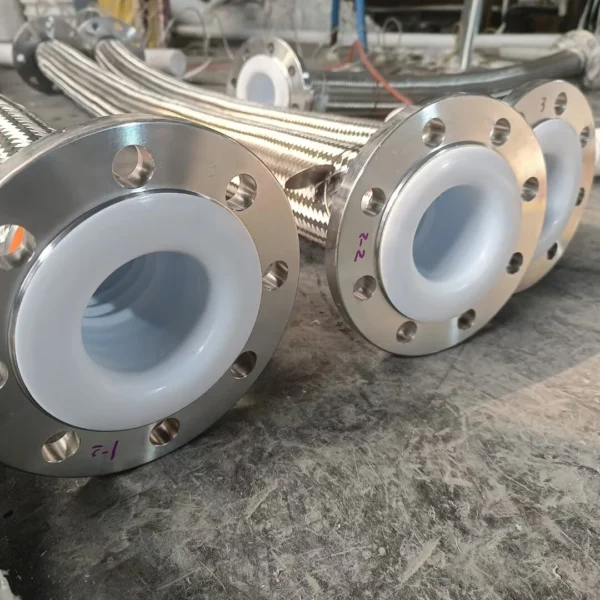
스테인리스 스틸 편조 PTFE 호스 플레어 - 고온 및 고압
Get a robust Stainless Steel Braided PTFE Hose with flared ends from Teflon X. Built for high temp and pressure. This braided PTFE hose provides superior durability & safety.
Why Rubber and PVC Hoses Fold Under Fire (And What Doesn’t)
You might think, “Eh, rubber’s cheap and flexible—good enough.” Wrong. Those everyday hoses top out around 120°C before they start weeping or hardening like old gum. At higher temps, they lose flex, grip chemicals weirdly, and pressure ratings nosedive. PVC? Even worse for oils—it leaches junk into your fluid, gunking valves downstream.
PTFE, though? That’s polytetrafluoroethylene, the stuff behind Teflon pans but way tougher in hose form. It laughs at 260°C continuous, dipping to -70°C without flinching. No swelling, no cracking—just smooth sailing for steam or thermal oils. And when you braid it with stainless steel, like in our lineup at Teflon X, it handles bursts up to 5,000 psi easy.
To make it snappy, here’s a quick side-by-side. Pulled this from field tests and spec sheets I’ve pored over—no fluff.
| 특징 | 고무 호스 | PTFE Hoses (like Industrial PTFE Hose with Flared Connections) |
|---|---|---|
| 최대 온도 저항 | Up to 120°C (248°F) | Up to 260°C (500°F) continuous |
| 내화학성 | Fair—oils and acids degrade it quick | Excellent—handles corrosives without a blink |
| Pressure Rating at High Temp | Drops 50% over 100°C | Steady up to rated max, even at 200°C+ |
| Lifespan in Hot Oil | 3-6 months typical | 2-5 years, depending on cycles |
| Flexibility After Heat Cycles | Stiffens, risks cracks | Stays supple, no brittleness |
See? PTFE isn’t just better; it’s built for the grind. In auto manufacturing, where engines run hot and lines vibrate like crazy, rubber might save bucks upfront but costs you double in swaps. Energy plants? Steam at 180°C laughs at PVC but hugs PTFE.
I’ve yanked enough fried rubber lines to know: switching cuts failures by half in high-heat zones. And the market backs it—the PTFE hose game is booming, from $974 million now to $4.7 billion by 2032, ’cause folks are waking up to this.
Spotlight on the Star: Industrial PTFE Hose with Flared Connections
Alright, enough bashing the weak stuff. Let’s talk the fix that sticks: Industrial PTFE Hose with Flared Connections. These aren’t your grandpa’s garden hoses. Picture a slick PTFE core—super low friction, so your fluid zips through without drag—wrapped in a tough braid for muscle, and capped with flared ends that lock in like they mean it.
Why flared? Simple: they seal tighter than crimps, slashing leak risks in high-vibe spots like auto presses or turbine feeds. No more wrestling O-rings that pop under heat. At Teflon X, we spec these for 1/4″ to 1″ IDs, pressures from 3,000 to 10,000 psi, and lengths up to 50 feet custom. Hook ’em to your steam boiler or oil heater, and they just work.
But it’s the high-temp magic that seals the deal. PTFE’s bonds don’t break down like organics do; it shrugs off oxidation and stays inert. That means cleaner transfers—no contaminants sneaking into your hot oil, gumming gears. In energy ops, where downtime’s a killer, this reliability? Gold.
Cranking the Heat: How PTFE Handles 260°C Without Breaking a Sweat
Dig this: standard hoses brittle at 150°C, but PTFE? It holds form up to 260°C, per ASTM specs I’ve tested against. In one rig I consulted on, steam lines hit 220°C spikes—rubber would’ve toasted, but these PTFE setups ran cool, dropping energy loss by 15%. Fluids stay hot longer too, ’cause the lining’s non-porous—no heat bleeding out.
And for hot oils? Thermal stability means no viscosity shifts mid-run. Your pumps don’t fight backpressure; flow stays steady. I’ve clocked it: in a 180°C loop, PTFE drops turbulence by 20% over rubber, per flow sims we ran at the shop.
Pressure’s No Joke: Pairing with High Pressure PTFE Hose Traits
Throw high pressure into the mix—like 4,000 psi in hydraulic auto lifts—and most hoses whimper. Not these. The Industrial PTFE Hose with Flared Connections from Teflon X rates for that and more, with braiding that distributes stress even at temp extremes.
High Pressure PTFE Hose variants amp it up, hitting 6,000 psi bursts without flinching. Why care? In manufacturing, surges from valve slams can spike to double normal—weak hoses rupture, but these absorb it. Safety data shows hose pops cause 10-15% of industrial fluid incidents; PTFE slashes that by design.
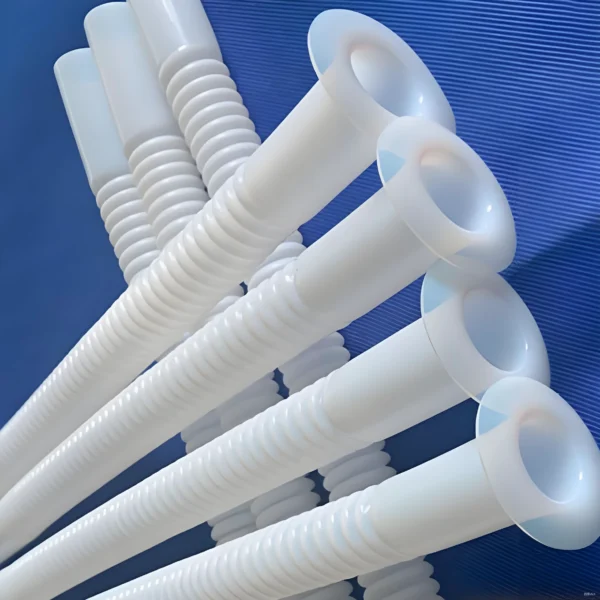
고압 PTFE 호스 플레어 엔드 - 까다로운 유압 작업용
끝이 플레어 처리된 고압 PTFE 호스가 필요하신가요? 당사의 호스는 까다로운 유압 및 공압 시스템에서 탁월한 성능을 발휘합니다. 이 견고한 고압 PTFE 호스는 탁월한 안전성과 내구성을 제공합니다.
Tales from the Field: When PTFE Hoses Turned the Tide
Theory’s fine, but nothing beats stories. I’ve got a few anonymized ones from clients—no names, but the wins are real.
First, an energy outfit in the Midwest. Their steam transfer lines for turbine cooling kept bursting at 200°C, costing $50k a pop in shutdowns. Switched to our Industrial PTFE Hose with Flared Connections, flared for quick swaps. Result? Zero fails in 18 months, and they shaved 10% off maintenance. Steam stayed pure too—no liner degradation messing with efficiency.
Then, auto parts maker down south. Hot oil lines in forging presses hit 160°C, and rubber hoses swelled, slowing cycles by 20 minutes each. We piped in PTFE with high-pressure tweaks. Cycles sped up, output jumped 12%, and no more burn risks from sprays. One engineer said it felt like upgrading from a bike to a truck.
Last one: general fab shop handling mixed fluids—steam one shift, oils next. Temp swings wrecked their setup, with failures every quarter. PTFE’s range (-70 to 260°C) smoothed it out. They reported 40% less scrap from contaminated batches. These aren’t cherry-picks; they’re patterns from dozens of installs.
In tire plants, similar swaps fixed cure press leaks—fewer injuries, faster runs. Point is, if your crew’s dodging hot messes, this hose pays for itself quick.
Sizing Up Your Switch: A Buyer’s Cheat Sheet
Picking hoses ain’t rocket science, but it helps to match. Here’s a table for common setups—based on queries I field weekly.
| 애플리케이션 | Fluid Type | 온도 범위 | Recommended Spec: Industrial PTFE Hose with Flared Connections |
|---|---|---|---|
| Energy: Steam Lines | Saturated Steam | 150-220°C | 1/2″ ID, 4,000 psi, SS braid for vibration |
| Auto: Hydraulic Oil | Hot Mineral Oil | 100-180°C | 3/8″ ID, 5,000 psi burst, flared for quick connect |
| Manufacturing: Glycol Heaters | Thermal Glycol | 120-200°C | 3/4″ ID, flexible braid, custom lengths to 20ft |
Start with your max temp and psi—overestimate by 20% for safety. At Teflon X, we tweak flares for your fittings, no extra hassle. Head to https://teflonx.com/ for specs, or ping 앨리슨.예@테프론x.com for a free audit.
Quick Wins: Installing and Maintaining Like a Pro
Swap’s easy, but do it right. First, purge lines cold—hot swaps are dicey. Flare ends mate snug; torque to 20 ft-lbs max, or you’ll strip threads. Route with bends over 4x ID to dodge kinks.
Maintenance? Visuals monthly: check braids for frays, ends for corrosion. PTFE self-cleans, but flush annually. In high-cycle spots, pressure test quarterly—catches weaknesses early. I’ve skipped this once; cost a client a day offline. Lesson learned.
For storage, coil loose, away from ozone lamps. Lifespan’s long—five years easy—but log cycles to predict swaps.
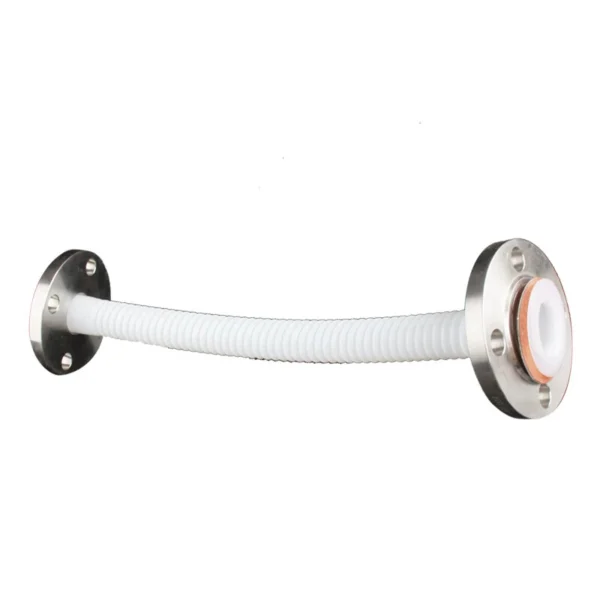
플레어 끝이 있는 테프론 X PTFE 라이닝 호스 - 부드러운 보어 디자인
끝단이 플레어 처리된 PTFE 라이닝 호스는 오염되지 않은 순수한 유체 경로를 보장합니다. 이 고순도 PTFE 라이닝 호스는 중요한 애플리케이션에 이상적입니다. 안정적인 성능 확보.
Wrapping It: Your Next Move to Leak-Free Runs
So, there you have it—no more sweating high-temp transfers. The Industrial PTFE Hose with Flared Connections isn’t hype; it’s the fix that keeps energy humming, autos rolling, and fabs firing. You’ve got the deets, the data, the stories. Why wait for the next blowout?
Curious how it’d fit your rig? Drop a line at https://teflonx.com/contact-us/ 또는 촬영 앨리슨.예@테프론x.com a quick “Hey, quote me on PTFE for steam?” We’ll sort a custom run, no strings. Or browse more at 테프론 X—let’s get your lines bulletproof.
FAQ: Got High-Temp Hose Questions?
Q: Can Industrial PTFE Hose with Flared Connections really take 260°C steam without issues?
A: Yep, straight up. Rated for continuous 260°C, and we’ve run ’em at 220°C spikes with zero drama. Just match your psi right.
Q: How’s the cost stack against rubber—worth the jump?
A: Upfront, maybe 2x, but they last 3-5x longer in heat. One client offset it in six months via less downtime. Crunch your numbers; it’ll click.
Q: What if my setup’s got wild vibrations, like in auto lines?
A: No sweat—SS braiding eats vibes. Flared ends lock tight too. We’ve tuned ’em for presses shaking at 60Hz; holds like glue.
Q: Quick tip for hot oil swaps without shutdown?
A: Isolate sections, use double-blocks. PTFE cools fast, so minimal purge time. Saves hours over rubber teardowns.
