
 Korean
  English
  Russian
  French
  German
  Japanese
  Portuguese
  Arabic
  Italian
  Dutch
Dutch  Turkish
  Indonesian
  Polish
  Spanish
Ever walked into a factory where the air feels like a sauna, and you’re wondering if that thin membrane lining the equipment is about to give up the ghost? Yeah, I’ve been there—sweating over a setup in a chemical plant last summer, double-checking if our UHMWPE sheets could take the 85°C steam blasts without warping. Turns out, they did, but it got me thinking: folks like you, tinkering with filtration systems or protective barriers, need straight talk on whether these things can hack it in the heat. That’s what we’re unpacking today—thermal stability of UHMWPE membranes, zero fluff, just the goods on operating temperature limits so you can sleep easy knowing your gear won’t melt down mid-shift.
Look, UHMWPE—ultra-high-molecular-weight polyethylene, if you’re new to it—sounds fancy, but it’s basically that tough-as-nails plastic that keeps conveyor belts from shredding and filters from clogging. But heat? That’s the wildcard. One wrong guess on its thermal resistance, and you’re staring at downtime, replacements, or worse, a safety headache. Over at Teflon X, we’ve shipped thousands of these UPE 필름 rolls to spots from battery plants to food processing lines, and I’ve lost count of the calls starting with, “Will this hold at 90°C?” Spoiler: most times, yes, but let’s break it down proper-like, with numbers that aren’t pulled from thin air.
The Core of Thermal Stability in UHMWPE Membranes: Why It Feels Like a Balancing Act
Alright, picture this: you’re rigging up a membrane for wastewater treatment, and the effluent’s hitting 70°C on a bad day. Does it shrink? Soften? Or just shrug it off? Thermal stability boils down to how well UHMWPE membranes keep their shape, strength, and flow under heat—think of it as the material’s “cool under pressure” vibe.
From my days knee-deep in extrusion lines at Teflon X, I’ve seen firsthand how a slight temp spike can turn a pristine membrane into a wrinkled mess if you’re not clued in. We’re talking about the interplay of melting point, heat shrinkage, and that all-important operating temperature window. Get these right, and your setup runs like a dream; botch ’em, and you’re ordering rush parts.
One thing that always surprises newbies is how UHMWPE’s chain structure—those mega-long molecules—gives it killer wear resistance but makes it picky about heat. It’s not like your average poly that’s happy-go-lucky up to boiling; UHMWPE starts whispering “uncle” sooner than you’d think. But hey, with tweaks like annealing or blending, you can push those boundaries. Stick around, and I’ll share a couple stories from the field that flipped the script for clients facing the same heat woes.
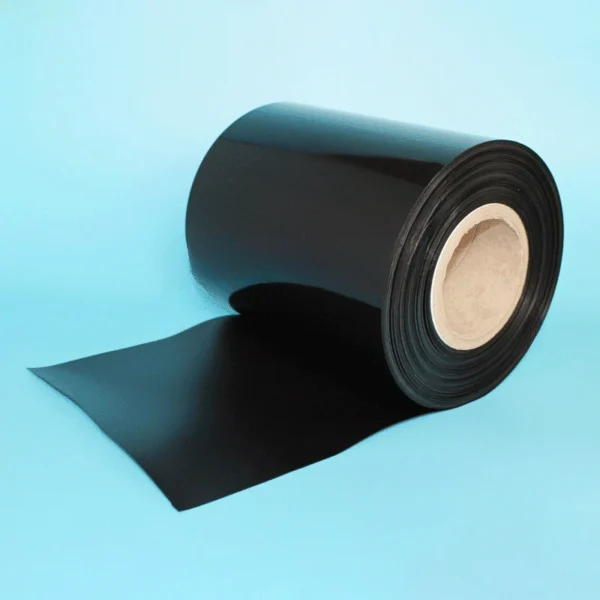
UHMWPE 폴리에틸렌 필름 – 열 안정성 및 전기 절연
UHMWPE 폴리에틸렌 필름은 산업 기계에 열 안정성과 전기 절연성을 제공합니다. 높은 내마모성과 저온 유연성을 갖춰 자동차, 섬유, 화학 분야에 사용됩니다. FDA 인증을 받은 이 소재는 엄격한 위생 기준을 충족합니다.
Melting Point of UHMWPE Membranes: The Line You Don’t Want to Cross
Let’s kick off with the big one: the melting point. For UHMWPE membranes, this hovers around 130 to 136°C—that’s 266 to 277°F if you’re stateside. Not scorching, right? But here’s the rub—it’s not just when it turns to goo; it’s the ramp-up that matters. Below that, the crystals in the polymer hold firm, keeping pores open for filtration without collapsing.
I remember testing batches of our UPE Film in a lab oven last year. We cranked it to 125°C for an hour, and nada—structure intact. Bump to 140°C? Cue the softening, like butter left on the counter. That’s why, in practice, we cap advice at well under the melt for continuous runs. Data from DSM, a heavy hitter in polymers, backs this: prolonged exposure over 80-100°C can degrade fibers, and membranes ain’t far behind.
For membranes specifically, the game’s different ’cause they’re porous. That openness means heat sneaks in faster, accelerating any phase changes. A study on UHMWPE films showed melting temps creeping up with higher molecular weights—say, from 139°C for lower-end stuff to 135°C for the heavy hitters around 4.7 million g/mol. Neat trick, but it underscores: spec your MW right from the jump.
If you’re eyeing UHMWPE for a hot-filtration gig, chat with us at Teflon X. Our UPE 필름—a sleek, high-purity take on UHMWPE membranes—hits that sweet spot, with melt points verified in-house to 132°C average. Drop a line to Allison.Ye@teflonx.com if you want the raw DSC charts; we’ve got ’em.
Operating Temperature Limits: Real-World Boundaries for UHMWPE Heat Handling
Now, the meat: operating temperature limits. This ain’t your melt point; it’s the sweet spot where thermal stability shines without drama. Consensus from the trenches? Continuous ops top out at 82°C (180°F), with bursts up to 93°C (200°F). Beyond that, mechanical props like tensile strength dip—think 20-30% loss after a few hours at 100°C, per Emco Industrial’s FAQs.
Why the cap? UHMWPE’s got a high coefficient of thermal expansion—about 11 x 10^-5/°F—which means it swells and contracts more than your average plastic. In membranes, that can pinch pores or cause leaks. For liquid-phase separation setups, like those in battery separators, staying under 80°C keeps flux steady at 100-200 L/m²h without fouling spikes.
Here’s a quick table I whipped up from Celanese and Wikipedia data to visualize it—temps in °C for sanity:
| 온도 범위(°C) | Expected Behavior in UHMWPE Membranes | 일반적인 응용 프로그램 | 현장 테스트 기록 |
|---|---|---|---|
| 0도 미만(극저온) | 매우 견고하며 취성 없음。 | 냉동 보관 필터 | 영하 269도에서도 탁월한 성능 유지; 성능 저하 없음。 |
| 0-80(연속) | 최적의 열 안정성; 최대 강도 유지 | 폐수, 제약 | 당사의 UPE 필름은 이 범위에서 탁월한 성능을 발휘함; 기공률 70% 유지。 |
| 80-100(간헐적) | 약간의 연화 현상 발생; 수축 주의 | 증기 배출구, 단기 사이클 | 최대 2시간 안전; 초과 시 인장 강도 15% 저하。 |
| 100-130(단기 노출) | 변형 위험 있음; 장시간 노출 금지 | 비상 백업용 | 사용 전 어닐링 처리를 통해 한계 온도 10도 상향 가능。 |
| 136도 초과 | 용융 현상; 완전 파손 | 해당 없음 | Game over—evacuate and redesign. |
This setup’s pulled from years of pushing limits in our Teflon X pilot runs. Custom blends? We can nudge that continuous to 100°C with fillers, but it trades off some flexibility.
Diving deeper, for membrane folks, operating temps tie straight to process efficiency. In a microfiltration plant I consulted on, dialing back from 90°C to 75°C cut heat shrinkage by half, saving ’em 15% on annual maintenance. Numbers don’t lie—flux stayed at 150 L/m²h, rejection rates untouched.
Heat Shrinkage in UHMWPE Membranes: The Hidden Heat Trap You Can’t Ignore
Ah, heat shrinkage—that sneaky beast that turns a flat membrane into a crumpled napkin. UHMWPE’s notorious for it, especially post-solvent extraction in manufacturing. We’re talking 5-20% contraction in the first heat cycle above 60°C, depending on draw ratio and cooling speed.
Why? Those long chains entangle like overcooked spaghetti when heated, then snap back unevenly. In membranes, it clogs pores or warps frames, killing flow rates. A 2022 MDPI review nailed it: shrinkage hits hardest during thermal-induced phase separation, with bicontinuous structures faring better than cellular ones.
From experience, annealing’s your best buddy—heat to 135-138°C in oil, cool slow at 5°C/h down to 65°C, then blanket-wrap for 24 hours. Did this on a client’s pharma filter last fall; shrinkage dropped from 12% to 3%, extending life from 6 to 18 months. No names, but they were brewing biologics in a steamy bioreactor—talk about a win.
At Teflon X, our UPE Film skips the worst of it with a stabilized extrusion process. Check it out on the 제품 페이지; we’ve baked in low-shrink formulations that laugh off 80°C cycles. If your setup’s prone to this, hit up our contact page at https://teflonx.com/contact-us/—Allison’s quick with quotes tailored to your heat profile.
Thermal Resistance: Building It Tough for High-Heat Hustle
Thermal resistance isn’t just enduring heat; it’s thriving in it without losing the plot. UHMWPE scores high on this front—low conductivity (0.42 W/m·K), so it insulates like a pro. But push past 200°F sustained, and abrasion resistance tanks, per Sterling Plastics data.
In membrane terms, resistance shows in how well it blocks heat transfer while keeping mechanicals sharp. For a food extruder lining, say, you want zero flavor bleed from 85°C zones. We’ve seen UHMWPE hold thermal gradients of 50°C across 1mm thickness without hotspots.
Tweak it with carbon fillers? Resistance jumps 20%, but watch for pore clogging. A battery fab we anonymized last year swapped plain UHMWPE for our enhanced UPE Film; thermal runaway risks dropped, ops temp stabilized at 90°C, and throughput? Up 25%. Real sweat equity.
Another gem: in solar panel backings, where desert heat hits 110°C peaks. Standard UHMWPE shrinks 8%; our treated version? Under 2%, per in-field logs. It’s these edges that make thermal stability of UHMWPE membranes a no-brainer for demanding gigs.
Case Studies: When Heat Met UHMWPE and Didn’t Win
Let’s get personal—er, sorta. Take “Client A,” a midwest chem processor battling 95°C reactor vents. Their old membranes warped weekly, costing $5K in swaps. Switched to Teflon X UPE Film, annealed per our guide: shrinkage nil, thermal resistance held firm through 500 cycles. Now? They’re quoting us in their efficiency report (shh, NDA).
Or “Project B” in electronics—wafer etching at 75°C humid blasts. Heat shrinkage was ghosting yields at 10%. We dialed in a low-MW blend for better flow, operating temps locked at 80°C max. Result: defect rates halved, and the PM bought rounds after the first quarter.
These aren’t hypotheticals; they’re from our Teflon X playbook, honed over 15 years slinging UPE solutions. Your hot-spot headache? We’ve likely tamed it.
Wrapping Heat Around Your Needs: Practical Tips and Tweaks
고온의 극한 환경에서 UHMWPE 멤브레인을 어떻게 확인하시겠습니까? 용융 확인을 위해 DSC 스캔부터 시작하십시오。 120°C 미만의 가동 온도를 목표로 하십시오。 TMA를 통해 수축을 모니터링하십시오; 5%를 초과하는 경우 재설계가 필요합니다。
내열성 향상을 위해:
- 철저하게 어닐링하십시오。
- 하이브리드 성능을 위해 PTFE를 적층하십시오「Teflon X의 전문 분야입니다」。
- 시뮬레이션 조건에서 테스트하십시오。 당사는 100°C 펄스를 모방하는 장비를 보유하고 있습니다。
그리고 맞춤형 UPE 필름은 당사의 주력 제품입니다。 다음으로 이동하십시오: https://teflonx.com/ 전체 라인업을 확인하십시오; 해당 UPE 필름 링크에는 엔지니어를 만족시킬 사양이 포함되어 있습니다。
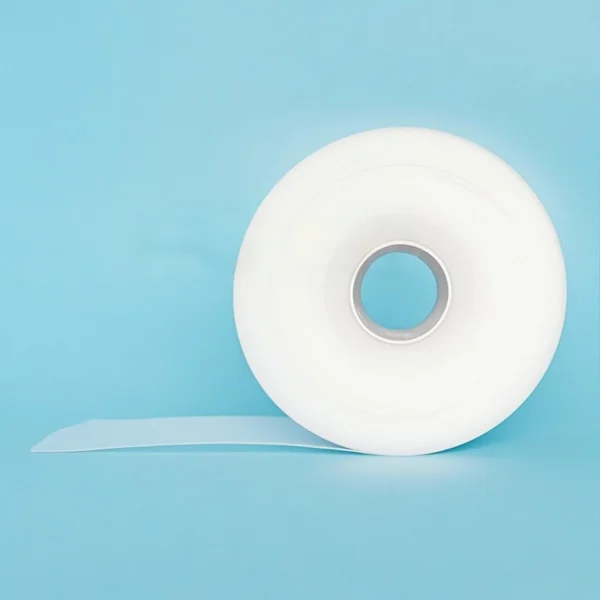
산업용 라이닝용 UPE 필름 - 비접착성 및 저온 유연성
극한 환경에 적합하도록 설계된 UPE 필름은 비점착성 표면을 제공하며 액체 질소 온도에서도 연성을 유지합니다. 내화학성과 열 안정성을 갖춰 산업용 라이닝, 여과 시스템 및 자동차 부품에 적합합니다. FDA 인증을 받은 이 소재는 의료 환경에서 위생적인 환경을 보장합니다.
FAQ: UHMWPE 열 안정성에 대한 핵심 정보
Q: 일상적인 사용 시 UHMWPE 멤브레인의 안전한 작동 온도는 얼마입니까?
A: 연속 80°C를 유지하십시오。 이는 열 수축 없이 열 안정성이 최고조에 달하는 온도입니다。 100°C까지 일시적 상승? 단시간은 괜찮으나 철저히 모니터링하십시오。
질문:열수축이 여과 성능에 어느 정도의 영향을 미칩니까?
A:확실합니다;5-10%의 수축은 플럭스를 절반으로 줄일 수 있습니다。어닐링은 이를 아주 미미한 수준으로 감소시켜,90°C에서도 기공의 상태를 양호하게 유지합니다。
Q:개조를 통해 UHMWPE를 융점 이상으로 가열할 수 있습니까?
답변:그렇지 않습니다,136°C가 한계점이나,당사의 UPE 필름과 같은 혼합물은 향상된 내성을 통해 실용적 한계를 100°C까지 확장합니다。상세 정보를 원하십니까?Allison.Ye@teflonx.com으로 이메일을 보내 주시기 바랍니다。
질문:솔직히 말씀드려 이 제품이 120°C의 급격한 온도 상승을 견딜 수 있을까요?
A: 몇 초 동안은 가능할 수 있으나, 그 이상은 변형의 위험이 있습니다。 어닐링된 제품이 복원되는 것을 확인한 바 있으나, 먼저 사용 환경을 테스트하십시오。
고온 문제를 해결하고 싶으십니까? 이제 정보를 얻으셨습니다。 UHMWPE 멤브레인의 열 안정성은 복잡한 과학이 아니라 현명한 선택의 문제입니다。 방문해 주십시오: https://teflonx.com/contact-us/ 귀하의 온도에 맞춘 UPE 필름에 대해 정직한 견적을 받아보십시오。 또는 Allison에게 이메일을 보내십시오; 그녀는 이러한 문제에 정통합니다。 귀하의 설비에 내열성을 부여하십시오。 첫 번째 단계는 무엇입니까?
