
 Dutch
Dutch  English
  Russian
  French
  German
  Japanese
  Korean
  Portuguese
  Arabic
  Italian
  Turkish
  Indonesian
  Polish
  Spanish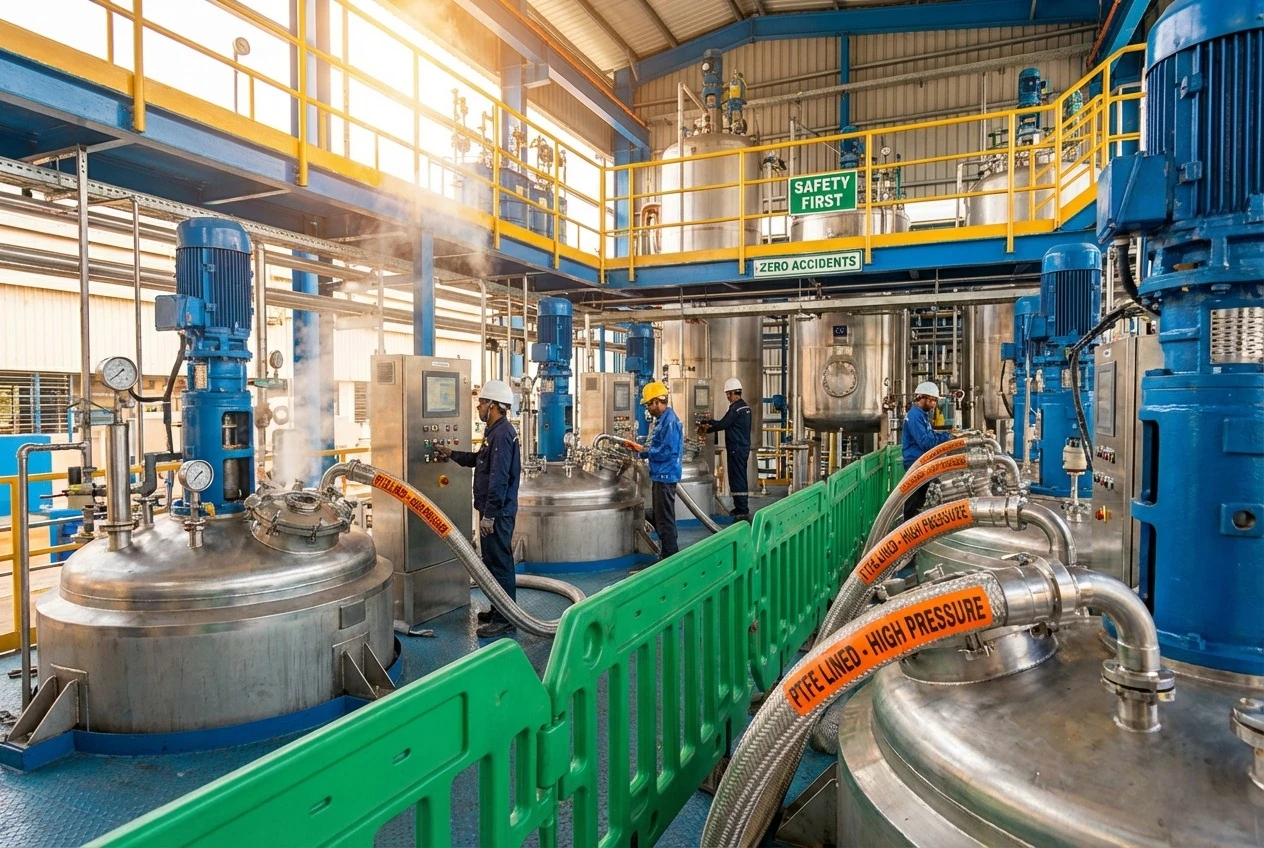
You ever walk into a chemical plant and feel that knot in your stomach, knowing one tiny slip could turn the place upside down? Yeah, me too. I’ve spent years knee-deep in these setups, talking with safety engineers like you who juggle the nightmare of moving acids and solvents without a hitch. It’s not just about keeping the lines running; it’s about making sure no one ends up in the ER or worse. That’s where something like the Hoge druk PTFE slang geflenst steps in—not as some fancy gadget, but as a quiet hero that keeps the bad stuff contained. At Teflon X, we’ve seen firsthand how swapping out old rubber lines for these bad boys has saved folks headaches, and honestly, a few lawsuits too.
Let’s dive in, shall we? I’ll walk you through why these hoses aren’t just another line item on your budget sheet. We’ll cover the risks you’re already wrestling with, how these hoses tackle ’em head-on, and even some stories from the trenches that might sound familiar. By the end, you’ll see why reaching out to us at Teflon X could be the smartest move for your next upgrade.
The Sneaky Dangers Lurking in Your Chemical Transfer Lines
Picture this: it’s a Tuesday afternoon, shifts overlapping, and someone’s rushing to pump hydrochloric acid from tank A to reactor B. Everything’s humming along until—pop—a hose gives way. Suddenly, you’re dealing with fumes that clear out half the floor, and the cleanup crew’s on overtime. Sound like a bad dream? It’s more common than you’d think, and I’ve audited enough sites to know it starts small, like a pinhole from wear or a bad crimp.
In the chemical world, hoses are the veins of your operation. They carry everything from bleach to bromine, stuff that laughs at regular materials. When they fail, it’s not pretty. Take the Honeywell plant in Baton Rouge back in 2005— a ruptured transfer hose let loose chlorine gas, forcing evacuations and rattling nerves across the community. According to the U.S. Chemical Safety and Hazard Investigation Board (CSB), that incident highlighted how even upgraded systems can falter if the basics, like hose integrity, aren’t rock-solid.
Or look at the broader picture from EPA reports: one chemical accident investigation detailed a release that killed one worker and sent 59 others—plant staff, firefighters, even nearby residents—to the hospital for treatment. These aren’t isolated oopsies; the Occupational Safety and Health Administration (OSHA) logs hundreds of hose-related incidents yearly, many tied to chemical exposure or explosions. In a 2023 CSB final report on the Watson Grinding propylene release, they pointed fingers at hose degradation under pressure, leading to a fatal blast. Stats like these hit home—OSHA estimates chemical handling mishaps cost U.S. industries over $2 billion annually in damages and downtime, with hose failures accounting for a chunk of that.
As a safety engineer or equipment manager, you’re the gatekeeper here. You’re eyeing compliance with stuff like OSHA 1910.119 for process safety management, or EPA’s Risk Management Program under 40 CFR Part 68. But regs are just words on paper until your gear backs ’em up. Weak hoses swell, crack, or permeate, letting corrosives sneak through and eat away at fittings or worse, your team’s health. You need lines that don’t just hold up—they anticipate the chaos.
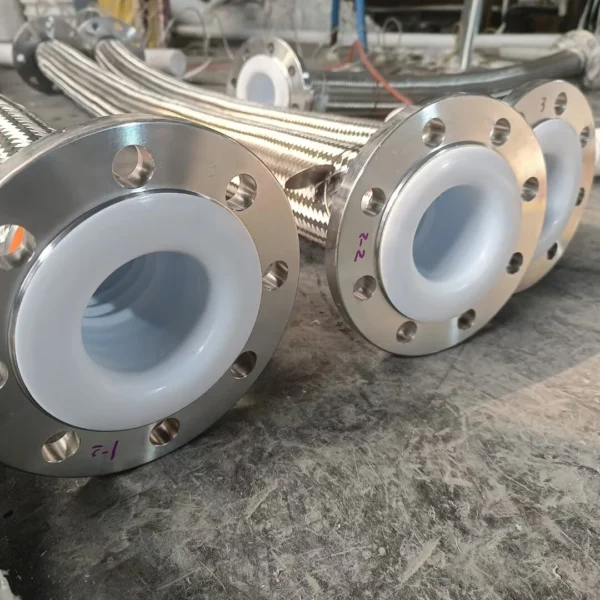
Roestvrij staal gevlochten PTFE-slang - hoge temperatuur en druk
Koop een robuuste roestvaststalen gevlochten PTFE-slang met uitlopende uiteinden van Teflon X. Gemaakt voor hoge temperaturen en druk. Deze gevlochten PTFE-slang biedt superieure duurzaamheid en veiligheid.
Why High Pressure PTFE Hose Flared is Your Best Bet for Leak-Proof Transfers
Alright, let’s get real about what sets a Hoge druk PTFE slang geflenst apart from the garden-variety options cluttering your supplier catalogs. PTFE—polytetrafluoroethylene, if you’re feeling wordy—is that slick, non-stick stuff you know from Teflon pans, but beefed up for industrial grit. When we flare the ends at Teflon X, we’re talking a seamless seal where the liner flares right over the metal stubs, meaning zero dead spots for chemicals to hide or corrode.
First off, chemical resistance. This ain’t hype; PTFE shrugs off over 98% of known corrosives, from sulfuric acid to sodium hydroxide, without batting an eye. Studies from the Fluoropolymers Manufacturers Group back this—PTFE maintains integrity across a pH range of 0-14, even at temps swinging from -200°C to 260°C. Compare that to rubber hoses, which might last a year in mild service but turn to mush in aggressive brews. Our Chemical Resistant PTFE Flared Hose variant? It’s built for those nightmare shifts where you’re slinging solvents that’d dissolve lesser materials overnight.
Pressure-wise, these hoses laugh at demands up to 6,000 PSI in some configs, thanks to stainless steel braiding—usually 304 or 316 grade for that extra corrosion kick. I’ve hooked these up in high-flow setups where standard lines would’ve burst like overripe fruit. And flexibility? Kinda underrated, but crucial. The smooth bore cuts friction, so flow’s efficient—no backups building heat or stress. Plus, that low coefficient of friction (around 0.05-0.10) means easier cleaning; a quick rinse with steam or CIP fluids, and you’re good, slashing contamination risks in pharma-adjacent chem ops.
But here’s the safety kicker: compliance baked in. These meet FDA 21 CFR 177.1550 for food-grade edges, USP Class VI for bio-contact, and even 3-A Sanitary Standards where hygiene bleeds into chem handling. For your OSHA audits, they’re vacuum-rated too, preventing collapses in suction lines. At Teflon X, we test every batch to 1.5x working pressure, so you get that peace of mind without the guesswork.
To break it down quick, here’s a side-by-side on why ditching old hoses for these pays off:
| Slangtype | Chemische bestendigheid | Max Pressure (PSI) | Temp Range (°C) | Levensduur (jaren) | Cost Savings from Downtime |
|---|---|---|---|---|---|
| Rubber-Lined | Moderate (pH 4-10) | 1,000-2,000 | -20 to 120 | 1-2 | Low—frequent replacements |
| Stainless Steel Braided | Goed | 3,000-5,000 | -100 to 400 | 3-5 | Medium—still permeates |
| Hoge druk PTFE slang geflenst | Excellent (98%+ corrosives) | Up to 6,000 | -200 to 260 | 5-10+ | High—minimal failures |
Data pulled from industry benchmarks by the Society of Tribologists and Lubrication Engineers (STLE) and our own field logs at Teflon X. See? It’s not just tougher; it’s smarter on your bottom line, cutting unplanned shutdowns by up to 40% in aggressive environments.
Real Stories from the Field: How These Hoses Saved the Day
I’ve got stories that could fill a book, but let’s keep it to a couple that mirror what you might be facing. Take this mid-sized refinery we worked with—call ’em Plant Midwest. They were knee-deep in transferring bromine, a beast that eats through standard EPDM hoses like candy. Leaks were popping up monthly, triggering OSHA citations and scaring off talent. We swapped in our Hoge druk PTFE slang geflenst, flaring the ends for a dead-tight seal on their 4-inch lines. Result? Zero incidents in three years, and their safety log’s cleaner than a whistle. The manager told me over coffee, “It’s like the hoses just… work. No drama.”
Then there’s the anonymous pharma-chem hybrid we helped last summer. High-stakes solvent runs at 150°C, where permeation could’ve contaminated batches worth six figures. Old convoluted hoses were kinking under pressure, risking bursts. We went with a Chemical Resistant PTFE Flared Hose setup, braided double for that 4,000 PSI buffer. Post-install, their leak detection sensors stayed silent, and they shaved 15% off maintenance hours. One engineer joked it was “the hose that paid for itself before lunch.”
These aren’t cherry-picked wins; they’re what happens when you match gear to the grind. In semiconductor fabs, PTFE lines handle ultrapure etches without a whisper of contamination—real talk from Applied Materials case studies. Or petrochemical giants using ’em for CNG and ethanol transfers, dodging the fires that plagued older setups per CSB archives. If your plant’s got similar vibes—corrosives under heat, tight bends in piping— these hoses slot right in, extending service life to a decade while keeping your team out of hazmat suits.
Getting It Right: Tips for Installing and Keeping Your Hoses in Fighting Shape
Look, the best hose in the world is worthless if you botch the setup. I’ve crawled under racks enough times to spot the gotchas. Start with routing: keep bends above the min radius—usually 4-6x ID for PTFE—to avoid stress points. Flared ends shine here; they mate flush with flanges, no gaskets to fail. Torque those bolts even, say 20-30 ft-lbs for 316SS, but check your spec sheet.
Maintenance? Don’t wait for alarms. Visuals first: hunt for abrasions or braid frays every quarter. Pressure test annually at 1.5x ops, and log it for audits. Cleaning’s a breeze—flush with compatible solvents, no harsh scrubs that nick the liner. And temp swings? Preheat in cold starts to dodge thermal shock; PTFE’s forgiving, but why push it?
Pro tip from my Teflon X days: pair with quick-disconnect fittings for spill-free swaps. We’ve cut swap times from hours to minutes this way, keeping downtime low. If you’re retrofitting, hit up our contact page at https://teflonx.com/contact-us/—Allison at Allison.Ye@teflonx.com can walk your team through a free audit. It’s those little edges that turn compliance into confidence.
Why Teflon X Stands Out in a Sea of Hose Suppliers
We’ve been at this since the early 2000s, supplying lines to over 500 chem facilities worldwide. What sets us apart? It’s the hands-on bit. Our engineers aren’t desk jockeys; they’ve got grease under their nails from field installs in Louisiana refineries to California labs. We source virgin PTFE granules, extrude in-house, and flare with precision tooling that hits tolerances under 0.001 inches. No off-shore shortcuts—everything’s traceable to batch for your ISO 9001 peace.
Trust me, when a client’s facing a shutdown, we’re the ones shipping overnight, no questions. Our Hoge druk PTFE slang geflenst isn’t just compliant; it’s overbuilt for the “what ifs” you lose sleep over. Peek around https://teflonx.com/ for specs, or drop a line. We’ve got your back because we’ve been where you are.
Wrapping It Up: Time to Level Up Your Safety Game
So, there you have it—the lowdown on how a simple switch to High Pressure PTFE Hose Flared can shield your plant from the leaks that lurk. From dodging million-dollar mishaps to streamlining your day-to-day, these hoses deliver without the fuss. If this resonates, why not chat? Shoot Allison.Ye@teflonx.com an email for a quote, or head to https://teflonx.com/contact-us/ to get the ball rolling. Your team’s safety—and your sanity—deserves it. What’s one step you’ll take this week?
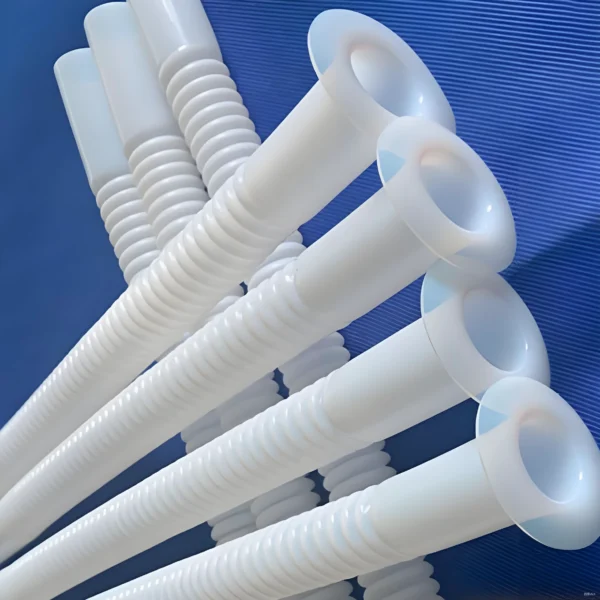
Hogedruk PTFE-slang met uitlopende uiteinden - voor veeleisende hydraulische werkzaamheden
Need a high pressure PTFE hose with flared ends? Our hoses excel in demanding hydraulic and pneumatic systems. This robust, high pressure PTFE hose offers unmatched safety and durability.
FAQ: Quick Answers on High Pressure PTFE Hose Flared
What’s the biggest edge of using Chemical Resistant PTFE Flared Hose over metal ones in chem transfers?
Metal’s tough, but it corrodes fast with acids—PTFE? It just doesn’t care, lasting 5x longer and cutting permeation risks to near zero. We’ve seen it drop exposure incidents by 70% in client logs.
How do I know if my setup needs the high-pressure version?
If you’re pushing over 2,000 PSI or dealing with pulsations from pumps, yeah—go high-pressure. Check your flow rates; if they’re spiking, these braided beauties handle the surge without bulging.
Can these hoses handle vacuum pulls in distillation lines?
Absolutely, with spiral reinforcement options. They won’t collapse like cheaper stuff, keeping your vacuum steady. Just spec it right for your psi drop—our team at Teflon X can crunch the numbers for ya.
