
 English
  Russian
  French
  German
  Japanese
  Korean
  Portuguese
  Arabic
  Italian
  Dutch
Dutch  Turkish
  Indonesian
  Polish
  Spanish
If you spend enough time around labs or pharmaceutical manufacturing floors, you eventually see it: a puddle of highly expensive—or highly dangerous—liquid pooling under a pump. Someone miscalculated the tubing lifespan, or worse, chose the wrong material for the job, and the tube simply ruptured.
When you’re dealing with fluid transfer, the actual pump hardware is rarely the issue. The motor spins, the rollers roll. The true weak link in any peristaltic setup is the tubing itself. It takes a brutal beating every single second it operates.
Today we’re going to break down the heavyweights of the tubing world. If you are stuck deciding between PTFE vs Silicone for your next setup, you need to look beyond just the price tag. We are going to look at the raw mechanics, the chemical resistance, and the real-world lifespan of these materials, especially if you are working on critical chemical dosing applications.
The Brutal Reality of Fluid Transfer
Before we get into the materials, let’s talk about what actually happens inside that pump head.
A peristaltic pump works by positive displacement. A set of rollers pinches a flexible tube against a housing (the occlusion bed) and pushes the fluid forward. It’s totally air-free and keeps the fluid isolated from the mechanical parts. Sounds great, right?
But think about the physics happening to that piece of plastic or rubber. If your pump runs at 100 RPM and has 3 rollers, that tube is being completely crushed flat 300 times a minute. That’s 18,000 times an hour.
You can actually calculate the basic mechanical stress your tube is under with a simple formula:
Stress = Roller Force / Contact Area
Every time the roller lifts, the tube has to instantly snap back to its original circular shape to pull in the next gulp of liquid. This “snap back” is called restitution. If the material gets tired and stays flat, your flow rate drops. If the material is attacked by the chemical inside it, it swells, gets brittle, and eventually cracks.
This brings us to the great debate: Silicone or PTFE?
Silicone Tubing: The “Default” Choice
Let’s be honest, silicone is everywhere. It’s the industry standard for general peristaltic pump tubing, and for good reason.
Silicone is incredibly flexible. It has amazing flex-fatigue resistance, meaning it can be smashed by those rollers millions of times before the physical structure of the rubber gives out. It also has great restitution, snapping back into shape immediately, which gives you highly accurate and repeatable fluid transfer rates.
But here is my slightly controversial take: alot of people worship silicone tubing like it’s the absolute holy grail of lab equipment, but if you are doing aggressive chemical dosing, silicone is pretty much garbage.
Most sales reps will push standard silicone on you cause it’s cheap and they know you’ll have to keep buying replacement rolls every few weeks. It’s a classic trap.
Here is where silicone fails:
- Chemical Compatability: Silicone handles water and mild acids fine. But if you try to pump organic solvents (like toluene, hexane, or MEK), concentrated acids, or aggressive bases, the silicone acts like a sponge. It absorbs the solvent, swells up, and loses its mechanical strength.
- Spallation: This is a dirty word in the pharma industry. Spallation is the process where the rollers scrape tiny, microscopic flakes of the tubing off the inner wall and deposit them right into your fluid stream. Standard silicone has a relatively high spallation rate. If you are pumping a high-purity pharmaceutical product, you definitly do not want microscopic rubber particles floating in it.
- Gas Permeability: Silicone is breathable. If you are pumping a light-sensitive or oxygen-sensitive chemical, air can literally pass right through the walls of a silicone tube and ruin your batch.
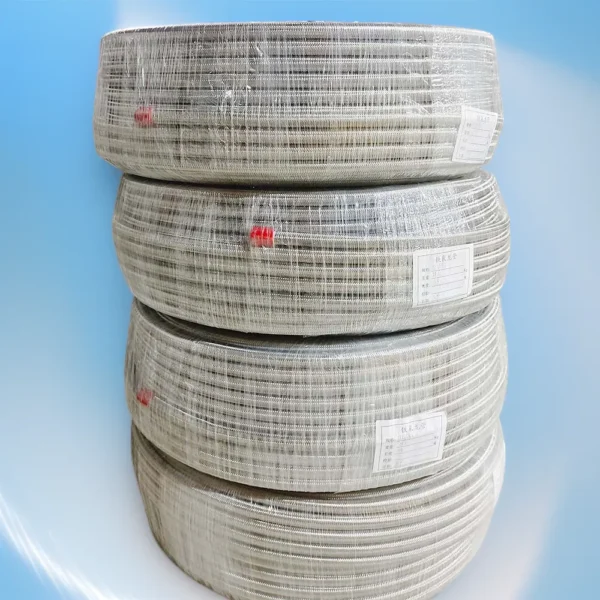
Chemical Resistant Polytetrafluoroethylene Tubing | PTFE Lined Hose Supplier
Polytetrafluoroethylene tubing (PTFE) withstands aggressive chemicals like sulfuric acid and organic solvents, perfect for chemical reactors and lab equipment. The smooth inner surface reduces fluid resistance by 30%, lowering operational costs. Optional multi-layer designs for critical industrial applications.
PTFE Tubing: The Heavyweight for Chemical Dosing
If silicone is the flexible gymnast, PTFE (Polytetrafluoroethylene) is the armored tank.
PTFE is practically chemically inert. It doesn’t care if you are pumping concentrated sulfuric acid, highly corrosive sodium hydroxide, or aggressive industrial solvents. It handles a pH range from 0 to 14 without breaking a sweat. It also has zero extractables, meaning it won’t leach anything into your ultra-pure pharma liquids.
The temperature range is also insane. While silicone taps out around 200°C, PTFE can comfortably operate from -200°C all the way up to 260°C.
But wait, if you know anything about plastics, you are probably thinking: “PTFE is a rigid plastic. How on earth do you put a stiff tube inside a peristaltic roller pump?”
That’s the catch that trips up a lot of engineers. You can’t just take standard thick-walled PTFE water pipe and stick it in a pump head. The motor will stall, or the tube will instantly crease and crack.
To use PTFE in these pumps, the industry has developed two main solutions:
1. Micro-bore PTFE tubing: For ultra-low volume chemical dosing (like dispensing cyanoacrylate adhesives or precise lab reagents), we use very thin-gauge PTFE. Think 26-gauge or 30-gauge. Because the wall thickness is so microscopically thin, the material becomes flexible enough to survive the rollers while giving you that bulletproof chemical resistance.
2. PTFE-Lined Composite Tubing: For larger fluid transfer applications, you use a composite tube. The outside jacket is made of a flexible elastomer (like silicone or rubber) to handle the mechanical crushing of the rollers, but the inner bore—the part actually touching the fluid—is a thin liner of expanded PTFE. You get the mechanical flex life of silicone combined with the chemical immunity of PTFE.
When you need the absolute best, checking out dedicated PTFE Tubes is usually the turning point where your maintenance headaches disappear.
PTFE vs Silicone: Head-to-Head Comparison
Sometimes you just need the raw data to make a decision. I put together this table based on real-world operational limits.
| Feature / Spec | Standard Silicone Tubing | PTFE Tubing (Micro/Lined) |
|---|---|---|
| Temperature Range | -50°C to 200°C | -200°C to 260°C |
| Flex Fatigue Life | Excellent (Hundreds of hours) | Moderate to Good (Requires specific pump heads) |
| Chemical Resistance | Poor with solvents/strong acids | Exceptional (Universal compatability) |
| Spallation Rate | High (sheds particles easily) | Extremely Low (Zero extractables) |
| Gas Permeability | High (Oxygen can pass through) | Near Zero (Total fluid isolation) |
| Upfront Cost | Low | Higher |
| Long-term TCO | High (if pumping aggressive fluids) | Low (due to extreme longevity) |
Note: TCO = Total Cost of Ownership. Paying double upfront for PTFE saves you 10x in downtime and ruined batches over a year.
High-Temperature Teflon Tube | PTFE Insulation Sleeve for Electronics
High-temperature Teflon tube provides superior dielectric properties for insulating high-voltage cables and semiconductor components. Withstand extreme temperatures (-200°C to +260°C) while maintaining flexibility. UL-certified and RoHS-compliant for global electronics manufacturing.
Real-World Example: A Pharmaceutical Lab’s Nightmare
Let me share a quick story from a client we worked with recently. I’ll keep the company name anonymized, but they are a mid-sized biopharma facility doing continuous inline chemical dosing of a rather nasty solvent-based reagent.
They initially set up their peristaltic pumps with standard platinum-cured silicone tubing. On paper, the flow rate was supposed to be 50 mL/min.
For the first four hours, it worked perfectly. But by hour six, the lab techs noticed the flow rate was dropping. By day two, the pump was barely moving 20 mL/min, and the tubing looked like a swollen, cloudy mess.
Here is what was happening mechanically: The solvent was absorbing into the silicone, causing the walls of the tube to swell inward.
If you look at the flow rate formula for a peristaltic pump:
Flow Rate (Q) = RPM * (pi * (ID / 2)^2) * Length of tube in pump head
Because the inner diameter (ID) was shrinking from the swelling, the volume per revolution completely tanked. The lab was throwing away the tubing and recalibrating the pumps every 48 hours. The labor cost alone was ridiculous, not to mention the risk of a blowout.
We had them switch over to PTFE-lined tubing. The result? The inner diameter stayed perfectly static. No swelling, zero chemical attack. They went from changing tubes every 2 days to doing preventative maintenance changes just once every 6 months. That is the power of matching the right material to your enviornment.
How to Calculate and Size Your Tubing Perfectly
If you’ve decided on your material, the next hurdle is getting the size right. If you order the wrong size, your pump will either leak internally or rip the tube to shreds.
You only really need to care about three dimensions:
- Inner Diameter (ID)
- Outer Diameter (OD)
- Wall Thickness (WT)
The relationship is simple:
Wall Thickness = (OD – ID) / 2
Why does this matter?
The occlusion bed of your pump is fixed. If you buy tubing with a wall thickness that is too thin, the rollers won’t pinch the tube completely shut. Fluid will slip backwards during operation, killing your flow rate.
If you buy tubing with a wall thickness that is too thick, the rollers will smash it too hard, burning out the pump motor and drastically reducing the flex-fatigue life of the material.
Always measure your existing tubing with digital calipers before ordering, and remember that PTFE requires very specific wall thicknesses to maintain flexibility.
Choosing the Right Path for Your Process
Look, if you are just pumping water, saline, or very mild buffers, keep using silicone. It’s cheap, it’s easy, and it works.
But if you are dealing with chemical dosing where precision matters, or if you are pumping harsh acids, bases, or organic solvents, you need to upgrade. Continuing to replace ruined silicone tubing is just throwing money down the drain, and you’re risking severe contamination of your end product.
By integrating high-quality PTFE tubing into your fluid transfer systems, you lock in peace of mind. Your flow rates stay consistent, your downtime vanishes, and you don’t have to worry about waking up to a chemical spill on the lab floor.

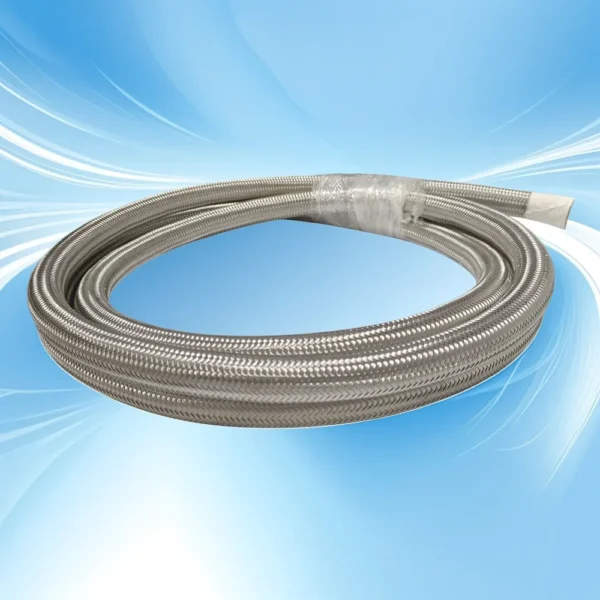
Custom PTFE Teflon Tubing | Corrosion-Proof Hose for Industrial Cooling
Custom PTFE Teflon tubing is engineered for industrial cooling systems, offering chemical inertness and thermal stability. Metal-braided options enhance pressure resistance in liquid cooling circuits for machinery and power electronics. Available in FDA-compliant grades for diverse sectors.
Frequently Asked Questions (FAQ)
Q: Can I use standard rigid PTFE pipe in a peristaltic pump?
No, absolutely not. Standard rigid PTFE pipe has zero flex-fatigue life and will crack almost instantly under the crushing force of a roller pump. You must use specifically engineered micro-bore PTFE tubing or a PTFE-lined composite tube designed specifically for peristaltic applications.
Q: Which tubing material has the lowest spallation rate?
PTFE has one of the lowest spallation rates in the industry. Because of its extremely low coefficient of friction and tough structural integrity, the rollers glide over it without scraping off microscopic particles. If purity is your top priority, PTFE is the clear winner over silicone or standard TPEs.
Q: How often should I change my peristaltic pump tubing for chemical dosing?
This depends heavily on your RPM, the chemical being pumped, and the pressure of the system. However, as a general rule, silicone might need changing every few hundred hours of operation when dealing with moderate chemicals. PTFE tubing can often run for thousands of hours without degrading. You should establish a preventative maintenance schedule based on visual inspection and flow-rate drop-off.
Q: Does PTFE tubing require a special pump head?
It depends on the gauge. Very thin-gauge micro-bore PTFE can often run in standard benchtop dispensers. However, thicker PTFE-lined composite tubes are stiffer than standard silicone and might require a pump head designed to handle higher torque, as the motor needs to work a bit harder to compress the tube.
Ready to Upgrade Your Fluid Transfer System?
Dealing with constant tube failures and unreliable dosing is a massive headache that you don’t need to put up with. You’ve seen the data, and you know how much time and money gets wasted on the wrong materials.
Imagine running your fluid transfer systems for months at a time without having to recalibrate flow rates, without worrying about spallation contamination, and without dealing with unexpected ruptures. That’s the reality when you use the right engineered plastics.
If you are ready to stop replacing cheap tubing and want to build a system that actually lasts, we need to talk. As a trusted manufacturer under the Teflon X brand, we know exactly what it takes to handle the harshest chemical environments.
Don’t let a $10 piece of bad tubing ruin a $10,000 batch of product.
Head over to our contact us page to request a custom quote, or email our specialist directly at Allison.Ye@teflonx.com to get expert advice on the exact tubing specs for your specific pump and chemical setup. Let’s get your lab running the way it was supposed to.
