
 Portuguese
  English
  Russian
  French
  German
  Japanese
  Korean
  Arabic
  Italian
  Dutch
Dutch  Turkish
  Indonesian
  Polish
  Spanish
Por que a pureza é realmente importante nas fábricas de semicondutores atuais
Você sabe como é — hoje em dia, até mesmo uma única partícula ou alguns ppb de íons metálicos podem destruir um lote de wafers. Com os nós chegando a 2 nm ou menos, a margem de erro na sala limpa continua diminuindo.
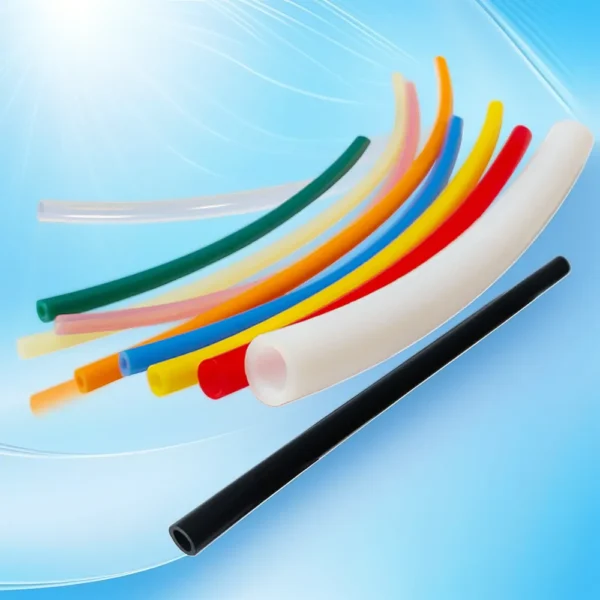
Quando falamos de linhas de distribuição de fluidos em wet benches, scrubbers, ferramentas de CMP ou sistemas de distribuição de produtos químicos, Tubulação de PTFE para semicondutores as aplicações ainda são o padrão ouro para muitas etapas críticas. Mas nem todas as tubulações de PTFE são criadas iguais — especialmente quando você está tentando atingir <1 partícula/mL ou extraíveis metálicos em ppt de um único dígito.
Passei os últimos 15 anos ou mais trabalhando com fábricas em Taiwan, Coreia, EUA e Europa, ajudando-as a qualificar tubulações e mangueiras para exatamente esses tipos de processos. Deixe-me compartilhar o que realmente importa ao escolher uma tubulação que não sabotará seu rendimento.
O que torna a tubulação de “pureza ultra-alta” realmente de pureza ultra-alta?
A maioria das pessoas pensa que “alta pureza” significa apenas “branco e com aparência limpa”. Isso nem chega perto.
As tubulações de PTFE de pureza ultra-alta reais para uso em semicondutores precisam passar por testes muito mais rigorosos:
- Extraíveis metálicos (ICP-MS): < 10 ppt para Na, K, Fe, Cu, Ni, Zn…
- Desprendimento de partículas sob fluxo (contador de partículas a laser): normalmente 0,2 µm por mL
- TOC (Carbono Orgânico Total) lixiviáveis: < 50 ppb após pré-condicionamento agressivo
- Suavidade da superfície (Ra < 0,2 µm interno)
- Livre de peróxido resina + processo de sinterização especial para minimizar a cisão de cadeias
Muitos dos PTFE de "grau industrial" ou até mesmo de "alta pureza" que você encontra online simplesmente não atendem a essas especificações — eles servem para as indústrias farmacêutica ou alimentícia, mas não para lógica de ponta ou DRAM.
Tubulação PFA vs PTFE: Um Rápido Choque de Realidade para Engenheiros de Semicondutores
Uma pergunta que recebo o tempo todo: "Devemos usar PFA ou PTFE?"
Aqui está uma tabela de comparação direta baseada em experiência real em fábrica (fab):
| Propriedade | PTFE (Teflon®) | PFA | Vencedor para Linhas Críticas de Bancadas Úmidas (Wet Bench)? |
|---|---|---|---|
| Temperatura máxima de serviço contínuo | ~260 °C | ~260 °C | Empate |
| Resistência química | Excelente (melhor para HF, bases fortes) | Excelente (ligeiramente melhor para aminas) | Pequena vantagem para o PTFE |
| Extraíveis metálicos (típico) | 1–10 ppt (graus premium) | 5–50 ppt (mesmo os premium) | PTFE |
| Desprendimento de partículas | Muito baixo (especialmente resina virgem) | Maior que o PTFE | PTFE |
| Rugosidade da superfície (Ra) | Pode atingir <0,1 µm | Geralmente 0,2–0,4 µm | PTFE |
| Permeabilidade a gases | Muito baixa | Maior que o PTFE | PTFE |
| Custo | Moderado | 30–60% mais caro | O PTFE vence |
| Flexibilidade / raio de curvatura | Mais rígido | Mais flexível | PFA |
Conclusão para a maioria das fábricas de 3D NAND / lógica avançada no momento:
Se o seu processo puder tolerar linhas ligeiramente mais rígidas e você estiver lutando por cada ppt de contaminação metálica, o PTFE ainda é a aposta mais segura para caminhos de fluidos ultra-críticos.
O PFA é ótimo quando você precisa de raios de curvatura menores ou possui decapantes agressivos à base de aminas.

Mangueira de PTFE trançada antiestática – Tubo de Teflon condutor para transferência química
Nosso tubo trançado antiestático, também conhecido como tubo trançado condutor, é perfeito para transferência segura de fluidos. Isto mangueira de PTFE trançada de aço inoxidável elimina o acúmulo de estática, prevenindo riscos. Ideal para processamento químico, resiste à corrosão e garante a dissipação eletrostática. Excelente para linha de gás flexível e linha de combustível trançada aplicações.
Fatores-chave ao especificar tubulação de PTFE para semicondutores
Aqui está o que eu sempre digo aos engenheiros para verificarem antes mesmo de enviarem um RFQ:
- Origem da resina — É Daikin Neoflon, Chemours Teflon ou Dongyue? (evite resinas reprocessadas chinesas desconhecidas)
- Virgem vs reprocessado — Apenas resina virgem para linhas críticas
- Método de sinterização — Extrusão isostática vs ram (isostática geralmente é mais limpa)
- Certificado de metais traço — Peça dados reais de ICP-MS, não apenas “atende ao SEMI F57”
- Pré-condicionamento e embalagem — Embalagem dupla, purga de nitrogênio, embalado em sala limpa Classe 10
- Tratamento de superfície — Alguns fornecedores oferecem IDs eletropolidos ou tratados por plasma — pode reduzir a liberação de partículas em mais 50–70%
Exemplo do Mundo Real: Como uma Fab Reduziu a Densidade de Defeitos em 40%
Trabalhei com uma fábrica de memórias em 2022 que estava observando limitadores de rendimento (yield killers) aleatórios em seu módulo de CMP de cobre.
Eles estavam usando tubulação de PFA padrão para as linhas de distribuição de slurry e enxágue. Após a mudança para tubulação de PTFE moldada isostaticamente de nível premium (com certificados completos de extraíveis metálicos), seus defeitos relacionados a partículas caíram cerca de 40% em 3 meses. A causa raiz? O PFA estava liberando baixos níveis de íons de fluoreto e traços orgânicos que estavam prejudicando a estabilidade do slurry.
Nem todo caso é tão dramático, mas pequenas diferenças na qualidade da tubulação podem absolutamente aparecer nos mapas de defeitos.
Mangueiras de PTFE Antiestáticas: Quando Você Precisa Mover Produtos Químicos com Segurança
Para transferência de produtos químicos de maior volume (entrega a granel, tanques diários → ferramenta), muitas fábricas estão migrando para mangueiras de PTFE trançadas antiestáticas.
Por quê? Porque o PTFE é naturalmente isolante — quando você bombeia solventes agressivos ou água DI em altas taxas de fluxo, a estática pode se acumular e causar faíscas ou até atrair partículas.
No Teflon X, um dos nossos produtos mais populares para transferência a granel de semicondutores é a mangueira de PTFE trançada antiestática. Ela combina um núcleo interno de PTFE de ultra-alta pureza com uma trança condutora que mantém a resistividade superficial < 10⁸ Ω — segura para transferência de produtos químicos perigosos.
Como Começar (Sem Perder Meses Qualificando Tubulações)
- Peça aos fornecedores dados de validação de 3 lotes — contagens reais de ICP-MS e de partículas de múltiplas corridas de produção
- Execute o seu próprio teste de imersão estática de 100 horas teste com os seus produtos químicos de processo reais
- Verifique SEMI F57 e SEMI F70 conformidade (mas não pare por aí — SEMI é o mínimo, não o melhor da categoria)
- Considere auditoria de fornecedor — especialmente se você estiver qualificando para uma nova fab
Se quiser encurtar parte da dificuldade da qualificação, sinta-se à vontade para nos contactar em Teflon X. Nossa equipe ajudou dezenas de fabs a qualificar tubagens para nós de 7 nm, 5 nm e 3 nm.
→ Entre em contato diretamente com Allison: Allison.Ye@teflonx.com
→ Ou preencha o formulário rápido aqui: https://teflonx.com/contact-us/
Geralmente podemos enviar bobinas de amostra com certificações completas em até 2 semanas.
Mangueira Revestida com PTFE para Serviços Pesados | Tubos de Teflon Multicamadas para Ambientes Agressivos
Mangueira reforçada com revestimento de PTFE, construída em multicamadas para resistência à abrasão em mineração e processamento químico. O núcleo de PTFE resiste à degradação UV e à oxidação, enquanto a malha externa adiciona resistência à tração. A vida útil é superior a 10 anos em uso contínuo.
FAQ – Perguntas Frequentes sobre Tubagens de PTFE em Semicondutores
P: A tubulação de PTFE ainda é superior à de PFA para o controle de contaminação por metais em 2025?
Sim — para as linhas mais críticas de enxágue e distribuição de produtos químicos, o PTFE premium ainda apresenta menores extraíveis metálicos (frequentemente 5–10 vezes menores do que até mesmo o PFA de alto desempenho).
P: Qual é o maior erro que as fábricas cometem ao escolher tubulações?
Eles olham apenas para o preço e o diâmetro, e depois são surpreendidos por problemas de partículas ou metais 6 meses depois. Exija sempre dados reais de metais traço e relatórios de testes de desprendimento de partículas.
P: Preciso de mangueiras antiestáticas para toda transferência de produtos químicos?
Não necessariamente para percursos curtos em baixo fluxo. No entanto, ao ultrapassar ~10 L/min ou transferir solventes inflamáveis, recomenda-se fortemente o uso de malha dissipativa estática ou condutiva (sendo frequentemente exigida pelas normas de segurança do local).
P: Quanto tempo a qualificação costuma levar?
Se o fornecedor fornecer certificações adequadas, vimos clientes passarem das amostras para a liberação da produção em 6 a 12 semanas. Sem dados sólidos, o processo pode se arrastar por mais de 6 meses.
Esperamos que isso ajude você a tomar uma decisão mais confiante na próxima vez que atualizar suas tubulação de processo de semicondutores especificações.
Sinta-se à vontade para entrar em contato se quiser discutir sua aplicação específica — teremos prazer em compartilhar as lições aprendidas em outras fabs (sem citar nomes, é claro).
Até breve,
A Equipe Teflon X
https://teflonx.com
