
 Portuguese
  English
  Russian
  French
  German
  Japanese
  Korean
  Arabic
  Italian
  Dutch
Dutch  Turkish
  Indonesian
  Polish
  Spanish
Se você já lidou com flanges de vedação em fábricas de produtos químicos ou linhas de processamento de alimentos, sabe como pode ser complicado escolher a gaxeta certa. As coisas vazam, os parafusos se soltam com o tempo ou o material simplesmente não resiste a superfícies ásperas. Já vi isso muitas vezes - trocar as gaxetas com mais frequência do que você gostaria porque o tipo errado foi escolhido no início.
É aí que o conhecimento do PTFE puro (geralmente chamado de PTFE virgem) e do PTFE expandido (ePTFE) se torna útil. Ambos são feitos do mesmo material de base, o politetrafluoroetileno, mas a maneira como são processados faz uma enorme diferença no uso no mundo real. No Teflon X, fornecemos ambos há anos e, honestamente, conhecer os prós e os contras ajuda a evitar dores de cabeça no futuro.
Vamos explicar isso em termos simples, sem enrolação.
O que exatamente é PTFE puro (PTFE virgem)?
O PTFE puro é a versão direta, sem aditivos. É a resina de politetrafluoroetileno 100%, comprimida e sinterizada em folhas ou formas. Pense nele como o material clássico e denso que existe desde sempre.
Principais características:
- Altíssima resistência química - suporta quase tudo, de ácidos fortes a bases, pH 0-14.
- Baixo atrito, antiaderente (sim, como sua frigideira).
- Funciona a partir de temperaturas criogênicas até cerca de 500°F (260°C).
- Densidade em torno de 2,1-2,2 g/cm³, o que o torna bastante sólido e rígido.
Mas aqui está o problema: ele é propenso a deformação e fluxo a frio. Sob pressão constante, ele se deforma lentamente, perdendo espessura e carga nos parafusos ao longo do tempo. Isso pode levar a vazamentos se você não for cuidadoso com o reaperto.
Usamos PTFE virgem em configurações limpas e de alta pureza onde não são permitidos enchimentos, como linhas farmacêuticas. Ele se destaca nesse caso por ser inerte e estar em conformidade com a FDA.
E quanto ao PTFE expandido (ePTFE)?
O PTFE expandido pega o PTFE virgem e o estica sob condições controladas, criando uma estrutura microporosa e fibrosa. É como transformar um bloco sólido em uma malha macia, semelhante a uma esponja, com nós e fibrilas.
Isso muda tudo:
- Densidade muito menor, geralmente de 0,5 a 1,0 g/cm³.
- Muito mais compressível e conformável - preenche facilmente arranhões, buracos ou flanges deformados.
- Melhor resistência à fluência e ao fluxo frio graças à rede de fibras multidirecionais.
- Ainda mantém toda a resistência química e a faixa de temperatura do PTFE virgem.
As folhas de gaxeta de ePTFE são mais macias, quase fofas, mas não se deixe enganar por isso - elas são resistentes onde é preciso.
Por experiência própria, o ePTFE salvou o dia em reatores revestidos com vidro ou em tubulações mais antigas em que os flanges não são perfeitos. Você não precisa de um torque de parafuso muito alto para obter uma vedação firme.

Junta de PTFE Teflon de alta temperatura para válvulas de esfera e vedação industrial
As juntas de PTFE e Teflon são projetadas para oferecer resistência a temperaturas extremas (-200 °C a +260 °C) e inércia química, ideais para a vedação de válvulas de esfera de alta pressão e sistemas de meios corrosivos. Essas juntas garantem desempenho à prova de vazamentos em petróleo e gás, processamento químico e máquinas industriais. Formatos personalizáveis (plano, liner ou anel) adaptam-se a estruturas mecânicas complexas.
Comparação direta: PTFE expandido vs PTFE virgem
Para deixar isso mais claro, aqui está uma tabela rápida extraída de dados reais (como padrões ASTM e testes do setor):
| Propriedade | PTFE puro (virgem) | PTFE expandido (ePTFE) |
|---|---|---|
| Densidade | 2,1-2,2 g/cm³ | 0,5-1,2 g/cm³ (geralmente em torno de 0,8) |
| Compressibilidade | Inferior (em torno de 10-25%) | Alta (até 60-70%) |
| Creep Relaxamento | Maior (pode ser perda de 40-50%) | Muito inferior (geralmente 15-30%) |
| Conformabilidade | Razoável em superfícies lisas | Excelente, mesmo em flanges ásperos/danificados |
| Resistência à tracção | 10-30 MPa | 20-50 MPa (mais forte em várias direções) |
| Resistência química | Excelente (pH total 0-14) | Excelente (o mesmo que virgem) |
| Faixa de temperatura | -450°F a 500°F (-268°C a 260°C) | Igual |
| Melhor para | Alta pureza, flanges suaves, cargas moderadas | Superfícies irregulares, baixa carga de parafusos, equipamentos frágeis |
Dados extraídos de fontes como testes ASTM F36/F38 e especificações do fabricante (por exemplo, produtos Gore e Teadit). Testes reais de fluência mostram que o ePTFE mantém a carga do parafuso muito melhor sob calor e pressão.
Por que o Creep é tão importante
O relaxamento por fluência é o assassino silencioso das gaxetas. O PTFE virgem pode perder até 50% de sua espessura sob carga ao longo do tempo, especialmente quando há ciclos de temperatura. A estrutura do ePTFE se fixa melhor - testes a 500°F mostram que ele retém mais estresse.
Em uma configuração que fizemos, um cliente mudou de virgem para ePTFE em um trocador de calor. Os vazamentos cessaram e não foi mais necessário um novo torque a cada poucos meses.
Quando escolher anéis de vedação de PTFE puro
Use virgem se:
- Você precisa de pureza absoluta - sem risco de contaminação (alimentos, produtos farmacêuticos, semicondutores).
- Os flanges são lisos e bem conservados.
- Em aplicações de pressão mais alta, a rigidez ajuda.
- O custo é um fator (geralmente é mais barato).
Nosso Junta de PTFE A linha inclui opções virgens de alta qualidade que atendem aos padrões da FDA e da USP.
Quando o PTFE expandido (ePTFE) vence
Escolha folhas de gaxeta de ePTFE quando:
- Os flanges estão desgastados, com corrosão ou revestidos com vidro/FRP (baixo torque necessário).
- O objetivo é reduzir ao mínimo a variação das temperaturas de ciclo.
- Vedação de produtos químicos agressivos em superfícies irregulares.
- Instalação mais fácil e vida útil mais longa.
Vimos que o ePTFE é excelente em processamento químico - um caso anônimo envolveu uma linha cáustica com flanges danificados. Trocado por ePTFE, ele foi vedado com metade da carga do parafuso, sem vazamentos em mais de dois anos.
Cenários do mundo real que já vimos
Em uma fábrica de alimentos, o PTFE virgem funcionou muito bem para conexões limpas e planas em linhas estéreis.
Mas em uma instalação petroquímica com tubulações velhas e corroídas? o ePTFE foi o herói - conformou-se perfeitamente, resistiu à fluência mesmo com variações de temperatura.
Em outra ocasião, os flanges de vasos revestidos de vidro racharam com o alto torque das gaxetas virgens. O ePTFE consertou o problema sem sobrecarregar o vidro.
Lista rápida de prós e contras
PTFE puro Prós: A forma mais pura, excelente para aplicações ultralimpas, rígida para alta pressão.
Contras: Mais fluência, precisa de superfícies lisas, maior torque.
ePTFE Prós: Superconformável, baixa fluência, veda facilmente material áspero, menos carga nos parafusos.
Contras: Um pouco mais caro, mais macio, portanto não é ideal para alta pressão extrema sem suporte.
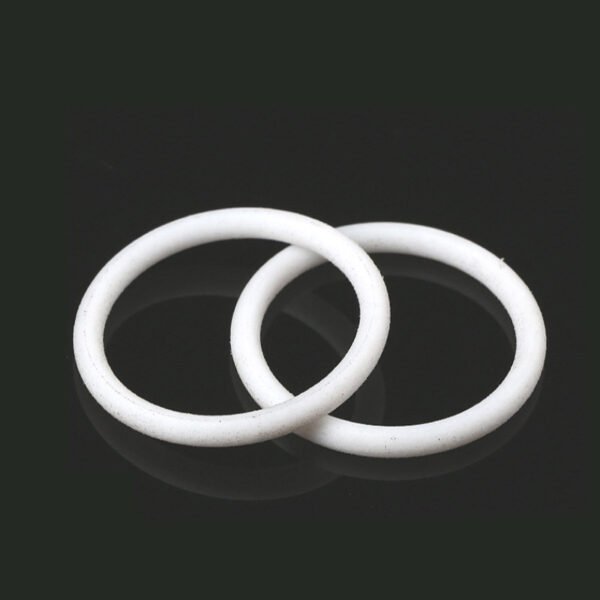
Junta de vedação PTFE Teflon | Fornecedor de vedação de PTFE e junta de vedação de Teflon para alta temperatura
O anel de vedação de PTFE e a junta de Teflon são perfeitos para vedação em altas temperaturas em ambientes químicos agressivos. A junta de Teflon e a junta de PTFE oferecem excelente resistência química e durabilidade. Nossa vedação de PTFE garante um desempenho confiável. Ideal para aplicações industriais e sistemas de fluidos.
Como decidir sobre sua configuração
Pergunte a si mesmo:
- Qual é a suavidade dos flanges?
- Algum ciclo de temperatura ou vibração?
- Limites de carga dos parafusos (por exemplo, materiais frágeis)?
- Requisitos de pureza?
Na maioria das vezes, se houver alguma irregularidade, o ePTFE fica à frente. Para um produto puro e de alta pureza, a virgem se mantém forte.
Na Teflon X, temos ambos em estoque e podemos cortar juntas personalizadas rapidamente.
Perguntas frequentes
Qual é a principal diferença entre o PTFE expandido e o PTFE virgem para gaxetas?
A principal delas é a estrutura: o virgem é denso e rígido, o ePTFE é poroso e fibroso. Isso faz com que o ePTFE seja muito melhor em se adaptar e resistir à fluência.
As folhas de gaxeta de ePTFE são melhores do que o PTFE puro em geral?
Depende do trabalho. O ePTFE geralmente tem um desempenho melhor em flanges resistentes do mundo real, mas o virgem é imbatível em termos de pureza.
Posso usar PTFE puro em flanges ásperos?
Você pode fazer isso, mas é mais arriscado - pode não vedar tão bem sem alto torque, e a fluência pode causar problemas mais tarde.
Se não tiver certeza de qual deles se encaixa em sua operação, entre em contato conosco. Já ajudamos muitas pessoas a escolher a opção certa e até mesmo a fazer orçamentos personalizados Juntas de PTFE. Entre em contato com Allison.Ye@teflonx.com ou por meio de nosso página de contato. Vamos resolver isso rapidamente.
