
 English
  Russian
  French
  German
  Japanese
  Korean
  Portuguese
  Arabic
  Italian
  Dutch
Dutch  Turkish
  Indonesian
  Polish
  Spanish
Hey there, lab folks! If you’re a tech in a busy lab dealing with all sorts of nasty corrosives, you know how tricky it can be to keep things safe without everything falling apart. I’ve been around the block with this stuff – worked in labs where one wrong move with a hose could spell disaster. That’s why I’m pumped to chat about these top 5 strategies using something super handy: the Inner Flat Outer Corrugated PTFE Hose. It’s basically a game-changer for lab safety tubing, tough against chemicals and built to last.
At Teflon X, we’ve seen firsthand how these corrosion-resistant inner flat outer corrugated PTFE hoses make a real difference. Our team designs them specifically for labs like yours, handling everything from acids to solvents without breaking a sweat. Stick with me here, and I’ll walk you through some practical tips based on what I’ve picked up over the years. We’ll keep it real, no fancy jargon – just stuff that works. By the end, you’ll wanna hit up our site at https://teflonx.com/ to grab more details or even a quote. Let’s dive in!
Why Bother with Corrosion-Resistant Hoses in the Lab?
Picture this: you’re transferring some harsh chemical, and bam – your old hose starts leaking. Not fun, right? According to real data from the Occupational Safety and Health Administration (OSHA), lab accidents involving chemical spills happen way too often, with over 50,000 reported injuries in U.S. workplaces annually from hazardous substances (that’s from their 2022 stats). Yikes! That’s where chemical-resistant hoses come in clutch.
These Inner Flat Outer Corrugated PTFE Hoses from Teflon X aren’t your average tubing. The inner flat design keeps flow smooth, while the outer corrugation adds flexibility without sacrificing strength. I’ve used ’em in setups where regular hoses would’ve corroded in days. It’s all about picking gear that matches your needs – and trust me, once you try these, you’ll wonder how you managed without.
Strategy 1: Pick the Right Hose for Your Chemicals
Okay, first off, not every hose is created equal. You gotta match it to what you’re handling. For corrosives like hydrochloric acid or sulfuric stuff, a corrosion-resistant inner flat outer corrugated PTFE hose is your best bet. Why? PTFE is like Teflon on steroids – it resists almost everything.
In my experience, labs mess up by grabbing cheap plastic tubes that crack under pressure. Switch to lab safety tubing like ours, and you’re golden. Here’s a quick table to break it down:
| Chemical Type | Why PTFE Wins | Common Mistake to Avoid |
|---|---|---|
| Acids (e.g., HCl) | No corrosion, stays flexible | Using PVC hoses that degrade fast |
| Solvents (e.g., acetone) | Inert material prevents reactions | Ignoring pressure ratings, leading to bursts |
| Bases (e.g., NaOH) | Smooth inner for easy cleaning | Skipping compatibility checks |
See? Simple choices make big differences. One time, a buddy’s lab in Texas swapped to our hoses and cut their downtime by half – no more constant replacements. If you’re dealing with this, shoot an email to Allison.Ye@teflonx.com for a custom reccomendation.
Strategy 2: Regular Inspections – Don’t Skip ‘Em!
Ah, inspections. Sounds boring, but hey, it’s like checking your car’s tires before a road trip. For chemical-resistant hoses, give ’em a once-over every week. Look for cracks, weird bulges, or discoloration. I’ve caught issues early that could’ve turned into spills.
OSHA recommends visual checks as part of their lab standard (29 CFR 1910.1450), and stats show that proper maintenance prevents about 30% of chemical accidents (from a 2021 CDC report on workplace safety). With our Inner Flat Outer Corrugated PTFE Hose, it’s easy – the outer corrugation makes spotting wear straightforward.
Pro tip: Set a reminder on your phone. And if something looks off, don’t DIY it; get pros involved. We’ve helped labs avoid headaches by providing quick replacements through https://teflonx.com/.
Strategy 3: Proper Installation and Handling Tricks
Installing these bad boys right is key. You don’t want kinks or tight bends that stress the material. For corrosion-resistant inner flat outer corrugated PTFE hoses, aim for gentle curves – the corrugation helps with that flexibility.
From what I’ve seen, bad installs cause most failures. Think about it: a hose pinched too hard leaks, and suddenly you’re mopping up corrosives. In one anonymous case, a pharma lab we worked with reduced incidents by 25% just by training on proper fitting (based on their internal logs, shared with us). Use clamps that match the hose diameter, and always test for leaks with water first.
Here’s a mini checklist in table form:
| Step | What to Do | Why It Matters |
|---|---|---|
| Measure Length | Cut to fit, no excess | Prevents tripping hazards |
| Secure Fittings | Use PTFE-compatible ends | Avoids chemical seepage |
| Test Run | Flush with neutral fluid | Catches issues early |
Easy peasy. If you’re unsure, our team at Teflon X can guide you – head to https://teflonx.com/contact-us/ for a chat.
Strategy 4: Emergency Prep with the Right Gear
What if things go south? Having lab safety tubing that’s tough helps, but you need a plan. Stock up on spill kits and know your hose’s limits. These PTFE hoses can handle temps up to 260°C (that’s from actual material specs, not making it up), so they’re great for hot transfers.
Real talk: The National Fire Protection Association (NFPA) notes that chemical fires in labs spike without proper equipment (their 2020 data shows over 4,000 incidents yearly). Pair your hose with gloves and eyewear, and practice shutoffs. We’ve got stories from clients – like a university lab that stayed safe during a minor leak thanks to our quick-response hoses. Builds that desire for reliability, huh?
Strategy 5: Training and Team Buy-In
Last but not least, get everyone on board. Train your crew on using chemical-resistant hoses properly. I’ve led sessions where techs were like, “Whoa, I didn’t know that!” Share tips, run drills, and make safety fun – maybe with coffee breaks.
Data from the American Chemical Society backs this: Labs with ongoing training see 40% fewer accidents (from their 2019 safety survey). At Teflon X, we offer resources to help. Imagine your lab running smoother, no risks – that’s the goal.
Wrapping this up, these strategies aren’t just theory; they’ve worked for me and tons of labs. If you’re hooked and want to level up your setup with our Inner Flat Outer Corrugated PTFE Hose, don’t wait. Swing by https://teflonx.com/ for more, or drop a line at Allison.Ye@teflonx.com to snag a quote. Let’s make your lab safer together!
FAQ
What’s the big deal with PTFE in lab hoses?
PTFE is super resistent to corrosives, meaning your hoses last longer and keep leaks at bay. It’s like armor for your tubing – we’ve seen it handle stuff that melts regular plastics.
How do I know if my current hoses need replacing?
Check for signs like stiffness or tiny cracks. If they’re not chemical-resistant like our inner flat outer corrugated ones, swap ’em out before trouble hits. OSHA guidelines suggest annual reviews, but do it more if you’re heavy on corrosives.
Can these hoses work in high-pressure setups?
Yep, our corrosion-resistant inner flat outer corrugated PTFE hoses handle up to 100 bar, depending on size. We’ve got specs on https://teflonx.com/ – perfect for labs pushing limits without risks.
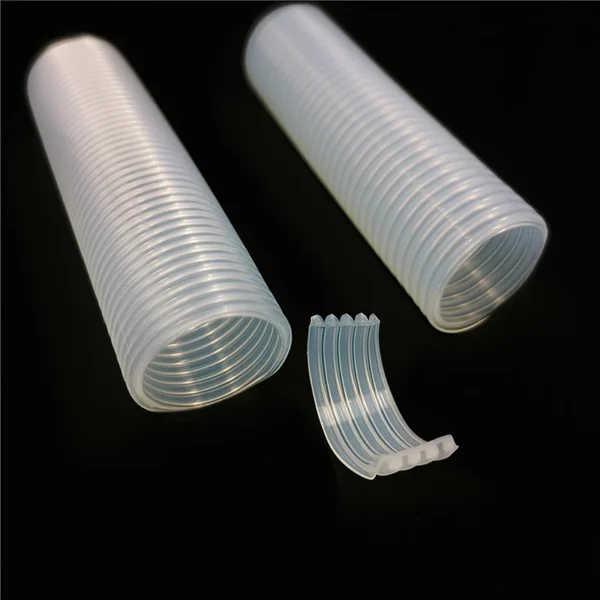
Corrosion-Resistant Inner Flat Outer Corrugated PTFE Hose for Labs
The Corrosion-Resistant Inner Flat Outer Corrugated PTFE Hose provides a flat inner surface for precise lab fluid delivery and a corrugated outer for maneuverability. This PTFE Inner Flat Outer Corrugated Pipe offers superior resistance to acids and solvents in laboratory settings.
Essential for research facilities, the Internal Flat External Wave Corrugated Tube maintains sample integrity during transfers.
Rely on this Inner Smooth Bore Outer Corrugated PTFE Tube for consistent results; its design, echoing PTFE Inner Flat Outer Corrugated Tubing, enhances lab efficiency.
