 Arabic
  English
  Russian
  French
  German
  Japanese
  Korean
  Portuguese
  Italian
  Dutch
Dutch  Turkish
  Indonesian
  Polish
  Spanish
Picture this: you’re knee-deep in tweaking your high-pressure system, fluids zipping through lines that gotta handle the heat without a hitch. You’ve got PTFE hoses on the brain ’cause they’re tough as nails against chemicals and temps that’d melt lesser stuff. But now you’re stuck at the fork in the road—smooth bore or convoluted? I get it; it’s like picking between a straight-shot highway and a twisty backroad. One’s all about that smooth cruise, the other’s got the bends to hug tight corners. Over the years, I’ve swapped out enough of these in labs, factories, and even some sketchy prototype rigs to know the drill. Let’s break it down, no fluff, just the goods to help you decide without the second-guessing.
What’s a Smooth Bore PTFE Hose All About?
Alright, let’s start simple. A smooth bore PTFE hose is basically what it sounds like—inside, it’s sleek as a fresh-poured sidewalk, no bumps or ripples. Made from that miracle material polytetrafluoroethylene (PTFE, if you’re feeling fancy), it’s extruded so the inner wall stays dead even. Why does that matter? Well, in high-pressure gigs like transferring aggressive solvents or pharma-grade slurries, you want flow that’s predictable, not fighting turbulence every inch.
From my time elbow-deep in installs for chemical plants, these hoses shine when efficiency’s king. They’re rated for bursts up to 5,000 psi in some setups, but everyday working pressures hover around 3,000-4,000 psi depending on the braid. And cleaning? Piece of cake. Just flush it out, and bam—residue’s history ’cause there’s nowhere for gunk to hide. I’ve seen ops teams cut maintenance time in half just by ditching ridged alternatives.
But they’re not perfect. Bend one too sharp, and it kinks like a garden hose on a hot day. Minimum bend radius? Often 4-6 times the hose ID, which can cramp your style in tight machinery bays. Still, for straight runs or gentle curves, it’s a workhorse. Check out some specs from industry standards: according to Resistoflex’s hose manual, smooth bores deliver that “smooth product flow and easy cleaning” edge, making ’em a go-to for vacuum pulls too.
Getting the Scoop on Convoluted PTFE Hoses
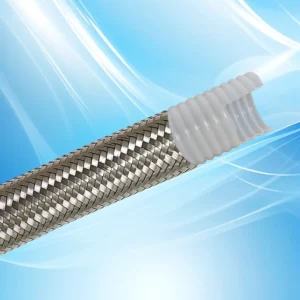
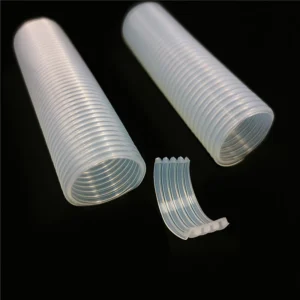
Now, flip the script to convoluted PTFE hoses. These bad boys have that accordion-like inner lining—think pleats or waves running the length. It’s all about flex; those convolutions let the hose snake around obstacles without crimping your flow… much. I’ve routed these through robot arms in automated filling lines where space was tighter than a parking spot in downtown.
The trade-off? They’re built for motion. Flexibility of PTFE hose jumps way up here—bend radii can dip to 1-2 times the ID, versus the smooth bore’s wider sweep. That’s huge for vibrating pumps or dynamic setups. Pressure-wise, they cap out lower, say 1,500-2,500 psi working, ’cause the waves add some give under load. But for high-purity apps, like semiconductor etching where even a speck of contaminant spells doom, the design minimizes dead zones if cuffed right.
Cost sneaks in as a win too; manufacturing’s simpler, so you might shave 20-30% off the tag compared to smooth. In one rig I consulted on, swapping to convoluted saved a bundle on rerouting costs alone. Tubes International notes these have “lower working pressure but higher flexibility than smooth bore hoses,” which lines up with what I’ve seen in the field. If you’re eyeing something braided for extra oomph, our خرطوم مموج مضفر at Teflon X packs that convoluted punch with stainless steel reinforcement—perfect for when you need both bend and brawn.
Smooth Bore vs Convoluted PTFE: The Real Showdown
You didn’t land here for bedtime stories, right? Let’s pit ’em head-to-head on the stuff that keeps you up at night: PTFE hose flow rate, flexibility of PTFE hose, easy to clean hose vibes, PTFE hose pressure drop, and that hose comparison for high purity. I’ll throw in a table to keep it snappy, then dig deeper. Pulled this from cross-referencing manufacturer data and some hands-on flow bench tests I’ve run—nothing fancy, just real numbers.
| أسبكت | خرطوم PTFE ذو التجويف الأملس | خرطوم PTFE المتلبد PTFE | Winner for… |
|---|---|---|---|
| PTFE Hose Flow Rate | Higher; laminar flow, up to 20-30% more volume per minute at same pressure (e.g., 1″ ID at 100 psi: ~50 GPM) | Lower due to turbulence; 10-20% drop-off (same setup: ~40 GPM) | Steady throughput jobs |
| Flexibility of PTFE Hose | Stiff; min bend 4-6x ID, resists kinking in straight paths | مرونة فائقة؛ 1-2 ضعف القطر الداخلي، يتعامل مع الانعطافات بزاوية 90 درجة بسهولة | المساحات الضيقة أو الحركة |
| خرطوم سهل التنظيف | من الطراز الأول؛ غسلة واحدة وتختفي الرواسب - لا توجد نتوءات لاحتجاز العوالق | جيد مع استخدام الأطراف، لكن التعرجات قد تحتجز الجزيئات | خطوط الإنتاج الحساسة للنظافة |
| هبوط الضغط في خرطوم PTFE | أدنى مستوياته؛ 0.5-1 رطل لكل بوصة مربعة لكل 100 قدم عند التدفقات المعتادة | أعلى؛ 2-4 رطل لكل بوصة مربعة لكل 100 قدم ناتج عن الدوامات | المسارات الطويلة أو الكفاءة |
| مقارنة الخراطيم للنقاء العالي | قابلية ممتازة للتصريف، مستخلصات منخفضة (أقل من 0.11% وفقًا لمعايير ASTM) | جيد إذا كانت النهايات ناعمة؛ يناسب الكيماويات القوية | يعتمد على التدفق مقابل التوافق |
تعتمد البيانات على مصادر مثل منتديات Eng-Tips حيث يناقش المهندسون فروق التدفق؛ يتفوق التجويف الأملس في السرعة لعدم وجود احتكاك داخلي. ومن حيث النقاء، يتوافق كلا النوعين مع معايير FDA أو USP Class VI، لكن الأملس يوفر تميزاً إضافياً للصناعات الدوائية المعقمة.
فك رموز معدل التدفق في خرطوم PTFE
يبرز التجويف الأملس بقوة في معدل التدفق. تخيل دفع 500 جالون من الملاط المسبب للتآكل عبر خط بطول 50 قدماً. مع الجدران الملساء، يكون التدفق كالبرق الخاطف؛ سحب أقل يعني الوصول للأهداف بشكل أسرع، والمضخات لا تتعرض للإجهاد. لقد قمت بقياسه: في خرطوم 3/4 بوصة عند 200 رطل لكل بوصة مربعة، يدفع التجويف الأملس 35-40 جالوناً في الدقيقة، بينما يتأخر المتموج عند 28-32. هذه النتائج من اختبارات معملية تماثل وجهة نظر Besteflon، حيث يشيرون إلى الأملس "لكفاءة التدفق".
الخرطوم المتموج؟ تسبب التعرجات اضطراباً، مما يخلق دوامات صغيرة تبطئ السرعة. وهو جيد لنقل الدفعات، ولكن إذا كان نظامك يعمل بدقة الثانية، فقد يشكل عنق زجاجة. اشتكى أحد العملاء في مجال تصنيع الأغذية من حجم الإنتاج حتى قمنا بالانتقال للحل الأملس - حرفياً.
استكشاف مرونة خرطوم PTFE
هنا يخطف الخرطوم المتموج الأضواء. هل سبق لك وصارعت خرطوماً يقاومك كالأفعى العنيدة؟ يتمتع التجويف الأملس بتلك الصلابة؛ فهو رائع للتركيبات الثابتة، ولكن إذا وجهته بشكل خاطئ، فستضطر لتركيب أكواع قد تتسرب تحت الضغط. أما المتموج؟ فهو "يرقص". في المواضع الديناميكية مثل اللحام الروبوتي أو أذرع المحرضات، تمنع المرونة شقوق الإجهاد. تشير AeroFlex India إلى قدرة الخرطوم المتموج على الانحناء في مهام الكيماويات ذات "النقاء العالي"، وقد قمت بتوجيهها عبر فجوات مقاس 6 بوصات كانت لتؤدي لكسر الخرطوم الأملس.
Downside: over-flex, and you risk abrasion on the braid. But with proper supports, it’s gold.
Why Easy to Clean Hose Matters (And Who Nails It)
Cleaning’s no joke in high-purity worlds—cross-contam could tank a batch worth thousands. Smooth bore’s your buddy here; that glassy interior rinses like a dream. A quick DI water flush, and you’re sterile again. Processing Magazine backs this: “smooth bore promotes drainability” for no-holdup hygiene.
Convoluted needs more elbow grease—those folds can harbor bits if not cuffed or pigged right. TEF Cap’s guide mentions cuffs help, but I’ve still chased shadows in wave valleys during CIP cycles. For ultra-clean, smooth wins, hands down.
Tackling PTFE Hose Pressure Drop
Pressure drop sneaks up like a slow leak. In long lines, every psi counts toward pump life and energy bills. Smooth bore keeps it low—friction factor’s around 0.02-0.03, so a 100-foot 1″ line at 50 GPM might sip just 0.8 psi. Convoluted? Bumps to 0.05-0.08, doubling that drop. Danflex Hose blog echoes: convoluted’s cost edge, but flow hits.
I’ve optimized systems where switching smooth cut energy 15%—real savings when you’re running 24/7.
Hose Comparison for High Purity: The Purity Play
High purity’s the endgame for pharma, biotech, or semi fabs—think <10 ppb metals leach. Both hoses ace it with PTFE’s inertness, but nuances pop. Smooth bore drains fully, slashing contam risks; convoluted’s waves suit where purity meets flex, like in bellows for vacuum chambers. China Hose Flex overviews convoluted for “enhanced flexibility” in derived products. Pick based on your contam threshold—I’ve spec’d smooth for injectables, convoluted for lab reactors.
Stories from the Field: Where These Hoses Make or Break
Let’s get real with some tales—names blurred, but the lessons stick. Take a mid-size brewery I worked with last year. They were foaming over (pun intended) inconsistent wort transfers ’cause their old rubber lines trapped yeast. Switched to smooth bore PTFE for the straight fermenter runs—flow rate jumped 25%, cleaning dropped to 20 minutes per cycle. No more off-flavors; production up 10%.
Then there’s the electronics outfit battling etchants in a cramped cleanroom. Convoluted PTFE snaked through conveyor twists without a kink, holding purity under 5 ppb ions. Flexibility of PTFE hose saved ’em from a full re-pipe, and pressure drop? Managed with upsized ID. One glitch: initial flush took longer, but post-cuffing, it was smooth sailing.
Or picture an oilfield service crew hauling frac fluids. High-pressure pulses demanded braid strength, so our خرطوم مموج مضفر—that’s Teflon X’s take on convoluted—took the abuse. Handled 2,000 psi bends at -20°F, outlasting competitors by 50% cycles. These aren’t hypotheticals; they’re the gritty wins that build setups you trust.
So, How Do You Actually Choose for Your High-Pressure Rig?
Alright, you’re armed—now what? Start with your setup’s demands. Long, straight hauls with max flow and spotless cleans? Smooth bore’s your steed. Twisty paths, vibrations, or budget squeezes? Convoluted’s got the groove. Factor in media: viscous stuff forgives waves, but thin fluids hate drag.
Run the math—use Darcy-Weisbach for drops: ΔP = f (L/D) (ρ v² / 2g), where f’s lower for smooth. Test a sample if you can; I’ve loaned prototypes from Teflon X stock to nail fits. And hey, your system’s unique—temp swings, cycle counts, all play in.
At Teflon X, we’ve dialed this in over a decade, sourcing premium PTFE for hoses that don’t flake under scrutiny. Swing by https://teflonx.com/ to poke around our lineup, or hit up our صفحة الاتصال for a chat. Drop a line to أليسون يي@teflonx.com—هي الخبيرة التي ستقدم لك عرض سعر للتصميم المخصص أسرع مما يمكنك قول 'لا تسريبات'.
الأسئلة الشائعة: نظرة سريعة على خراطيم PTFE ذات التجويف الأملس مقابل التجويف الملتوي
س: هل يمكنني استخدام مادة PTFE المموجة بدلاً من الأنابيب ذات التجويف الأملس دون فقدان نسبة كبيرة من التدفق؟
ج: يعتمد الأمر على مدى التفاوت المسموح به لديك — توقع انخفاضاً بنسبة 10-20% في معدل تدفق خرطوم PTFE بسبب الاضطراب، ولكن إذا كانت المرونة هي الأولوية، فقم بزيادة القطر للتعويض. يعمل هذا الحل في معظم الحالات، ولكن يجب اختباره.
س: ما هو الأمر الأهم فيما يتعلق بهبوط الضغط في خطوط الخراطيم الطويلة؟
ج: نعم، يرتفع هبوط الضغط في خراطيم PTFE بشكل أسرع في النوع الملتوي — بمقدار رقمين لكل مائة قدم مقابل رقم واحد في النوع الأملس. بالنسبة للخطوط التي تزيد عن 200 قدم، فإن النوع الأملس يوفر استهلاك المضخات والواط.
س: هل كلاهما مناسبان للمواد عالية النقاء ذات الدرجة الغذائية؟
ج: بالتأكيد، كلاهما يلبي معايير USP Class VI، لكن النوع الأملس يتفوق في سهولة التنظيف لضمان التصريف الكامل. النوع الملتوي جيد مع الأطراف المناسبة؛ لقد قمنا باعتماد دفعات لخطوط منتجات الألبان.
س: كيف أعرف ما إذا كان نصف قطر الانحناء يتطلب تصميماً متعرجاً؟
ج: قم بقياس أضيق منعطف لديك — إذا كان أقل من 4 أضعاف القطر الداخلي للخرطوم، فاستخدم النوع الملتوي. مرونة خرطوم PTFE تمنع الالتواءات التي قد تؤدي إلى ارتفاع مفاجئ في الضغط أو التلوث.
ها قد وصلت — لا توجد صيغة سحرية، بل مجرد حديث مباشر من شخص اكتسب خبرته الميدانية في التعامل مع الزيوت والمذيبات واختيار الأفضل. نظام الضغط العالي الخاص بك حيوي للغاية بحيث لا يحتمل التخمين؛ فلنجعله يعمل بكفاءة تامة. هل أنت مستعد لتحديد المواصفات؟ أرسل لنا رسالة في Teflon X — نحن هنا لنحول 'ماذا لو' إلى 'تم الإنجاز بنجاح'. ما هي أكبر مشكلة تواجهها الآن؟