
 German
  English
  Russian
  French
  Japanese
  Korean
  Portuguese
  Arabic
  Italian
  Dutch
Dutch  Turkish
  Indonesian
  Polish
  Spanish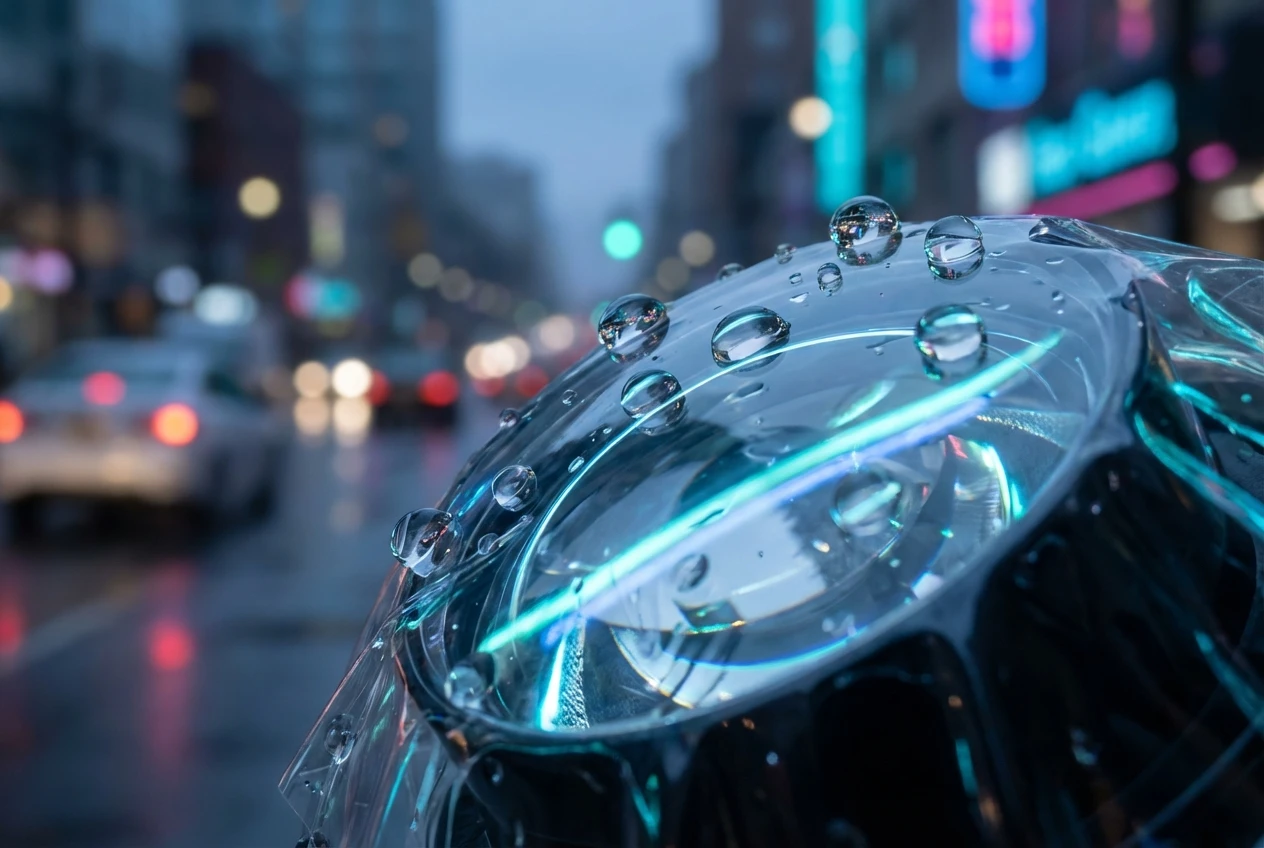
Wenn Sie ein Ingenieur sind, der an autonomer Fahrzeugtechnik arbeitet, kennen Sie das Problem. Sie haben einen Wahrnehmungs-Stack (Perception Stack) entwickelt, der mehr kostet als ein Ferrari, aber eine einzige Schlammpfütze setzt ihn außer Gefecht. Hier setzt PTFE-Folie für Sensoren die Branche im Stillen revolutioniert.
Wir sprechen hier nicht von Standard-Displayschutzfolien. Wenn wir über PTFE-Folie für Sensorendiskutieren, sprechen wir über eine kritische Infrastrukturschicht, die sich zwischen Ihrer teuren LiDAR/Radar-Hardware und der chaotischen, schmutzigen Außenwelt befindet.
Bei Teflon Xhaben wir Jahre damit verbracht, die Fluorpolymer-Chemie zu verfeinern. Wir haben aus erster Hand erfahren, dass mechanische Wischer versagen. Sie verkratzen Oberflächen. Sie verklemmen sich. Sie sehen an einem eleganten Elektrofahrzeug-Design furchtbar aus. Die Branche schwenkt auf passiven Schutz um, und hochwertiges PTFE-Folie für Sensoren ist das Material, das diesen Wandel anführt.
Warum? Weil es optische Klarheit, Hochfrequenztransparenz und eine selbstreinigende Oberfläche kombiniert, die sich fast wie Magie anfühlt. Lassen Sie uns tief in die Frage eintauchen, warum dieses Material Glas und Polycarbonat in jeder wichtigen Kennzahl schlägt.
1. Die Physik des Signalverlusts: Warum PTFE-Folie für Sensoren gewinnt
Lassen Sie uns kurz technisch werden. Ich verspreche, es verständlich zu halten, aber wir müssen über die Dielektrizitätskonstante (Dk) sprechen.
Jedes Mal, wenn Ihr 77-GHz-Radar eine Welle aussendet, muss diese eine Schutzabdeckung (das Radom) passieren. Wenn diese Abdeckung aus Standardkunststoff oder Glas besteht, wird ein Teil dieses Signals zurückgeworfen. Dies wird als Reflexionskoeffizient bezeichnet.
Hohe Reflexion bedeutet, dass Ihr Sensor von seiner eigenen Abdeckung „geblendet“ wird. Dies verringert die Reichweite und Genauigkeit der Objekterkennung.
Standard-Polycarbonat hat eine Dk von etwa 2,9 bis 3,0.
PTFE-Folie für Sensoren, insbesondere die bei Teflon X entwickelte Güteklasse, hat eine Dk von etwa 2,0 bis 2,1.
Dieser Unterschied klingt gering, ist aber in der Welt des Millimeterwellen-Radars (mmWave) gewaltig.
Die Signalübertragungsformel
Da wir hier keine aufwendigen Code-Blöcke verwenden können, betrachten wir die Mathematik in reinem Text. Der Reflexionskoeffizient (nennen wir ihn Gamma) hängt von der Permittivität (Er) des Materials ab.
Gamma = (sqrt(Er) – 1) / (sqrt(Er) + 1)
Betrachten wir die Zahlen:
- Für Polycarbonat (Er = 3,0):
Gamma = (1,732 – 1) / (1,732 + 1)
Gamma = 0,732 / 2,732
Reflexion = 0,268 (oder etwa 26,8 %) - Für Teflon X PTFE-Folie (Er = 2,1):
Gamma = (1,449 – 1) / (1,449 + 1)
Gamma = 0,449 / 2,449
Reflexion = 0,183 (oder etwa 18,3 %)
Das ist eine massive Reduzierung des Signalverlusts. Durch den Wechsel zu PTFE-Folie für Sensoren, steigern Sie die Übertragungseffizienz Ihres Radars effektiv um fast 10 %, allein durch den Wechsel des Abdeckmaterials. Das könnte der Unterschied sein, ob ein Fußgänger in 150 Metern oder in 130 Metern Entfernung erkannt wird. Beim autonomen Fahren retten diese 20 Meter Leben.

Reibungsarme, geschälte Teflonfolie für Luft- und Raumfahrt- und Automobilkomponenten
Geschälte Teflonfolie überzeugt in der Luft- und Raumfahrt sowie im Automobilbereich durch ihr geringes Gewicht und ihre Hitzebeständigkeit bis 260 °C[5]. Die reibungsarme Oberfläche reduziert den Verschleiß in Kraftstoffsystemen und Motorkomponenten, während die dielektrischen Eigenschaften die Leistung in Hochspannungsumgebungen verbessern.
Anwendungen: Isolierfolien für Kondensatoren, Leiterplatten und Förderbänder.
2. PTFE-Folie für Sensoren und das selbstreinigende Wunder
Ich hasse den Begriff „selbstreinigend“, weil er impliziert, dass die Folie einen kleinen Roboterarm hat. Das hat sie nicht. Sie beruht lediglich auf Physik – genauer gesagt auf der Kontaktwinkel-Hysterese.
Wir hatten vor Kurzem einen Kunden, ein Startup für Lieferroboter, das mit Morgentau zu kämpfen hatte. Ihre Kameras beschlugen, und die Wassertropfen rollten nicht ab, bis der Roboter 10 mph erreichte. Aber der Roboter fährt nur mit 5 mph auf Gehwegen. Sie saßen fest.
Sie brachten unsere PTFE-Folie für Sensoren über dem Objektiv an.
Hier ist der Grund, warum es funktioniert hat:
- Hydrophobie: Wasser stößt PTFE ab. Der Wasserkontaktwinkel (WCA) liegt bei etwa 110-115 Grad. Das Wasser bildet nahezu perfekte Kugeln.
- Gleitwinkel: Dies ist das Erfolgsgeheimnis. Ein Wassertropfen auf Glas bleibt möglicherweise haften, bis das Glas um 30 Grad geneigt wird. Auf PTFE-Folie für Sensoren, ist der Gleitwinkel oft geringer als 5 bis 10 Grad.
Die Schwerkraft übernimmt die Reinigung für Sie. Selbst eine leichte Vibration oder eine sanfte Brise genügt, um das Wasser abzustoßen. Der Lieferbot benötigte keine Scheibenwischer; er brauchte lediglich eine Oberfläche, an der Wasser nicht haften bleibt.
Vergleichstabelle: Materialien auf einen Blick
Sehen Sie sich diesen Vergleich an. Es ist ziemlich offensichtlich, warum PTFE-Folie für Sensoren die überlegene Wahl ist für Autonome Fahrzeugtechnik.
| Besonderheit | Standardglas | Polycarbonat-Abdeckung | Teflon X PTFE-Folie |
|---|---|---|---|
| Dielektrizitätskonstante (Dk) | 6,0 – 7,0 (schlecht für Radar) | 2.9 – 3.0 | 2,0 – 2,1 (exzellent) |
| Signalverlust | Hoch | Mäßig | Sehr niedrig |
| Wasser-Kontakt-Winkel | ~40° (hydrophil) | ~80° | ~115° (superhydrophob) |
| Reinigungsbedarf | Wischer + Flüssigkeit | Beschichtungen (die sich abnutzen) | Luftstrahl / Schwerkraft |
| Austauschkosten | $$$ (Gesamte Linse) | $$ (Formteil) | $ (Opferfolie) |
3. Die Wirtschaftlichkeit: Warum PTFE-Folie für Sensoren Schont das Budget
Reden wir über Geld.
Eine High-End-Lidar-Einheit kann zwischen $1,000 und $10,000 kosten. Die Frontlinse besteht in der Regel aus präzisionsgeschliffenem Glas mit speziellen Antireflexbeschichtungen.
Wenn ein Steinschlag auf der Autobahn dieses Glas trifft, ist die Einheit unbrauchbar. Man kann ihn nicht einfach auspolieren, da man sonst die optische Krümmung verändert. Die Einheit muss ersetzt werden.
Stellen Sie sich nun vor, Sie hätten eine Schicht aufgetragen PTFE-Folie für Sensoren von Teflon X.
Ein Stein schlägt ein. Er beschädigt die Folie.
Die Lösung: Ein Techniker zieht die $5-Folie ab und bringt eine neue an. Der darunter liegende $5,000-Sensor ist makellos.
Wir beobachten, dass Flottenbetreiber dies einführen PTFE-Folie für Sensoren nicht nur wegen der optischen Vorteile, sondern rein als Versicherungsschutz. Es handelt sich um eine Opferschicht. Sie fängt die Belastung ab, damit Ihre Hardware geschont wird.
Praxisbeispiel: Der Fernverkehr-Lkw-Test
Wir haben mit einem Frachtunternehmen (nennen wir es Transport Z) zusammengearbeitet, um Level-4-Lkw zu testen. Diese fahren Langstrecken auf Routen mit hohem Insektenaufkommen. Insektenrückstände sind extrem säurehaltig. Verbleiben sie 48 Stunden lang auf einer Polycarbonatlinse, beginnt die Säure, den Kunststoff anzuätzen, was zu einer dauerhaften Trübung führt.
Transport Z begann mit der Nutzung unserer PTFE-Folie für Sensoren. Da PTFE chemisch inert ist (chemisch gesehen handelt es sich im Grunde um das gleiche Material wie in Ihrer Bratpfanne), konnte die Insektensäure nicht daran haften.
Ergebnis?
- Reinigungszeit um 70% reduziert. Ein einfacher Wasserstrahl wusch die Insekten direkt ab.
- Der Linsenaustausch sank auf Null.
- ROI: Sie sparten in einem sechsmonatigen Pilotprogramm rund $15.000 an Hardware-Ersatzkosten ein.
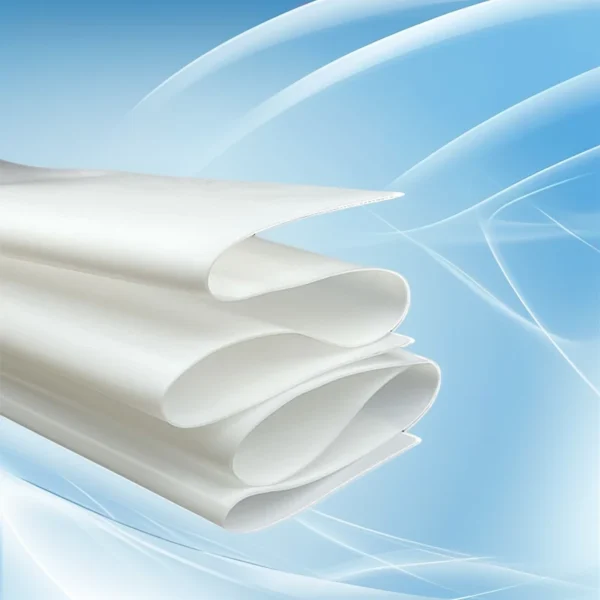
Geschälte PTFE-Folie in medizinischer Qualität für Sterilfiltration und Implantatbeschichtungen
Medizinische PTFE-Folie kombiniert Biokompatibilität mit mikroporöser Filtration (0,02–15 μm Porengröße) und erfüllt strenge pharmazeutische Standards. Das ungiftige Material wird in Arzneimittelverabreichungssystemen und Implantatbeschichtungen eingesetzt und gewährleistet chemische Inertheit und thermische Stabilität bei Sterilisation.
Hauptmerkmale: UV-beständig, FDA-konform und anpassbar an schnelle Temperaturzyklen.
4. Installation und Langlebigkeit von PTFE-Folie für Sensoren
Eine der häufigsten Fragen, die mir bei Allison.Ye@teflonx.com gestellt werden, lautet: „Ist das Anbringen ein Albtraum?“
Sehen Sie, ich werde Sie nicht anlügen. Es ist nicht wie das Aufkleben eines Stickers auf ein Notizbuch. Man muss vorsichtig sein, um Luftblasen zu vermeiden, da eine Luftblase einen Lidar-Strahl brechen kann.
Moderne PTFE-Folie für Sensoren werden jedoch mit fortschrittlichen Silikon- oder Acrylatklebstoffen geliefert, die „benetzungsfreundlich“ sind. Dies bedeutet, dass sie mit der Zeit fließen, um mikroskopische Lücken zu füllen.
Der Anwendungsprozess:
- Sauber: Absolute chirurgische Sauberkeit des Sensors.
- Nassverklebung: Wir empfehlen oft einen leichten Flüssigkeitsnebel, der es Ihnen ermöglicht, die Folie zu positionieren.
- Rakel: Drücken Sie die Flüssigkeit heraus.
- Aushärtung: Lassen Sie es haften.
Einmal angebracht, bleibt es haften. Unser PTFE-Folie für Sensoren ist für Temperaturen von -40 °C (hallo, Norwegen) bis +150 °C (hallo, Death Valley) ausgelegt. Es vergilbt nicht unter UV-Licht, wie es bei billigen PVC- oder TPU-Folien der Fall ist.
Ein Hinweis zur individuellen Anpassung
Wir wissen, dass jeder Sensor anders ist. Einige sind flach, andere kuppelförmig. Bei Teflon X, bieten wir individuelles Stanzen an. Wir können PTFE-Folie für Sensoren auf den Millimeter genau für Ihr Gerät zugeschnitten liefern, inklusive Abziehlaschen für eine einfache Anwendung.
Geben Sie sich nicht damit zufrieden, eine Rohrolle zu kaufen und zu versuchen, sie im Labor mit der Schere zuzuschneiden. Präzision ist hier entscheidend.
5. Die Zukunft: PTFE-Folie für Sensoren und Solid-State-Reinigung
Die Branche bewegt sich in Richtung „Solid State“ in allen Bereichen. Solid-State-Lidar (ohne rotierende Teile). Festkörperbatterien. Und jetzt: Solid-State-Reinigung.
Das Konzept ist die Ultraschall-Linsenreinigung (ULC). Die Linsenabdeckung vibriert mit Ultraschallfrequenzen, um Wasser und Staub zu zerstäuben.
Der Haken dabei ist: ULC funktioniert wesentlich besser, wenn die Oberfläche bereits hydrophob ist. Wenn die Oberflächenenergie hoch ist (wie bei normalem Glas), haftet das Wasser zu stark, als dass die Vibrationen es lösen könnten.
Durch das Laminieren von PTFE-Folie für Sensoren auf ein ULC-System schaffen Sie den ultimativen selbstreinigenden Aufbau. Die niedrige Oberflächenenergie des PTFE bedeutet, dass das Wasser kaum haftet, sodass die Ultraschallvibrationen es sofort und mit geringerem Stromverbrauch wegschleudern.
Wir entwickeln derzeit Prototypen dieser Kombination mit mehreren Tier-1-Zulieferern. Wenn Sie LiDAR-Reinigung Technologie entwickeln, müssen Sie diese Folie testen.
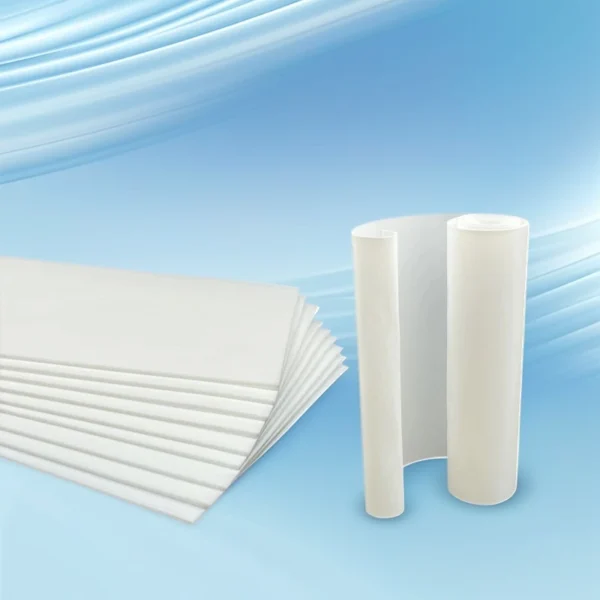
Hochtemperaturbeständige PTFE-Schälfolie für industrielle Dichtungen
PTFE-Schälfolie bietet außergewöhnliche chemische Stabilität und Temperaturbeständigkeit (-200 °C bis +260 °C) und eignet sich ideal für Industriedichtungen in Pumpen, Ventilen und chemischen Prozessanlagen[4]. Der niedrige Reibungskoeffizient (0,04) gewährleistet Langlebigkeit in dynamischen Anwendungen, während die mikroporöse Struktur (85% Porosität) Flüssigkeits- und Partikelbeständigkeit gewährleistet.
Anwendungen: Korrosionsbeständige Dichtungen, Beschichtungen für Flugzeugtriebwerke und Filtermembranen in medizinischer Qualität.
Warum Teflon X?
Wir sind kein allgemeiner Kunststoffanbieter. Wir konzentrieren uns auf Hochleistungs-Fluorpolymere. Wenn Sie bei uns PTFE-Folie für Sensoren kaufen, erhalten Sie:
- Verifizierte Daten: Wir raten nicht bei Dk-Werten; wir testen sie.
- Konsistenz: Jede Rolle wird auf optische Mängel geprüft.
- Unterstützung: Echte Ingenieure beantworten Ihre E-Mails, kein Chatbot.
Wenn Sie es leid sind, sich mit Signalrauschen, häufiger Wartung und verkratzten Linsen auseinanderzusetzen, ist es an der Zeit, Ihre Materialien zu verbessern.
FAQ: Häufig gestellte Fragen zu PTFE-Folie für Sensoren
F1: Kann PTFE-Folie für Sensoren auf gekrümmten Oberflächen aufgebracht werden?
Ja, aber es gibt Grenzen. PTFE ist nicht so dehnbar wie TPU (thermoplastisches Polyurethan). Für extreme Wölbungen verwenden wir ein spezielles „geschältes“ PTFE, das eine etwas höhere Flexibilität aufweist, oder wir empfehlen Vakuum-Laminierverfahren. Kontaktieren Sie uns für spezifische Richtlinien zur Krümmung.
Q2: Beeinträchtigt die Klebeschicht das Signal?
Gute Frage. Der Klebstoff ist bei anderen Folien üblicherweise die Schwachstelle. Unsere PTFE-Folie für Sensoren verwendet einen speziell formulierten, verlustarmen Klebstoff, der optisch klar und dielektrisch so weit wie möglich angepasst ist, um Grenzflächenreflexionen zu minimieren.
Q3: Wie lange ist die Haltbarkeit der Folie im Außenbereich?
PTFE ist bekannt für seine UV-Beständigkeit. Es ist praktisch immun gegen UV-Degradation. Unter realen Bedingungen im Automobilbereich hält unser PTFE-Folie für Sensoren in der Regel 3 bis 5 Jahre, bevor es aufgrund von physischem Verschleiß (Abrieb durch Sand) und nicht aufgrund von chemischem Zerfall ausgetauscht werden muss.
F4: Kann ich ein Muster von PTFE-Folie für Sensoren bekommen, um es an meinem Radar zu testen?
Selbstverständlich. Wir befürworten dies ausdrücklich. Wir wissen, dass Sie die Dämpfungsdaten selbst validieren müssen. Kontaktieren Sie uns über unser Kontaktseite oder senden Sie mir direkt eine E-Mail an Allison.Ye@teflonx.com.
Bereit, Ihre Probleme beim Sensorschutz zu lösen?
Die Zukunft des autonomen Fahrens hängt nicht nur von besserem Code ab, sondern auch von einer besseren Hardware-Integration. Lassen Sie nicht zu, dass eine verschmutzte Linse Ihre Flotte stilllegt.
Wechseln Sie zu PTFE-Folie für Sensoren und erleben Sie den Unterschied in Ihrer Datenqualität und Ihren Wartungszyklen.
- Produkte anzeigen: Kategorie PTFE-Folien durchsuchen
- Technischen Support erhalten: Kontaktieren Sie uns
Sorgen wir dafür, dass diese Sensoren sauber bleiben und Ihre Fahrzeuge in Bewegung bleiben.
