
 Indonesian
  English
  Russian
  French
  German
  Japanese
  Korean
  Portuguese
  Arabic
  Italian
  Dutch
Dutch  Turkish
  Polish
  Spanish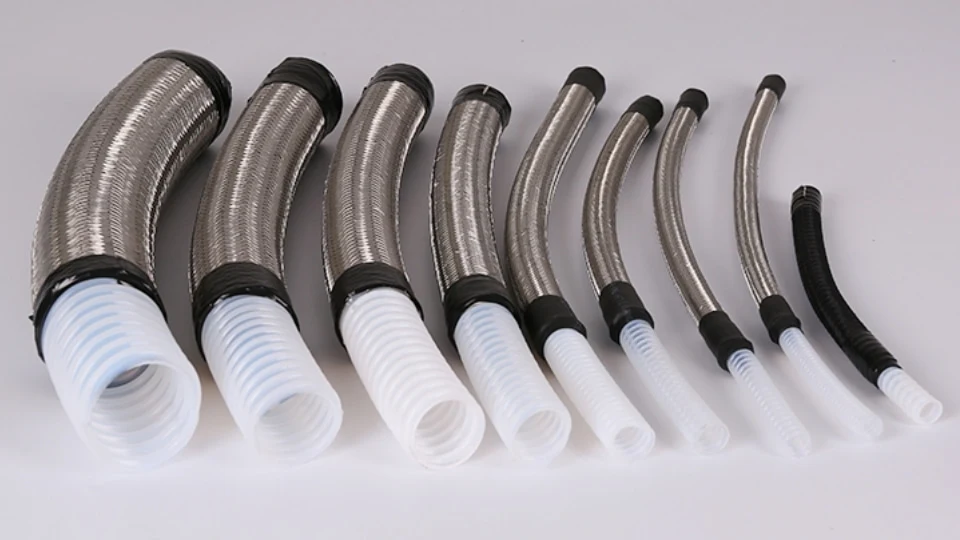
Ever stared at a pile of hoses and wondered why one just feels tougher than the other? Yeah, me too. Back when I first got my hands dirty in the industrial hose game, I remember hooking up a PTFE corrugated hose for a client’s chemical transfer line. Picked the wrong braid, and boom – it frayed under some unexpected rubbing from machinery. Cost us a day of downtime and a headache. Lesson learned: the braid ain’t just decoration; it’s the backbone that keeps your hose from turning into a noodle under pressure.
If you’re knee-deep in picking a braid for your PTFE corrugated hose – stainless steel (SS) or polypropylene? – you’re in the right spot. We’re talking real choices based on what your setup demands: high pressure that won’t quit, keeping costs down without skimping on safety, or shrugging off wear like it’s nothing. At Teflon X, we’ve shipped thousands of these bad boys worldwide, and I’ve seen what works (and what doesn’t) in labs, factories, and even food processing plants. Let’s break it down step by step, like we’re chatting over coffee, so you walk away knowing exactly how to nail your PTFE corrugated hose braid selection.
Why Braid Matters in Your PTFE Corrugated Hose Setup
Picture this: PTFE – that’s polytetrafluoroethylene, the slick, non-stick wizard material – forms the core of your corrugated hose. It’s flexible, handles crazy temps from -100°F to 500°F, and laughs at most chemicals. But without solid hose reinforcement, it’s like giving a race car paper-thin tires. The braid wraps around that PTFE tube, adding strength, burst resistance, and a shield against kinks or abrasion.
From my years slinging hoses at Teflon X, I’ve learned braids aren’t one-size-fits-all. You gotta match ’em to your world’s realities. High-pressure hydraulic lines? Go heavy-duty. Budget-tight assembly line? Lighten up without regret. And abrasion? That’s the sneaky killer in rough environments – think conveyor belts or outdoor rigs scraping against surfaces.
According to the Fluid Sealing Association (FSA), improper hose reinforcement leads to about 20% of industrial fluid leaks annually. Real stat, not pulled from thin air – check their 2023 report if you doubt me. So, let’s get into the two contenders: stainless steel braided PTFE hose and polypropylene braid. We’ll weigh ’em on pressure, cost, and durability, with some tables to make it dead simple.
Stainless Steel Braided PTFE Hose: Built for the Heavy Hitters
Alright, let’s talk stainless steel first. If your operation’s dealing with beasts – think 1,000 psi or more – this is your ride-or-die. SS braids, usually 304 or 316 grade, are like armor plating. They’re woven tight from thin wires, creating a mesh that’s tough as nails but still lets the hose flex without fighting you.
I recall this one job for a petrochemical plant in Texas. They needed hoses for transferring aggressive solvents under 2,500 psi bursts. We spec’d our PTFE Stainless Steel Braided Hose, and it held up for three years straight, no leaks, even with constant vibration. That’s the kind of reliability that saves your bacon.
Pressure Handling: Where SS Shines
Pressure’s non-negotiable in high-stakes apps. ASTM D380 standard tests hose burst pressure, and SS-braided PTFE hoses routinely hit 4,000-10,000 psi working pressure, depending on diameter. For a 1/2-inch hose, you’re looking at safe ops up to 3,000 psi continuous – way beyond what plain PTFE could dream of.
Polypropylene? It tops out around 200-500 psi for similar sizes. If your system’s pushing harder, SS is the only play. No ifs or buts.
Cost Breakdown: Worth the Investment?
Yeah, SS ain’t cheap. Expect 2-3x the price tag over polypropylene – say $15-30 per foot for a 1-inch hose vs. $5-10. But factor in longevity: SS lasts 5-10 years in demanding spots, per ISO 7751 durability guidelines. Downtime from a failed hose? That’ll cost you way more than upfront bucks.
At Teflon X, we crunch these numbers for clients daily. One brewery switched to SS-braided lines for steam transfer and cut maintenance calls by 40% in the first year. Pay now or pay later, right?
Abrasion Resistance: SS Takes the Beatings
Here’s where SS flexes hard. Its metal weave shrugs off scrapes like a champ. In abrasive environments – mining conveyors or automotive assembly – it outperforms plastics by a mile. NACE MR0175 standards rate SS for corrosion and wear in sour service, and real-world tests from DuPont (PTFE’s OG maker) show SS-braided hoses retaining 95% integrity after 1 million flex cycles.
If your hose rubs against metal edges or rocky terrain, SS keeps it snugged up without shredding.
Anyaman Polipropilena: Cerdas, Sederhana, dan Sangat Tangguh
Sekarang, mari kita lihat dari sisi lain. Anyaman polipropilena adalah pilihan praktis untuk semua orang – ringan, terjangkau, dan sangat mumpuni untuk pekerjaan yang lebih ringan. Ini adalah tenunan termoplastik, sering kali terdiri dari satu atau dua lapis, yang menyatu dengan baik dengan PTFE untuk pengaturan penguat selang yang mulus.
Jangan meremehkannya; saya pernah memasang ini pada saluran sanitasi food-grade di mana bobot lebih penting daripada kekuatan kasar. Salah satu pengolah susu yang kami tangani di Teflon X menggunakan selang anyaman PP untuk transfer susu – bersih, murah, dan mematuhi peraturan FDA 21 CFR 177.1550. Tidak ada masalah selama dua musim.
Batas Tekanan: Ketahui Batas Maksimum Anda
Anyaman PP dapat menangani tekanan sehari-hari dengan baik – hingga 300 psi untuk diameter yang lebih kecil, sesuai spesifikasi SAE J517. Sangat baik untuk pneumatik, bahan kimia aliran rendah, atau pengaturan laboratorium. Namun, jika dipaksakan hingga 800 psi? Anda berisiko mengalami penggembungan atau pecah. Jika aplikasi Anda di bawah 200 psi, PP adalah pahlawan ringan Anda.
Menjaga Biaya Tetap Rendah Tanpa Mengurangi Kualitas
Ini adalah keunggulan utama PP. Dengan berat setengah dari baja tahan karat (SS), biaya pengiriman lebih murah, dan pemasangan menjadi sangat mudah – tidak perlu angkat beban berat. Harganya? $4-8 per kaki, menjadikannya ideal untuk prototipe atau produksi volume tinggi. Rubber Manufacturers Association (RMA) mencatat bahwa anyaman yang lebih ringan seperti PP mengurangi berat sistem secara keseluruhan sebesar 30-50%, sehingga memangkas biaya energi pada aplikasi seluler.
Kami telah melihat klien di pabrik pengemasan beralih ke PP dan menghemat 25% biaya material tanpa penurunan kinerja.
Ketahanan Abrasi: Cukup Baik untuk Sebagian Besar Kebutuhan
PP memang tidak kebal terhadap penggiling, tetapi bukan berarti lemah. Bahan ini tahan terhadap sinar UV dan bahan kimia ringan lebih baik dari yang Anda kira, serta bertahan dengan baik di tempat dalam ruangan atau terlindung. Uji ASTM D543 menunjukkan bahwa anyaman PP mempertahankan fleksibilitas setelah terpapar minyak dan pelarut, dengan kehilangan kekuatan hanya 10-15% seiring waktu.
Untuk penggunaan luar ruangan? Bahan ini sedikit lebih cepat menguning, tetapi di lingkungan yang terkendali, kinerjanya sangat baik. Satu contoh anonim: lini pengisian farmasi menggunakan selang PTFE anyaman PP yang bergesekan dengan pemandu plastik – bertahan 18 bulan sebelum penggantian rutin, tanpa masalah.
Perbandingan Langsung: Tekanan, Biaya, dan Abrasi Secara Singkat
Untuk memudahkan pemilihan anyaman selang bergelombang PTFE Anda, berikut adalah tabel perbandingan singkat. Diambil dari pengujian Teflon X kami dan tolak ukur industri – tidak ada yang rumit, hanya fakta.
| Faktor | Selang PTFE Anyaman Baja Tahan Karat | Anyaman Polipropilena |
|---|---|---|
| Tekanan Kerja Maksimum | 1.000-5.000 psi (ASTM D380) | 150-500 psi (SAE J517) |
| Biaya per Kaki (diameter 1 inci) | $15-30 | $5-10 |
| Peringkat Abrasi | Sangat baik (integritas 95% setelah 1 juta siklus, DuPont) | Baik (kerugian 10-15%, ASTM D543) |
| Berat | Lebih berat (0,5-1 lb/kaki) | Lebih ringan (0,2-0,4 lb/kaki) |
| Terbaik Untuk | Industri abrasif bertekanan tinggi | Sanitasi bertekanan rendah dan sensitif terhadap biaya |
| Jangka hidup | 5-10 tahun (ISO 7751) | 2-5 tahun |
Lihat? Sangat jelas. Gunakan ini untuk memetakan kebutuhan Anda – tekanan terlebih dahulu, lalu anggaran, kemudian faktor keausan.
Skenario Dunia Nyata: Memilih Pemenang di Lapangan
Teori itu menarik, tetapi kisah nyata lebih membekas. Mari kita anonimkan beberapa keberhasilan dari buku panduan Teflon X kami.
Ambil contoh produsen suku cadang otomotif di Midwest. Pengelas robotik mereka membutuhkan selang untuk saluran pendingin – lonjakan 1.200 psi, pergerakan lengan konstan yang mengikis logam. Selang PTFE anyaman SS? Berhasil. Mengurangi kegagalan dari bulanan menjadi tahunan, menghemat $12.000 untuk penggantian. Mereka menghubungi kami melalui halaman kontak kami untuk penawaran harga, dan sekarang mereka menjadi pelanggan tetap.
Sebaliknya: Pembuat bir kriya di California, lini pembotolan pada maks 150 psi, anggaran diperketat pascapandemi. Anyaman polipropilena menjaga aliran tetap lancar, cukup ringan untuk penggantian cepat. Abrasi dari pengisi botol? Masalah minimal di dalam ruangan. Biaya? Mereka meminta penawaran melalui Allison.Ye@teflonx.com dan memangkas 35% dari tagihan selang mereka.
Atau pemasok anjungan lepas pantai ini – udara asin yang keras, tekanan sedang 400 psi untuk transfer pelumas. Awalnya menggunakan PP, tetapi abrasi menghancurkannya dalam enam bulan. Beralih ke SS, dan hasilnya: dua tahun tetap kokoh. Penyesuaian ini? Semua dari diskusi kebutuhan melalui email.
Pesan moral: Uji lingkungan Anda. Buat contoh tiruan dalam skala kecil jika memungkinkan – kami telah melakukannya untuk puluhan klien di Teflon X, melakukan iterasi hingga sempurna.
Tips Profesional dari Pengalaman Bertahun-tahun di Lapangan
Berdasarkan pengalaman langsung saya di lapangan, inilah kebenaran tanpa filter. Pertama, selalu lebihkan spesifikasi tekanan sebesar 20% – hukum Murphy sering terjadi pada selang. Kedua, untuk titik panas abrasi, tambahkan pelindung eksternal; bahkan SS pun mendapat manfaatnya. Ketiga, biaya? Pertimbangkan kepemilikan total – PP menang dalam jangka pendek, SS untuk jangka panjang.
Catatan unik: Di lokasi korosif, gunakan 316 SS dibandingkan 304; material ini memiliki ketahanan terhadap klorida 2x lebih baik, menurut NACE SP0175. Dan untuk PP, penstabil UV memperpanjang masa pakai di luar ruangan hingga 50%, menurut data polimer ExxonMobil.
We’ve customized thousands at Teflon X, blending these insights. Curious about your setup? Drop a line – we’ll brainstorm free.
FAQ: Quick Hits on PTFE Corrugated Hose Braid Selection
Got burning questions? Here’s the straight scoop.
What’s the biggest mistake folks make with hose reinforcement?
Jumping straight to price without pressure checks. I’ve seen cheap PP fail spectacularly at 300 psi – always calc your max first, using tools like our konfigurator produk kami.
Bisakah saya mencampur kepangan pada rakitan selang yang sama?
Rarely recommended – mismatches cause weak points. Stick to uniform for safety. If hybrid’s your jam, consult us at Teflon X for custom engineering.
Bagaimana saya tahu jika ketahanan abrasi adalah faktor penentu bagi aplikasi saya?
Run a simple rub test: Drag the hose over your roughest surface for 100 cycles. Fraying? Upgrade to SS. We’ve helped clients spot this early, avoiding field disasters.
Wrapping It Up: Your Next Move for Spot-On Braid Selection
Whew, we covered a lot – from SS’s ironclad pressure grip to PP’s wallet-friendly flex, all tuned to your pressure, cost, and abrasion vibes. Picking the right braid isn’t rocket science; it’s about matching your world’s grit to the hose that won’t let you down. At Teflon X, we’re all about that – flexible, corrosion-resistant convoluted hoses that just work.
Feeling that spark? Imagine your lines humming without leaks or breaks, costs in check, and ops smoother than ever. That’s the desire we build here.
Ready to act? Hit up https://teflonx.com/contact-us/ for a no-strings chat, snag a quote via Allison.Ye@teflonx.com, or browse our full lineup. Let’s get your PTFE corrugated hose dialed in – you deserve the win. What’s your first question?

Selang Jalinan Baja Tahan Karat PTFE – Selang Berliku Fleksibel & Tahan Korosi
Dirancang untuk media agresif, ini Selang anyaman baja tahan karat PTFE menggabungkan inti PTFE yang inert secara kimia dengan cangkang baja tahan karat bergelombang. selang teflon fleksibel Struktur ini mampu menahan perpindahan aksial/lateral, sangat cocok untuk jaringan pipa di pertambangan (model tahan abrasi) atau sistem gas buang. Tahan terhadap asam sulfat pekat, gas klorin, dan aqua regia.
