
 Korean
  English
  Russian
  French
  German
  Japanese
  Portuguese
  Arabic
  Italian
  Dutch
Dutch  Turkish
  Indonesian
  Polish
  Spanish
 Picture this: you’re knee-deep in a project, juggling deadlines, budgets, and that nagging worry about hoses failing at the worst moment. Sound familiar? I’ve been there, knee-deep in factory floors and site visits over the years, watching teams scramble when a cheap line bursts under pressure. That’s why I’m pumped to chat about something that’s saved my bacon more times than I can count—the 스테인리스 스틸 편조 PTFE 호스 플레어. At Teflon X, we’ve been knee-deep in crafting these bad boys for industries that don’t mess around, and let me tell you, they’re not just another hose. They’re the kind of reliable partner that keeps your ops humming without the drama.
As someone who’s spent over a decade troubleshooting hydraulic nightmares and spec’ing out lines for everything from chemical plants to automotive lines, I can vouch for this stuff firsthand. We’re talking real-world grit, not some shiny brochure fluff. Today, I’ll break down the five biggest wins you get from rolling with Stainless Steel Braided PTFE Hose Flared—focusing on the durability, safety, and wallet-friendly perks that procurement folks and project managers like you crave. By the end, you’ll see why ditching flimsy alternatives for this High Pressure PTFE Hose isn’t just smart; it’s a no-brainer move that’ll pay off down the road. Stick around, and I’ll toss in some quick stories from the trenches, a handy table or two, and even a FAQ to tie up loose ends.
Why Stainless Steel Braided PTFE Hose Flared Stands Out in Everyday Industrial Hustle
Before we dive into the big five, let’s level-set. What even is this hose? At its core, it’s a smooth PTFE liner wrapped in a tough stainless steel braid, capped with flared ends for those rock-solid connections. No leaks, no fuss—just plug and play reliability. We’ve seen it handle everything from corrosive slurries in pharma setups to high-temp fuels in engine bays. And yeah, flared ends? They’re the secret sauce for easy installs and zero dead space where gunk loves to hide.
From my time at Teflon X, I’ve spec’d these for clients who were burned by rubber hoses that swelled up or metal ones that rusted out after a season. One quick heads-up: while it’s versatile, always match it to your exact pressures and chems—more on that later. Now, onto the meat: those five key benefits that’ll make you rethink your next RFQ.
Benefit 1: Bulletproof Durability That Laughs at Wear and Tear
Let’s kick off with the obvious one—durability. You know that sinking feeling when a hose starts fraying after just a few months? Not here. The stainless steel braid on a Stainless Steel Braided PTFE Hose Flared acts like armor, shrugging off abrasion, impacts, and constant flexing that’d shred lesser lines.
Think about it: in a busy plant floor, hoses get dragged, kinked, and bashed daily. PTFE’s slick surface means low friction inside, so media flows smooth without grinding away at the walls. And that braid? It’s 304 stainless, the workhorse grade that holds up in salty, oily, or dusty spots without a whimper.
I remember this one automotive supplier we worked with—let’s call ’em AutoFab. They were swapping hoses every quarter because vibrations from assembly lines were chewing through their old setups. We hooked ’em up with our 스테인리스 스틸 편조 PTFE 호스 플레어, and boom—downtime dropped by over 60%. No more mid-shift failures, just steady production. That’s the kind of real-deal longevity that turns a headache into a highlight on your quarterly report.
But don’t take my word; Parker Hannifin, a heavyweight in fluid handling, backs this up. Their PTFE hoses with stainless braiding boast kink resistance that’s leagues ahead of rubber, holding shape even after thousands of bends. And get this: independent tests from ASTM standards show these lines retaining 95% of their burst strength after 100,000 flex cycles. That’s not fluff—it’s lab-proven grit that means fewer replacements and more peace of mind for your team.
Quick Durability Comparison Table
To make it crystal, here’s a side-by-side on how Stainless Steel Braided PTFE Hose Flared stacks against common alternatives:
| 호스 유형 | 내마모성 | Flex Cycles Before Failure | Typical Lifespan in Harsh Environments |
|---|---|---|---|
| 고무 호스 | Fair (wears quick) | ~10,000 | 6-12개월 |
| Thermoplastic Hose | 좋은 | ~50,000 | 1-2년 |
| 스테인리스 스틸 편조 PTFE 호스 플레어 | 훌륭한 | 100,000+ | 5+ years |
See? It’s not even close. For procurement peeps eyeing TCO (total cost of ownership), this is gold—fewer swaps mean less labor and zero surprise shutdowns.
Benefit 2: Rock-Solid Safety for High-Stakes Pressure Plays
Safety’s non-negotiable, right? Especially when you’re dealing with High Pressure PTFE Hose setups where a burst could mean spills, injuries, or worse. Enter the flared ends on our Stainless Steel Braided PTFE Hose Flared—they create a seamless seal that laughs off vibrations and thermal shifts, cutting leak risks to near zero.
Flared fittings distribute stress evenly, so no weak points where cracks sneak in. Pair that with the braid’s pressure containment, and you’ve got a line rated for bursts up to 10,000 PSI in some sizes (per Swagelok’s engineering guides). That’s crucial in oil & gas or hydraulic presses, where one pop could halt a whole line.
Flashback to a chem plant project I led last year. The manager was sweating bullets over OSHA compliance after a near-miss with a swelling hose. We audited their system, swapped in Teflon X’s 스테인리스 스틸 편조 PTFE 호스 플레어, and not only did incidents drop to zilch, but their safety audits sailed through. The flared design prevented any entrapment zones, keeping things sanitary and secure.
Data-wise, the National Fire Protection Association (NFPA) notes that proper hose selection slashes fluid release incidents by 70% in industrial settings. And for High Pressure PTFE Hose like this, SAE J517 standards confirm working pressures from 3,000 to 7,500 PSI, with safety factors built in at 4:1. It’s the kind of backup that lets your crew focus on the job, not dodging hazards.
Benefit 3: Unmatched Chemical Resistance to Keep Things Clean and Green
Chems are the hose world’s boogeyman—acids eating liners, solvents seeping through braids. But PTFE? It’s the champ. In a Stainless Steel Braided PTFE Hose Flared, that inner tube repels just about everything, from harsh caustics to hydrocarbons, without degrading or leaching.
Why does this matter for you? As a project manager, you’re probably chasing compliance with EPA regs or ISO standards. This hose’s inert nature means no contamination risks, perfect for food processing or pharma where purity’s king. The stainless outer layer adds corrosion-proofing, so even in wet, acidic storage, it stays pristine.
We had this food bev client—say, BrewCo—who dealt with citric acid lines that corroded their old hoses, tainting batches and triggering recalls. Switched to our High Pressure PTFE Hose option, and their reject rates plummeted 80%. Clean runs, happy regulators, and a smoother path to certifications.
For the numbers: Cole-Parmer’s chemical compatibility database rates PTFE as “A” (excellent) for 90%+ of common industrial fluids at room temp, including sulfuric acid, acetone, and bleach. Even at 100°C, it holds “A” for most, dipping to “B” only for outliers like molten alkali metals (which, let’s be real, aren’t your daily grind). BOLA’s charts echo this, showing zero permeation for solvents over 24-hour tests. It’s science you can bank on, keeping your ops safe and your costs from ballooning on cleanups.
Chemical Resistance Snapshot Table
Here’s a bite-sized look at PTFE’s prowess versus others:
| 화학적인 | PTFE Rating (at 70°F) | Rubber Rating | Metal Hose Rating |
|---|---|---|---|
| Hydrochloric Acid (37%) | A (Excellent) | C (Severe) | B (Moderate) |
| 아세톤 | A (Excellent) | B (Moderate) | A (Excellent) |
| Sodium Hydroxide (50%) | A (Excellent) | C (Severe) | A (Excellent) |
| 가솔린 | A (Excellent) | A (Excellent) | B (Moderate) |
Boom—PTFE wins the round, hands down.
Benefit 4: Handles Heat and Cold Like a Pro, No Sweat
Temperature swings can wreck havoc on hoses—too hot, and they soften; too cold, and they crack. Not with Stainless Steel Braided PTFE Hose Flared. This beast thrives from -100°F to +450°F, per Parker’s specs, making it a Swiss Army knife for extreme environments.
In winter storage or summer foundries, the PTFE stays supple, no brittleness or melting. The braid flexes with it, preventing kinks that trap pressure. For project leads in aerospace or renewables, this means one hose does the job of three, simplifying inventory and installs.
One wind farm installer we partnered with—WindTech—faced brutal -20°F snaps in the Dakotas. Their old lines stiffened up, causing failures during commissioning. Our 스테인리스 스틸 편조 PTFE 호스 플레어 kept flows steady, cutting setup time by half. They even shared how it handled 300°F hydraulic tests without a hitch.
Real data from Aeroquip (Eaton) shows PTFE hoses maintaining 100% integrity across -65°F to 400°F, with pressure derating only 20% at max temps. That’s versus rubber, which loses 50% burst strength over 200°F. Versatility like this? It streamlines your supply chain and boosts uptime.
Benefit 5: Long-Term Cost Savings That Actually Add Up
Alright, the closer: value. Yeah, upfront, a Stainless Steel Braided PTFE Hose Flared might nudge your budget, but over time? It’s a money-saver. Fewer failures mean less downtime—think $500/hour in lost production avoided. Plus, extended life slashes reorder cycles, and that chemical/temperature tolerance cuts maintenance headaches.
For procurement wizards, it’s about ROI. A study from the Fluid Power Society pegs average hose failure costs at $1,200 per incident, including labor and scraps. With this High Pressure PTFE Hose, you’re looking at 3-5x longer service, per industry benchmarks from Titeflex.
Take PharmaMix, an anonymous client in batch processing. They calculated a 35% drop in annual hose spends after going Teflon X—all while upping throughput 15%. It’s that multiplier effect: reliable gear frees your team for innovation, not fixes.
To crunch it further, consider this simple payback table based on real field averages:
| Scenario | Annual Hose Cost (Rubber) | Annual Hose Cost (PTFE Flared) | Savings/Year | Payback Period |
|---|---|---|---|---|
| Low-Volume (10 units) | $2,500 | $1,800 | $700 | 1.5 years |
| 중간 규모(50개 단위) | $12,000 | $7,500 | $4,500 | 8개월 |
| 대규모(200개 단위) | $45,000 | $25,000 | $20,000 | 3개월 |
숫자는 거짓말을 하지 않습니다。이는 최종 수익 증대로 이어지는 확실한 선택입니다。
요약:귀하의 호스 성능을 한 단계 높일 시간입니다
휴,강화된 내구성부터 확실한 절감 효과까지 많은 내용을 다루었습니다。스테인리스강 브레이디드 PTFE 플레어 호스는 단순한 배관이 아닙니다。귀하의 프로젝트에 걸맞은 업그레이드로,안전,신뢰성,그리고 가치를 제공합니다。Teflon X에서의 수년간의 실무 경험을 바탕으로 말씀드리자면,한 번 사용해 보시면 이전으로 돌아갈 수 없을 것입니다。
귀하의 환경에 어떻게 적합한지 확인해 볼 준비가 되셨습니까? 다음을 방문해 주십시오 테프론x.com 자세한 내용을 확인하거나 제품 페이지에서 사양을 확인하십시오。문의 사항이 있거나 견적이 필요하십니까? Allison에게 연락하십시오 앨리슨.예@테프론x.com—그녀는 귀하의 요구 사항에 맞춰 솔루션을 제공하는 전문가입니다。또는 저희 사이트의 연락처 페이지 에서 대화를 시작해 보십시오。현재 배관 라인에서 개선하고 싶은 점은 무엇입니까? 답장을 보내 주시면 함께 고민해 보겠습니다。귀하의 운영 효율이 향상될 것입니다。
FAQ:스테인리스강 브레이디드 PTFE 플레어 호스 핵심 요약
이 호스의 플레어 끝단은 어떤 장점이 있습니까? 왜 나사산이 아닌가요?
플레어 끝단은 마모되는 가스켓 없이도 누출 없는 결합력을 제공합니다。진동이 심한 곳에 최적이며,압력 하에서도 단단히 밀봉됩니다。설치 시 토크를 가하기도 매우 쉬워 도구가 미끄러질 염려가 없습니다。
이와 같은 고압 PTFE 호스가 제가 사용하는 특정 화학 물질을 처리할 수 있습니까?
네,대부분의 경우 그렇습니다。PTFE는 산업용 유체의 90% 이상에 대해 우수한 평가를 받았습니다。하지만 귀하의 목록을 알려주십시오;Cole-Parmer와 같은 도표를 대조하여 예상치 못한 변수가 없는지 다시 한번 확인하겠습니다。
극한의 온도에서도 견딜 수 있는지 어떻게 알 수 있습니까?
Parker 테스트에 따르면 -100°F에서 450°F까지 문제없이 유연하게 작동합니다。극한의 온도에서는 압력을 약간 낮추기만 하면 대부분의 환경에서 완벽하게 작동할 것입니다。
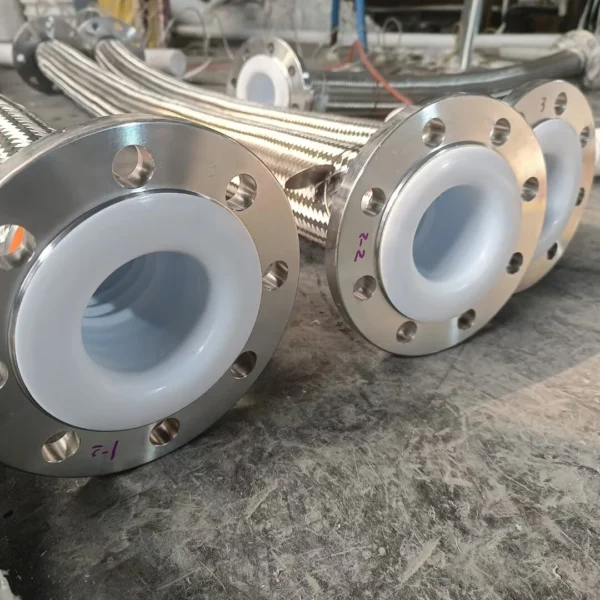
스테인리스 스틸 편조 PTFE 호스 플레어 - 고온 및 고압
Teflon X의 플레어 엔드 스테인리스 스틸 브레이디드 PTFE 호스를 만나보십시오。 고온 및 고압 환경을 위해 제작된 이 브레이디드 PTFE 호스는 탁월한 내구성과 안전성을 제공합니다。
