
 Portuguese
  English
  Russian
  French
  German
  Japanese
  Korean
  Arabic
  Italian
  Dutch
Dutch  Turkish
  Indonesian
  Polish
  Spanish
Se você já projetou placas para chips de IA ou trabalhou com racks de servidores, conhece o desafio: esses componentes operam em temperaturas extremamente elevadas e é necessário mantê-los isolados sem causar falhas térmicas. É aqui que os filmes de PTFE de alto desempenho entram em ação. Eles não são apenas materiais de marketing; são soluções fundamentais para equilibrar o isolamento e o calor no hardware de IA moderno.
Acompanhei isso de perto ao longo dos anos trabalhando com engenheiros eletrônicos em projetos complexos. Os processadores de IA atingem níveis de potência altíssimos e, sem os materiais adequados, enfrenta-se o risco real de instabilidade térmica. Os filmes de PTFE gerenciam essa complexidade melhor do que a maioria, graças à sua combinação excepcional de baixa constante dielétrica, estabilidade térmica superior e confiabilidade sob estresse.
Vamos analisar isso detalhadamente, pois desejo compartilhar o que realmente funciona em aplicações práticas.
O problema do calor no hardware de IA que não pode ser ignorado
A IA não se resume mais a chatbots; são servidores massivos processando dados ininterruptamente. Chips como as séries H100 ou H200 da NVIDIA consomem 700 watts ou mais por GPU. Ao organizá-los em um centro de dados, observa-se que as densidades de potência dobraram em apenas alguns anos, atingindo hoje uma média de 17 kW por rack, com algumas configurações chegando a valores muito superiores.
O resfriamento consome atualmente de 30% a 40% da eletricidade de um centro de dados. Com a expansão das cargas de trabalho de IA, uma gestão térmica deficiente resulta em desempenho reduzido, menor vida útil dos componentes ou falhas totais. Os engenheiros buscam formas de dissipar o calor mantendo o isolamento elétrico robusto, a fim de evitar curtos-circuitos em sistemas de alta tensão.
O resfriamento a ar tradicional apresenta limitações neste cenário. Muitas instalações estão migrando para o resfriamento líquido, mas, mesmo assim, são necessários materiais que não se degradem em altas temperaturas nem interfiram nos sinais.
Por que os materiais dielétricos são tão importantes no resfriamento de servidores de IA
Nos servidores de IA, os materiais dielétricos situam-se entre os condutores, prevenindo curtos-circuitos e permitindo que os sinais sejam transmitidos de forma rápida e limpa. No entanto, com todo esse calor, eles também devem suportar o estresse térmico sem deformações ou perda de propriedades.
A maioria dos dielétricos ou conduz o calor de forma razoável, mas possui constantes dielétricas elevadas (interferindo nos sinais de alta frequência), ou são excelentes isolantes, mas retêm o calor. O hardware de IA necessita de ambos: baixa perda de sinal para computação rápida e caminhos térmicos suficientes para evitar pontos de superaquecimento.
Esse é o equilíbrio buscado pelos engenheiros eletrônicos: isolamento para segurança e confiabilidade, somado à gestão térmica para manter os chips em seu desempenho máximo.

Película de Teflon desbastada de baixo atrito para componentes aeroespaciais e automotivos
O filme de Teflon desbastado se destaca em aplicações aeroespaciais e automotivas por seu design leve e resistência ao calor de até 260 °C[5]. A superfície de baixo atrito reduz o desgaste em sistemas de combustível e componentes do motor, enquanto as propriedades dielétricas melhoram o desempenho em ambientes de alta tensão.
Aplicações: Películas isolantes para capacitores, placas de circuito e correias transportadoras.
O que torna o filme de PTFE um material dielétrico de destaque
O filme de PTFE — o material de que é feito o Teflon — possui uma constante dielétrica em torno de 2,0 a 2,1. Esse valor é extremamente baixo e permanece estável em diversas frequências e temperaturas. Comparando com as placas FR-4, que possuem valores entre 4,0 e 4,5, entende-se por que o PTFE reduz drasticamente a perda de sinal em sistemas de IA de alta velocidade.
A condutividade térmica do PTFE puro é baixa, cerca de 0,25-0,35 W/m·K, agindo mais como um isolante. Entretanto, ele se destaca na estabilidade térmica, suportando operações contínuas de até 260°C, com picos momentâneos ainda maiores. Não ocorre fusão ou degradação quando o chip de IA dissipa mais de 700W.
Além disso, é quimicamente inerte, hidrofóbico e possui fatores de dissipação mínimos (0,0002 ou menos). Umidade? Não a absorve. Produtos químicos de fluidos de arrefecimento? Não o afetam.
Para o resfriamento de servidores de IA, filmes finos de PTFE são integrados em camadas de PCBs, circuitos flexíveis ou até mesmo como barreiras em sistemas de resfriamento por imersão. Eles permitem uma maior densidade de componentes sem preocupações com falhas elétricas.
Versões de alto desempenho vão além
O PTFE comum é excelente, mas os filmes de PTFE de alto desempenho — frequentemente carregados com materiais como hBN, vidro ou cerâmica — aumentam a condutividade térmica. Alguns compósitos atingem 0,7-1,0 W/m·K ou mais, mantendo a constante dielétrica baixa (ainda em torno de 2,1-2,3).
Um estudo sobre PTFE carregado com hBN mostrou 0,722 W/m·K com 30% de volume de carga, com a degradação iniciando a 527°C. Outro estudo com cargas híbridas atingiu 1,04 W/m·K — quatro vezes o valor do PTFE puro.
Estes não são sonhos de laboratório; são usados em placas reais de alta frequência para 5G e, agora, em centros de dados de IA.
Aqui está uma tabela rápida comparando materiais dielétricos comuns para eletrônicos:
| Material | Constante Dielétrica | Condutividade Térmica (W/m·K) | Temp. Máxima de Operação (°C) | Notas Principais |
|---|---|---|---|---|
| PTFE Puro | 2.0-2.1 | 0.25-0.35 | 260 | Excelente estabilidade, baixa perda |
| PTFE preenchido com hBN | ~2.2-2.5 | 0.7-1.0+ | 500+ | Melhor transferência de calor, ainda com baixo Dk |
| FR-4 (PCB padrão) | 4.0-4.5 | 0.3-0.8 | 130-170 | Mais barato, mas com maior perda de sinal |
| Hidrocarboneto preenchido com cerâmica | 3.0-3.5 | 0.5-1.5 | 200+ | Bom para RF, mas mais quebradiço |
(Dados extraídos de fontes como medições da Thermtest e estudos de compósitos — o PTFE puro atinge 0,304 W/m·K em alguns testes.)
Aplicações no mundo real em gerenciamento térmico de hardware de IA
Imagine um rack de servidores de IA denso: GPUs empilhadas próximas, cabos de energia por toda parte, talvez com refrigeração líquida circulando. Filmes de PTFE são aplicados em PCBs multicamadas como camadas centrais, mantendo os sinais limpos em altas frequências enquanto resistem ao calor de chips próximos.
Em interconexões flexíveis, filmes finos de PTFE dobram-se sem rachar, sendo perfeitos para designs compactos. Ou como barreiras de interface térmica — protegendo peças sensíveis sem bloquear todo o fluxo de calor.
Um projeto que recordo (mantendo o anonimato, assunto de cliente): Uma equipe que construía aceleradores de IA estava enfrentando falhas de isolamento acima de 150°C. Substituíram por filmes de PTFE de alto desempenho nas camadas dielétricas e as temperaturas estabilizaram, sem mais falhas mesmo em carga total. Isso estendeu a vida útil do hardware em meses nos testes.
Outro caso — profissionais de centros de dados usando compósitos baseados em PTFE em dissipadores de calor. Reduziram as temperaturas dos pontos quentes em 20-30°C em comparação com materiais mais antigos, permitindo operar em frequências mais altas sem estrangulamento térmico (throttling).
Estes casos não são raros; com o salto de potência da IA — algumas previsões dizem que os chips chegarão a mais de 2000W em breve — materiais como estes estão se tornando indispensáveis.
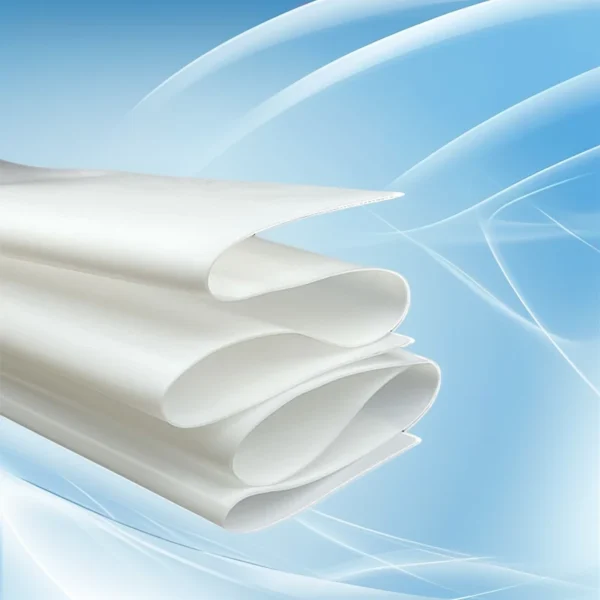
Filme de PTFE cromado de grau médico para filtração estéril e revestimentos de implantes
O filme de PTFE Skived de grau médico combina biocompatibilidade e filtração microporosa (tamanho de poro de 0,02 a 15 μm), atendendo aos rigorosos padrões farmacêuticos. O material atóxico é utilizado em sistemas de liberação de medicamentos e revestimentos de implantes, garantindo inércia química e estabilidade térmica sob esterilização.
Principais características: resistente a UV, compatível com FDA e adaptável a ciclos térmicos rápidos.
Equilibrando Isolamento e Dissipação de Calor — A Corda Bamba do Engenheiro
Você deseja uma alta rigidez dielétrica (o PTFE geralmente excede 30 kV/mm em filmes finos) para evitar arcos em placas de IA de alta potência. Mas você também precisa de um caminho para a saída do calor.
Os filmes de PTFE de alto desempenho resolvem isso mantendo-se finos — com espessura de mícrons — para que o calor se mova através da pilha com mais facilidade, enquanto fornecem aquele isolamento sólido. No resfriamento por imersão, eles resistem a fluidos e mantêm suas propriedades.
Chega de escolher entre “seguro, mas quente” ou “frio, mas arriscado”.
Como escolher o filme de PTFE certo para o seu projeto de IA
Depende da sua configuração. Precisa de isolamento máximo? Use PTFE virgem. Aumentando a densidade de calor? Veja as versões com carga.
A espessura importa — mais finos para flexibilidade, mais grossos para rigidez. Superfícies gravadas ajudam na colagem se você estiver laminando.
Na Teflon X, temos opções ajustadas para eletrônicos, incluindo filmes com essas propriedades aprimoradas. Consulte nosso site para especificações.
Primeiros passos com filmes de PTFE em seus projetos
Se você está cansado de dores de cabeça térmicas atrasando suas construções de IA, vale a pena testar o PTFE. Pequenas mudanças nos materiais podem liberar pacotes mais densos, melhor eficiência e menores taxas de falha.
Ajudamos engenheiros a especificar esse material para projetos de servidores — ficaremos felizes em conversar sobre o seu.
Pronto para resfriar as coisas adequadamente? Vá para Teflon X e navegue por nossa linha de PTFE, como estes chemical-resistant Teflon gasket sheets que compartilham resistência semelhante (ótimo ponto de partida para aplicações relacionadas). Para filmes personalizados ou orçamentos, entre em contato com nosso página de contato ou por e-mail Allison.Ye@teflonx.com diretamente. Forneceremos amostras ou orientações rapidamente.
Não deixe o calor atrasar seu hardware — vamos resolver isso.
Perguntas frequentes sobre filmes de PTFE de alto desempenho em gerenciamento térmico de IA
Qual é a questão da condutividade térmica em filmes de PTFE — não deveria ser baixa?
Sim, o PTFE puro fica em torno de 0,25-0,35 W/m·K, o que é baixo, então ele isola bem. Mas isso costuma ser uma vantagem para camadas dielétricas — você não quer caminhos de calor em curto-circuito. Versões preenchidas de alto desempenho aumentam para 1 W/m·K ou mais sem prejudicar a baixa constante dielétrica. Perfeito para IA onde você precisa de fluxo de calor controlado.
Como os filmes de PTFE realmente auxiliam no resfriamento de servidores de IA?
Eles permitem projetar placas mais densas e de maior potência sem falhas de isolamento sob calor. Estáveis sob temperaturas extremas, oferecem baixa perda de sinal para comunicações rápidas de IA e são compatíveis com sistemas de refrigeração líquida ou a ar. Essencialmente, mantêm o funcionamento resfriado e confiável mesmo quando os chips operam em temperaturas elevadíssimas.
Os filmes de PTFE de alto desempenho valem o custo em relação a dielétricos mais baratos?
Para coisas básicas, talvez não. Mas em hardware de IA? Com certeza — menos falhas, vida útil mais longa, melhor desempenho. Já vi projetos onde a troca resultou em grande economia em tempo de inatividade e retrabalho. Além disso, à medida que as densidades de potência aumentam, materiais mais baratos simplesmente não conseguem acompanhar.
As películas de PTFE podem suportar fluidos de resfriamento por imersão?
A maioria sim—altamente resistente a produtos químicos. Sem dilatação ou degradação por líquidos de arrefecimento comuns. Verifique as especificações para o seu fluido específico.
Qual é a espessura típica para estes em eletrônicos?
De 25 mícrons até algumas centenas, dependendo das necessidades de tensão e flexibilidade. Mais finas para placas de IA de alta densidade.
