
 English
  Russian
  French
  German
  Japanese
  Korean
  Portuguese
  Arabic
  Italian
  Dutch
Dutch  Turkish
  Indonesian
  Polish
  Spanish
If you’ve ever dealt with sealing flanges in chemical plants or food processing lines, you know how tricky it can get picking the right gasket. Things leak, bolts loosen over time, or the material just doesn’t hold up on rough surfaces. I’ve seen it plenty—swapping out gaskets more often than you’d like because the wrong type was chosen upfront.
That’s where understanding pure PTFE (often called virgin PTFE) versus expanded PTFE (ePTFE) comes in handy. These two are both made from the same base material, polytetrafluoroethylene, but the way they’re processed makes a world of difference in real-world use. At Teflon X, we’ve supplied both for years, and honestly, knowing the pros and cons helps avoid headaches down the line.
Let’s break it down in plain terms, no fluff.
What Exactly is Pure PTFE (Virgin PTFE)?
Pure PTFE is the straight-up, no-additives version. It’s 100% polytetrafluoroethylene resin, compressed and sintered into sheets or shapes. Think of it as the classic, dense material that’s been around forever.
Key traits:
- Super high chemical resistance—handles almost anything from strong acids to bases, pH 0-14.
- Low friction, non-stick (yeah, like your frying pan).
- Works from cryogenic temps up to about 500°F (260°C).
- Density around 2.1-2.2 g/cm³, making it pretty solid and rigid.
But here’s the catch: it’s prone to creep and cold flow. Under constant pressure, it slowly deforms, losing thickness and bolt load over time. That can lead to leaks if you’re not careful with retorqueing.
We’ve used virgin PTFE in clean, high-purity setups where no fillers are allowed, like pharma lines. It shines there because it’s inert and FDA-compliant.
And What About Expanded PTFE (ePTFE)?
Expanded PTFE takes virgin PTFE and stretches it under controlled conditions, creating a microporous, fibrous structure. It’s like turning a solid block into a soft, sponge-like mesh with nodes and fibrils.
This changes everything:
- Much lower density, often 0.5-1.0 g/cm³.
- Way more compressible and conformable—fills in scratches, pits, or warped flanges easily.
- Better resistance to creep and cold flow thanks to that multi-directional fiber network.
- Still keeps the full chemical resistance and temp range of virgin PTFE.
ePTFE gasket sheets are softer, almost fluffy feeling, but don’t let that fool you—they’re tough where it counts.
From experience, ePTFE has saved the day on glass-lined reactors or older piping where flanges aren’t perfect. You don’t need crazy high bolt torque to get a tight seal.

High-Temperature PTFE Teflon Gasket for Ball Valves & Industrial Sealing
PTFE Teflon Gaskets are engineered for extreme temperature resistance (-200°C to +260°C) and chemical inertness, ideal for sealing high-pressure ball valves and corrosive media systems. These gaskets ensure leak-proof performance in oil & gas, chemical processing, and industrial machinery. Customizable shapes (flat, liner, or ring) adapt to complex mechanical structures.
Head-to-Head Comparison: Expanded PTFE vs Virgin PTFE
To make it clearer, here’s a quick table pulling from real data (like ASTM standards and industry tests):
| Property | Pure (Virgin) PTFE | Expanded PTFE (ePTFE) |
|---|---|---|
| Density | 2.1-2.2 g/cm³ | 0.5-1.2 g/cm³ (often around 0.8) |
| Compressibility | Lower (around 10-25%) | High (up to 60-70%) |
| Creep Relaxation | Higher (can be 40-50% loss) | Much lower (often 15-30%) |
| Conformability | Fair on smooth surfaces | Excellent, even on rough/damaged flanges |
| Tensile Strength | 10-30 MPa | 20-50 MPa (stronger in multiple directions) |
| Chemical Resistance | Excellent (full pH 0-14) | Excellent (same as virgin) |
| Temperature Range | -450°F to 500°F (-268°C to 260°C) | Same |
| Best For | High-purity, smooth flanges, moderate loads | Irregular surfaces, low bolt load, fragile equipment |
Data drawn from sources like ASTM F36/F38 tests and manufacturer specs (e.g., Gore and Teadit products). Real creep tests show ePTFE holding bolt load way better under heat and pressure.
Why Creep Matters So Much
Creep relaxation is the silent killer for gaskets. Virgin PTFE can lose up to 50% of its thickness under load over time, especially when temps cycle. ePTFE’s structure locks in better—tests at 500°F show it retaining more stress.
In one setup we handled, a client switched from virgin to ePTFE on a heat exchanger. Leaks stopped, no more retorque needed every few months.
When to Choose Pure PTFE Gaskets
Go with virgin if:
- You need absolute purity—no risk of contamination (food, pharma, semiconductors).
- Flanges are smooth and well-maintained.
- Higher pressure apps where rigidity helps.
- Cost is a factor (it’s usually cheaper).
Our PTFE Gasket line includes top-grade virgin options that meet FDA and USP standards.
When Expanded PTFE (ePTFE) Wins Out
Pick ePTFE gasket sheets when:
- Flanges are worn, pitted, or glass/FRP lined (low torque needed).
- You want minimal creep in cycling temps.
- Sealing aggressive chemicals on irregular surfaces.
- Easier install and longer life.
We’ve seen ePTFE excel in chemical processing— one anonymous case involved a caustic line on damaged flanges. Swapped in ePTFE, and it sealed tight with half the bolt load, no leaks in over two years.
Real-World Scenarios We’ve Seen
In a food plant, virgin PTFE worked great for clean, flat connections in sterile lines.
But in a petrochemical setup with old, corroded pipes? ePTFE was the hero—conformed perfectly, resisted creep even with temp swings.
Another time, glass-lined vessel flanges cracked under high torque from virgin gaskets. ePTFE fixed it without over-stressing the glass.
Pros and Cons Quick List
Pure PTFE Pros: Purest form, great for ultra-clean apps, rigid for high pressure.
Cons: More creep, needs smooth surfaces, higher torque.
ePTFE Pros: Super conformable, low creep, seals rough stuff easily, less bolt load.
Cons: A bit pricier, softer so not ideal for extreme high-pressure without support.
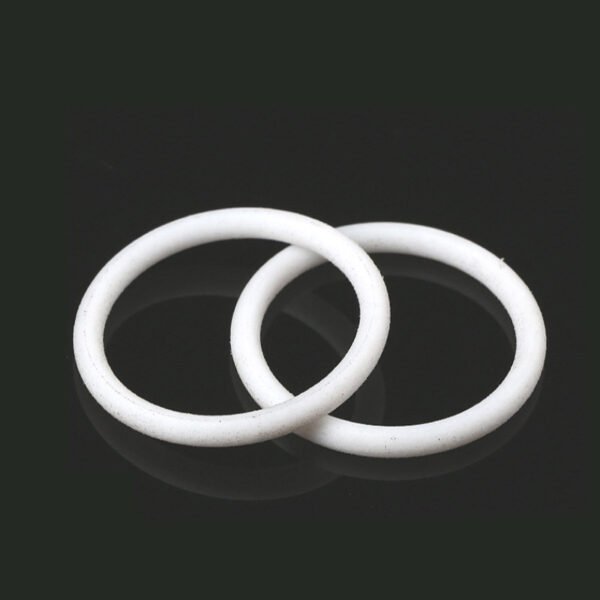
PTFE Teflon O Ring Gasket | High Temp Sealing PTFE Seal & Teflon Gasket Supplier
PTFE teflon o ring and teflon gasket are perfect for high temp sealing in harsh chemical environments. Teflon gasket and ptfe gasket offer outstanding chemical resistance and durability. Our ptfe seal ensures reliable performance. Ideal for industrial applications and fluid systems.
How to Decide for Your Setup
Ask yourself:
- How smooth are the flanges?
- Any temp cycling or vibration?
- Bolt load limits (e.g., fragile materials)?
- Purity requirements?
Most times, if there’s any irregularity, ePTFE edges out. For pristine, high-purity—virgin holds strong.
At Teflon X, we stock both and can cut custom gaskets fast.
FAQ
What’s the main difference in expanded PTFE vs virgin PTFE for gaskets?
The big one is structure: virgin is dense and rigid, ePTFE is porous and fibrous. That makes ePTFE way better at conforming and resisting creep.
Are ePTFE gasket sheets better than pure PTFE overall?
Depends on the job. ePTFE often performs better in tough, real-world flanges, but virgin is unbeatable for purity.
Can I use pure PTFE on rough flanges?
You can, but it’s riskier—might not seal as well without high torque, and creep could cause issues later.
If you’re unsure which fits your operation, drop us a line. We’ve helped tons of folks pick the right one and even quote custom PTFE Gaskets. Reach out at Allison.Ye@teflonx.com or through our contact page. We’ll sort it out quick.
