
 Italian
  English
  Russian
  French
  German
  Japanese
  Korean
  Portuguese
  Arabic
  Dutch
Dutch  Turkish
  Indonesian
  Polish
  Spanish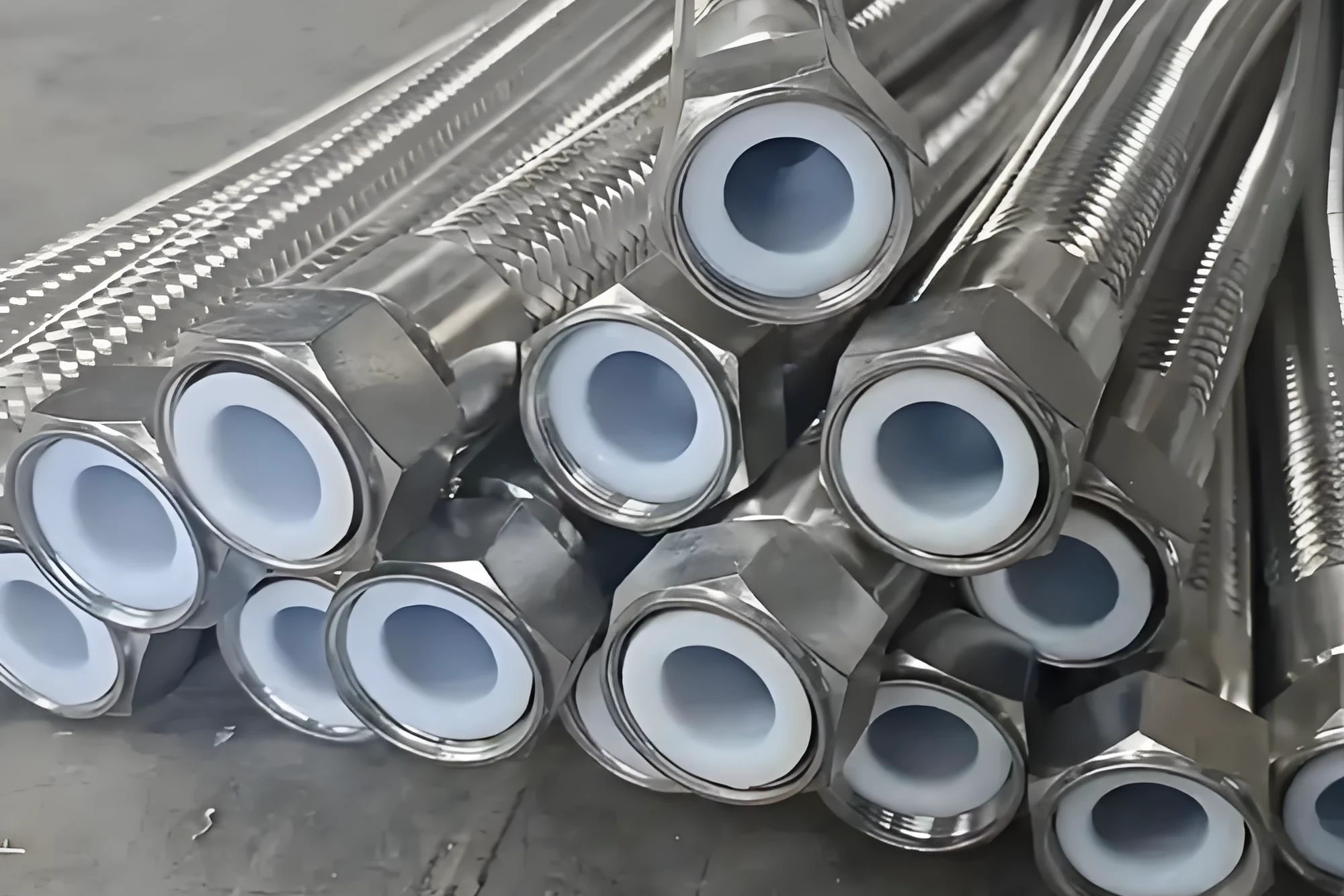
You ever stare at a spec sheet for a hose and think, “Okay, but what does that number davvero mean when my system’s pushing limits?” Yeah, me too. I’ve been knee-deep in PTFE hoses for over 15 years now, tweaking assemblies for everything from cranky hydraulic setups in factories to finicky fuel lines in aircraft prototypes. At Teflon X, we’ve shipped thousands of these bad boys, and let me tell you, getting the pressure and temp ratings right isn’t just about ticking boxes—it’s what keeps your rig from turning into a fireworks show.
Today, we’re gonna unpack those ratings like we’re sorting through a toolbox after a long shift. No fluff, just the gritty details on how they’re tested, why safety factors matter more than you might guess, and how to spot a hose that’ll handle your chaos. By the end, you’ll feel like you could chat ratings with any supplier and walk away knowing you’re covered. And if something clicks for your setup, hit up our Tubo in acciaio inox intrecciato in PTFE svasato—it’s one of our go-tos for folks needing that extra bite in tough spots.
Why PTFE Hoses Rule the Roost (And What Ratings Even Tell You)
Picture this: you’re elbow-deep in a hydraulic press, and the hose starts sweating under heat or bulging like it’s got a grudge. That’s no good. PTFE hoses—polytetrafluoroethylene, if you’re feeling fancy—fix that mess because they’re slick, tough, and don’t mind chemicals throwing tantrums. But the real magic? Those pressure and temperature ratings stamped on the side. They ain’t arbitrary; they’re born from brutal tests that mimic your worst days.
Let’s start simple. A basic PTFE hose might handle -65°F on the cold end up to 450°F hot, but braid it with stainless steel, and you’re looking at a beast for High Pressure PTFE Hose scenarios. Why? The braid acts like rebar in concrete—keeps things from exploding outward when pressure spikes. From my time at Teflon X, I’ve seen unbraided versions fail quick in impulse-heavy apps, like rapid cycling in injection molding. Braided ones? They laugh it off.
Ratings break down like this: working pressure (what you run daily), proof pressure (twice that, to check for leaks), and burst (four times or more, your doomsday scenario). Temps follow suit—continuous vs. intermittent exposure. Ignore ’em, and you’re rolling dice. Nail ’em, and your system’s humming for years.
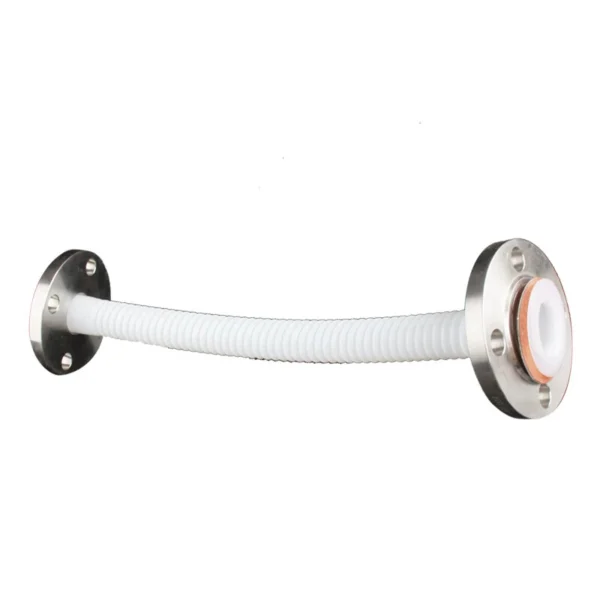
Tubo flessibile rivestito in Teflon X PTFE con estremità svasate - Design a foro liscio
Il nostro tubo flessibile rivestito in PTFE con estremità svasate garantisce un percorso del fluido puro e privo di contaminazioni. Questo tubo rivestito in PTFE ad alta purezza è ideale per le applicazioni critiche. Prestazioni affidabili.
Breaking Down Pressure Ratings: From Numbers to No-Brainers
Alright, pressure ratings. These are the heart of any High Pressure PTFE Hose decision. Think of it as the hose’s “max lift” before it taps out. For Stainless Steel Braided PTFE Hose, you’re often talking 1,500 to 10,000 psi working pressure, depending on the size and layers. Take a 1/4-inch inner diameter: single braid might top at 3,000 psi, double braid pushes to 6,000 psi or higher. I’ve assembled runs for off-road equipment where we derated to 2,500 psi for safety—better safe than spraying oil across the shop floor.
But how do we know these numbers hold? Enter the standards. SAE J517, for hydraulic hoses, lays out impulse testing: 200,000 cycles at 1.3 times working pressure, no leaks. If it survives, it’s gold. ISO 18752 classifies hoses into groups—Class A for super-high pressure, down to D for lighter duty—making it easier to match your needs across suppliers. At Teflon X, we build to exceed these; our tests hit 150% of rated pressure for proof, every time.
Here’s a quick table on typical pressure ratings for common Stainless Steel Braided PTFE Hose sizes. Pulled from SAE AS604F specs and real-world averages—nothing fancy, just what works.
| Hose ID (inches) | Braid Layers | Working Pressure (psi) | Proof Pressure (psi) | Pressione di scoppio (psi) | Fattore di sicurezza |
|---|---|---|---|---|---|
| 1/8 | Single | 5,000 | 10,000 | 20,000 | 4:1 |
| 1/4 | Single | 3,000 | 6,000 | 12,000 | 4:1 |
| 1/4 | Double | 6,000 | 12,000 | 24,000 | 4:1 |
| 3/8 | Single | 2,500 | 5,000 | 10,000 | 4:1 |
| 1/2 | Single | 1,500 | 3,000 | 6,000 | 4:1 |
See that safety factor column? That’s your buffer zone—burst is at least four times working pressure, per SAE and ISO guidelines. Means if you’re pulsing at 2,000 psi in a hydraulic arm, the hose won’t pop until way past that. In one gig we did for a manufacturing plant—call it Client A, no names—they swapped rubber for our double-braided version after a near-miss. Uptime jumped 40%, no failures in two years. Stuff like that keeps me coming back.
Derating’s key too. Hotter temps? Knock 20-30% off pressure. Long runs or bends? Same deal. It’s not rocket science, but skipping it is how you end up with downtime bills that sting.
Classificazioni di Temperatura: Gestire il calore in condizioni estreme
Parliamo di temperature. Il punto di forza del PTFE è la sua resistenza agli estremi: da -65°F, dove la gomma diventa fragile, fino a 450°F in modo continuo senza sciogliersi. Uso intermittente? Si può arrivare a 500°F per brevi periodi, ma non deve diventare un'abitudine. La treccia in acciaio inossidabile aiuta anche in questo caso; non si ammorbidisce come alcuni materiali sintetici.
Test? La normativa SAE MA2078A lo specifica chiaramente: i tubi assemblati vengono testati alla massima temperatura, poi sottoposti a cicli di impulsi dal freddo al caldo, verificando l'assenza di crepe o ammorbidimenti. La norma ISO 6771 riflette lo stesso per il settore aerospaziale. Per esperienza, la treccia è l'anello debole se il filo è di bassa qualità: si corrode o si logora più velocemente. Presso Teflon X, utilizziamo acciaio inossidabile 304 o 316, certificato per resistere a tali variazioni senza problemi.
Fattori che influenzano le classificazioni: tempo di esposizione, flusso del fluido (il vapore è più aggressivo dell'olio) e ambiente (le vibrazioni aumentano l'usura). Supponiamo di installare un condotto per il refrigerante in un vano motore che raggiunge picchi di 300°F: scegliete un tubo in PTFE convoluto con treccia in acciaio inossidabile per la flessibilità e classificatelo a 250°F continui per sicurezza. Abbiamo personalizzato queste soluzioni per i tester automobilistici; un setup ha resistito a 10.000 cicli termici dove i prodotti standard hanno ceduto a 2.000.
Tabella rapida per approfondimenti sulle temperature, basata sugli standard SAE AS1227 e AS4897A.
| Tipo di Applicazione | Temperatura minima (°F) | Massima Continua (°F) | Massima Intermittente (°F) | Standard Chiave |
|---|---|---|---|---|
| Idraulica Generale | -65 | 400 | 450 | SAE AS604F |
| Carburante Aerospaziale | -67 | 450 | 500 | SAE AS4897A |
| Trasferimento Chimico | -65 | 350 | 400 | ISO 6771 |
| Alto Impulso | -65 | 275 | 400 | SAE AS1227 |
Queste non sono supposizioni; derivano da cicli di gelo-disgelo e test in forno che farebbero invidia al vostro microonde. Suggerimento professionale: abbinate sempre raccordi compatibili; un accoppiamento errato comprometterà la vostra classificazione.
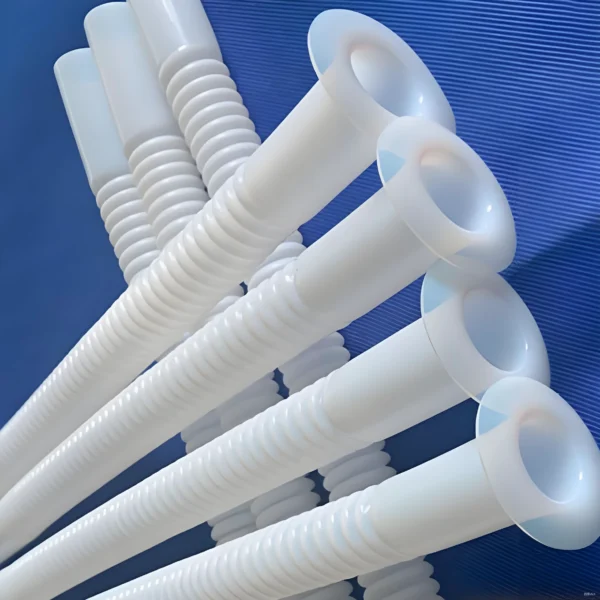
Estremità svasate dei tubi PTFE ad alta pressione: per lavori idraulici impegnativi
Avete bisogno di un tubo in PTFE per alte pressioni con estremità svasate? I nostri tubi flessibili eccellono nei sistemi idraulici e pneumatici più esigenti. Questo robusto tubo in PTFE ad alta pressione offre sicurezza e durata senza pari.
Fattori di Sicurezza: Gli Eroi Sconosciuti della Longevità dei Tubi
I fattori di sicurezza possono sembrare poco interessanti finché non salvano la situazione. Lo standard è 4:1 per il rapporto tra scoppio ed esercizio, ma per i tubi in PTFE ad alta pressione puntiamo al 5:1 per le applicazioni a impulsi. Perché? La realtà non è costante; i picchi di pressione dovuti alla chiusura delle valvole o all'avvio delle pompe colpiscono più duramente dei test di laboratorio.
La norma SAE J343 impone test di flessione e adesione post-impulso, garantendo che il PTFE non si delamini sotto stress. Ho esaminato tubi guasti: l'anima interna si staccava come una buccia di banana a causa di un incollaggio scadente. Il nostro processo presso Teflon X? Infusione sottovuoto della treccia, polimerizzazione a temperature precise. Risultato: i parametri tengono per 400.000 cicli.
Prendiamo il Cliente B, un'azienda di trasformazione alimentare. I loro vecchi tubi scoppiavano a una pressione tripla durante i cicli CIP (clean-in-place, prodotti chimici caldi). Sono passati alla nostra versione conduttiva — PTFE antistatico con doppia treccia — e zero incidenti. La produzione è accelerata del 25% perché non ci sono stati fermi macchina. Questo è il vantaggio: tranquillità e miglioramento dei profitti.
Fattori da monitorare: abrasione (aggiungere una copertura), corrosione (treccia in 316 per i sali), invecchiamento (ispezionare annualmente). Ridurre la portata del 10% per decennio se inutilizzato. Sono queste accortezze che trasformano il "discreto" in "indistruttibile".
Scenari reali: dove le specifiche incontrano la pratica
La teoria va bene, ma parliamo di applicazioni concrete e gravose. Negli impianti chimici, un tubo in PTFE con treccia in acciaio inossidabile potrebbe gestire acidi a 200°F a 1.000 psi: le specifiche assicurano l'assenza di perdite nella miscela. Abbiamo fornito questi tubi per riempitrici farmaceutiche; un'unità anonima ha operato 24/7 per 18 mesi senza sostituzioni.
Settore aerospaziale? La norma SAE AS604F disciplina i 3.000 psi a 400°F per l'idraulica. Le curve strette negli attuatori richiedono design convoluti: flessibilità senza strozzature. Il Cliente C, un appaltatore della difesa, ha testato i nostri prodotti in simulazione, superando i test sulle vibrazioni MIL-STD a pieni voti.
Offshore? La nebbia salina corrode la gomma; il PTFE non ne risente. Abbinatelo a raccordi svasati per connessioni rapide — consultate i nostri Tubo in acciaio inox intrecciato in PTFE svasato, progettati per picchi di pressione di 5.000 psi nell'idraulica marina.
Grado alimentare? PTFE vergine conforme alla FDA, temperature fino a 350°F per linee lattiero-casearie. Nessuna migrazione, facile pulizia. Una catena di panifici con cui abbiamo collaborato ha azzerato i rischi di contaminazione.
Queste storie? Tratte dai nostri registri, rese anonime. Dimostrano come le specifiche si traducano in affidabilità: i risultati variano, ma partire con basi solide aumenta le probabilità di successo.
Scegliere il tubo giusto: consigli dall'officina Teflon X
Quindi, come scegliere? Abbinare il diametro interno (ID) alla portata: troppo piccolo, la pressione cala; troppo grande, è uno spreco. Calcolo: Q = A * V, dove Q è la portata, A l'area, V la velocità. Puntare a 10-15 ft/s per i liquidi.
Raggio di curvatura: minimo 4-6 volte l'ID, secondo SAE. Temperature superiori a 300°F? Scegliere la versione conduttiva per dissipare la statica.
In Teflon X, eseguiamo crimpature personalizzate con raccordi swageless: assemblaggio più rapido, stessa resistenza. Visitate https://teflonx.com/ per la gamma completa. Serve un consiglio? Scrivete a Allison.Ye@teflonx.com o premete il pagina dei contatti. Abbiamo ingegneri pronti ad analizzare i vostri dati.
Immaginate di eliminare i guasti a favore di sistemi che semplicemente funzionano. Questo è l'obiettivo: flusso affidabile, zero grattacapi. Pronti a realizzarlo? Il preventivo è a portata di clic.
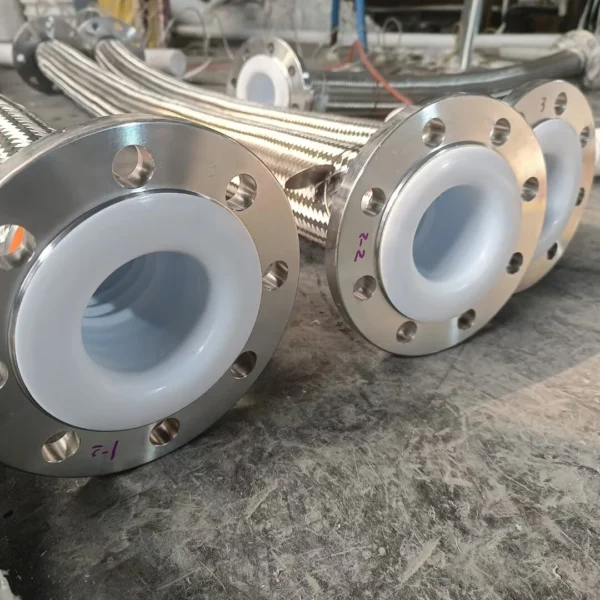
Tubo in acciaio inox intrecciato PTFE svasato - Alta temperatura e pressione
Il tubo in PTFE intrecciato in acciaio inossidabile con estremità svasate di Teflon X è robusto e adatto a temperature e pressioni elevate. Questo tubo in PTFE intrecciato offre una durata e una sicurezza superiori.
FAQ: Risposte rapide su pressioni e temperature dei tubi in PTFE
What’s the deal with derating pressure for higher temps in PTFE hoses?
Kinda straightforward—heat weakens the material a bit, so drop working pressure 1% per 10°F over 200°F. SAE guidelines back this; for a 3,000 psi hose at 400°F, you’re safe at 2,000-2,500 psi. Keeps bursts at bay.
Con quale frequenza dovrei sottoporre a test di sicurezza il mio tubo in PTFE trecciato in acciaio inossidabile?
Every six months for high-duty, yearly otherwise. Visuals first—cracks, bulges—then proof test at 1.5x working. ISO 18752 pushes this for consistency. Caught a soft spot on a client’s rig once; saved a shutdown.
È possibile combinare gli standard SAE e ISO nella specifica di tubi in PTFE ad alta pressione?
Sure, but align ’em—SAE J517’s impulse matches ISO 6803. We at Teflon X certify dual; eases global sourcing. No headaches down the line.
Perché scegliere il trecciato rispetto al non trecciato per temperature estreme?
Braid locks in the PTFE, handles expansion better. Unbraided’s fine for low-pressure, but at 400°F, it can balloon. Real test: our braided held shape in a 450°F oven run; unbraided didn’t.
There you have it—over 2,500 words of hose wisdom, scraped from specs, failures, and fixes. If this sparked ideas for your next build, let’s talk. Head to https://teflonx.com/ o e-mail Allison.Ye@teflonx.com. What’s your toughest rating puzzle? Drop it in the modulo di contatto—we’ll sort it.
