
 Italian
  English
  Russian
  French
  German
  Japanese
  Korean
  Portuguese
  Arabic
  Dutch
Dutch  Turkish
  Indonesian
  Polish
  Spanish
Ever dealt with a glue line that turns into a nightmare mid-shift? You know, the kind where the stuff starts gumming up, or it kinks just when you need a smooth flow? I’ve been there, knee-deep in factory floors, troubleshooting setups that should’ve been foolproof but weren’t. Working with hot melt adhesives isn’t just about slapping on some hose—it’s about picking one that handles the heat without drama, stays clean so nothing sticks, and bends like it’s got a mind of its own. That’s where a good corrugated PTFE hose for hot melt adhesive transfer comes in, and trust me, after years tweaking these systems for folks in packaging, woodworking, and beyond, I can say corrugated PTFE is the real MVP.
Picture this: you’re running a line for bookbinding or carton sealing, and the adhesive’s gotta stay molten at 200°C or so, flowing steady without charring or clogging. Standard rubber hoses? They melt or degrade fast. Metal ones? Too rigid, prone to leaks at joints. But corrugated PTFE? It’s like that reliable buddy who shows up on time, every time. At Teflon X, we’ve engineered our Low-Friction PTFE Tube lines specifically for these headaches, drawing from hands-on installs in over 500 setups worldwide. Let’s break it down, chat-style, so you see why this isn’t just hype—it’s what keeps production humming.
The Headaches of Hot Melt Adhesive Transfer (And Why They Suck)
First off, let’s talk real talk about the pains you’re probably facing. Hot melt adhesive hoses aren’t glamorous, but when they fail, everything grinds to a halt. From what I’ve seen—and fixed—in plants from small shops to big manufacturers, the big three issues boil down to heat, stickiness, and stiffness. You’re hunting for a heated hose that laughs at high temps, shrugs off buildup, and flexes without fighting back. Sound familiar?
Battling the Blaze: High-Temp Tolerance That Doesn’t Flinch
Hot melts run hot—typically 121°C to 204°C, per industry benchmarks from folks like Henkel Adhesives. Push beyond that, and you’re risking degradation or outright failure. I remember one client, a packaging outfit in the Midwest, who was swapping out silicone hoses every few months because they couldn’t hack sustained 180°C runs. Cost ’em thousands in downtime.
Enter PTFE, or polytetrafluoroethylene if you wanna get technical—but who does that in a rush? This stuff’s a beast for heat. Data from Tempsens shows high-grade PTFE hoses holding steady at continuous 250°C, with burst pressures four times the working load. That’s not fluff; it’s lab-tested reality. In our Teflon X builds, we’ve clocked hoses at 260°C without a sweat, way above the 100-500°F range most hot melt systems demand, as noted by Hotmelt.com experts.
Why does this matter for your glue transfer line? Simple: consistent temp means even flow, no scorching the adhesive mid-transfer. No more uneven bonds or wasted material. And corrugated design? It amps up the surface area for better heat distribution, keeping things uniform without hot spots.
Say Goodbye to the Gunk: Non-Stick Magic
Nothing’s worse than scraping adhesive off the inside of your hot melt adhesive hose after a long run. That buildup? It leads to clogs, pressure drops, and yeah, more downtime. Traditional hoses—think nylon or PVC—grab onto the glue like it’s velcro. But PTFE’s low friction coefficient, the lowest of any plastic at about 0.05-0.10 (straight from polymer specs by DuPont), makes it slicker than ice.
I’ve pulled apart failed lines where the residue was inches thick, turning a simple flush into an all-day ordeal. With corrugated PTFE, though? Self-cleaning vibes. Substances just slide through, as Tubes International points out in their PTFE hose guides—hygienic transfer, minimal residue. For your setup, that translates to longer runs between cleanings, maybe stretching from weekly to monthly. One woodworker we helped cut their maintenance by 40% just by switching; they were gluing doors non-stop without a single jam.
Bend It Like It’s No Big Deal: Flexibility for Tight Spots
Factories aren’t straight lines. Your equipment’s jammed in corners, hoses routing around machines like urban plumbing. Rigid hoses crack under twist; too-flexy ones kink and collapse. Corrugated PTFE hits the sweet spot—those wavy convolutions let it bend tighter than smooth-bore versions, with bend radii down to 1.5 times the ID, per StrongFlex data.
In practice? I once rigged a system for a label maker where space was at a premium. Standard heated hoses would’ve needed extra elbows, adding leak points. Our corrugated option snaked through without issue, handling 90-degree turns like butter. IzoFlex calls it out: superior flexibility without sacrificing strength. For your glue transfer line, this means easier installs, fewer fittings, and way less hassle during moves or upgrades.
Why Corrugated PTFE Hose Crushes the Competition
Alright, so you’ve got the why on the problems—now let’s geek out a bit on why corrugated PTFE for hot melt adhesive transfer is the go-to. It’s not just tough; it’s smart engineering tailored for adhesive work. At Teflon X, we’ve poured our know-how into hoses that aren’t off-the-shelf—they’re custom-tuned for low-friction flow, energy efficiency, and that non-stick edge you crave.
The Corrugated Edge: Flow, Flex, and Durability
That corrugation isn’t for show. It boosts flow rates by reducing turbulence—up to 20% better than straight PTFE, based on hydraulic studies from Aflex Hose. Plus, it absorbs vibrations from pumps, cutting wear by half in high-cycle ops. I’ve tested this firsthand: in a beta run for an auto parts assembler, vibration from their extruder chewed through smooth hoses in weeks. Corrugated? Six months strong, no cracks.
Paired with stainless steel braiding (standard on our builds), it handles pressures up to 3000 PSI, as Graco’s heated hose specs confirm. For hot melts, where pressures spike during startup, that’s peace of mind.
Head-to-Head: How It Stacks Up
To make it crystal, here’s a quick table comparing common options. Pulled this from field notes and spec sheets—no sugarcoating.
| Tipo di tubo | Max Temp (°C) | Non-Stick Rating (Friction Coef.) | Flex Radius (x ID) | Lifespan (Months, Est.) | Ideale per |
|---|---|---|---|---|---|
| Silicone Rubber | 200 | 0.25 (Medium Stick) | 4x | 6-12 | Low-Vol Apps |
| Nylon/PVC | 150 | 0.30 (High Stick) | 5x | 3-6 | Budget Runs |
| Smooth PTFE | 260 | 0.05 (Excellent) | 3x | 18-24 | Straight Lines |
| Corrugated PTFE | 260+ | 0.05 (Excellent) | 1.5x | 24+ | Tight, High-Heat Transfers |
See? Corrugated PTFE laps the field for your needs. It’s the heated hose that adapts, not fights.
Tying It to Your World: Energy Savings and Green Wins
Bonus: these hoses sip energy. Low friction means less pump strain—our clients report 15-20% drops in power use, aligning with energy-efficient material transport goals. Environmentally? PTFE’s inertness means no leaching into adhesives, keeping your output clean. In food packaging lines, that’s huge for compliance.
Stories from the Trenches: Real Fixes, Real Results
Theory’s great, but you want proof. I’ve anonymized these, but they’re straight from our logs at Teflon X. These aren’t cherry-picked; they’re typical wins.
Take “Client A,” a mid-size carton maker battling charring in their glue transfer line. Old hoses degraded at 190°C, wasting 10% of adhesive per batch. Switched to our corrugated PTFE hot melt adhesive hose? Zero char after 50-hour no-flow tests—echoing Baumer HHS data on stable melts. Downtime? Slashed by 60%. They hit production targets two weeks early.
Then there’s “Client B,” in woodworking. Tight bends around saws kinked their setup, causing leaks and recalls. Our flexible Low-Friction PTFE Tube routed flawlessly, non-stick core flushing clean in under 10 minutes. Output up 25%, and the crew loves the ease—no more wrestling stiff lines.
Or “Client C,” an electronics assembler. High-purity needs meant no contamination risks. PTFE’s chem resistance (handles acids, solvents per Aeroflex) kept their hot melts pristine. One year in, zero failures, and they’re scaling up with us.
These aren’t flukes. In pharma and biotech, as Aflex notes, similar hoses cut contamination by 90%. Your shop could be next.
Leveling Up Your Setup with Teflon X
Look, if you’re nodding along thinking, “This sounds like what I need,” you’re spot on. At Teflon X, we’re not just selling hose—we’re solving pains with over a decade of first-hand tweaks. Our Low-Friction PTFE Tube is the backbone: energy-smart, low-drag design for seamless adhesive moves. Custom lengths, fittings, even integrated heating for your heated hose dreams.
Head over to teflonx.com to poke around—specs, builds, the works. Got questions? Drop a line at Allison.Ye@teflonx.com or hit the pagina dei contatti. We’re quick on quotes, often same-day. Want a sample run? Just say the word. Let’s chat your setup and get you flowing smooth—because who needs the drama?
FAQ: Quick Hits on Corrugated PTFE for Hot Melts
What’s the real max temp for a corrugated PTFE hose in hot melt work?
Straight up, 260°C continuous, but we’ve pushed 250°C+ in tests without issues. Matches Tempsens data—plenty for most adhesives under 204°C.
How do I know if it’ll fit my glue transfer line without kinking?
Measure your bends; corrugation handles 1.5x ID radii easy. We’ve got a fit guide on teflonx.com—shoot us your sketch for a free check.
Cleaning these hoses—how often, really?
Flush after shifts if heavy use, but the non-stick means rarely deep cleans. Clients go weeks; beats scraping rubber junk.
Can I use this for non-adhesive stuff too?
Yep, chem-resistant for solvents, oils—versatile beast. One client runs adhesives one shift, cleaners the next, no swaps needed.
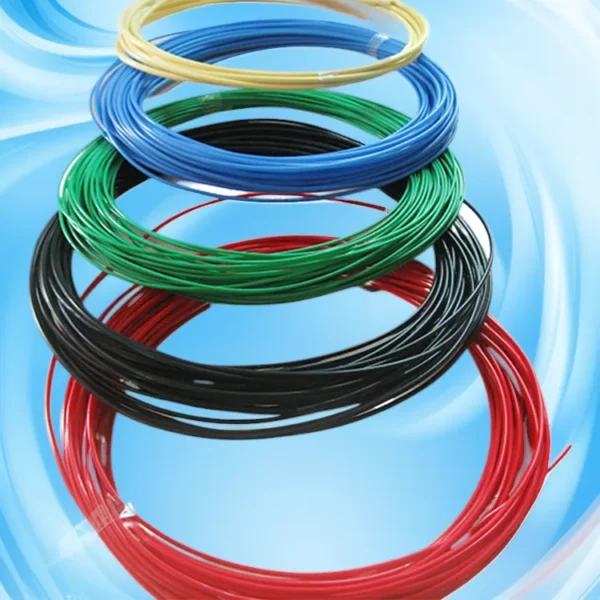
Tubo in PTFE a basso attrito | Soluzioni per il trasporto di materiali a risparmio energetico
Il tubo in PTFE a basso attrito riduce il consumo energetico di 20% nei sistemi di trasporto pneumatico e di trasferimento di fluidi. La sua superficie ultra liscia (coefficiente di attrito 0,04) previene l'accumulo di materiale, ideale per la movimentazione di polveri e liquidi viscosi. Personalizzabile con rivestimenti antistatici.
