
 Japanese
  English
  Russian
  French
  German
  Korean
  Portuguese
  Arabic
  Italian
  Dutch
Dutch  Turkish
  Indonesian
  Polish
  Spanish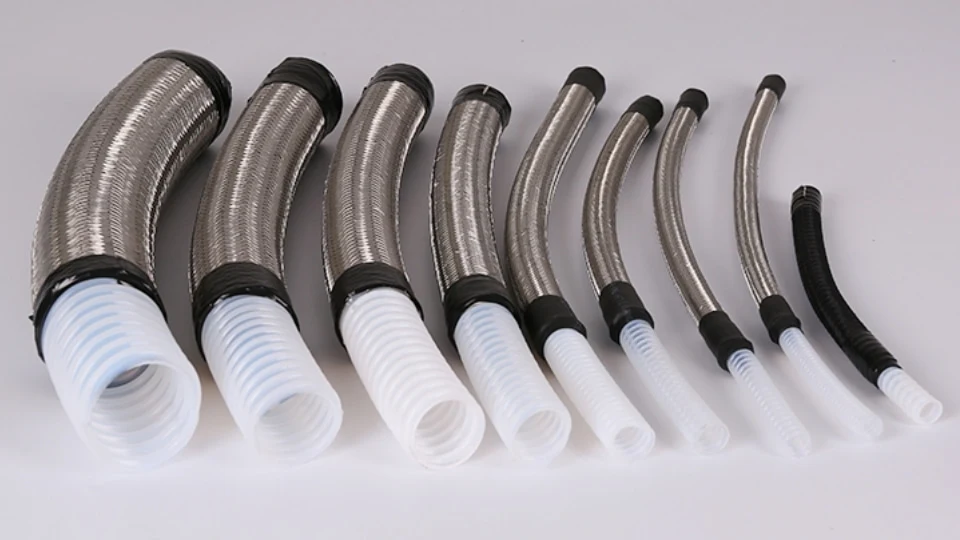
Ever stared at a pile of hoses and wondered why one just feels tougher than the other? Yeah, me too. Back when I first got my hands dirty in the industrial hose game, I remember hooking up a PTFE corrugated hose for a client’s chemical transfer line. Picked the wrong braid, and boom – it frayed under some unexpected rubbing from machinery. Cost us a day of downtime and a headache. Lesson learned: the braid ain’t just decoration; it’s the backbone that keeps your hose from turning into a noodle under pressure.
If you’re knee-deep in picking a braid for your PTFE corrugated hose – stainless steel (SS) or polypropylene? – you’re in the right spot. We’re talking real choices based on what your setup demands: high pressure that won’t quit, keeping costs down without skimping on safety, or shrugging off wear like it’s nothing. At Teflon X, we’ve shipped thousands of these bad boys worldwide, and I’ve seen what works (and what doesn’t) in labs, factories, and even food processing plants. Let’s break it down step by step, like we’re chatting over coffee, so you walk away knowing exactly how to nail your PTFE corrugated hose braid selection.
PTFE波状ホースの構成において、ブレードが重要である理由
Picture this: PTFE – that’s polytetrafluoroethylene, the slick, non-stick wizard material – forms the core of your corrugated hose. It’s flexible, handles crazy temps from -100°F to 500°F, and laughs at most chemicals. But without solid hose reinforcement, it’s like giving a race car paper-thin tires. The braid wraps around that PTFE tube, adding strength, burst resistance, and a shield against kinks or abrasion.
From my years slinging hoses at Teflon X, I’ve learned braids aren’t one-size-fits-all. You gotta match ’em to your world’s realities. High-pressure hydraulic lines? Go heavy-duty. Budget-tight assembly line? Lighten up without regret. And abrasion? That’s the sneaky killer in rough environments – think conveyor belts or outdoor rigs scraping against surfaces.
According to the Fluid Sealing Association (FSA), improper hose reinforcement leads to about 20% of industrial fluid leaks annually. Real stat, not pulled from thin air – check their 2023 report if you doubt me. So, let’s get into the two contenders: stainless steel braided PTFE hose and polypropylene braid. We’ll weigh ’em on pressure, cost, and durability, with some tables to make it dead simple.
ステンレス鋼編組PTFEホース:過酷な用途に対応する設計
Alright, let’s talk stainless steel first. If your operation’s dealing with beasts – think 1,000 psi or more – this is your ride-or-die. SS braids, usually 304 or 316 grade, are like armor plating. They’re woven tight from thin wires, creating a mesh that’s tough as nails but still lets the hose flex without fighting you.
I recall this one job for a petrochemical plant in Texas. They needed hoses for transferring aggressive solvents under 2,500 psi bursts. We spec’d our PTFEステンレス鋼編組ホース, and it held up for three years straight, no leaks, even with constant vibration. That’s the kind of reliability that saves your bacon.
耐圧性能:ステンレス鋼が真価を発揮する領域
Pressure’s non-negotiable in high-stakes apps. ASTM D380 standard tests hose burst pressure, and SS-braided PTFE hoses routinely hit 4,000-10,000 psi working pressure, depending on diameter. For a 1/2-inch hose, you’re looking at safe ops up to 3,000 psi continuous – way beyond what plain PTFE could dream of.
Polypropylene? It tops out around 200-500 psi for similar sizes. If your system’s pushing harder, SS is the only play. No ifs or buts.
コストの内訳:投資に見合う価値はあるか?
Yeah, SS ain’t cheap. Expect 2-3x the price tag over polypropylene – say $15-30 per foot for a 1-inch hose vs. $5-10. But factor in longevity: SS lasts 5-10 years in demanding spots, per ISO 7751 durability guidelines. Downtime from a failed hose? That’ll cost you way more than upfront bucks.
Teflon Xでは、お客様のために日々これらの数値を算出しています。ある醸造所では蒸気輸送用にステンレス鋼編組ラインに切り替えた結果、初年度のメンテナンス依頼が40%削減されました。今投資するか、後で支払うか、ということですね。
耐摩耗性:過酷な摩擦に耐えるステンレス鋼
Here’s where SS flexes hard. Its metal weave shrugs off scrapes like a champ. In abrasive environments – mining conveyors or automotive assembly – it outperforms plastics by a mile. NACE MR0175 standards rate SS for corrosion and wear in sour service, and real-world tests from DuPont (PTFE’s OG maker) show SS-braided hoses retaining 95% integrity after 1 million flex cycles.
ホースが金属の角や岩場に擦れるような環境でも、ステンレス鋼なら損傷することなくしっかりと保護します。
ポリプロピレンブレード:スマートでシンプル、そして驚くほど強靭
視点を変えてみましょう。ポリプロピレンブレードは、軽量かつ手頃な価格でありながら、軽度の作業には十分な能力を発揮する、万人に適した選択肢です。熱可塑性樹脂の織物であり、多くの場合、単層または二層で構成され、PTFEと良好に接着するため、シームレスなホース補強に適しています。
侮ることはできません。私は実際に、重量が過度な強度よりも重視される食品グレードの衛生ラインでこれらを使用してきました。Teflon Xで協力したある乳製品加工業者では、牛乳の移送にPPブレードホースを採用しました。清潔で安価であり、FDA 21 CFR 177.1550規制にも準拠しています。2シーズン使用しても問題は皆無でした。
圧力制限:限界を知る
PPブレードは、SAE J517規格に基づき、小径であればバースト圧300 psiまで、日常的な圧力には十分に耐えられます。空気圧装置、低流量の薬品、実験室の設備に最適です。しかし、800 psiまで負荷をかけると、膨張や破裂のリスクが生じます。用途が200 psi以下であれば、PPは軽量な頼れる味方となるでしょう。
品質を落とさずにコストを抑える
ここがPPの真骨頂です。ステンレス鋼の半分の重量であるため、輸送費が安く、取り付けも容易で、重量物を持ち上げる必要もありません。価格は1フィートあたり4~8ドル程度で、試作品や大量生産ラインに最適です。米国ゴム製造者協会(RMA)は、PPのような軽量ブレードを採用することでシステム全体の重量を30~50%削減でき、モバイル機器のエネルギーコストを大幅に削減できると指摘しています。
包装工場のお客様の中には、PPに切り替えることで性能を落とすことなく材料費だけで25%のコスト削減を実現した例もあります。
耐摩耗性:多くの用途で十分
PPは研削に対して無敵ではありませんが、決して弱くはありません。予想以上に紫外線や軽度の薬品に強く、屋内や保護された場所であれば十分に耐えられます。ASTM D543の試験では、PPブレードは油や溶剤にさらされた後でも柔軟性を維持し、経年変化による強度低下はわずか10~15%にとどまることが示されています。
屋外での使用ですか?多少の黄変は早まりますが、管理された環境下であれば非常に優れた性能を発揮します。ある製薬会社での事例では、プラスチックガイドと接触するPPブレード付きPTFEホースを使用しましたが、定期交換までの18ヶ月間、問題なく運用されました。
比較まとめ:圧力、コスト、耐摩耗性
PTFE波状ホースのブレード選定を容易にするため、簡単な比較表を作成しました。当社のTeflon Xによる試験および業界基準に基づいた、事実のみのデータです。
| 要素 | ステンレス鋼ブレード付きPTFEホース | ポリプロピレンブレード |
|---|---|---|
| 最大使用圧力 | 1,000~5,000 psi(ASTM D380) | 150~500 psi(SAE J517) |
| 1フィートあたりのコスト(直径1インチ) | $15-30 | $5-10 |
| 耐摩耗性評価 | 優良(100万サイクル後も完全性95%維持、デュポン社製) | 良好(10〜15%の損失、ASTM D543準拠) |
| 重さ | より重量級(0.5〜1ポンド/フィート) | より軽量(0.2〜0.4ポンド/フィート) |
| 最適な用途 | 高圧・研磨剤環境の産業用途 | 低圧・コスト重視の衛生環境 |
| 寿命 | 5〜10年(ISO 7751準拠) | 2~5年 |
お分かりでしょうか。まずは圧力、次に予算、最後に摩耗係数という順序で、ニーズを整理する際の参考にしてください。
実世界のシナリオ:現場での最適な選択
理論も大切ですが、実例は心に残るものです。Teflon Xの実績から、匿名化された成功事例をいくつかご紹介しましょう。
中西部の自動車部品メーカーの例です。ロボット溶接機の冷却ラインには1,200psiのスパイクと、金属との絶え間ない摩擦に耐えるホースが必要でした。ステンレス編組PTFEホースを採用した結果、故障が月次から年次へと激減し、交換コストを12,000ドル削減できました。彼らは当社に お問い合わせページ から見積もりを依頼し、今ではリピーターとなっています。
対照的な例として、カリフォルニア州のクラフトビール醸造所があります。瓶詰めラインの最大圧力は150psiで、パンデミック後の予算削減が急務でした。ポリプロピレン編組ホースは流れを円滑に保ち、軽量で交換も容易でした。ボトル充填機による摩耗も室内では最小限です。コスト面では アリソン・イェ@teflonx.com を通じて見積もりを行い、ホースの請求額を35%削減しました。
あるいは、オフショアのリグ供給業者の例です。塩分を含む過酷な空気環境で、潤滑油移送のために400psiという中圧が必要でした。最初はPPを使用していましたが、6ヶ月で摩耗により破損しました。ステンレスに変更したところ、2年間安定して稼働しています。これらの微調整は、すべてメールでのニーズ相談から生まれました。
結論:使用環境をテストしてください。可能であれば短い区間で試作を行ってください。私たちはTeflon Xで数十社のサポートを行い、完璧になるまで改善を繰り返してきました。
ホース現場の最前線で得たプロのヒント
現場経験に基づいた、ありのままの真実をお伝えします。第一に、圧力規格は常に20%余裕を持って選定してください。マーフィーの法則はホースにも当てはまります。第二に、摩耗が激しい場所には外部保護材を追加してください。ステンレスであっても効果があります。第三に、コストについてです。総所有コストで判断してください。短期ならPP、長期ならステンレスが優位です。
独自のヒント:腐食しやすい場所では304ステンレスより316ステンレスを選んでください。NACE SP0175規格に基づくと、塩化物への耐性が2倍高まります。またPPについては、エクソンモービルのポリマーデータによると、UV安定剤を使用することで屋外寿命が50%向上します。
私たちはこれまでに数千のカスタマイズを行ってきました。 テフロンX, blending these insights. Curious about your setup? Drop a line – we’ll brainstorm free.
よくある質問:PTFE波状ホースのブレード選定に関する要点
疑問をお持ちですか?こちらが率直な回答です。
What’s the biggest mistake folks make with hose reinforcement?
Jumping straight to price without pressure checks. I’ve seen cheap PP fail spectacularly at 300 psi – always calc your max first, using tools like our 製品コンフィギュレーター.
同一のホースアセンブリにおいて、異なる種類の編組を組み合わせることは可能ですか。
Rarely recommended – mismatches cause weak points. Stick to uniform for safety. If hybrid’s your jam, consult us at Teflon X for custom engineering.
耐摩耗性がアプリケーションにとって決定的な要素であるかどうかを判断するには、どうすればよいですか。
Run a simple rub test: Drag the hose over your roughest surface for 100 cycles. Fraying? Upgrade to SS. We’ve helped clients spot this early, avoiding field disasters.
まとめ:最適なブレード選定のための次のステップ
Whew, we covered a lot – from SS’s ironclad pressure grip to PP’s wallet-friendly flex, all tuned to your pressure, cost, and abrasion vibes. Picking the right braid isn’t rocket science; it’s about matching your world’s grit to the hose that won’t let you down. At Teflon X, we’re all about that – flexible, corrosion-resistant convoluted hoses that just work.
Feeling that spark? Imagine your lines humming without leaks or breaks, costs in check, and ops smoother than ever. That’s the desire we build here.
準備はいいですか?お問い合わせください。 https://teflonx.com/contact-us/ for a no-strings chat, snag a quote via Allison.Ye@teflonx.com, or browse our full lineup. Let’s get your PTFE corrugated hose dialed in – you deserve the win. What’s your first question?

PTFEステンレススチール編組ホース – 柔軟で耐腐食性のある渦巻きホース
攻撃的なメディア向けに設計されたこの PTFEステンレス鋼編組ホース 化学的に不活性なPTFEコアと波形ステンレス鋼シェルを組み合わせたものです。 フレキシブルテフロンホース 軸方向および横方向の変位に対応する構造で、鉱業パイプライン(耐摩耗モデル)や排ガスシステムに最適です。濃硫酸、塩素ガス、王水にも耐性があります。
